Who are the Batwa People?
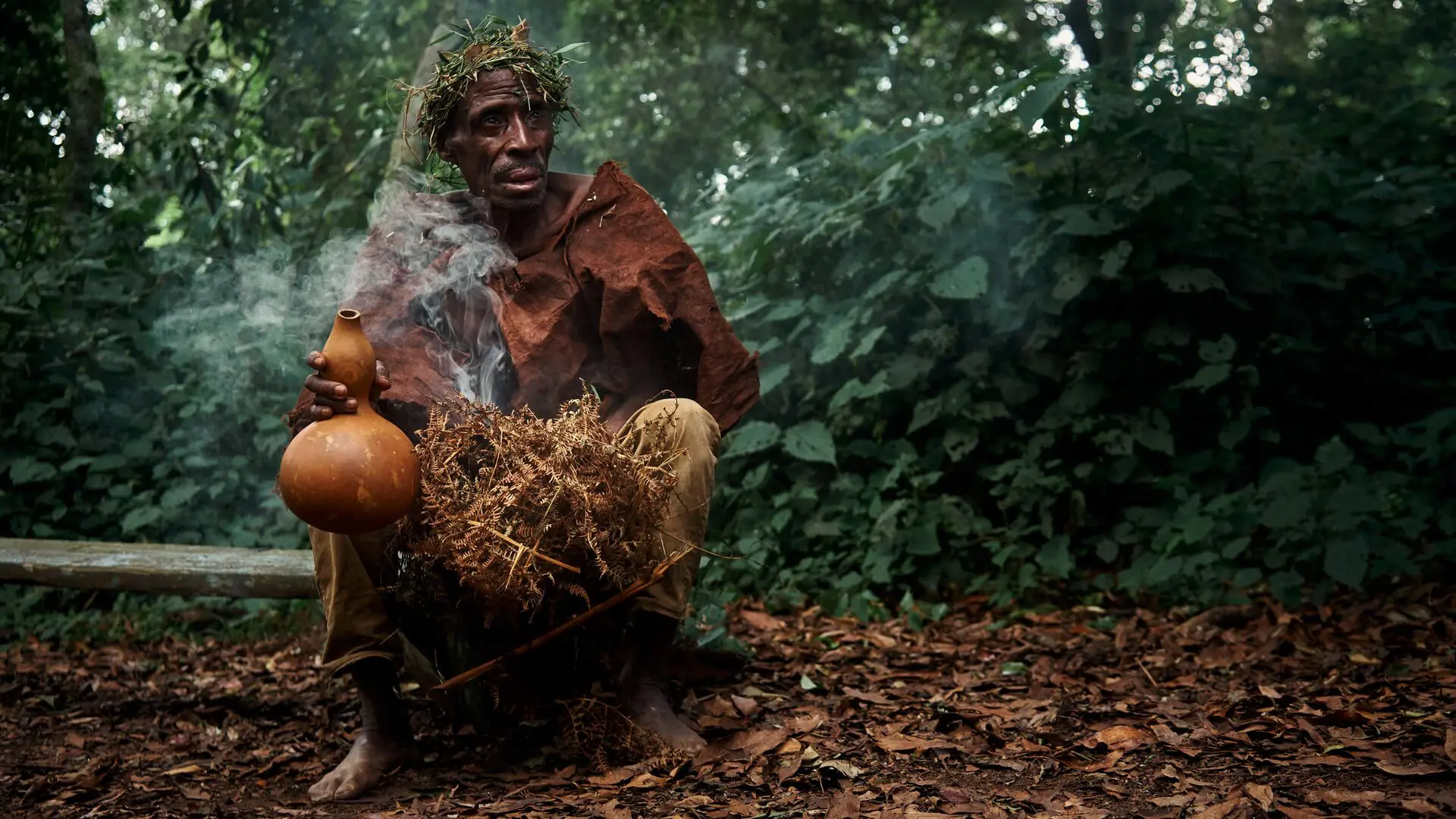
The Batwa are one of Africa’s oldest surviving indigenous tribes and have lived in the rainforests of Central Africa for centuries.
For thousands of years, they lived as hunter-gatherers in the forests that are now form part of protected areas in Uganda, Rwanda, and Congo.
The rainforest jungles were their home.
Men hunted small animals, while women gathered honey, berries, roots, and medicinal plants. Over time, they developed a deep knowledge of the ecosystem in which they lived. Their houses were made from leaves and sticks, and their clothes from animal skins.
In many ways, their existence was deeply connected to the forest that had sustained them for generations.
What changed for the Batwa?
In the 1990s, large areas of the rainforest where the Batwa had lived for generations were give protected status to help conserve endangered mountain gorillas and other wildlife.
That eventually led to the creation of, among others, Mgahinga Gorilla National Park and Bwindi Impenetrable National Park.
From a nature conservation perspective, this was an important step in protecting some of Uganda’s most valuable natural areas.
But for the Batwa, it brought profound changes. They lost access to the forests that had been their home for centuries and the foundation of their traditional way of life.
Many Batwa families were forced to live on the edges of the national parks, often without land, stable income, or the resources needed to adapt to a new way of life.
As a hunter-gatherer community whose survival had always depended on the forest, the transition was extremely difficult.
Many faced poverty, exclusion, and exploitation, including from early forms of tourism that did not always respect their situation.
That is indeed why the story of the Batwa is so complex.
It is not only a story about culture and traditions, but also about conservation, land rights, poverty, and the challenges of social change.
Why is this subject sensitive and complex?
If you are booking a Batwa Experience in Uganda, you are not simply visiting a community that has chosen to present its traditional way of life as a tourist attraction.
You are meeting a community whose way of life has changed significantly over time.
That is why this experience deserves to be approached with understanding and respect.
The reality is that conserving nature around the world sometimes involves difficult choices. The protection of the mountain gorillas has unquestionably yielded positive results. It has helped to secure the future of one of the world’s most endangered species. At the same time, some local communities have paid a high price for this.
That does not mean that gorilla trekking tourism is wrong. It simply means that there are different sides to the story, and both deserve to be acknowledged and understood.
That is precisely why many travelers find a Batwa Experience so valuable. It shows that the destinations we visit often have more layers than we see at first glance.
What does a Batwa Experience in Uganda entail?
The Batwa Trail
Among the most famous experiences is the Batwa Trail in the Mgahinga area and Buniga Forest in the Nkuringo Section of Bwindi Impenetrable National Park.
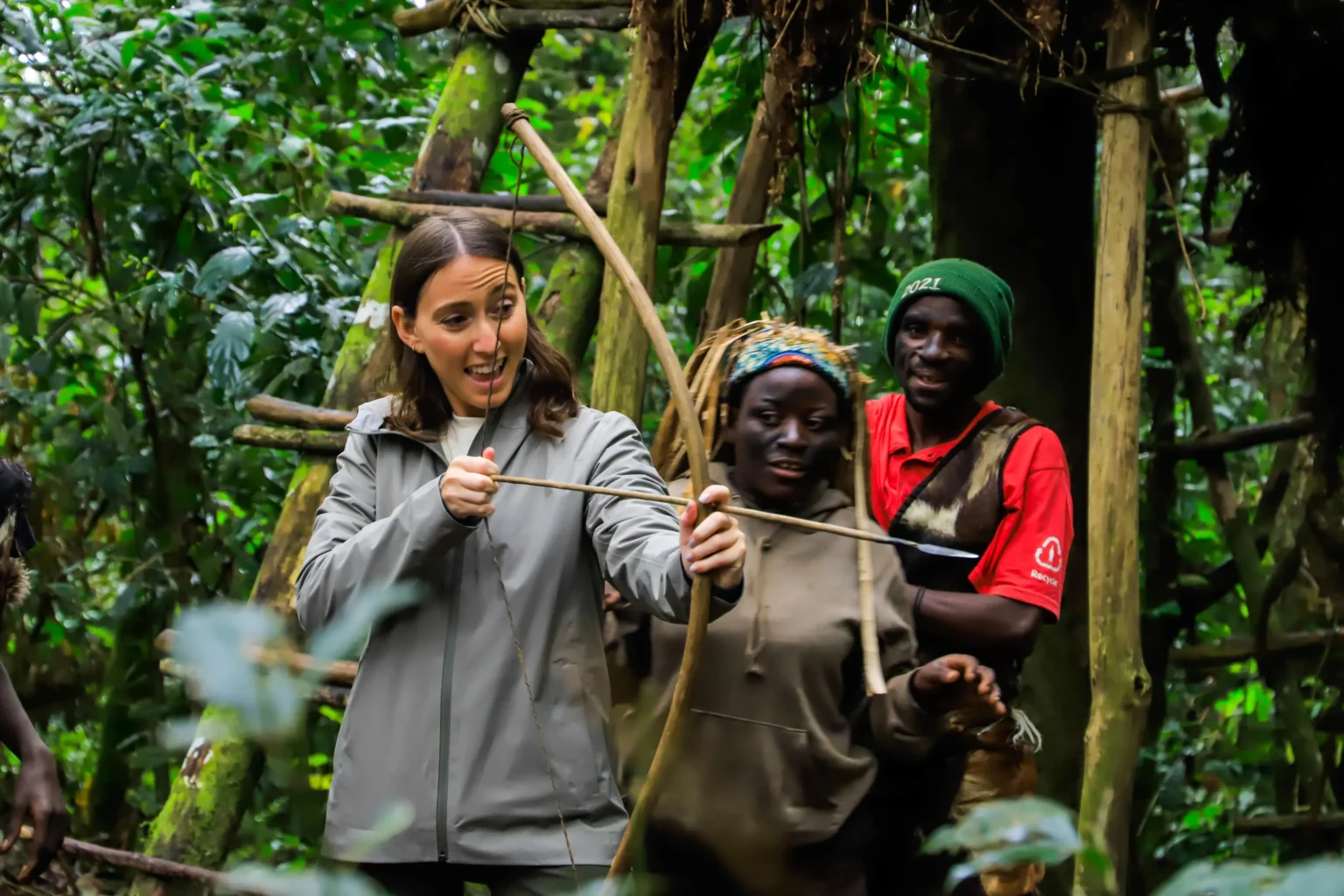
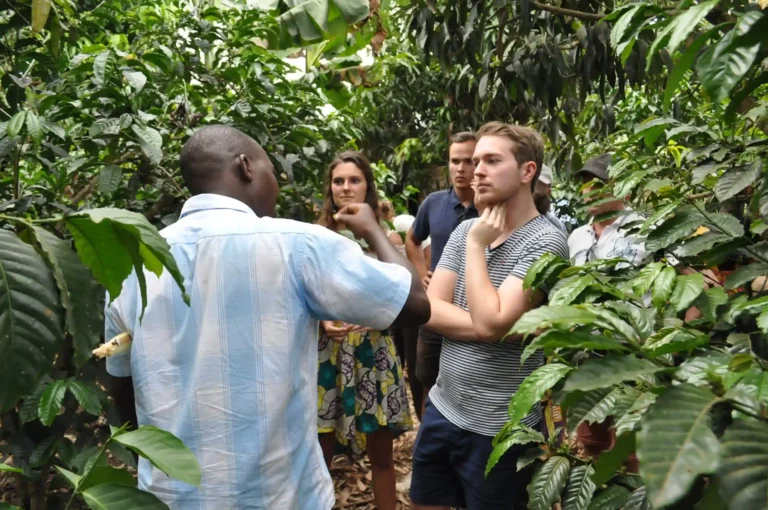
Your guides are Batwa themselves. You walk through parts of the forest while they explain their former way of life.
You will learn, among other things:
- How they hunted and trapped animals, gathered food, and found clean water.
- How they made medicine from plants
- How they lit fires without matches
- How they built shelters to survive harsh weather.
- What role caves played within the community.
- How knowledge was passed down from generation to generation.
What makes this experience special is that the stories are told directly by people who are themselves part of the community.
Cultural visits
In addition, there are several initiatives around Bwindi where you can get acquainted with music, dance, stories, crafts, and the daily life of Batwa families.
The quality and setup vary per project.
Therefore, it is very important to choose initiatives in which the community itself is actively involved and benefits from the income.
At Choose Uganda Safaris, we recommend visiting the Batwa settlement in Sanuriiro after the Buniga Forest Walk in Nkuringo. Some Batwa families now live here, far from the forest life.
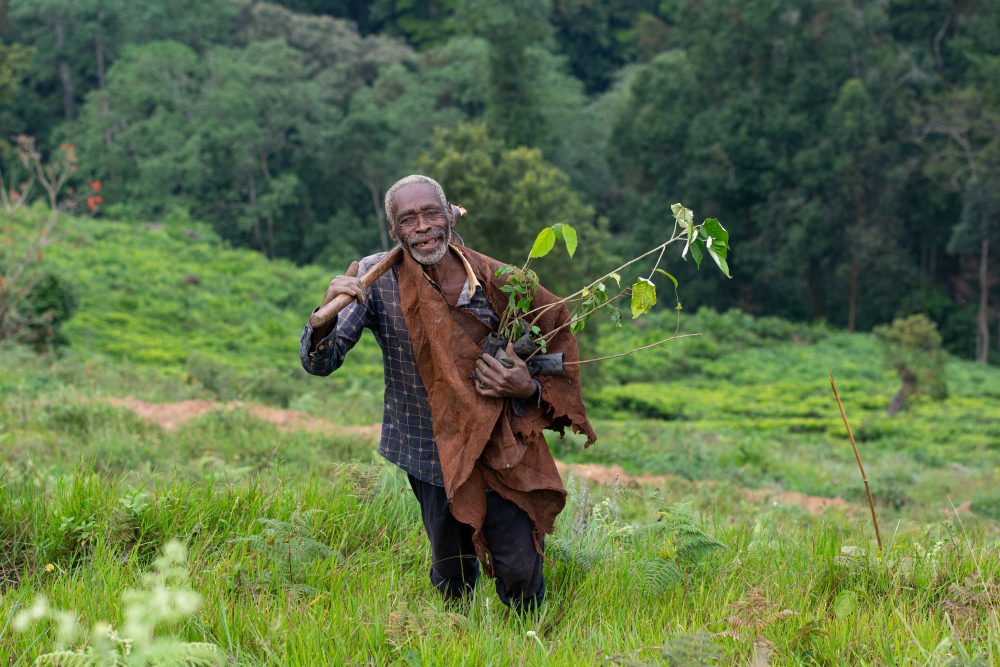
Life outside the forest has brought many changes for them. Through community programs, some families in Sanuriiro have received support to build homes and create new opportunities.
However, adapting to a new way of life has not always been easy. A visit gives you the chance to meet the Batwa, hear their stories, and understand the journey they have been through.
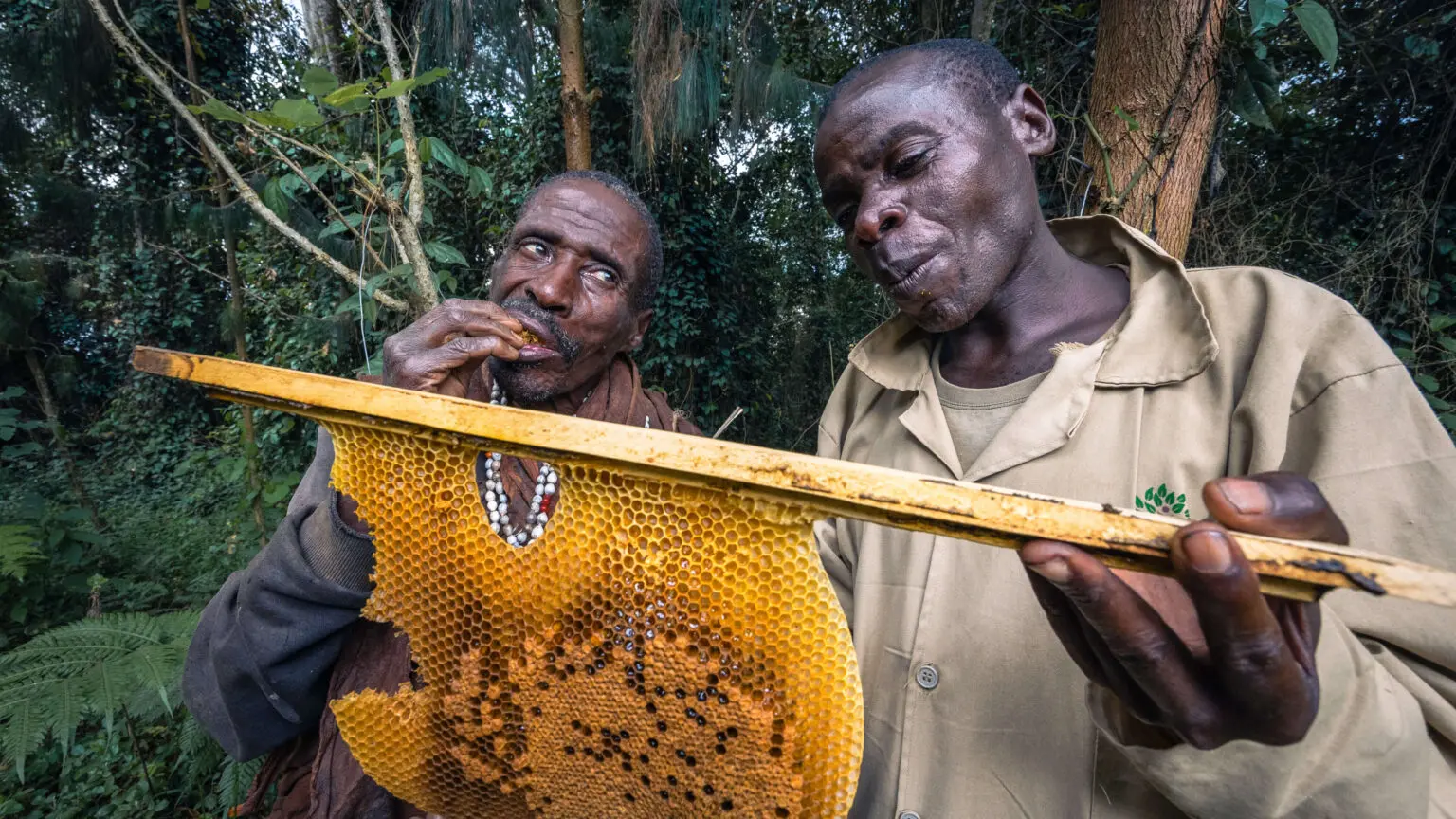
You may see women weaving traditional baskets using natural fibres and dyes. You can also men practising modern beekeeping as they find new ways to use their knowledge of the forest. The same Batwa guides who introduce you to their former forest home will also help you understand their lives today, connecting the past with the present.
What can you expect from a Batwa Experience?
Many travelers think beforehand that they are ending up at a staged show for tourists.
Many travelers initially think they will experience a staged show created for tourists.
But that is not what a meaningful Batwa visit is about.
The real strength lies in the conversations.
You hear stories about life in the forest, but also about the challenges people face today.
About education.
About employment.
About the balance between protecting traditions and creating a future for new generations.
That is what often makes the experience much more personal and meaningful than travelers expect.
Is a Batwa Experience ethically responsible?
This is probably one of the most common questions travelers ask.
The honest answer is that it depends on the initiative you visit and the way the experience is created.
We believe a responsible Batwa Experience should meet a few important principles:
- The Batwa community has an active role in shaping the experience.
- A meaningful share of the income stays within the community.
- The focus is on learning, conversation, and cultural exchange.
- People are not presented as an attraction, but respected as a living community.
- Visitors have the opportunity to hear their own stories and perspectives.
When these principles are respected, tourism can become a positive force. It can support local livelihoods, create opportunities for education, and help preserve important cultural knowledge and traditions.
What makes a visit special for travelers?
During a safari in Uganda, many experiences are connected to nature.
Gorilla trekking is about encountering wildlife.
A safari is about discovering animals in their natural habitat.
A Batwa Experience is about meeting people and understanding their story.
It is this variety that many travelers value.
You gain a deeper understanding of the region you are visiting and discover how nature, history, and local communities are closely connected.
For many travelers, this becomes a meaningful addition to their time around Bwindi or Mgahinga Gorilla National Parks.
How do you combine a Batwa Experience with gorilla trekking?
Quite easily, in fact.
Most travelers include a Batwa Experience:
- In the afternoon after their gorilla trek.
- On the day before their gorilla trekking adventure.
- As part of an extra night in the region.
Because gorilla permits are booked for a fixed date, a cultural experience is often a perfect way to make the most of the time around Bwindi or Mgahinga. It also offers a different perspective of the region, allowing you to discover not only its incredible forests and wildlife, but also the people, traditions, and stories that are part of its identity.
Visiting Batwa respectfully: some important tips
- Come with an open mind: Do not visit looking for a romantic image of the past. The reality is often more complex, and that is what makes the experience meaningful.
- Ask questions: Many Batwa guides are happy to share their knowledge, experiences, and personal stories.
- Always ask before taking photos: Not everyone feels comfortable being photographed, so it is important to ask for permission first.
- Listen more than you speak: A Batwa Experience becomes most meaningful when you do not only observe, but also take time to listen and understand.
Why we believe this experience provides context to a visit to Bwindi
Many travelers leave Uganda with unforgettable memories of mountain gorillas.
And rightly so.
But those who also take the time to learn about the people who have lived in these forests for generations get a more complete picture of this special region.
A Batwa Experience is not about blame or judgement.
It is about history, culture, change, and resilience.
And that is precisely why this experience often lingers long after the photos of the gorillas have already disappeared into the photo album.
The Batwa Experience as part of your trip
The Batwa Experience in Uganda is at its best when it isn’t a standalone visit. But an encounter that fits logically into your safari in Uganda. That is why, at Choose Uganda Safaris, we look not only at what you want to see, but also at the pace of travel, the route, and how you wish to get to know local communities. Because we are Ugandans with professional experience in the tourism industry, we know which experiences are genuine and well-organized.
And how to respectfully incorporate them into your tour. This way, it doesn’t remain just a matter of looking and moving on, but allows you to gain a deeper connection with the people, the history, and the Uganda of today. Curious how such an experience fits into your tour? Contact us.