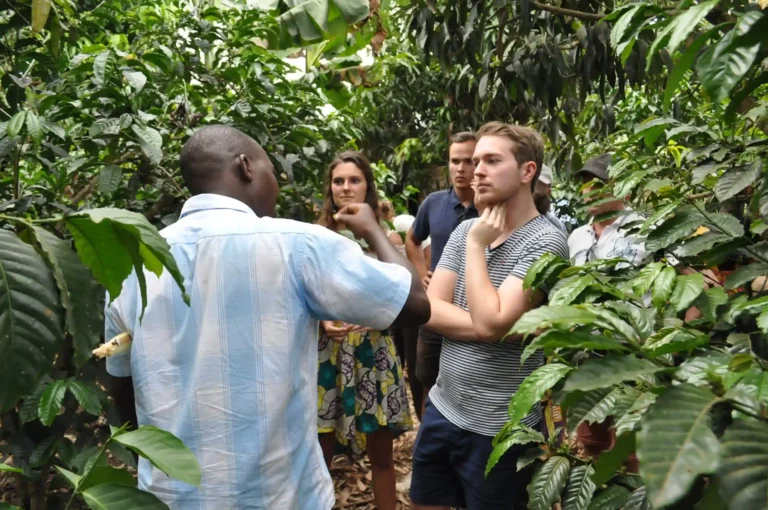
How does a traditional coffee tour proceed?
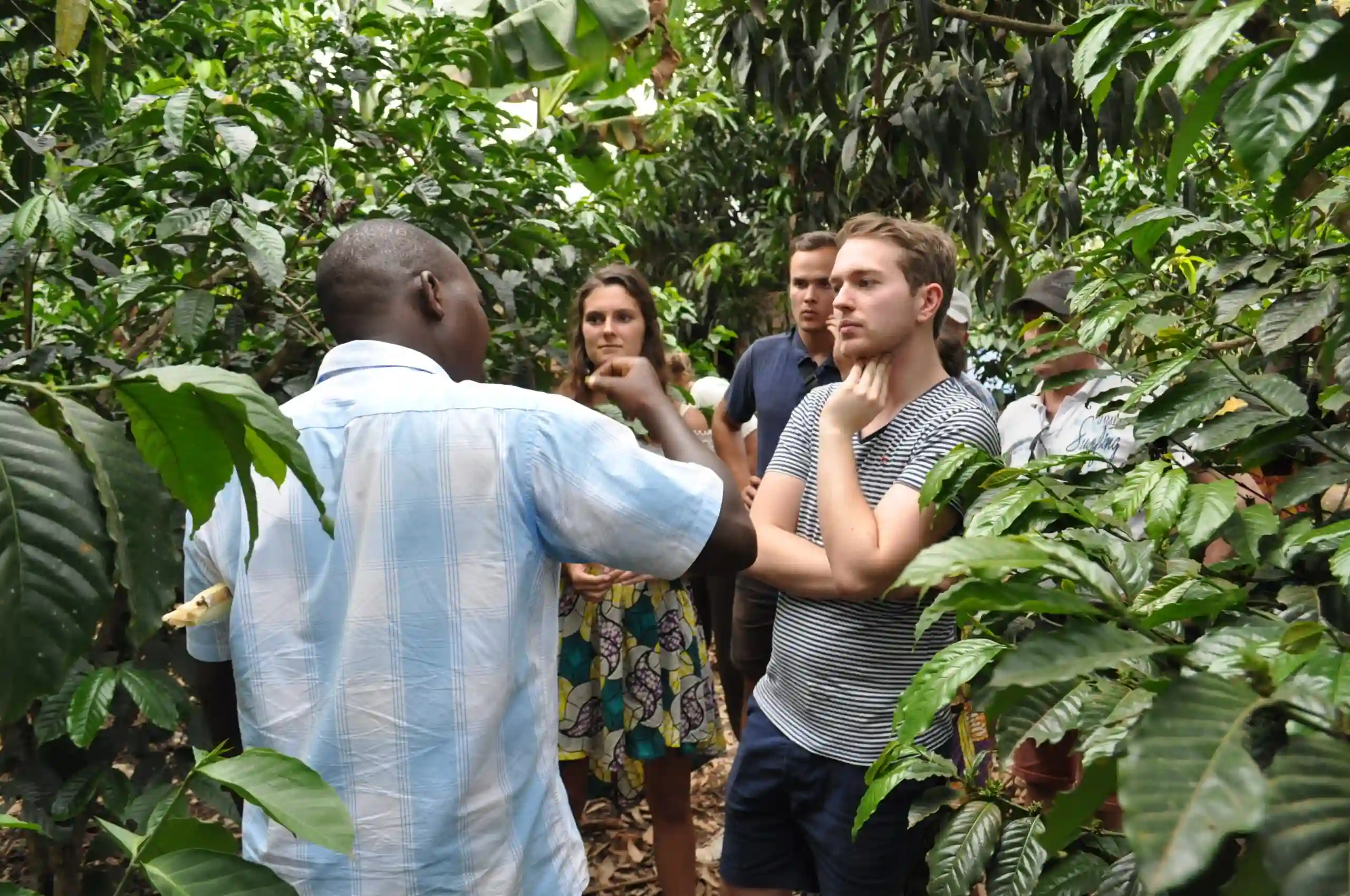
The nice thing about a coffee tour in Uganda is that you often don’t visit a polished tourist attraction. In many cases, you are literally standing in a family’s garden.
The process to a delicious cup of coffee usually proceeds in the following order:
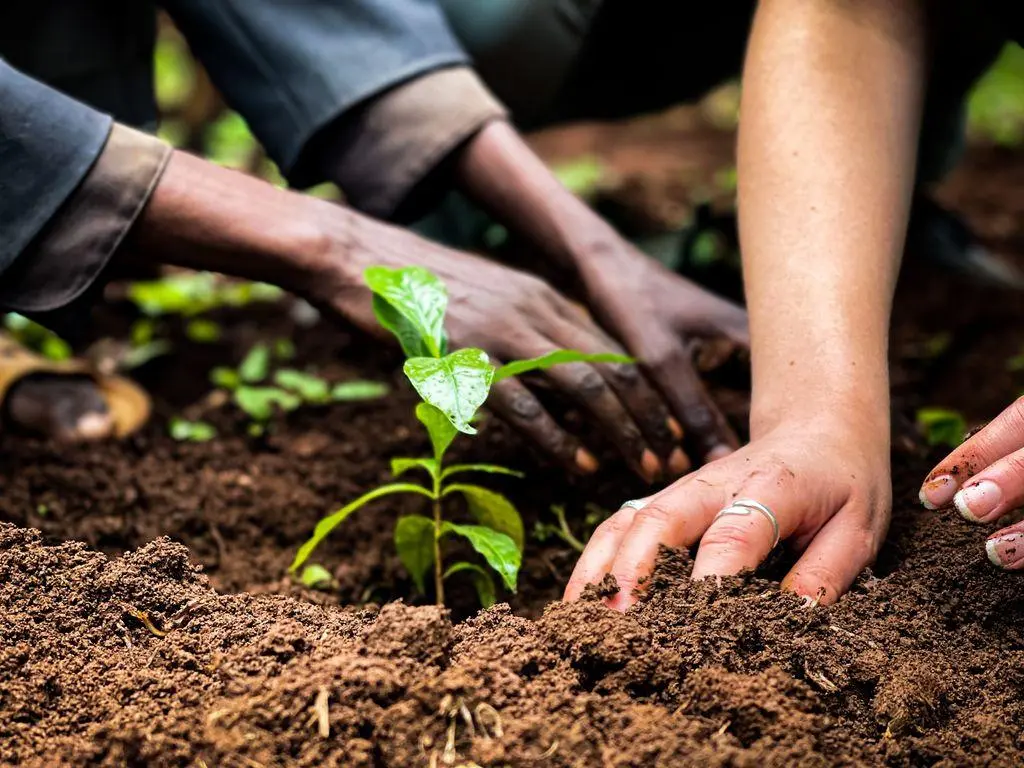
1. The coffee plant
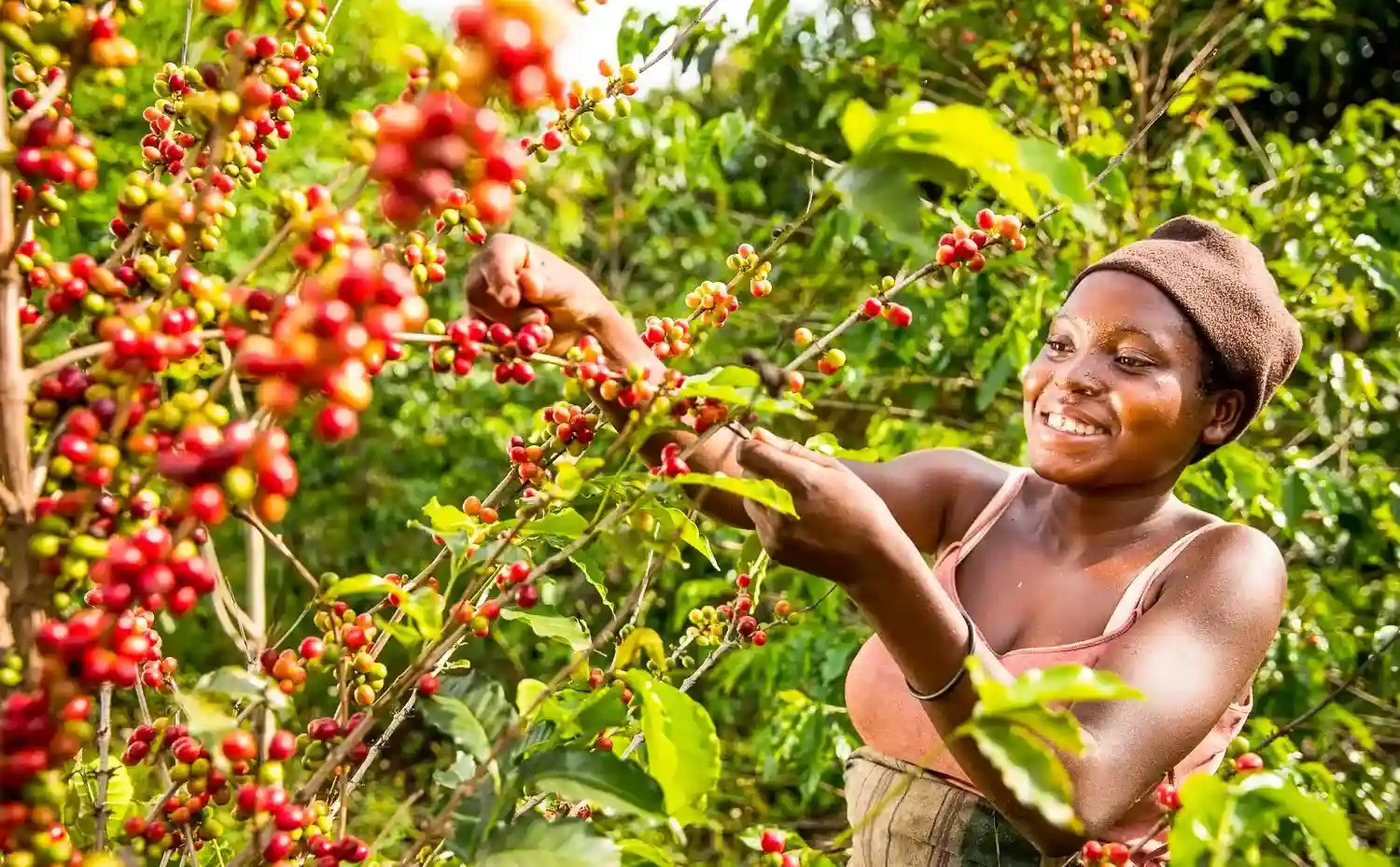
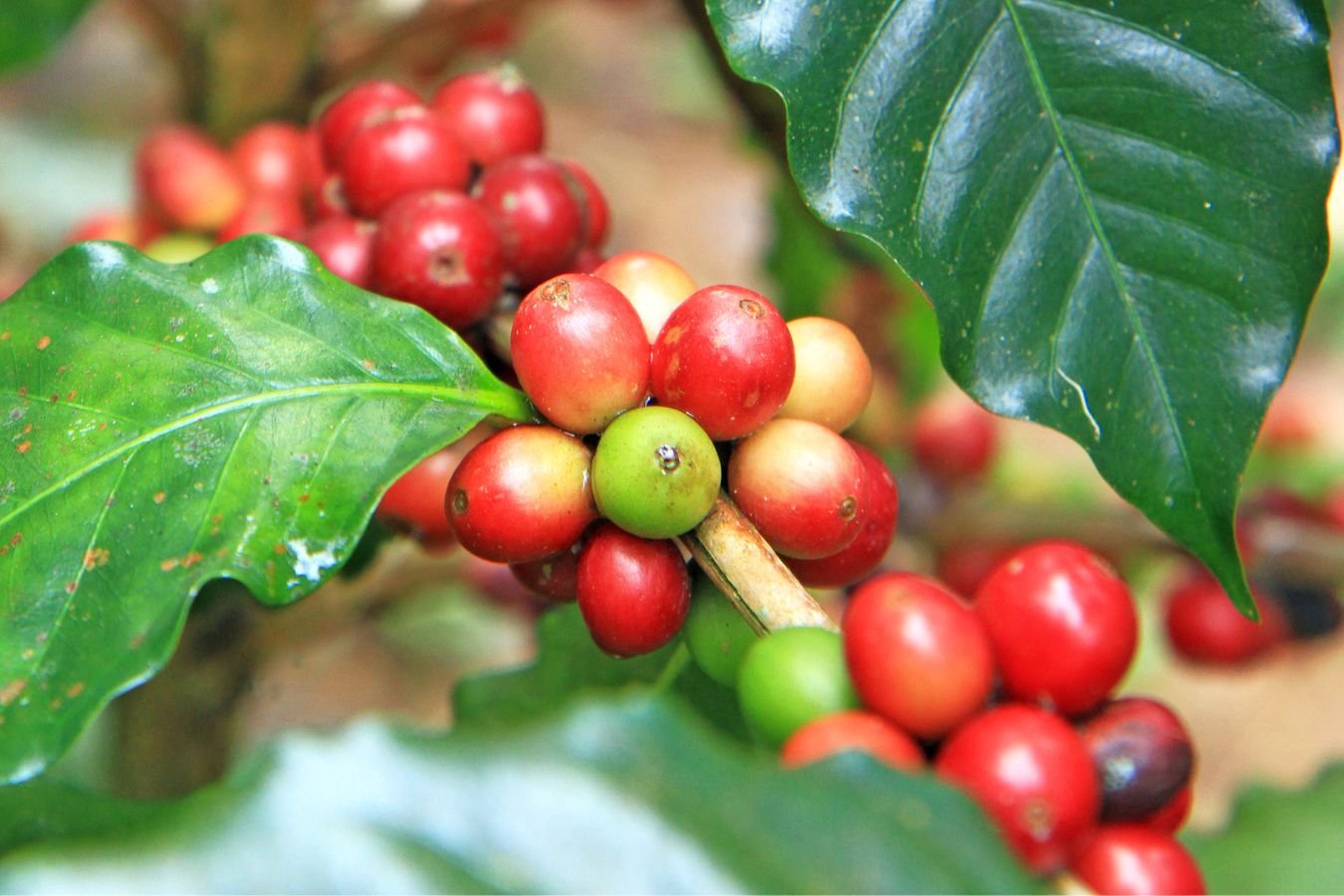
You start with the coffee plant itself. You learn how long it takes for a plant to produce fruit and how farmers determine when the coffee berries are ripe. The red coffee berries are often picked by hand. That sounds simple, but selecting only the ripe berries requires experience.
2. Removing the flesh
After the harvest, the pulp is removed. Depending on the region, this is done manually or with simple machines. Here you see for the first time how labor-intensive coffee production actually is.
3. Drying the beans
Next, the beans are spread out in the sun. This process can take days to weeks, depending on the weather. The beans are turned regularly to prevent mold formation.
4. Mashing and peeling
One of the most enjoyable parts of the tour is often the traditional pounding of the beans in a large wooden mortar. Here, the last skin is removed. You are often allowed to help. That usually earns your daily cup of coffee more respect than you had expected beforehand.
5. Roasting over an open fire
The green coffee beans are then roasted over charcoal or an open fire. During roasting, not only does the color change, but the aroma that we all recognize also develops.
6. Grinding and brewing
Finally, the beans are ground and the coffee is freshly brewed. You often drink coffee with the family who have just shown you how much work goes into the process. And let’s be honest: coffee rarely tastes better than when you’ve seen exactly where it comes from.
Is a coffee tour worth it?
If you are curious about how your daily cup of “black gold” is made, it is certainly worth understanding the story and process. That adds an extra dimension to your hot cup of coffee in the morning. Are you interested in culture? Then the coffee tour is highly recommended as well. Many cultural excursions show a glimpse of daily life. A coffee tour does this perhaps even more strongly.
You see:
- How a family earns its income.
- What challenges farmers face.
- How traditional knowledge is passed on.
- What role coffee plays in the local community.
- How agriculture and nature are connected.
It is often precisely these personal encounters that travelers still remember years later.
Is Ugandan Coffee good?
Yes. Ugandan coffee is considered among the finest coffees produced in Africa. The country is unique because it produces both Robusta and Arabica. Varieties that you can find in every supermarket.
Robusta
Robusta is actually native to Uganda. The coffee plant grows naturally in areas around Lake Victoria and is known for its strong body, rich taste, and higher caffeine content. For many generations, Robusta has been an important crop for Ugandan farmers and remains a major part of the country’s coffee production today.
Arabica
Arabica coffee grows mainly in Uganda’s higher regions, including the slopes of Mount Elgon and the Rwenzori Mountains. The altitude, climate, and fertile soils create ideal conditions for coffee with more delicate flavours, often with fruity and floral notes. Today, Ugandan Arabica beans are increasingly appreciated by specialty coffee roasters in Europe because of their quality and unique flavor profiles.
Who is a coffee tour suitable for?
A coffee tour in Uganda is one of those experiences that appeals to many different travellers.
It is a great choice for:
- Coffee lovers who want to understand where their coffee comes from.
- Families looking for a fun and educational experience.
- Photographers who enjoy capturing rural life and local traditions.
- Travellers who want to meet people and discover everyday life beyond the national parks.
- Anyone who wants to experience the cultural side of Uganda alongside its nature.
Because many coffee tours take place with local farming families, they often feel personal rather than commercial. You do not just see how coffee is made. You meet the people behind it.
Practical tips
How long does a coffee tour last?
Most coffee tours take around two to four hours, depending on the location and the activities included.
Do you have to walk a lot?
That depends on where you visit. At Sipi Falls, for example, a coffee tour often includes a short walk through the hills and coffee fields. That always makes for a beautiful picture.
Can you buy coffee?
Yes. Many local families and cooperatives sell freshly processed Ugandan coffee, giving you the chance to take a taste of your experience home.
Is the coffee tour suitable for children?
Yes. Children often enjoy the hands-on parts of the experience, such as crushing, roasting, and grinding the coffee beans. It is a fun way for them to learn where coffee comes from and meet the people behind it. Curious about what a fun trip with children might look like? Then check out our family trip.
Why we often recommend a coffee tour in Uganda
A trip through Uganda is not only about the famous highlights.
Of course, gorilla trekking, wildlife safaris, and chimpanzee encounters are unforgettable experiences. But often, it is the smaller moments that give a journey its deeper meaning.
A coffee tour takes you beyond the national parks and into everyday Ugandan life. You meet local families, hear their stories, and discover the amount of care and work behind something many people enjoy every day.
It may not be an experience that is at the top of your list before arriving in Uganda. Yet, many travellers look back on their coffee tour as one of the unexpected highlights of their journey.
May we put together your Uganda trip?
A coffee tour is at its best when it does not remain a standalone excursion, but becomes a natural part of your Uganda safari. It can be a quiet stop after a few days of wildlife experiences, or a local encounter along the way to the mountains and gorillas in the southwest. What works best depends on your route, your travel pace, and the way you want to experience Uganda. At Choose Uganda Safaris, we combine professional experience in the tourism industry with local knowledge of Uganda.
We know not only the famous places, but also the distances, timing, and small details that can make a journey smoother and more enjoyable. We look at your trip as a whole and make sure the coffee experience fits at the right moment, without unnecessary detours or a rushed schedule. This way, it becomes more than an activity you simply add to your itinerary. It becomes an encounter that adds depth to your journey. Curious how a coffee tour could fit into your Uganda safari? Contact us.