

Uganda Birding Tours

Is Uganda good for birding?

Choose a Uganda birding tour and discover a land full of amazing birds and beautiful places. Uganda is famous for its mountain gorillas and chimpanzees, but it is also the best country for birding in Africa. 

The country has over 1,080 bird species—almost half of all Africa’s birds—including more than 20 Albertine Rift species that you can find nowhere else. It is the easiest destination to find the mega Shoebill bird in its natural habitat. With friendly people, nice lodges, beautiful scenery, good weather, and great coffee, a Uganda birding tour is an adventure you will never forget. 

The national anthem says, “Oh Uganda, Land of Beauty,” and this is true. Uganda has many different habitats, from forests and lakes to wetlands and savannahs, making it perfect for birdwatching. Uganda birding tours are not just about seeing birds—it is about enjoying nature, taking great photos, and experiencing the country’s beauty up close. Whether you love birds or just enjoy being outside, Uganda will give you memories that last a lifetime.

Best Uganda Birding Packages

What are the most iconic birds of Uganda?

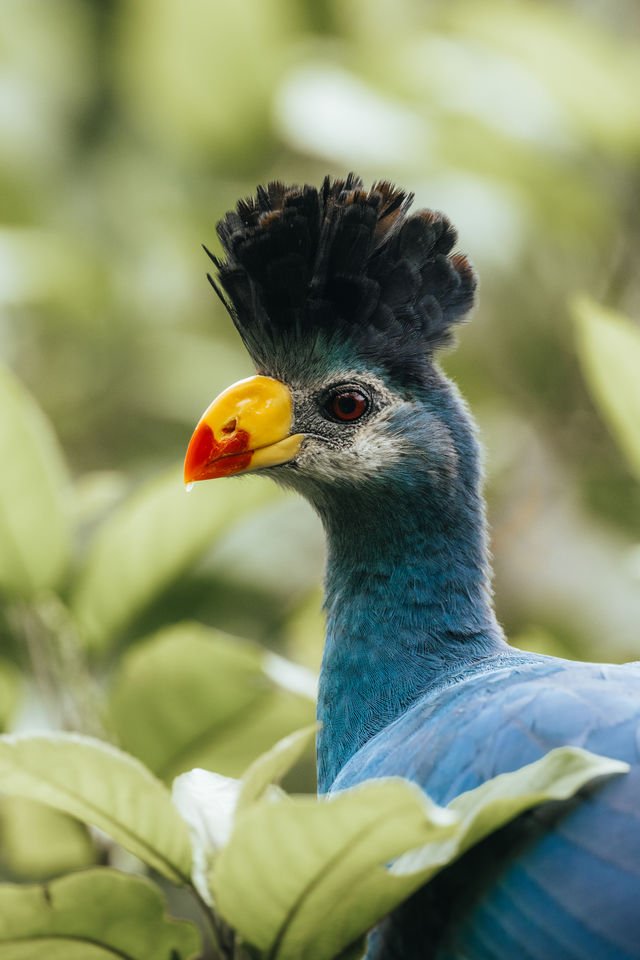
The most iconic bird species of Uganda are the Grey Crowned Crane (Uganda’s national bird), the prehistoric-looking Shoebill, and the vibrant Great Blue Turaco.

1. Grey Crowned Crane (Crested Crane)

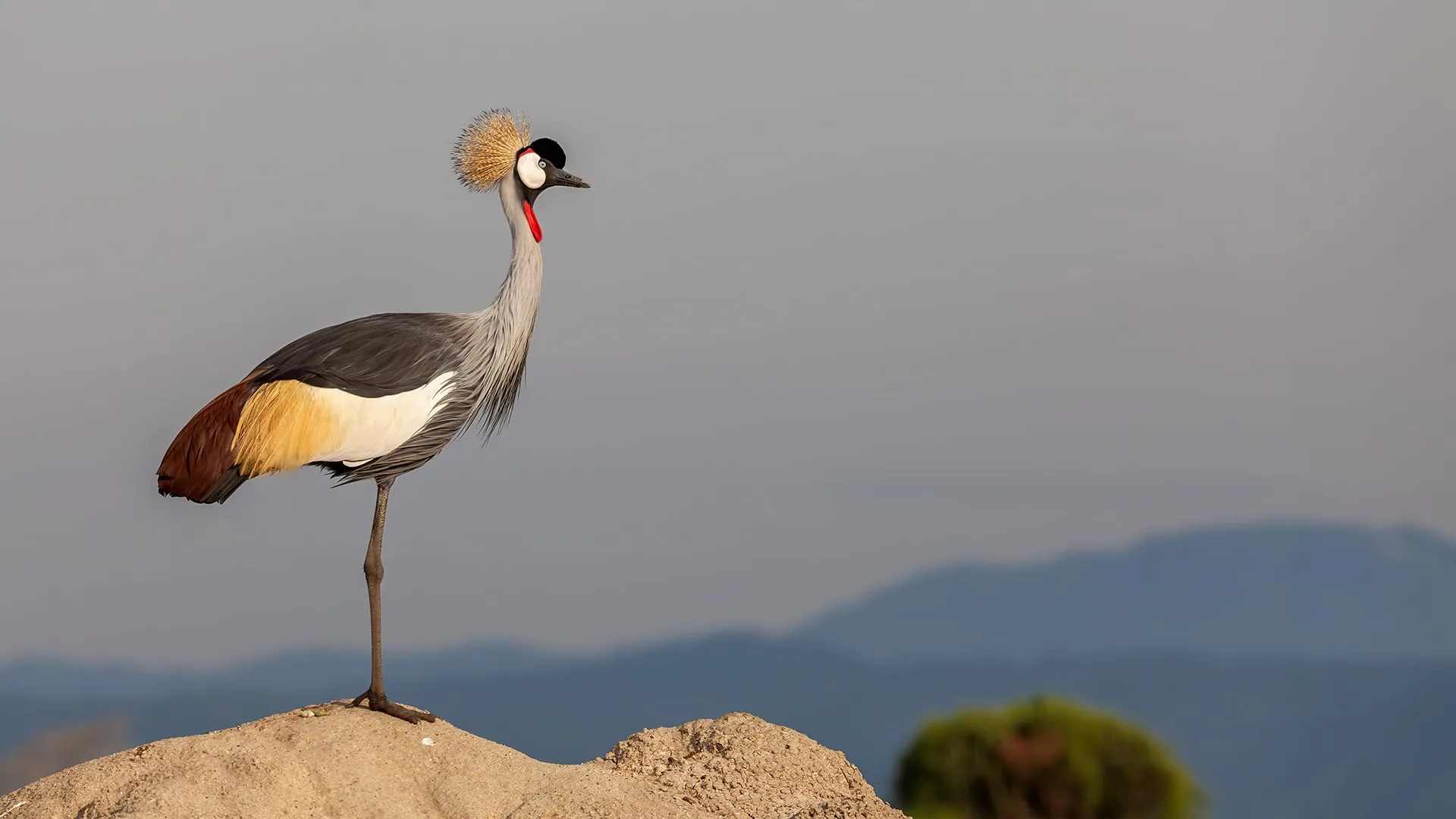
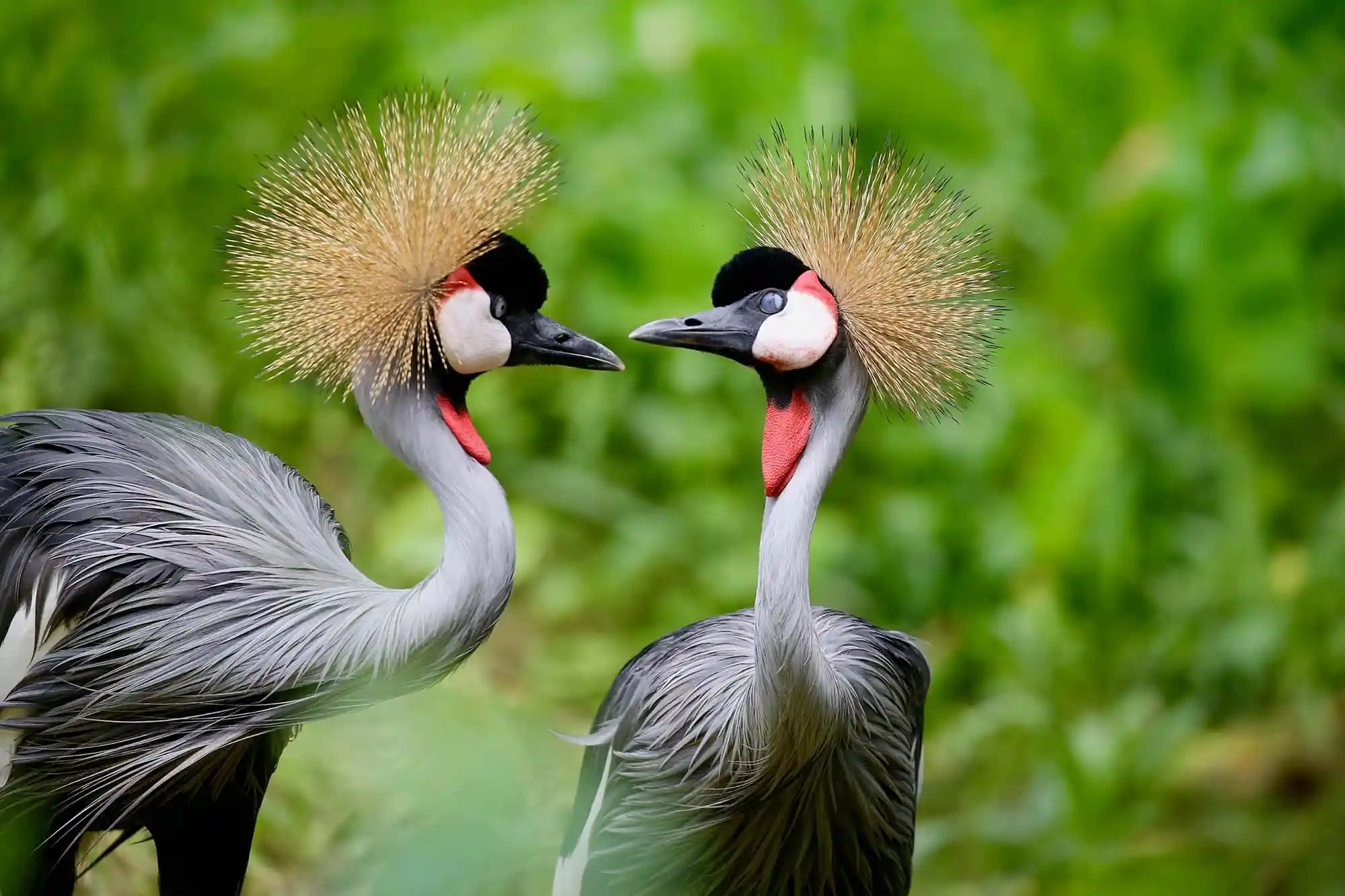
This is Uganda’s national bird and a prominent symbol featured on the national flag and coat of arms. It is known for its elegant appearance, with a golden crown of stiff feathers, a grey body, and an elaborate courtship “dance” involving bowing and jumping. It is commonly found in wetlands and grasslands across the country.

2. Shoebill Stork (Whalehead Stork)

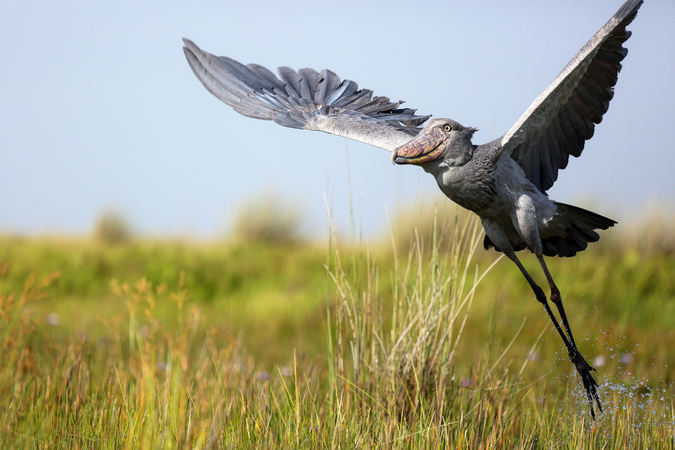
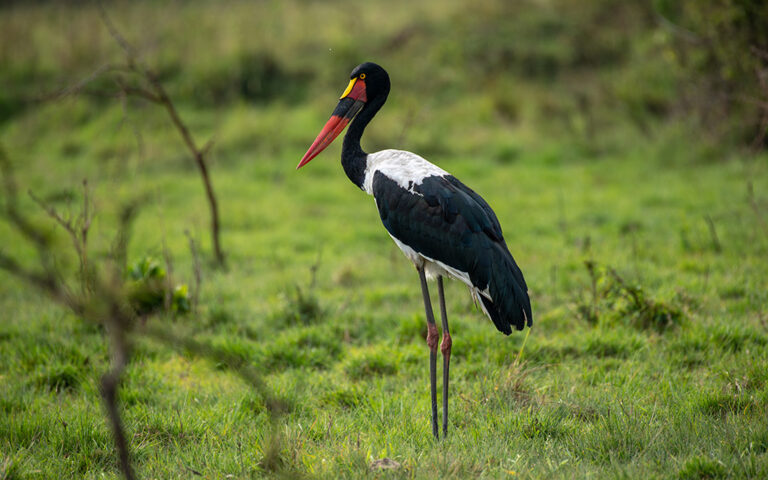
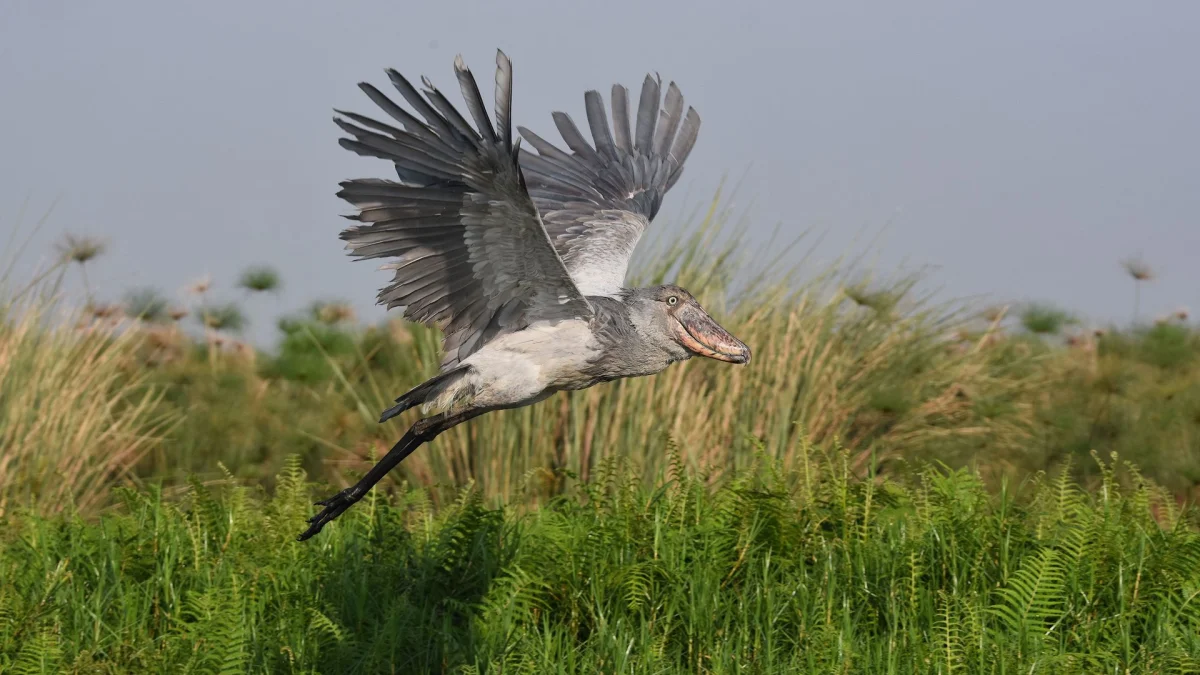
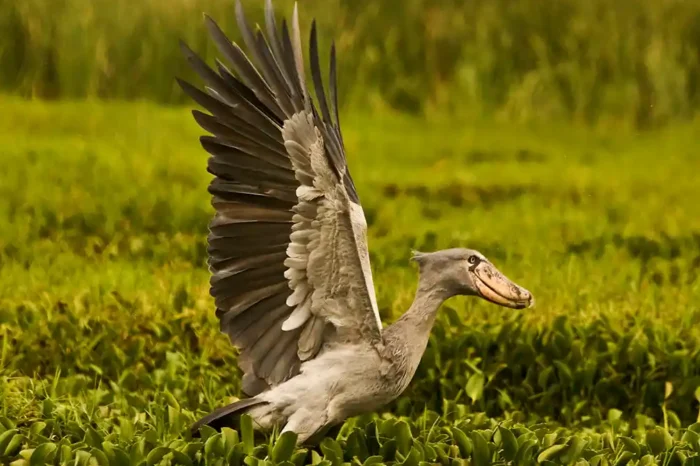
Highly sought after by birdwatchers, the Shoebill is famous for its massive, shoe-shaped bill and tall, prehistoric appearance, standing up to 5 feet (1.5 meters) tall. It is an elusive, solitary bird that employs a “freeze and seize” hunting strategy in swamps and marshes, primarily feeding on lungfish. The Mabamba Swamp near Lake Victoria is one of the most reliable locations to spot this unique bird.

where can I see shoebill stork in Uganda

3. Great Blue Turaco

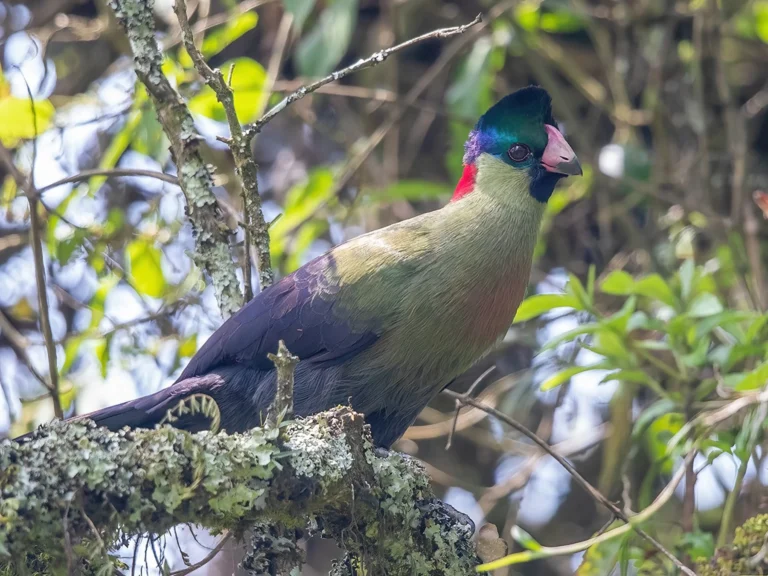
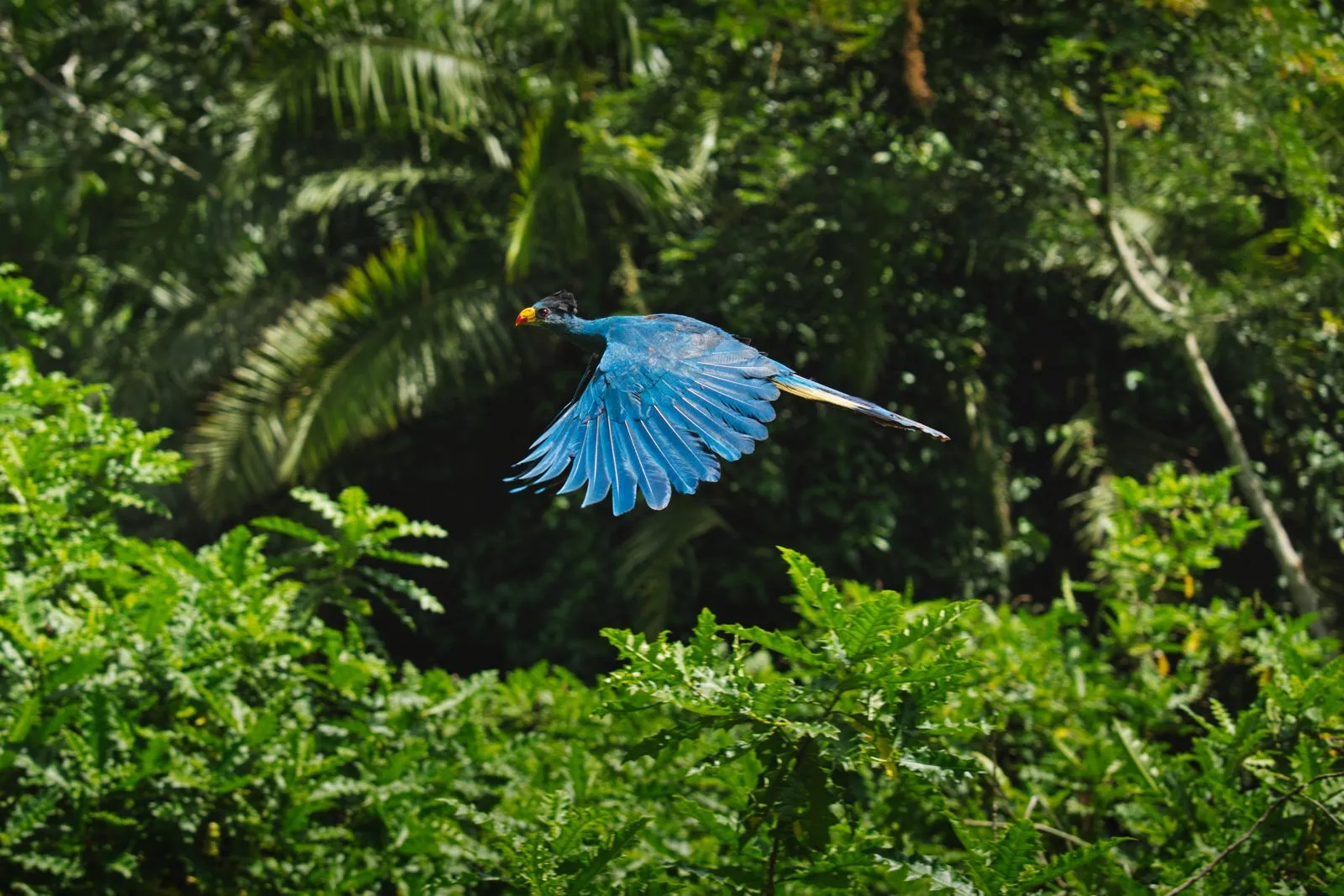
This is a large, beautiful forest-dwelling bird with vibrant blue and green plumage, a black crown, and a bright yellow bill with a red tip. Known for gliding between trees rather than strong flight, it is a common sight in forested habitats like Kibale National Park and Bwindi Impenetrable Forest.

Great Blue Turaco

4. African Fish Eagle

Renowned for its distinctive white head and tail and its piercing, evocative call, this majestic bird of prey is a symbol of strength in African culture. It is often seen around the country’s major water bodies, such as the Kazinga Channel and Lake Victoria, where it swoops to catch fish with its rough talons.

African-Fish-eagle-with-catch.-4

5. Green-breasted Pitta

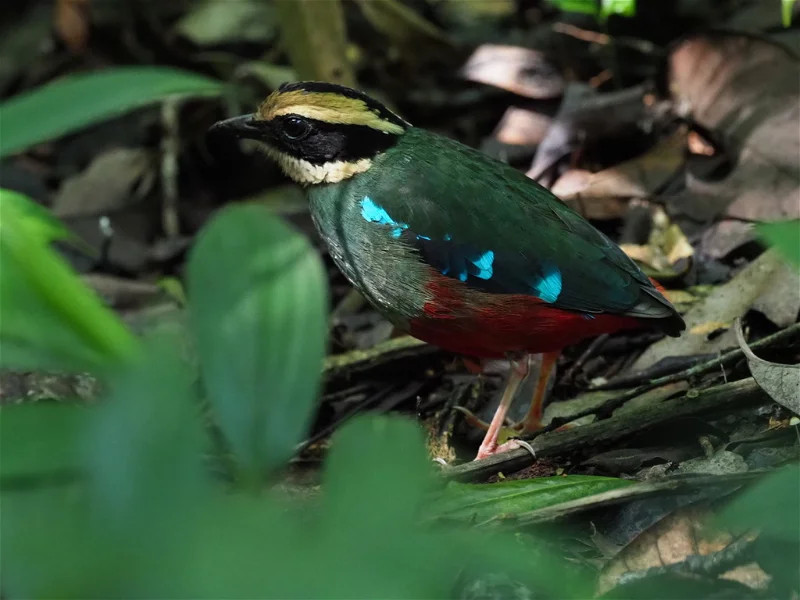
Though difficult to spot due to its secretive nature, this vibrantly colored, ground-dwelling forest bird is a “dream” sighting for many avid birders. Its brilliant shades of red, yellow, blue, and green make it a stunning, albeit challenging, find in the lowland tropical forests of Uganda.

Green-breasted Pitta

What are the best Birding Spots in Uganda?

There are many great destinations for bird watching in Uganda. The best birding spots include national parks, wetlands and forest reserves.

birding in Queen Elizabeth National Park

Mabamba Bay Wetland

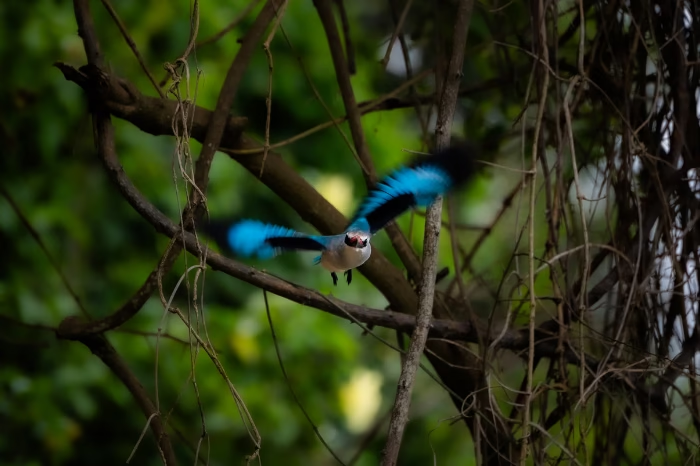
Mabamba Bay Wetland on the shores of Lake Victoria, near Entebbe, is a renowned birding destination, primarily famous for offering a high chance of spotting the elusive Shoebill Stork during guided canoe rides through the marshes. Beyond the iconic Shoebill, the wetland is a rich habitat for a variety of other avian species, including the vibrant Papyrus Gonolek and several species of kingfishers, with readily available guided tours ensuring an enriching experience for birdwatchers.

Bwindi Impenetrable Forest

Bwindi Impenetrable Forest is widely considered Uganda’s premier forest birding destination, hosting over 350 species, including 23 of the 24 Albertine Rift endemics found in the country. The park’s diverse altitudes provide varied habitats for rare and highly sought-after specialties such as the African Green Broadbill, Grauer’s Swamp Warbler, and the elusive Shelley’s Crimsonwing. 

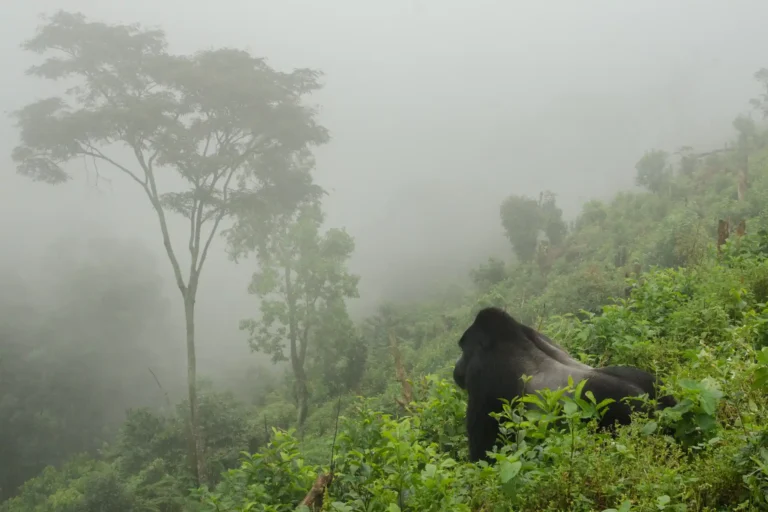
Serious birders often target the Ruhija sector, where the high-altitude Mubwindi Swamp Trail offers the world’s best chance of spotting the rare broadbill, while the lower-altitude Buhoma sector provides sightings of the Black-faced Rufous Warbler and Short-tailed Warbler. Beyond its avian treasures, Bwindi offers a unique multi-species experience, allowing birdwatchers the rare opportunity to encounter endangered mountain gorillas and chimpanzees within the same ancient rainforest ecosystem.

Queen Elizabeth National pARK

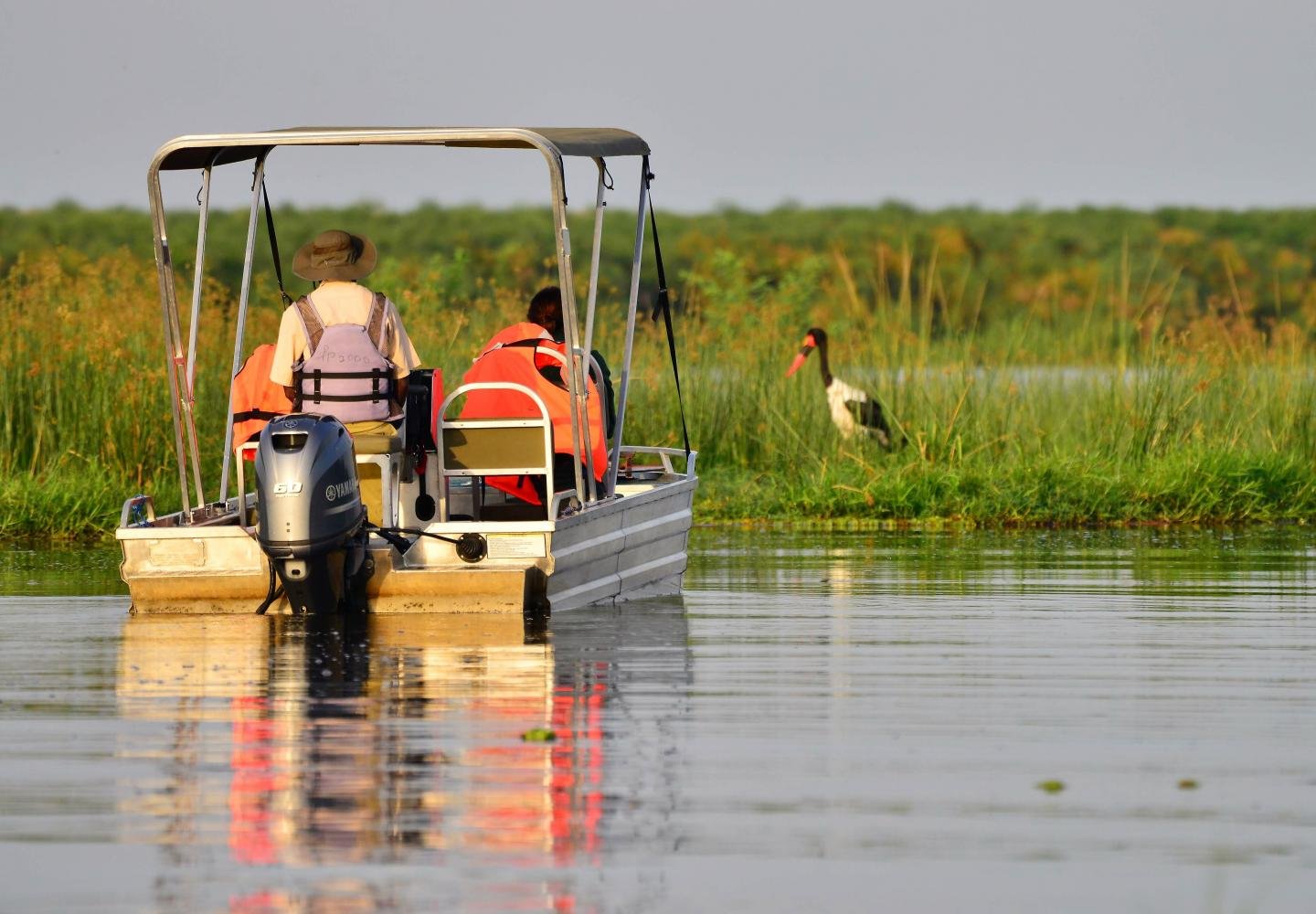
Queen Elizabeth National Park is home to one of the highest bird counts on the African continent, with over 600 recorded species thriving across its mosaic of savannah, forest, and wetland ecosystems. A central highlight for birders is the Kazinga Channel, where boat cruises offer exceptionally close encounters with massive concentrations of waterbirds, including the African Skimmer, Great White Pelican, and Yellow-billed Stork. 

Beyond the waterways, the park’s diverse sectors provide specialized sightings: the Kasenyi Plains are a haven for raptors like the Martial Eagle, while the lush Maramagambo Forest conceals rare forest dwellers such as the Rwenzori Turaco and Black Bee-eater. In the southern Ishasha sector, visitors can scan the riverine wetlands for the prehistoric Shoebill Stork between sightings of the region’s famous tree-climbing lions.

Murchison Falls National Park

Murchison Falls National Park, the largest conservation area in Uganda, offers a spectacular blend of diverse habitats and dramatic landscapes that support over 450 bird species. The park’s namesake, the magnificent Murchison Falls, provides excellent cliff-top birding, but the true highlight is the boat safari up the Nile River to the delta. This journey is one of the most reliable locations to spot the highly sought-after and endangered Shoebill Stork in the wild, often seen wading in the shallow marshes. 

The riverbanks also host massive populations of waterbirds, including the majestic Goliath Heron and Red-throated Bee-eater, which nests in large colonies along the cliffs. On land, game drives across the open savannah reward birders with sightings of regional specialties like the Secretary Bird and the elusive Denham’s Bustard, making it a comprehensive and essential stop on any Ugandan birding itinerary.

Kibale National Park

Kibale National Park is a premier destination that brilliantly combines world-class chimpanzee tracking with exceptional forest birding, boasting a remarkable checklist of over 375 species. The park is most famous among serious birders for being one of the best locations globally to find the elusive and vibrantly coloured Green-breasted Pitta through specialized, guided tracking tours during the breeding season. 

Beyond this flagship species, Kibale’s dense, moist evergreen forest canopy and swampy valley floors provide refuge for a host of rare and localized forest dwellers, including the African Pitta, White-naped Pigeon, and the Red-chested Owlet. A must-visit adjacent location is the Bigodi Wetland Sanctuary, a community-run initiative where guided boardwalk trails offer easy sightings of the Papyrus Gonolek, White-spotted Flufftail, and various primate species, cementing Kibale as a key location for both avifauna enthusiasts and general wildlife lovers.

Lake Mburo National Park

Lake Mburo National Park stands out as Uganda’s most accessible park, uniquely situated on the main road between Kampala and Bwindi, offering excellent savannah birding that is easily integrated into any itinerary. It provides a distinct avian experience compared to the dense forests and rivers of other parks, specializing in species adapted to acacia woodland and wetland habitats. 

Key target species include the rare Red-faced Barbet and the endemic African Finfoot, which can often be spotted during quiet canoe safaris on Lake Mburo itself. Birders also seek out the localized White-winged Warbler, African Scops Owl, and the park offers some of the country’s most reliable sightings of the elusive African Finfoot. Game drives and walking safaris allow for excellent viewing of raptors like the Bateleur and the Rufous-bellied Heron by the water edges, making it a vital stop for adding several localized specials to a life list.

Semuliki National Park

Semuliki National Park is widely regarded as a “true birder’s haven,” uniquely serving as the easternmost extension of the vast Ituri Forest of the Congo Basin. This lowland tropical forest habitat brings more than 440 recorded bird species into Uganda, including over 40 species found nowhere else in East Africa. 

Specialized birding tours often target the Kirumia Trail, a 13km route that plunges into the heart of the forest, offering prime opportunities to spot Central African rarities like the Nkulengu Rail, Lyre-tailed Honeyguide, and the massive Black-wattled Hornbill. Other highlights include the vibrant Congo Serpent Eagle, African Piculet, and Yellow-throated Nicator. In addition to its forest treasures, the park’s riverine areas near the Semuliki River and Lake Albert offer a chance to see the prehistoric Shoebill Stork, while the famous Sempaya Hot Springs provide a dramatic backdrop for observing a variety of hornbills and primates.

Budongo Forest Reserve

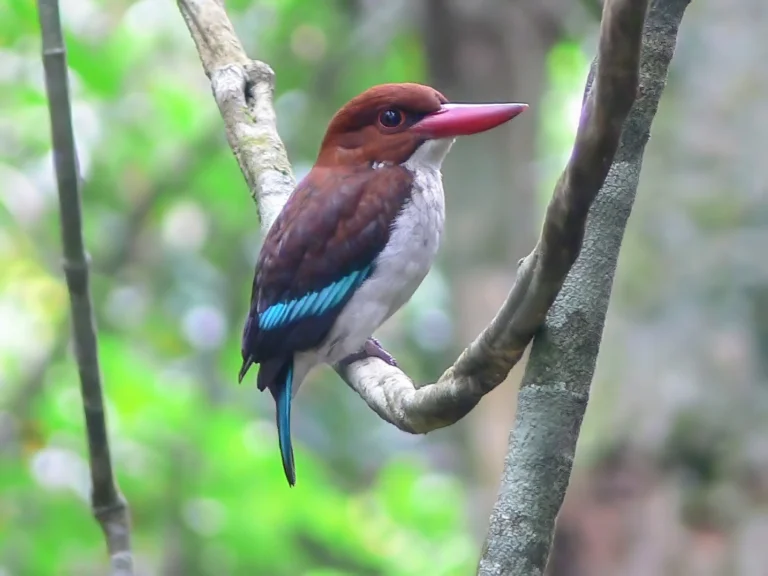
Budongo Forest Reserve, situated on the edge of the Albertine Rift near Murchison Falls, is widely considered one of the most significant forests for birding in Uganda, boasting over 360 recorded species. It is most famous for the Royal Mile, a historic, one-mile stretch of forest road originally maintained as a hunting ground for the King of Bunyoro; today, it is arguably the single most rewarding birding track in Uganda. This sector is renowned for “Royal Mile specials” like the elusive Chocolate-backed Kingfisher, African Dwarf Kingfisher, and Yellow-footed Flycatcher. Additionally, the Kaniyo Pabidi sector is the only place in East Africa to reliably find the Puvel’s Illadopsis. Beyond its rare avifauna, Budongo is a major research site for chimpanzees, offering birders a high chance of encountering habituated primates amidst its ancient, towering mahogany canopies.

What time of year is best for birding In Uganda?

The best time for birding in Uganda generally falls during the dry seasons: June to August and December to February. However, as Uganda is a year-round birding destination, the ideal time depends on whether you prioritize good weather, migratory species, or resident birds in breeding plumage.

Primary Seasons for Birding

Dry Seasons (June-August & December-February): These are the most popular months for birding due to favorable conditions

  • Pros: Trails are drier and more accessible, especially in remote reserves; vegetation is less dense, improving visibility; and this coincides with the arrival of migratory species from Europe and North Africa (from November to April). It’s also the best time to combine birding with general wildlife viewing and primate trekking.
  • Cons: These are peak tourist seasons, so popular locations can be a bit crowded.

Wet Seasons (March-May & September-November): These periods are often preferred by serious birders.

  • Pros: Resident birds are in their vibrant breeding plumage and are more vocal, making them easier to locate by call. There are fewer tourists, and the landscapes are lush and green.
  • Cons: Rains can make roads and forest trails muddy and challenging to navigate, potentially interrupting birding time.