Bwindi Impenetrable Forest National Park

Bwindi Impenetrable National Park

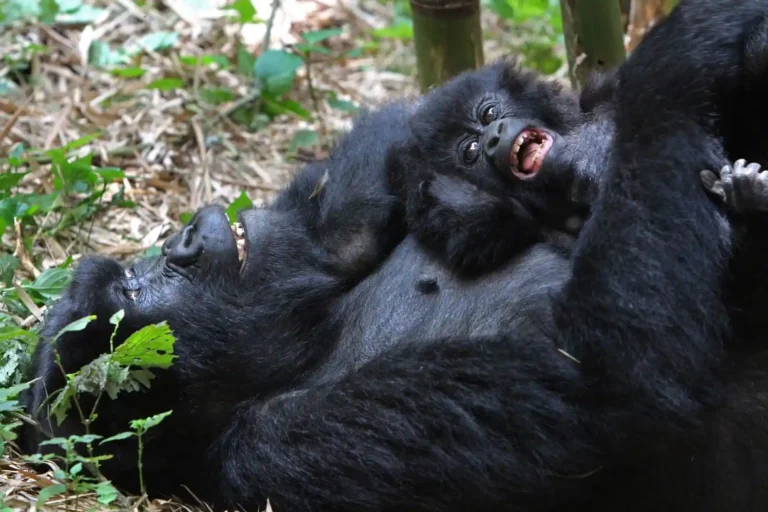
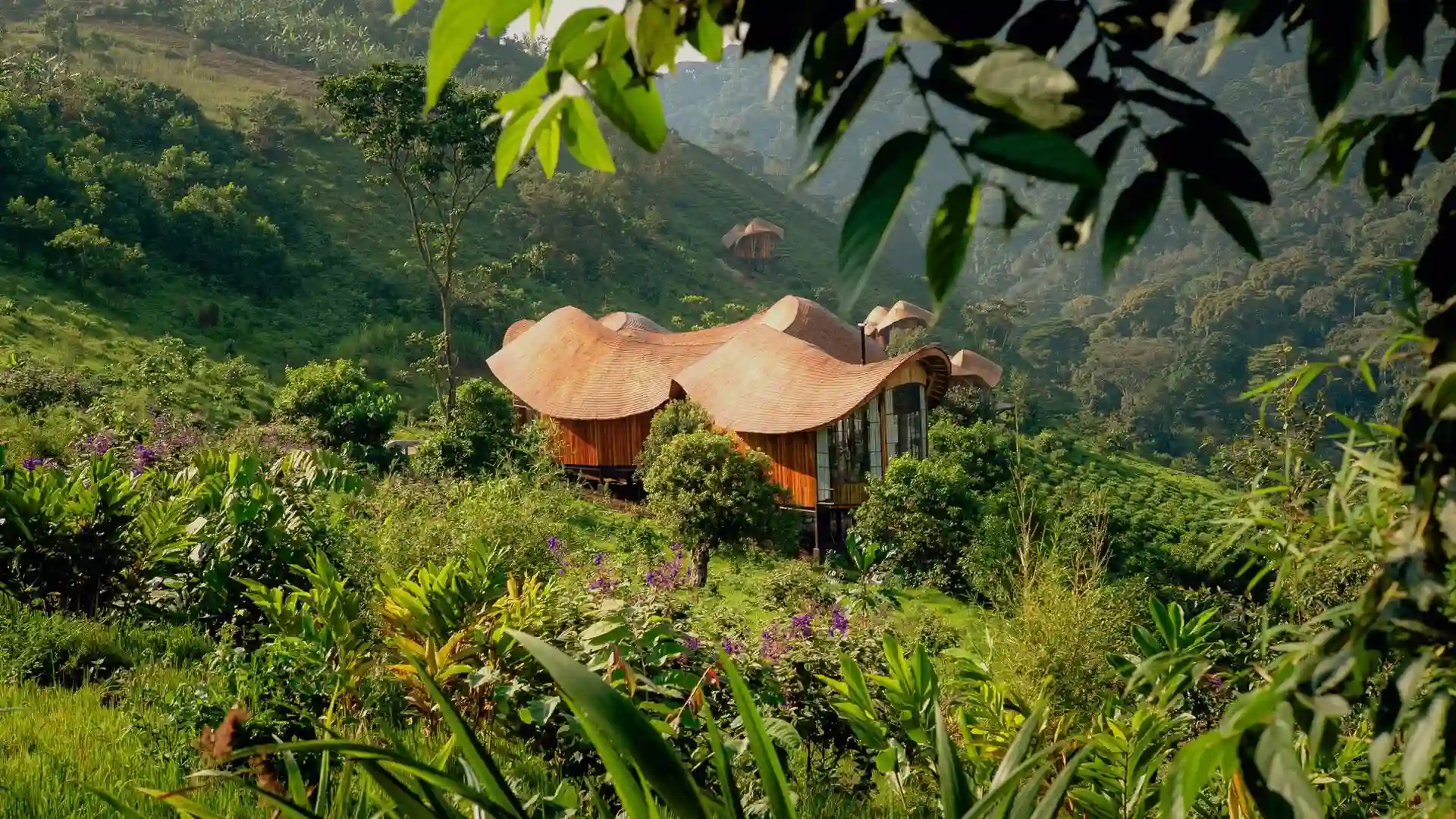
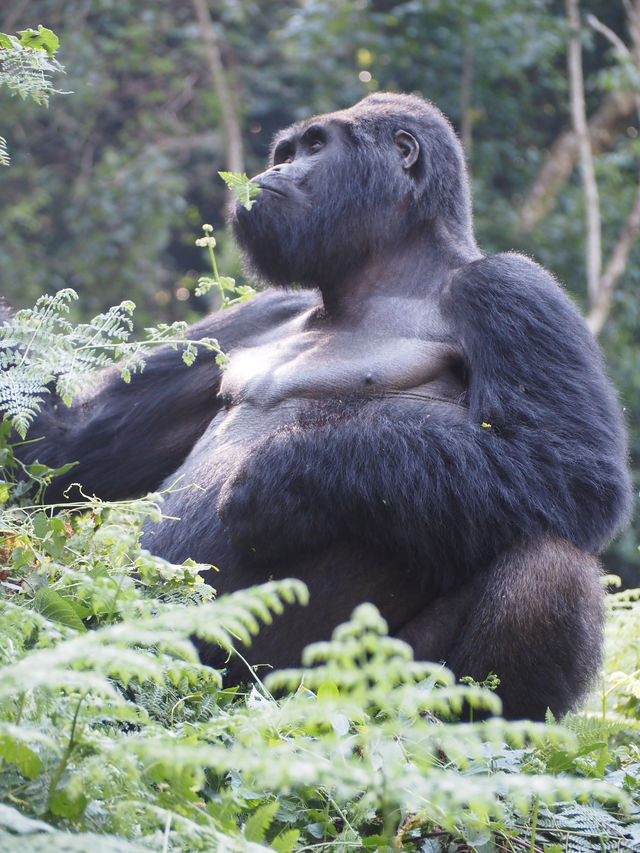
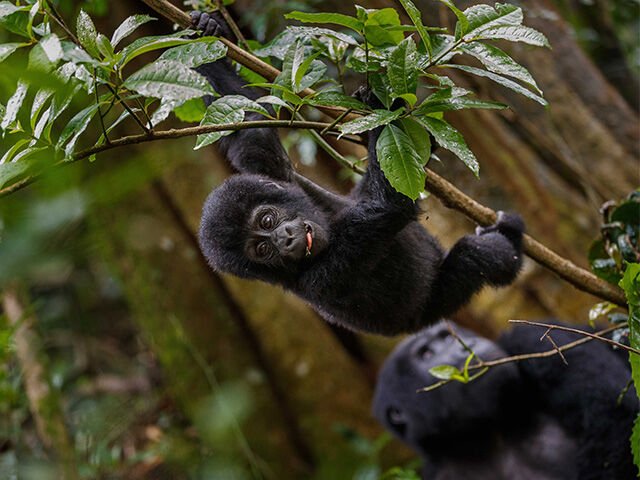
Bwindi Impenetrable Forest National Park, or Bwindi for short, is a magical place. As soon as you drive up, you are greeted by a green, misty mountainous landscape. This ancient rainforest is the main destination for gorilla trekking in Uganda. More than 50 families of mountain gorillas live here. 25 of them habituated for tourist visits. Besides gorilla trekking, Bwindi offers super birdwatching of over 350 bird species including 23 Albertine Rift endemics. But above all, it is the ultimate place for beautiful nature walks.

The name of the national park couldn’t be more fitting. “Bwindi” is derived from the local Runyakitara word (Mubwindi) which means something like “place of darkness” or “impenetrable.” Originally, the name referred to the vast swampy areas in the southeast of the forest, which were once impassable for humans. Today, the name symbolizes the dense canopy and the undergrowth of ferns and lianas that barely allows sunlight to reach the forest floor, giving it its mystical, almost sacred atmosphere.

Besides wildlife, Bwindi is also a cultural center for the Batwa Pygmies. These indigenous people lived in harmony with the forest for centuries before the national park was established in 1991. Today, guided “Batwa Trails” on the edge of the park offer the opportunity to learn from their immense knowledge of medicinal plants and jungle survival, and to understand their history.

5 things you need to know about Bwindi

Before we dive into the details, we have seven facts for you:

You won't find a greener place than Bwindi

Bwindi Impenetrable Forest National Park is green. Deep, thick, endlessly green. As you drive towards the park, the houses and small settlements become fewer. You drive slowly into the jungle. It gets cooler because of all the greenery and mountainous landscape. You see gigantic trees, huge ferns five or six meters high, beautiful flowers. Bwindi is one of those places that is difficult to describe. You only truly know how special it is when you are there. As you drive through area on your way to your accommodation, you gain quite a bit of altitude. You climb through and over the peaks. With all the hairpin bends, your average speed is less than 20km per hour. And that is no punishment. Driving through Bwindi is a magical experience.

Bwindi

Bwindi is the place to see gorillas

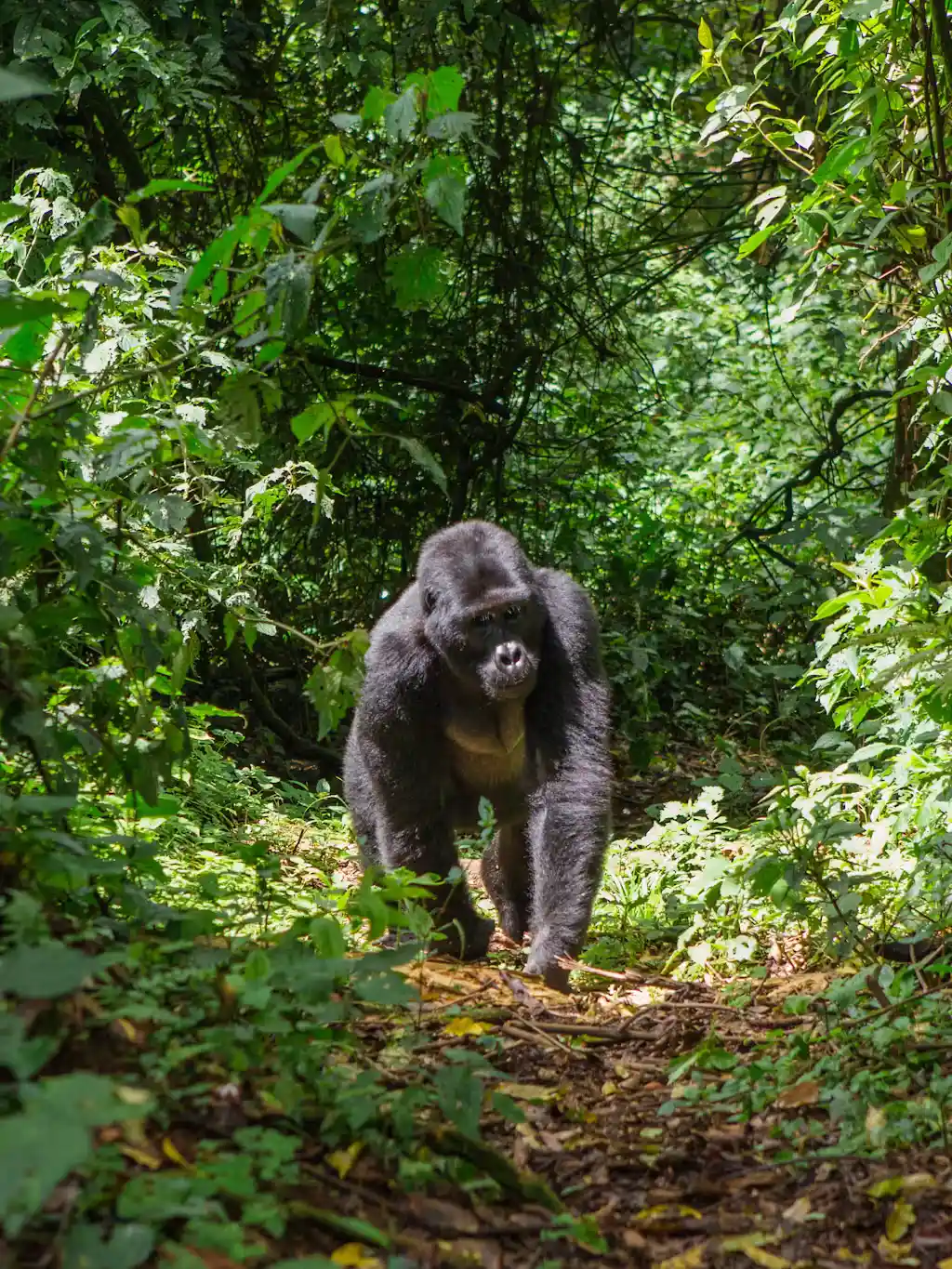
Bwindi Impenetrable Forest National Park is very different from Uganda’s savannah parks. You cannot drive through it. It is a dense rainforest, so exploring it means going on foot. Around 90% of visitors come to Bwindi to see mountain gorillas. To find them, you hike through the jungle with experienced rangers. Beyond the gorillas, Bwindi is also a paradise for birdwatchers.  

It is home to over 350 bird species and 23 Albertine Rift endemics, including rare species such as the African Green Broadbill and Shelley’s Crimsonwing. You will also find many monkeys here, including the black-and-white colobus monkey. Forest elephants also live in Bwindi, but they are extremely shy and very difficult to spot. They are also more unpredictable than the elephants found in savannah parks like Queen Elizabeth National Park.

Bwindi's gorilla families and trekking sectors

Gorilla Trekking sectors in Bwindi

Bwindi has four main gorilla trekking sectors: Buhoma, Ruhija, Rushaga and Nkuringo. Each has its own trekking headquarters, trailheads, gorilla families, and choice of accommodation. While they all belong to the same national park, they are not interchangeable starting points for your trek. This is why choosing your sector is one of the most important decisions when planning a gorilla safari in Bwindi.

Gorilla permits are booked according to a designated entry point, and on the day of your trek, you are allocated a specific gorilla family within that sector. Your lodge should therefore be booked in or close to the same sector as your permit. The distance between sectors is another detail that is easy to underestimate. There is no road through the forest connecting the four trekking hubs, so travelling from one sector to another means driving around the outside of Bwindi Impenetrable Forest. And the transfers can take several hours. This matters particularly on trekking day, when you need to be at the park headquarters early for check-in and registration. 

Some sectors can be combined more easily than others. Rushaga and Nkuringo, for example, are both in the southern part of Bwindi and are relatively close to each other. Buhoma and Ruhija can also be combined. By contrast, combining a northern sector such as Buhoma with a southern sector such as Rushaga is not recommended. The journey between them can take up to six hours by road, yet you need to be at the relevant park headquarters by around 7:30 a.m. for check-in and registration.

Choose Your Getway To Bwindi

Buhoma Sector

Buhoma is on the northern side of Bwindi and is the park’s most established sector. It is a good choice if you are coming from the north, for example from Kibale Forest National Park, Queen Elizabeth National Park, or Lake Mburo National Park. The roads are relatively easy compared with some of the more remote parts of Bwindi, and there is a wide choice of accommodation, including some excellent higher-end lodges. 

Buhoma is also where gorilla trekking began in Bwindi. The first gorilla group, Mubare, was habituated here in 1992. Today, several habituated families live around Buhoma, including Mubare Gorilla Family, Habinyanja Gorilla Family, Katwe Gorilla Family and Rushegura Gorilla Family. But you do not have to spend your whole time looking for gorillas. You can walk the forest trails, go birdwatching and visit the communities around the park. Buhoma is particularly good for travellers who want to combine gorilla trekking with time in the forest and a chance to see something of local life.

Luxury Uganda Safaris

Ruhija Sector

Ruhija is in the eastern part of Bwindi, high on the forested ridge above the hills. It has a quieter feel than Buhoma, with cool air, misty mornings and thick montane forest covering the slopes. If you prefer a less busy part of Bwindi, Ruhija is a good choice. The sector is home to several habituated gorilla families, including Kyaguriro gorilla family, Oruzogo Gorilla Family, and Bitukura Gorilla Family. 

Gorilla trekking here can be just as rewarding as in the other sectors, although the terrain can be steep and the walks can be demanding. Ruhija is also one of Bwindi’s best areas for birdwatching. The forest holds many Albertine Rift endemics. Ruhija also offers one of the better chances of seeing the forest’s elusive elephants, although sightings are rare. Accommodation is the main limitation. There are fewer comfortable lodges to choose from than in Buhoma, especially if you are looking for luxury options. But if you value peace, birding and a more remote forest setting, Ruhija can be an excellent choice.

Uganda

Rushaga Sector

Rushaga is in southern Bwindi is one of the best sectors for gorilla trekking in Bwindi. It has the highest numbers of habituated gorilla families in Bwindi, including Bikingi Gorilla Famili, Bweza Gorilla Family, Busingye Gorilla Family, Kahungye Gorilla Family, Mucunguzi Gorilla Family, Rwigi Gorilla Family, Mishaya Gorilla Family, and Nshongi Gorilla Family. The sector also offers gorilla habituation experiences, where you can spend up to four hours with a gorilla family instead of the usual one hour. 

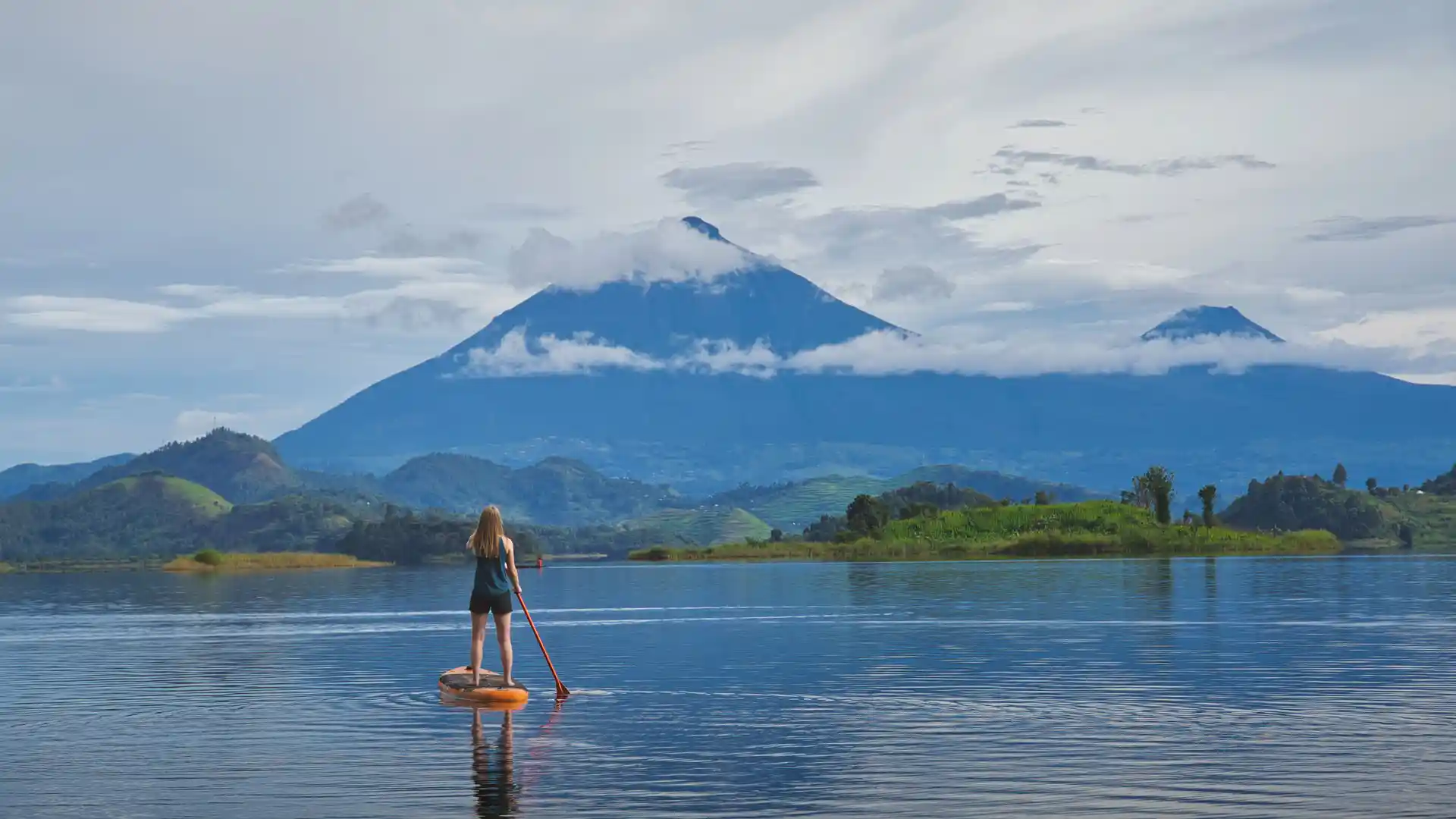
Rushaga also works well for travellers who want to combine gorilla trekking with other activities. Lake Mutanda is nearby, with canoeing, kayaking and stand-up paddleboarding offering a completely different way to enjoy the volcanic landscape. You can also continue to the nearby Mgahinga Gorilla National Park for golden monkey trekking or a hike in the Virunga volcanoes. Another advantage is its location. Rushaga is relatively close to the Cyanika border with Rwanda, making it a practical option for travellers coming from Kigali. The drive from Kigali to Rushaga takes about 5 hours. Accommodation is more limited than in Buhoma. There are fewer luxury lodges, but you will find comfortable mid-range options in Rushaga and nearby Kisoro. If you want a sector with plenty of gorilla families and gorilla permits, the option of habituation, and easy access to Lake Mutanda, Mgahinga and Rwanda, Rushaga is a very good choice.

Lake Mutanda Near Mgahinga Gorilla National Park

Nkuringo Sector

Nkuringo is in the southern part of Bwindi, close to Rushaga. It is considered the most scenic area, with steep hills and wide views towards the Virunga volcanoes. The scenery is beautiful, but the terrain is demanding, so Nkuringo is best suited to travellers who enjoy walking and are comfortable with steep climbs. Several habituated gorilla families are found around Nkuringo, including Nkuringo Gorilla Family, Bushaho Gorilla Family, Christmas Gorilla Family and Posho Gorilla Family. 

Gorilla trekking here can be challenging, but the combination of mountain scenery and dense forest makes it a special experience. Nkuringo is also a good place to experience the culture of the Batwa people, the original inhabitants of the forest. The Buniga Forest Walk gives you an opportunity to learn about their traditional knowledge, including medicinal plants and other forest skills. 

If you enjoy hiking, there is also the trail that takes from Nkuringo to Buhoma. The walk is around 10 kilometres and crosses forest, streams and rivers. It is a beautiful but demanding day on foot. Nkuringo is also not very far from Lake Mutanda and Mgahinga Gorilla National Park. Accommodation is more limited, although there are a few excellent high-end options, including Clouds Mountain Gorilla Lodge and Nkuringo Gorilla Lodge. Nkuringo receives fewer visitors than Buhoma and is a good choice if you want dramatic scenery, challenging walks and a quieter side of Bwindi.

Nkuringo

Actively Enjoy all The beauty of Bwindi

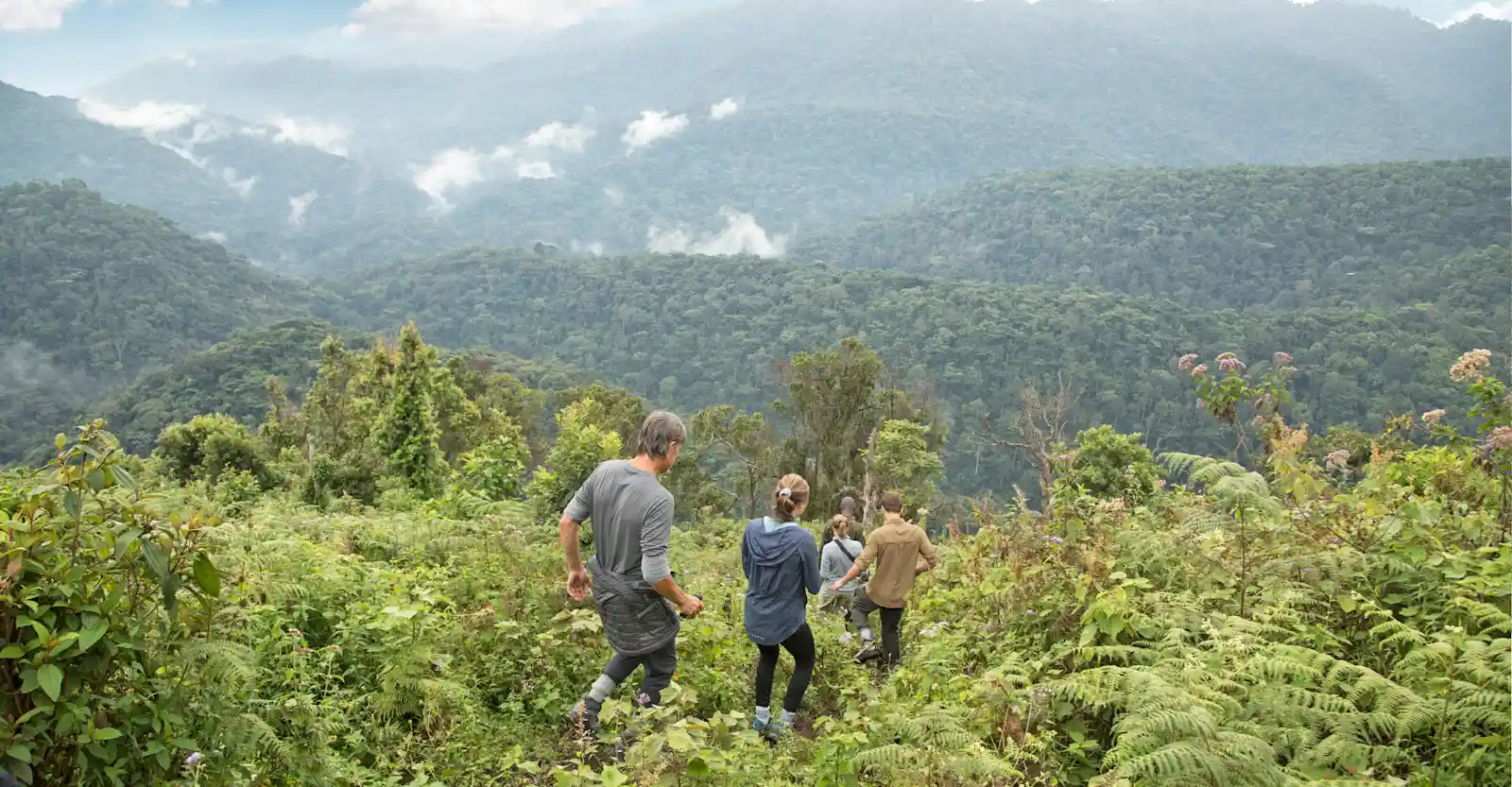
Bwindi is the perfect place to explore nature on foot. After a few days in Uganda’s savanna parks, the forest feels refreshing. The air is cooler. The pace is slower. Walking here is pure enjoyment. There are several ways to experience Bwindi actively.

Gorilla trekking in Bwindi

Gorilla trekking is the number one activity in Bwindi Impenetrable Forest National Park.  You can do the trek in two ways: the standard gorilla trek or the ‘Gorilla Habituation Experience’. With the standard trek, you visit a family of mountain gorillas that are already fully habituated or used to humans. If you choose the Gorilla Habituation Experience, the gorillas are still in the process of getting used to the presence of humans. It is a more unique, special experience. You do the trek with a smaller group (maximum 4 visitors). You do in company of researchers. You are on the trail longer. It is usually full-day activity. The standard trek is often half a day. You pay more for the Gorilla Habituation Experience: $1,500, instead of $800.

Uganda Safaris

Nature walks in Bwindi

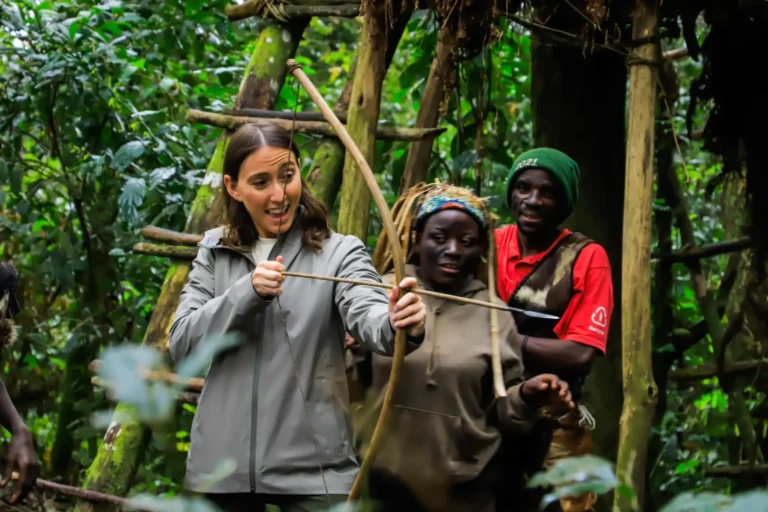
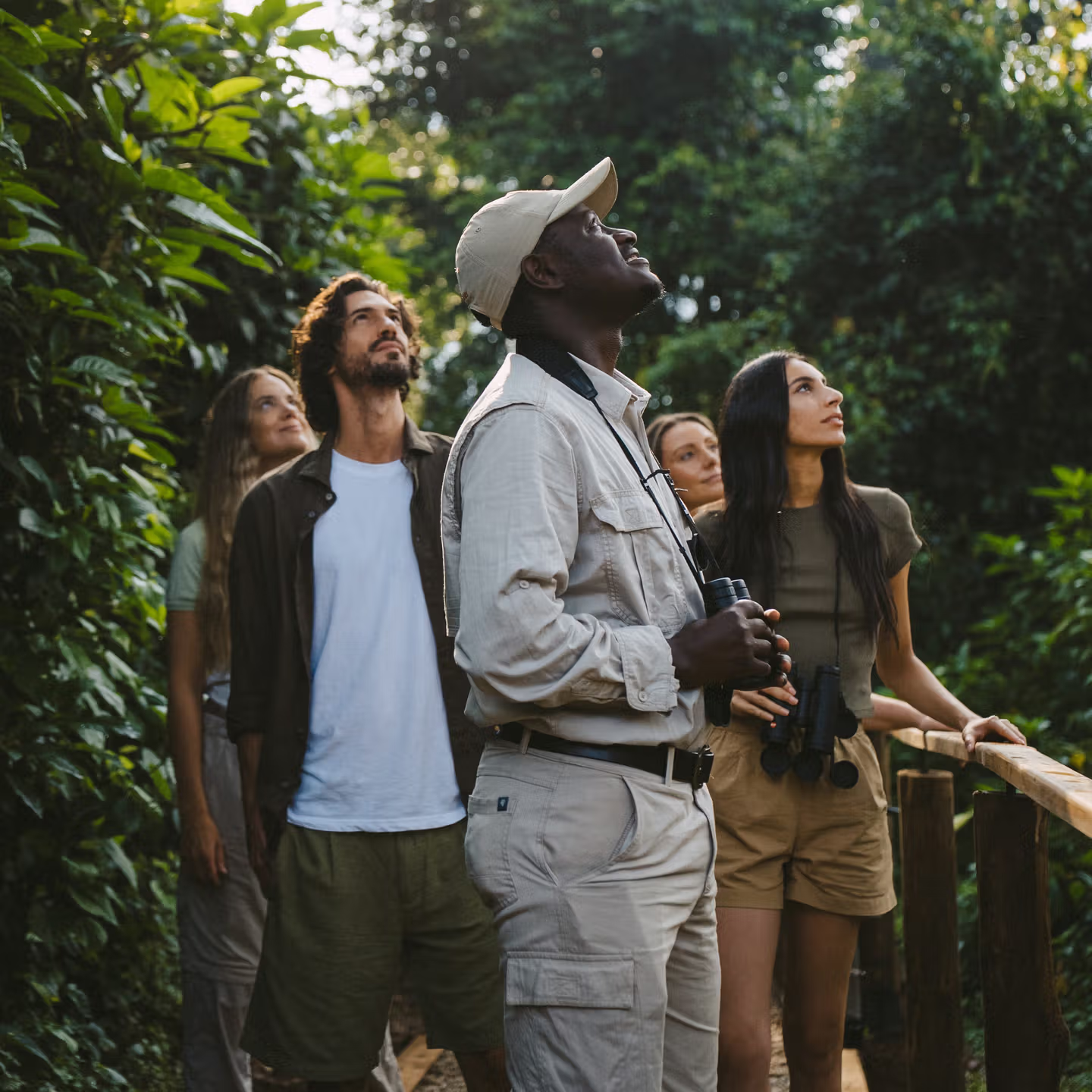
A guided nature walk is a must when visiting Bwindi. You explore the forest together with a ranger. They explain the ecosystem and the plants around you. You learn about medicinal herbs. You discover butterflies, insects, and other small forest life. During the walk, you also learn about the Batwa people. They were the original inhabitants of Bwindi. For thousands of years, they lived as hunter-gatherers in the forest. Today, the Batwa no longer live inside the park. They have been relocated to surrounding areas. This changed their way of life deeply. You can visit Batwa communities near the park. It offers insight into their traditions and culture. It is a respectful way to understand Bwindi’s human history.

Uganda Safari Cost

Hike from Buhoma to Nkuringo Sector

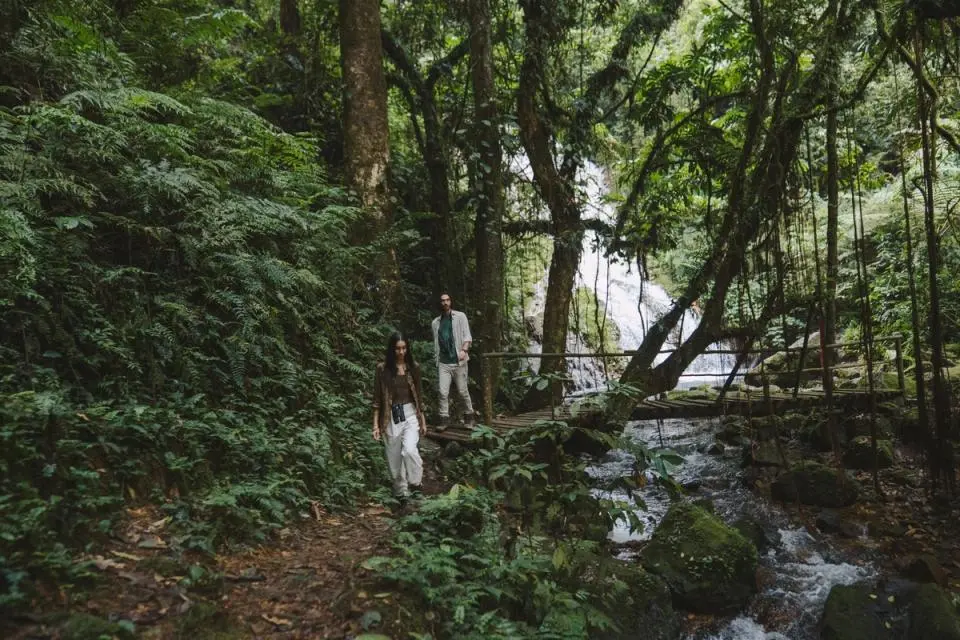
For travelers who want something special, there is a longer hike through the forest. This trail connects Buhoma and Nkuringo. You start at the ranger post in Buhoma. From there, you walk deep into the park with rangers and porters. You cross rivers. You pass waterfalls. You hike through untouched forest. At the end of the trail, you arrive in Nkuringo. A vehicle picks you up there. This hike is done by very few visitors. It is quiet. It is immersive.  It is perfect if you want to spend more time in Bwindi and truly feel the forest.

Nature Walk In BWIND

Cooking class in Buhoma

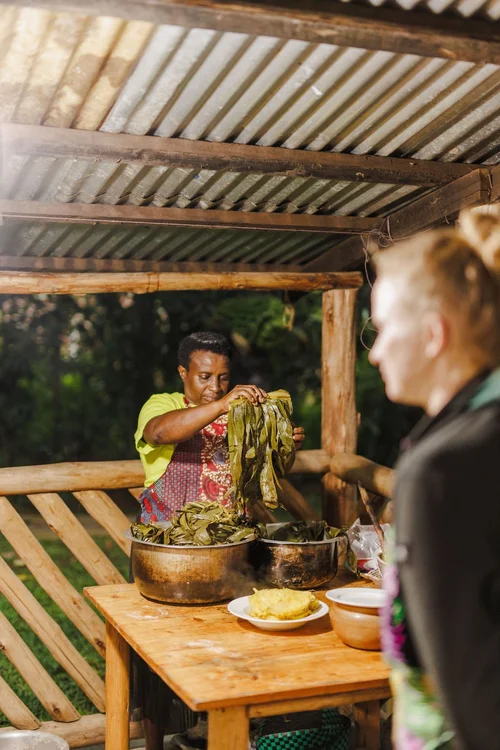
If you want to get closer to local life in Buhoma, a cooking class is a lovely way to spend an afternoon. You start by collecting fresh vegetables and herbs from the Ride 4 a Woman garden before heading into the kitchen with the local chef. Together, you prepare traditional dishes such as matoke, groundnut sauce, roasted goat and seasonal vegetables, including skumawiki, a local leafy green. 

You can also get to try Imonda, a local drink made from sorghum, millet, honey and water. Later in the evening, you sit around the campfire and enjoy the meal you have prepared with the women and families involved in the cooking experience. It is a simple experience, but a very personal one. You learn about local food, spend time with people from the community and share a meal together. The proceeds also help support the Ride 4 a Woman initiative.

Where To Stay in Kampala?

Room at Gorilla Forest Lodge
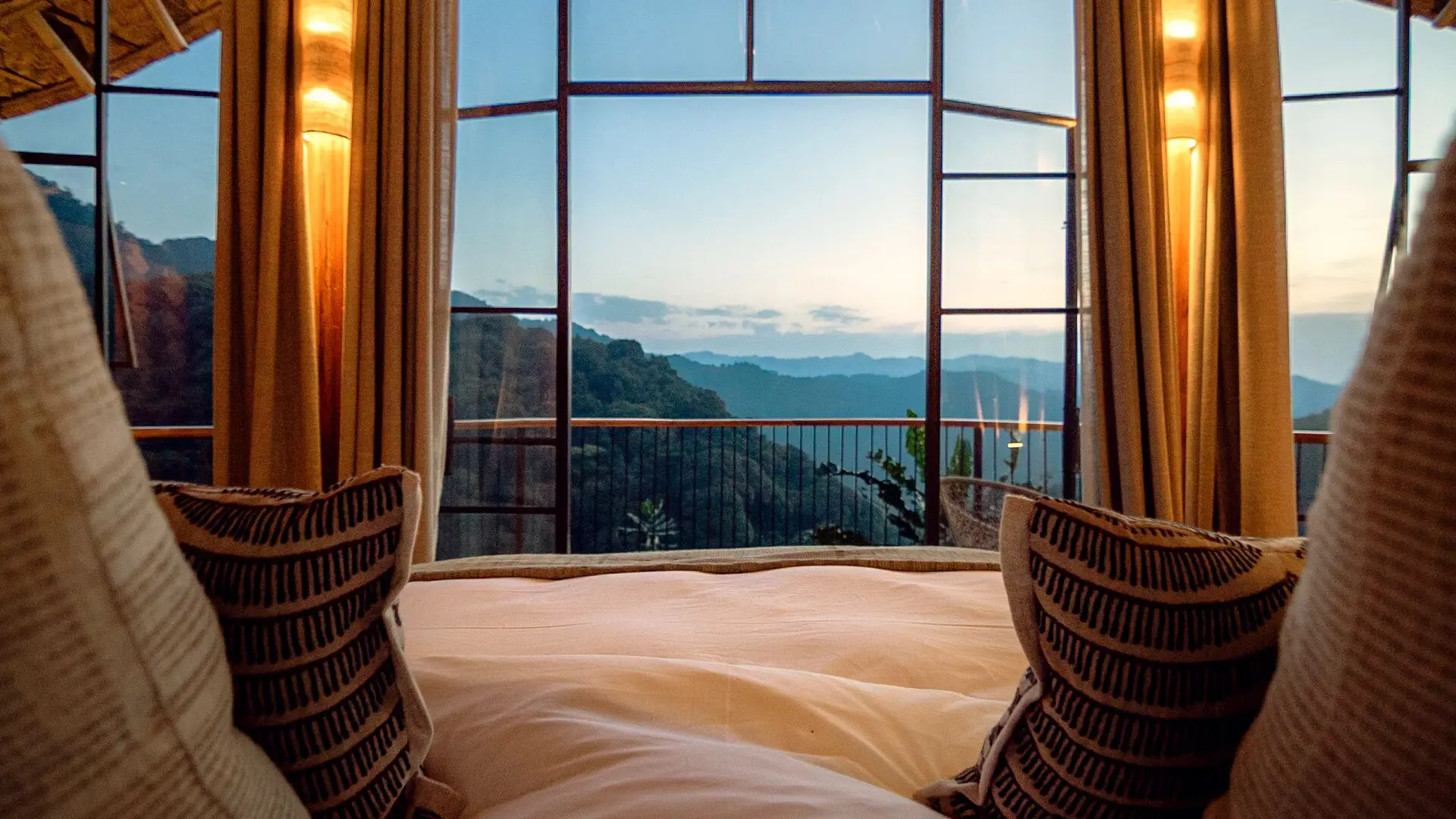
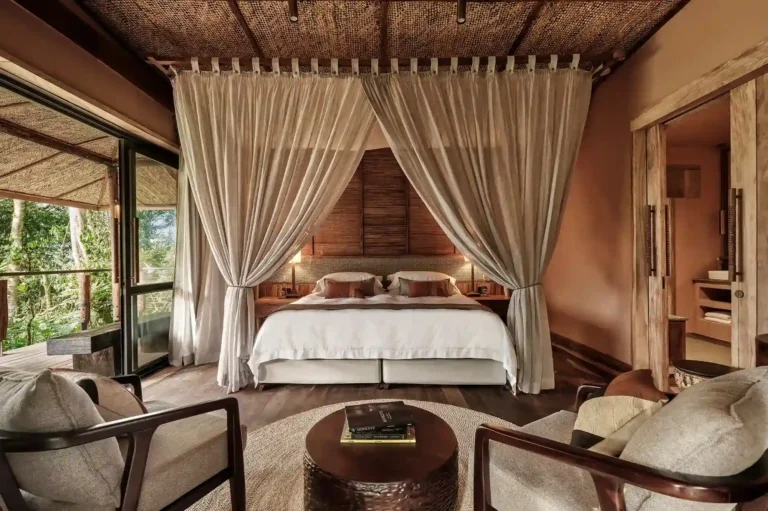
Gorilla Forest Lodge, an A&K Sanctuary, Bwindi, Buhoma

Sanctuary Gorilla Forest Lodge is one of the only few places where you can stay inside the appropriately named Bwindi Impenetrable Forest...
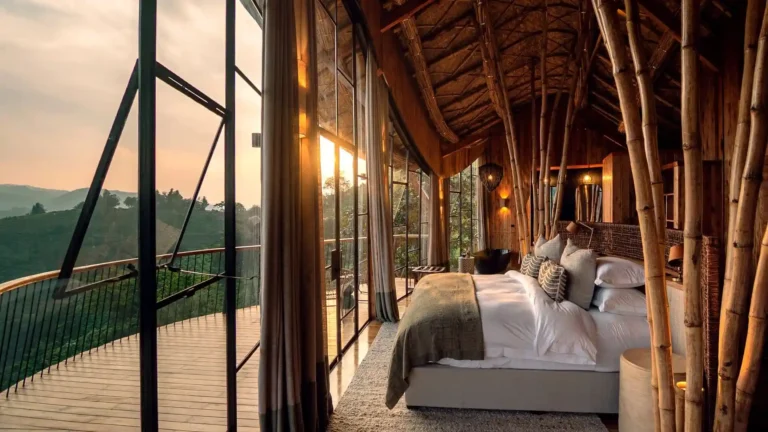

Asilia-Africa_Erebero-Hills_Room-Views
Erebero Hills Lodge, Bwindi Buhoma Sector

Erebero Hills offers a secluded haven beside Bwindi Impenetrable Forest, home to more than half the world’s mountain gorillas and exceptional...
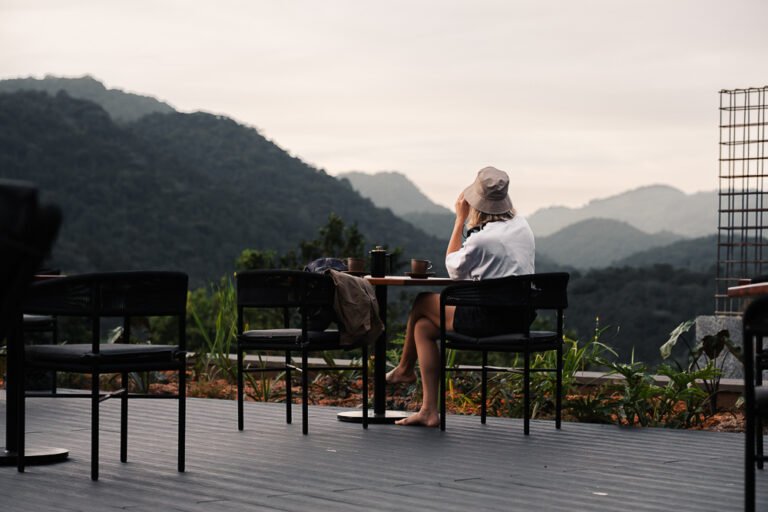

Silverback_breakfast_viewing_Deck
Silverback Lodge | Bwindi Impenetrable Forest

To see the mountain gorillas in Bwindi Impenetrable Forest National Park, there are a few exclusive/ high-end luxury lodges that offer access to the park But what makes Silverback Lodge different is...
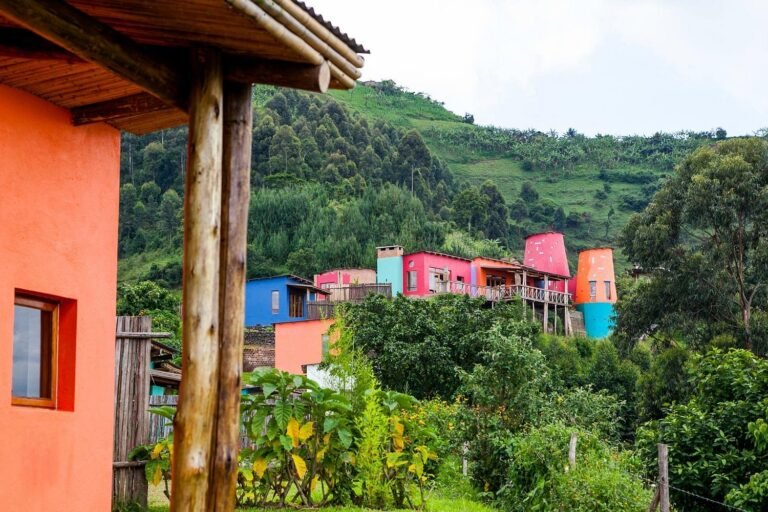

Chameleon Hill Lodge is one of the most colourful and eye-catching lodges in Uganda. It sits high on a hill overlooking the calm and beautiful Lake Mutanda.
Chameleon Hill Lodge I Bwindi | Rushaga | Nkuringo | Mgahinga

Chameleon Hill Lodge is one of the most colourful and eye-catching lodges in Uganda It sits high on a hill overlooking the calm and beautiful Lake Mutanda The lodge is perfectly placed between Bwindi...
Faqs about bWINDI

Bwindi has a tropical rainforest climate. Daytime temperatures usually range between 20–28°C, while at night they drop to around 10–18°C, depending on altitude. The park receives between 1,400 and 2,000 mm of rainfall per year. The wettest periods are March to May and September to November. The dry seasons run from June to August and December to February. During these months, the paths are generally less slippery and there are fewer mosquitoes. Birdwatching is especially rewarding in the wetter months, as many migratory species are present and forest activity is at its highest.

Bwindi can be visited all year round. Gorilla sightings are possible throughout the year, and encounters are almost always successful. There are two main seasons: the dry season and the rainy season.

The dry season runs from June to August and December to February. These months offer the easiest trekking conditions. The trails are less slippery, and walking is generally more comfortable. Rain is also less likely, which many travelers prefer.

The rainy season falls between March to May and September to November. During this time, the forest is greener and more dramatic. It is also quieter, with fewer visitors on the trails. This gives a more private and immersive experience in nature. Also, during the months of April, Maya and November, gorilla permits are discounted from USD 800 to USD 600.

Gorilla trekking remains a unique experience in every season. Gorillas are not affected by rain, so sightings are equally rewarding year-round. Sometimes, heavy rain can make the trek more challenging. In such cases, guides may adjust the pace or wait for conditions to improve before continuing. They always make decisions with your safety and experience in mind.

For foreign non-residents, a gorilla trekking permit in Bwindi costs USD 800 per person. During the low season months of April, May, and November, it is USD 600. Although this may seem expensive, it is still significantly more affordable compared to Rwanda, where the same experience costs USD 1,500. Gorilla trekking in Uganda is offered in both Bwindi Impenetrable National Park and Mgahinga Gorilla National Park. The experience is similar in both parks. Once you find a gorilla family, you are allowed to spend one hour with them in their natural habitat. Each group is strictly limited to eight visitors.

A special option available in Bwindi is the gorilla habituation experience. Here, semi-habituated gorilla families are visited by a maximum of four people per day. You can spend up to four hours with them. This is a more exclusive and immersive experience, but the gorillas are less accustomed to human presence and tend to keep more distance. The permit costs USD 1,500 per person, and it will increase to USD 1,800 in 2027.

You can book a very short gorilla safari once you are in Uganda, but there are important limitations to consider. The first is gorilla permit availability. Permits are limited and often sell out in advance, especially during the peak season from June to September. If no permit is available for your travel dates, a gorilla trek is simply not possible.

The second factor is distance. Kampala and Entebbe are at least a 9 to 11-hour drive from Bwindi Impenetrable National Park. Because of this, a realistic gorilla trekking itinerary from Kampala or Entebbe requires a minimum of 3 days and 2 nights.

From Kigali, the journey is shorter, usually around 4 to 6 hours depending on the border crossing and the Bwindi sector you are visiting. Bwindi is divided into four trekking sectors, and each one operates as a separate starting point for gorilla trekking. The closest sectors to Kigali are Rushaga and Nkuringo, accessed via the Cyanika border. Because of this proximity, a 2-day gorilla trekking itinerary from Kigali is possible.

A true same-day gorilla trek is generally not recommended from either Kampala or Kigali due to travel time and logistics. However, it can be done if you travel independently to Kisoro, the nearest town to Bwindi and Mgahinga. From there, you can access the Rushaga or Nkuringo sectors for a shorter transfer on the trekking day. Another option is gorilla trekking in Mgahinga National Park, which is also close to Kisoro.

In summary, while very short gorilla trekking options exist in specific cases, a 2–3-day itinerary remains the most practical and reliable way to experience Bwindi comfortably.

This varies from day to day and depends on the gorilla family you are tracking. On average, the search takes between 1 and four hours, but sometimes it can be quicker, and on other days it may take longer. It all depends on where the gorillas are moving in the rainforest at that time.

Once the gorilla family is found, you are allowed to spend a maximum of one hour with them. After the visit, you walk back to the starting point together with the guides.

Because you never know in advance how long the trek will take, every experience feels like a real adventure. And for most travelers, the moment you finally stand face to face with the gorillas makes every step completely worthwhile.

A gorilla trek in Bwindi is manageable for most travelers with a reasonable level of fitness. However, it is important to be prepared for hilly terrain, muddy paths, and sections of dense jungle. The duration of the trek varies from day to day. Gorillas move freely through the forest, so their exact location is never known in advance. Sometimes you find them within an hour, while on other days the search can take longer.

During the trek, the rangers adjust the pace to the group, and there are regular breaks to rest and catch your breath. You can also hire a local porter who assists on difficult sections and carries your bag if needed.

A high level of fitness is not required. A normal basic fitness level and the ability to walk for a few hours is usually enough. In most cases, the effort is quickly forgotten once you come face to face with a mountain gorilla.

It is sometimes possible to request a shorter or easier trek in advance, for example for older travelers or those with health considerations. This should be mentioned at the time of booking.

The chances of seeing mountain gorillas in Bwindi are almost 100%. This is because Bwindi Impenetrable National Park is home to 25 habituated gorilla families. And the gorilla families are tracked daily by rangers. They usually know exactly in which area the animals are located and adjust the trek accordingly. Still, it remains an encounter with wild animals in their natural habitat. That is precisely what makes the experience so special. You are a guest in the gorillas’ habitat, not the other way around. For most travelers, the trek ultimately ends with an encounter that often feels even more impressive than expected.  

You get one hour with the gorillas once your group reaches them. This time is strictly regulated to protect the animals and ensure minimal disturbance. Gorilla trekking in Bwindi starts in the morning. 

The search can take anywhere from 1 hour to 7 hours, depending on where the gorilla family is located that day. When you get close to the gorillas, you regroup with your guide and leave larger bags and non-essential items with the trackers, who remain behind. You then move in carefully for the viewing. 

During the one hour, the guide helps position the group for the best possible experience. This includes finding good viewing spots, ensuring safe distances, and allowing you to observe different members of the family, including the silverback. It is a short time, but it is intense and carefully managed. Most visitors find that the hour passes much faster than expected.

The best sector to stay in depends on what you value most in your trip. There is no single “best” option, because each sector offers a different experience. The right choice comes down to a few key factors: your fitness level, your preferred style of accommodation, how much comfort you want, and how exclusive you would like the experience to feel.

If you prefer easy access, relatively easy treks, and a wide range of comfortable or luxury lodges, Buhoma is often the strongest choice. It is well developed and smooth to navigate.

If you are looking for flexibility and a higher chance of permit availability, Rushaga is usually the most practical option, especially when coming from Kigali or Kisoro.

If you want a more remote and physically engaging experience, Nkuringo offers challenging treks and dramatic scenery, with fewer visitors and a more secluded atmosphere.

For a quieter, nature-focused stay with cooler temperatures and strong birdlife, Ruhija is ideal, especially for travelers who prefer a calmer setting. In short, the best sector is the one that matches your travel style, not just the one closest on the map.

You can reach Bwindi either by road or by domestic flight, depending on your itinerary, budget, and comfort level. If you are travelling from Kampala or Entebbe, the drive to Bwindi takes at least 10 hours without stops. In reality, with breaks and road conditions, it often takes longer. Because of this distance, many travellers prefer to break the journey into several days as part of a wider Uganda safari.

A faster and more comfortable option is to take a domestic flight. There are scheduled flights from Entebbe to nearby airstrips such as Kihihi (for Buhoma and Ruhija) and Kisoro (for Rushaga and Nkuringo). From there, it is a short road transfer to the park.

Bwindi is also much closer to Kigali in Rwanda, which is why many itineraries start or end there. The drive from Kigali to the southern sectors of Bwindi usually takes around 4 to 6 hours, depending on the border crossing and sector.

If you are already on safari in Uganda, Bwindi can also be reached by road from other parks. From Queen Elizabeth National Park, the drive takes roughly 2 to 6 hours, depending on the starting point and the Bwindi sector. From Lake Mburo National Park, it takes about 5 to 7 hours.

For gorilla trekking in Bwindi, good footwear is essential. You need strong, waterproof hiking boots or shoes with solid ankle support and good grip. The trails can be muddy, steep, and slippery, so proper traction makes a big difference. It is worth getting advice from a specialist outdoor store before your trip.

During the trek, you will often need to use your hands for balance. You may hold branches, roots, or rocks while moving up or down uneven sections. For this reason, sturdy gardening gloves are highly recommended. They protect your hands from thorns, nettles, and sharp surfaces. You can remove them once you are with the gorillas.

Rain is always possible in the rainforest. Showers can be short, but during certain seasons it can rain for hours. A lightweight, breathable rain jacket is therefore essential. It is also useful to bring a rain cover for your backpack.

Some travellers prefer a poncho instead of separate rain gear. It is quick to put on and easy to carry. Some ponchos are designed with space for a backpack, which is very practical.

The only drawback is that ponchos can sometimes catch on thick vegetation in dense forest sections. Whether you will pass through such areas cannot be predicted in advance, as gorillas move freely through the jungle.

Other essentials include long-sleeved shirts and trousers.

There is much more to do around Bwindi than gorilla trekking alone. The surrounding region is rich in lakes, culture, wildlife, and scenic landscapes, offering great options before or after your trek. You can enjoy canoeing or boat trips on Lake Mutanda and Lake Bunyonyi, two of the most beautiful lakes in Africa. Both are calm, scenic, and perfect for a relaxing day on the water.

Cultural experiences are also a highlight. You can visit local communities and take part in Batwa cultural experiences, cooking activities, and village walks. These give insight into traditional life and forest history in the region.

For travelers interested in conservation, there are visits to organizations such as Gorilla Doctors and Conservation Through Public Health, where you can learn more about gorilla protection and wildlife conservation efforts in the area.

The region is also ideal for nature activities. You can go on guided forest walks, birdwatching tours, and short hikes through the hills surrounding Bwindi.

For more active travelers, there is the option of climbing nearby volcanoes or combining your visit with golden monkey tracking in Mgahinga Gorilla National Park, which lies not far from Bwindi and offers a completely different primate experience.

Together, these activities make Bwindi not just a gorilla destination, but a full nature and culture experience.

Yes, combining Bwindi Impenetrable National Park with Queen Elizabeth National Park is very popular and highly recommended. It gives you the chance to experience gorilla trekking in the rainforest and classic savannah wildlife in one trip.

Queen Elizabeth National Park is famous for its game drives, tree-climbing lions in the Ishasha sector, and boat cruises on the Kazinga Channel. Bwindi, on the other hand, offers the unforgettable experience of mountain gorilla trekking. The contrast between the two parks makes the journey especially rich and rewarding.

A combined itinerary usually takes around 4 to 6 days, depending on your pace and travel style. The driving distance between Queen Elizabeth and Bwindi is roughly 3 to 6 hours, depending on the specific sectors you are connecting.

Tours Featuring Bwindi

All can be customized to your budget, travel pace, and interests.

Expert Uganda travel Guides

Meet The Ancient Batwa Tribe
The Batwa Experience in Uganda: meeting the ancient Batwa tribe with a complex history

If you are travelling through southwestern Uganda for gorilla trekking, you will sooner or later hear about the Batwa people Around Bwindi Impenetrable National Park and Mgahinga Gorilla National...


Uganda gorilla Trekking tours (1).webp
Chimpanzee And Gorilla Trekking vs Habituation: What’s The Difference?

Chimpanzee & gorilla trekking vs habituation: what’s the difference Seeing mountain gorillas or chimpanzees in the wild is one of the main reasons for many people to come to Uganda This...


Share

Bwindi Impenetrable Forest