The well-known dishes, but with a Ugandan twist
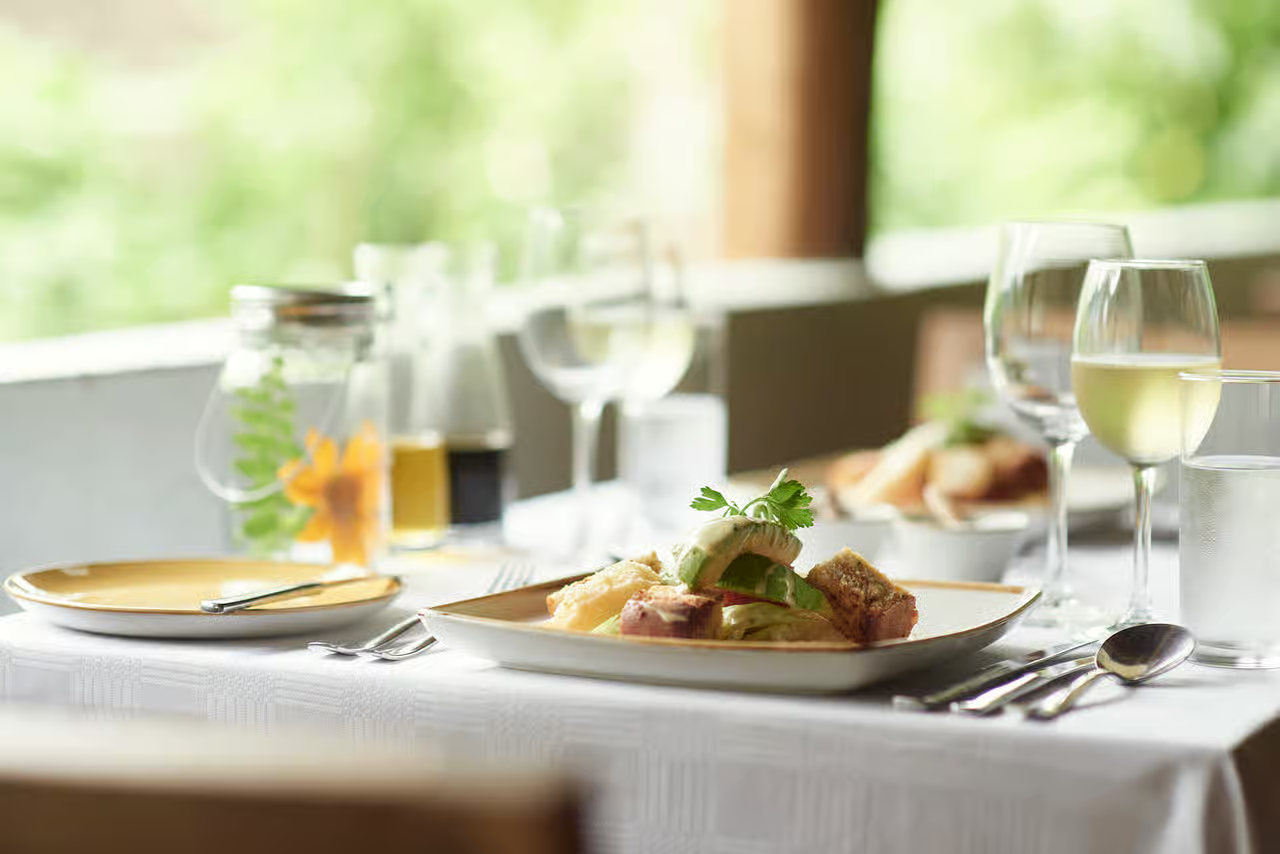
As you tour Uganda, you can get both: Western and local Ugandan food. The lodges and hotels where you stay often offer a menu that is familiar to Westerners. These are the dishes you know, but with a Ugandan twist. Instead of spinach, for example, you might find dodo.
Instead of mashed potatoes, you get matoke puree. Also, you will find something typically Ugandan on most menus. In short: there is plenty of choice for your during your Uganda safari.
When you travel with Choose Uganda Safaris, we basically take care of all your meals, including breakfast, lunch, and dinner.
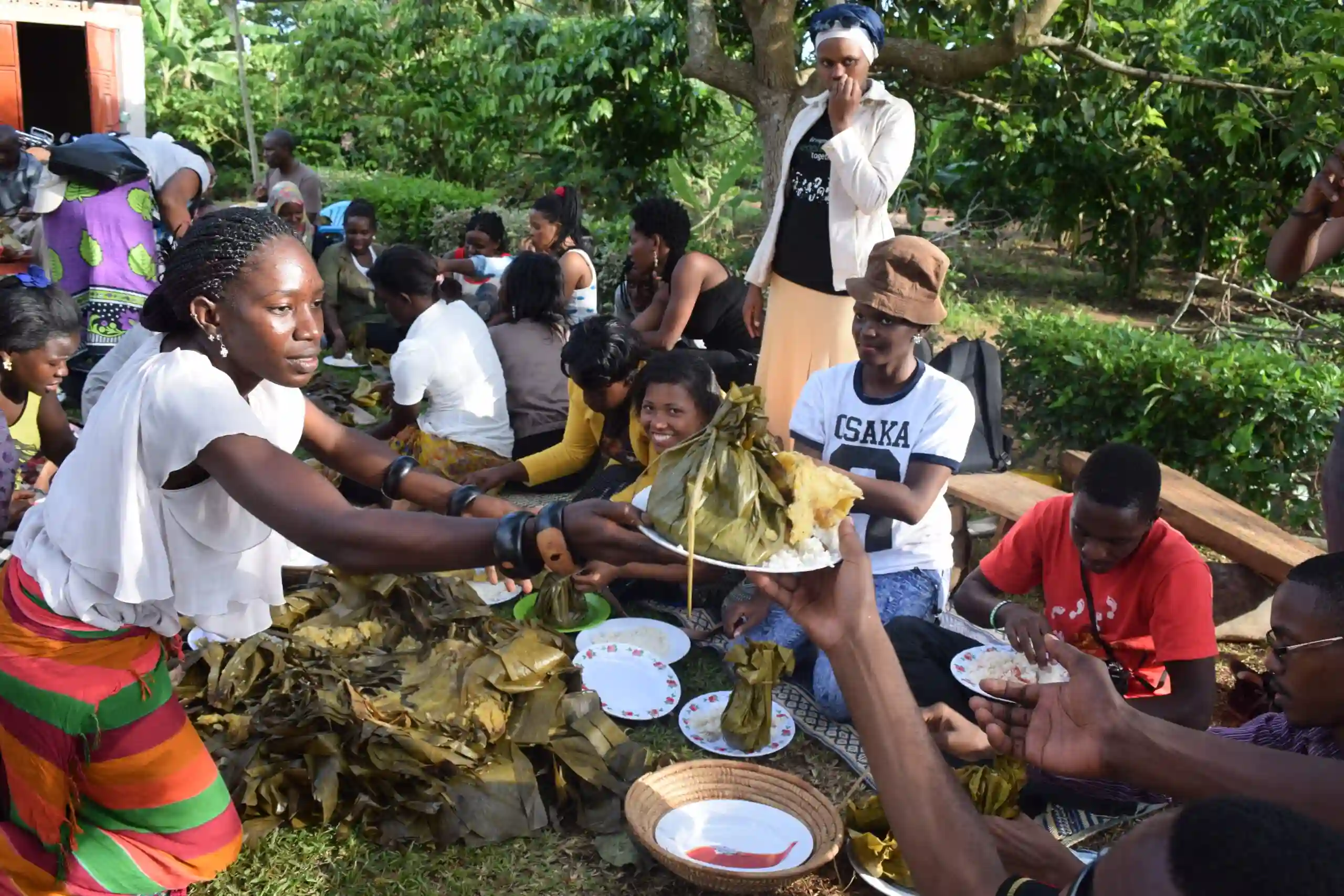
We also make sure that you have a chance to experience some delicious local Ugandan food one or more times along the way (whatever you like). A local dinner. A local lunch.
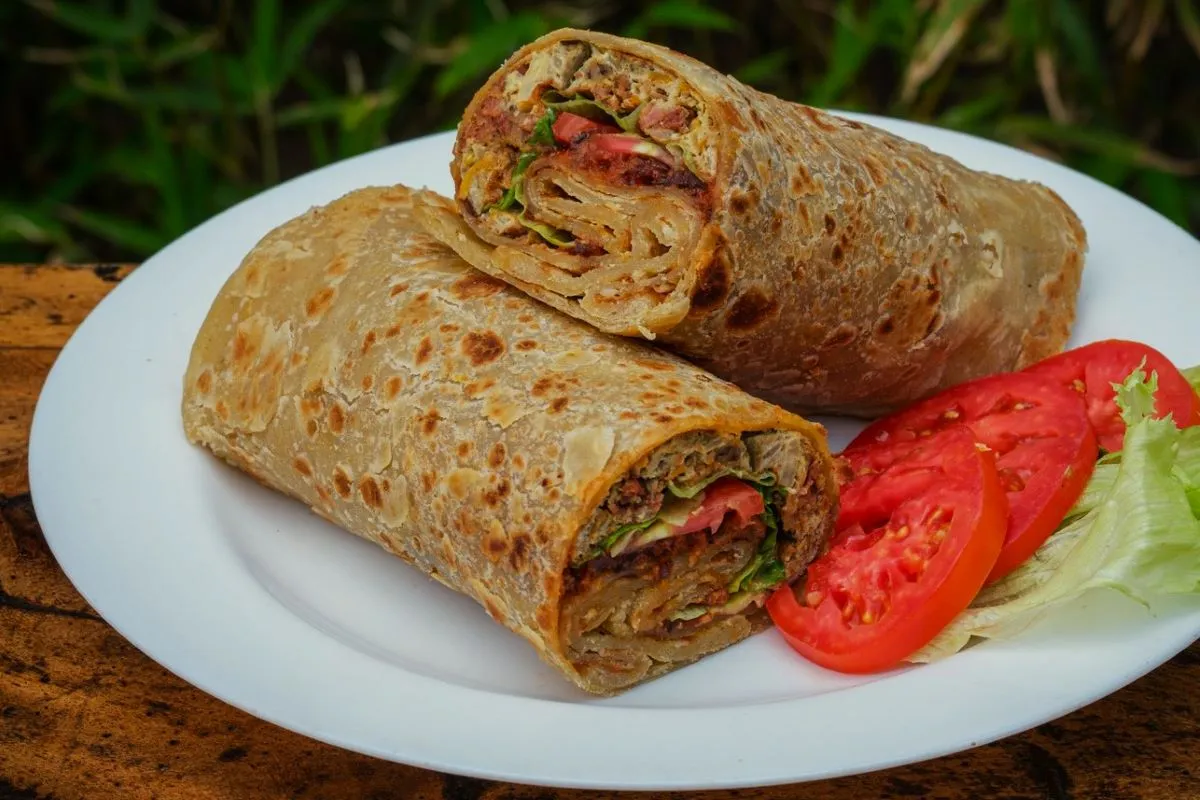
And, of course, we make sure you can taste the Rolex. If you are imagining a luxury watch, think again. Uganda’s famous Rolex has nothing to do with the Swiss watch brand. As Ugandans like to joke, “We don’t wear Rolex, we eat them.”
The name comes from “rolled eggs.” This popular street food consists of a freshly made chapati wrapped around an omelette with tomatoes, onions, and other vegetables. It is simple, delicious, and found all over the country. For many visitors, it quickly becomes a favourite snack on the road.
Here is our useful tip: if you are going to eat a Ugandan meal, order one portion for two people. The portions here are huge.
You will mainly be traveling through the country, but should you stay in cities and towns like Entebbe, Kampala or Jinja during your Uganda safari trip, where you will have plenty of restaurants at your disposal. You can taste high-quality Ugandan food there. But everything else you can imagine can also be found there: from Indian to Chinese to Italian.
The food culture in Uganda
We Ugandans love our food. Portions are often large. And eating a meal is very important moment. Food in Uganda is truly appreciated, perhaps much more than you may be used to in the West.
If someone is eating, you generally do not disturb them. Most Ugandans do not eat full breakfast. The day often commences with a cup of tea or some porridge. Lunch is usually the most important meal of the day. We generally dine late. We usually do not eat before 8 or 9 o’clock.
A typical Ugandan meal is simple, hearty, and satisfying. It often includes posho (made from maize (corn) flour and water, cooked into a thick, stiff dough-like consistency), beans in sauce, matoke (steamed green bananas), and some green vegetables (often dodo).
Sometimes there is some fish, chicken, and meat, but that is a luxury.
Allergies and diets are taken into account.
During your safari in Uganda, you will mainly eat at the lodges, hotels and safari camps. Most accommodation offer an increasing number of delicious and better vegetarian dishes – they do not compromise on meat or fish dishes. Moreover, the average lodge or hotel in Uganda is well-informed about allergies. So, if we mention it in advance, everything will be fine.
Want to know more about food in Uganda? Feel free to contact us.