Categories
- Accommodation
- Accommodation at Kibale Forest
- Active
- Active Tour Lodges
- Best Bwindi Guides
- Best Lodges
- Best Luxury
- Birding Guides
- Budget accommodation at Kibale
- Budget accommodation in Uganda
- Budget Hotels in Entebbe
- Budget Murchison Falls Accommodation
- Bwindi Guides
- Bwindi Lodges
- Bwindi National Park Guides
- Culture
- Culture & Nature
- Entebbe Hotels
- Exclusive Lodges In Bwindi
- Exclusive Lodges In Murchison Falls National Park
- Exclusive Lodges in Queen Elizabeth National Park
- Family
- Family Friendly Lodges
- Family Guides
- Good lodges
- Gorilla Trekking
- Gorilla trekking guides
- great blogs
- Guides
- Health Travel Informations
- High End Accommodation At Kibale
- Jinja Accommodation
- Kampala Hotels
- Kibale
- Kibale Guides
- Lodges in Mgahinga
- Luxury accommodation at Kibale
- Luxury Accommodation in Queen Elizabeth National Park
- Luxury Accommodation Options
- Luxury Hotels In Entebbe
- Luxury Lodges In Bwindi
- Luxury Murchison Falls Accommodation
- Midrange accommodation at Kibale
- Midrange Hotels In Entebbe
- Midrange Lodges In bwindi
- Midrange Murchison Falls Accommodation
- Murchison Falls Guides
- Murchison Falls Lodges
- Murchison Lodges
- Nature and Culture lodges
- News
- News and Blogs
- Popular
- Practical tips
- Primate Lodges
- Primates
- Queen Elizabeth Guide
- Queen Elizabeth National Park Accommodation
- Queen Guides
- Related
- Related active
- Related animals
- Related waters
- Semi Luxury Lodges In Bwindi
- Semi-Luxury Entebbe Hotels
- Travel Guide
- Travel Inspirations
- Uganda Honeymoon Lodges
- Uncategorized


Sipi Falls
Sipi falls: Hiking, Coffee, waterfalls, And Culture
Mention Sipi Falls to someone who knows Uganda very well, and the waterfalls will probably be the first thing they mention. That is hardly surprising. After all, they are the reason the place is called Sipi Falls. But honestly, we don’t even find the waterfalls the most interesting part of Sipi. For us, what makes this place so enjoyable is everything you experience around them.
You walk through a deep green landscape filled with coffee farms, banana plantations, wild plants, chameleons and colourful flowers. Along the way, you pass through small local communities and get to see how people live and work here. On clear days gaze endlessly out over East Uganda. And after an active morning, you can just as easily slow down and do nothing for the rest of the afternoon. That fits well with how we prefer to plan a safari in Uganda. Not just sitting in a car from one highlight to the next, but getting out occasionally. Walking. Looking around. Meeting people. Taking your time. Sipi Falls is a very nice place for that.
Where is Sipi Falls located?
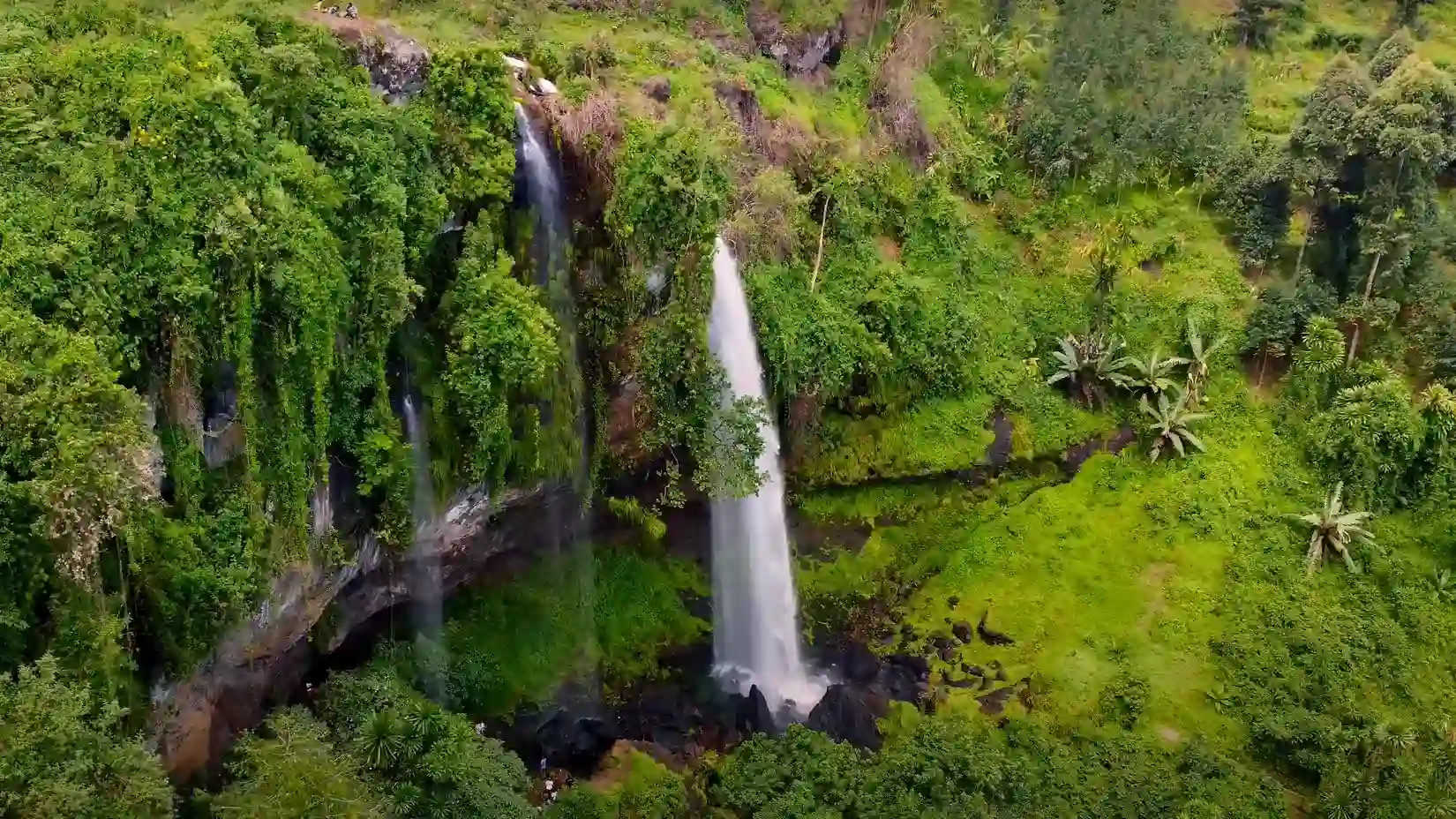
Sipi Falls is located eastern Uganda, on the slopes of Mount Elgon, close to the Kenyan border. The landscape here is very different from the open savannah you may see on a typical Uganda safari. It is green, mountainous and covered with farms and small communities. Sipi Falls is actually made up of three waterfalls, each at a different height.
So, this is not a place where you simply get out of the car, take a few pictures and move on. The best way to experience Sipi is on foot. You can spend a few hours walking from one waterfall to the next, following local paths through the hills. Along the way, you pass coffee and banana plantations, small farms and local homes. It gives you a chance to see a little of everyday life in this part of Uganda, while enjoying the scenery along the way.
Why do we think Sipi Falls is worth visiting?
Do you need to come all the way to Uganda just to see Sipi Falls? Honestly, no. There are other places we would put higher on the list if you are coming for a short safari.
What we like about Sipi is something else. It brings together several things that make travelling through Uganda so interesting. You have the landscape, the walking, the coffee farms and the local communities, all in the same place. You are not here looking for lions or getting up before sunrise for a game drive. You put on your walking shoes and head out.
It gives you a completely different pace from a typical safari. If you only have a few days in Uganda, we would not automatically add Sipi to your itinerary. There is already a lot to see, and trying to fit too much into one trip can leave you spending more time on the road than enjoying the places you came to see. But if you have more time, enjoy walking, or want to see a different side of Uganda, Sipi can be a really good addition. It also makes sense if your journey is taking you towards eastern or northeastern Uganda.
For example, on our culture and nature trips, we can combine Sipi with other places in the east and northeast. That way, you are not making a long journey just to see three waterfalls. Sipi becomes part of the journey itself. And for us, that is when it makes the most sense.
The three waterfalls of Sipi
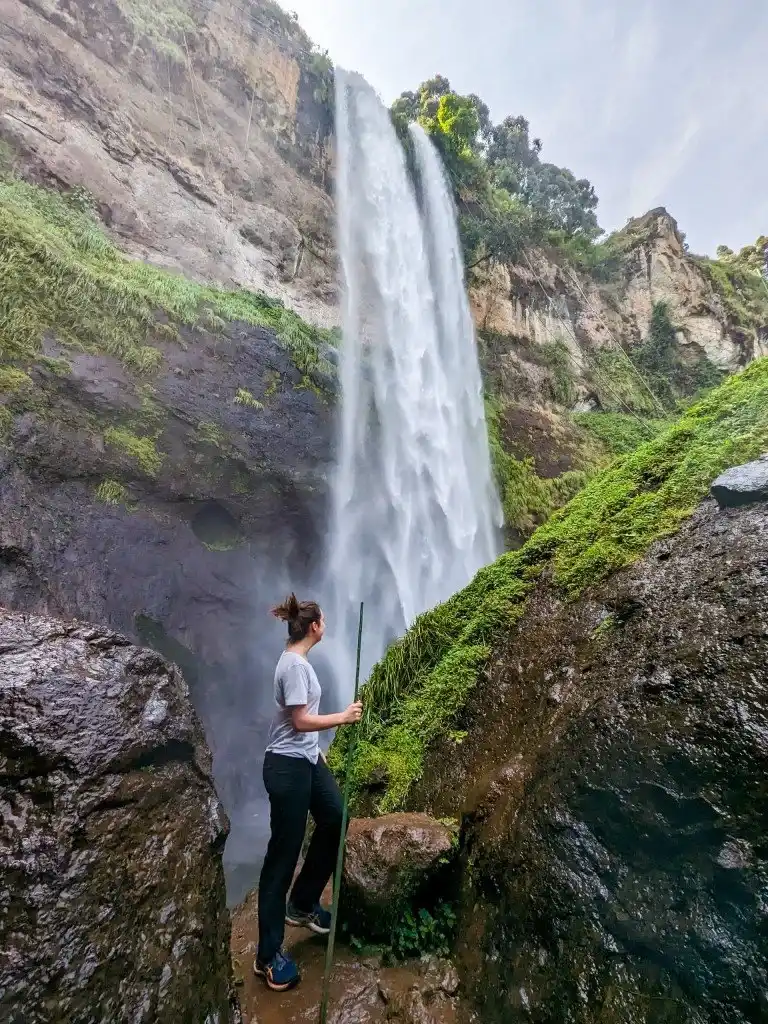
Sipi Falls is not just one waterfall. The Sipi area features three waterfalls, and a hike can take you to all three. The highest drops for about 100 metres. But we think it would be a shame to spend the whole hike simply waiting for the next waterfall. Look around as you walk.
The trail takes you through the hills of eastern Uganda, past coffee gardens, banana plantations, farmland and small communities. At times, you are walking close to the water. A little later, the path opens up and you find yourself looking across the surrounding landscape from high above.
And that is what we enjoy about hiking in Uganda. From a safari vehicle, you see the big picture. On foot, you notice the smaller things—the farms, the paths, the people, the plants and the changing views. You move through the landscape rather than simply passing through it. At Sipi, the waterfalls are the highlights. But the walk between them is what brings the whole place to life.
Hiking at Sipi Falls
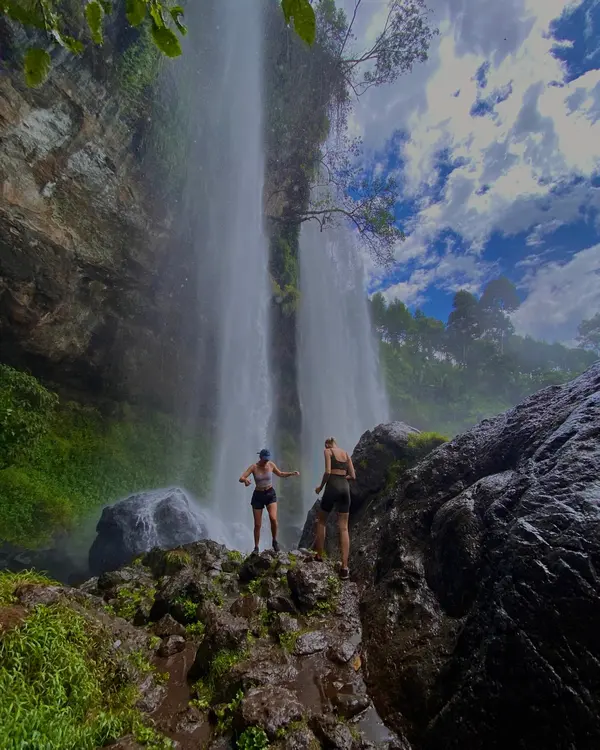
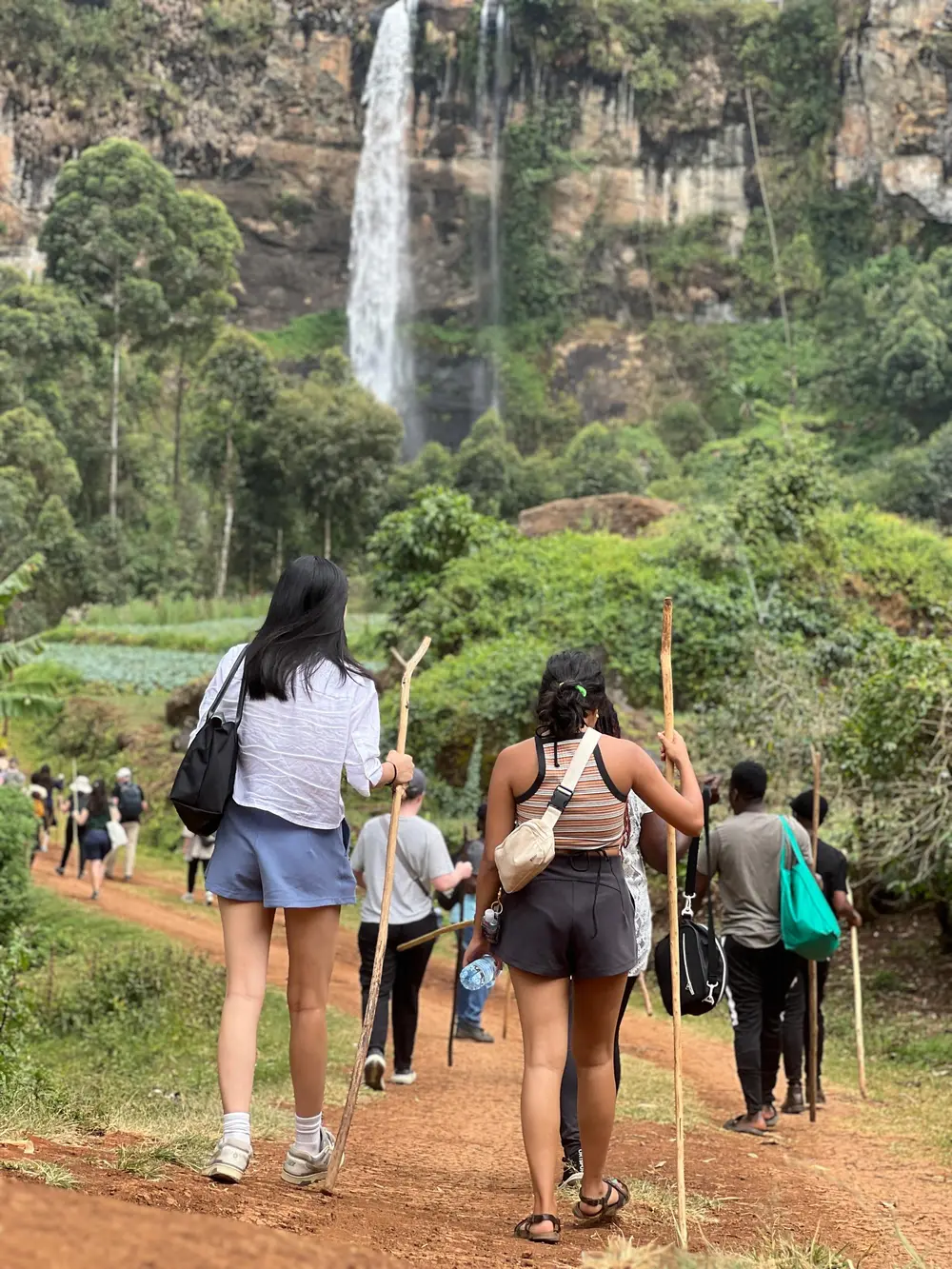
If you are physically able to walk, we would definitely leave the car behind in Sipi. Sipi is much better explored on foot. The full hike takes you around all three waterfalls and usually fills about half a day. The route is roughly 7 to 8 kilometres.
But there is no need to rush it. You are walking through the hills, past coffee and banana farms, small gardens and local homes. There is plenty to see between the waterfalls. The trail is not particularly technical, but it is hilly. You will climb around 250 to 300 metres in total, with some steeper stretches along the way. A reasonable level of fitness is enough for most people. The bigger consideration is the ground beneath your feet. You need to be comfortable walking on uneven paths.
Rain can change the trail quite quickly. Some sections become muddy and slippery, especially on the steeper parts. Good shoes with proper grip are therefore more useful than expensive hiking gear. We normally recommend hiking boots or trail shoes. Heavy mountain boots are unnecessary, and you can leave the walking poles at home unless you prefer to use them.
You also don’t have to do the entire circuit. If a half day hike is more than you want, the route can be shortened. We would rather adjust the walk to your comfort than have you spending the last hour wishing it was over. That is how we think Sipi should be enjoyed: at a pace that gives you time to look around, not simply to reach the next waterfall.
Do you need a guide at Sipi Falls?
We always recommend hiking Sipi with a local guide. Not only because they know the paths and you walk partly over private land.
Above all, a good guide ensures that you understand the place you are walking through. Who grows the coffee you see along the trail? How do families here make a living? What is growing in the fields? How important is farming to the communities around Sipi?
In addition, a local guide ensures that income from tourism contributes directly to the community. Without a guide, you see a beautiful landscape. With a good guide, you get a story to go with it. Ultimately, we find that much more interesting.
In Sipi, we work directly with several local guides who were born and raised in the area. As a result, they know the area, the local communities, and the hiking trails like no other. Besides their work as guides, many of these guides are active in agriculture, for example, in coffee cultivation, which is often run together with their families.
Our tour driver guides maintain direct contact with these local guides and often let them know well in advance when they are coming to Sipi with guests. This allows them to ensure that a guide they enjoy working with is available. In this way, we do not work through an intermediary, but directly with people from Sipi itself. Thus, your visit contributes to the local community.

Coffee in Sipi: look beyond your cappuccino
If you walk through Sipi, you will quickly notice that coffee is everywhere. And for anyone who drink a cup of coffee every day without thinking about it, it is actually quite remarkable to see for once how many steps precede it before that coffee ends up in your cup.
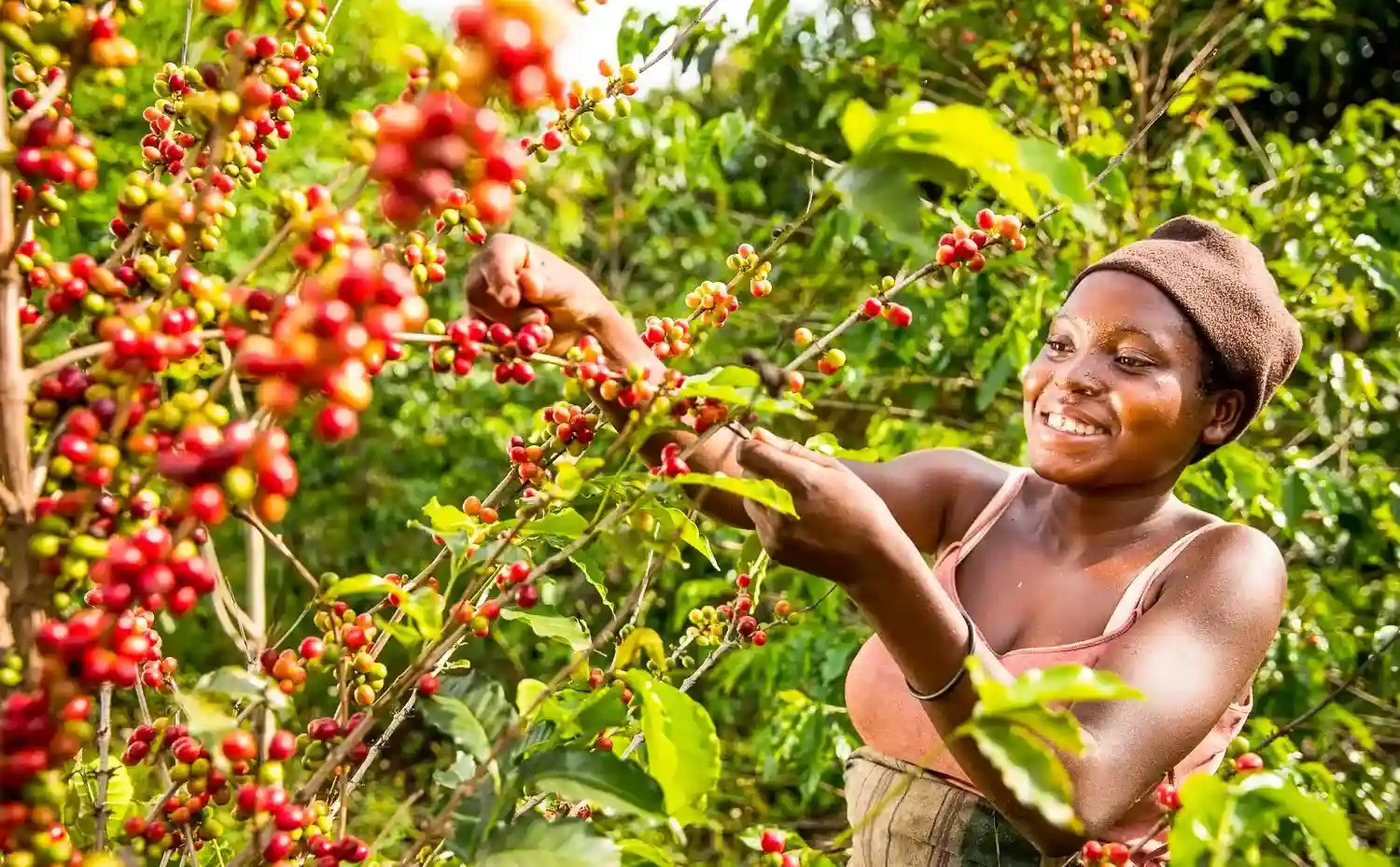
On a coffee tour, you visit a local coffee farmer or family and learn more about the process. From the coffee plant and its ripe cherries to drying, processing, roasting, and finally brewing the coffee. And because you are standing right in the middle of the farms here, such an activity does not feel like a standalone tourist excursion. Coffee is part of the landscape and of daily life in Sipi.
Local Encounter Around Sipi
When you walk through Sipi, you naturally come into contact with local life. You pass farmland, homes and small villages. People are working in their fields, tending to their coffee and going about their everyday lives. This is not a landscape created for tourists.
These are people’s homes and workplaces. That is why we believe cultural encounters should be handled with some care. We do not want to bring travelers into a village and arrange a staged show simply because tourists are there. Instead, we prefer small-scale encounters with people who can tell you about their own work, their families and their daily lives.
We take the same approach elsewhere in Uganda. One of the people you can meet in Sipi is Joel. He was born and raised here and still lives in Sipi with his family and other relatives. He worked for several years as a ranger with the Uganda Wildlife Authority before deciding to return home. Back in Sipi, he continued working on his family’s small coffee farm and also started working as a local guide.
With Joel, you can explore the three waterfalls and the surrounding area, but you can also visit his coffee farm. He will show you the different stages of coffee, from growing and picking the cherries to processing, roasting and finally tasting the coffee. And you do not just watch. You get to take part in the process yourself.
The visit takes place at Joel’s home, so you may also meet his family and other relatives while you are there. There is no performance and no carefully arranged show. You are simply spending time at someone’s home, seeing how they work and talking about everyday life. And you can be sure of one thing: they will probably be just as curious about you as you are about them.
Abseiling at Sipi Falls
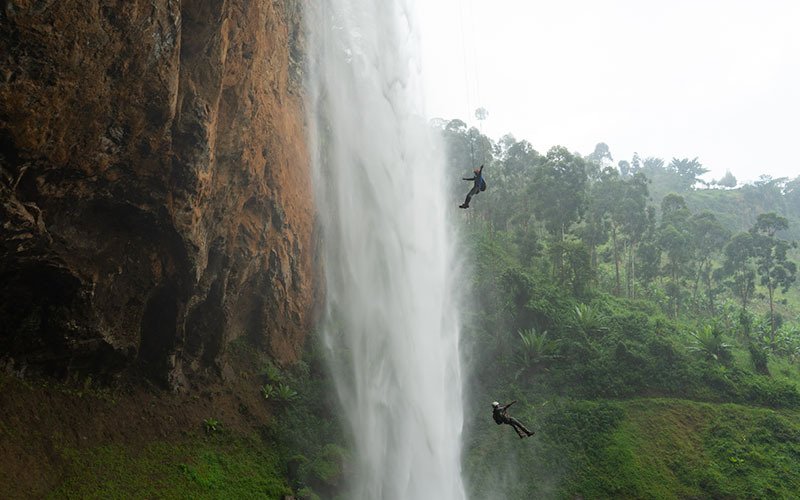
If you feel like adding a little adrenaline after your hike, you can also abseil down the rock face beside Sipi Falls. The descent takes place next to the highest of the three waterfalls and covers about 100 metres. You do not need to be an experienced climber to take part, but this is not an activity where we would simply tell you that it is “completely safe.”
With an activity like this, the important things are who is running it, how the descent is supervised and what equipment is being used. Before you start, you receive a safety briefing and are fitted with a helmet, climbing harness and the necessary climbing equipment. During the descent, you are also secured with a second safety line. So, if you are looking for something more adventurous after the hike, Sipi gives you the chance to see the waterfall from a very different angle.
Doing nothing for a while is also part of it.
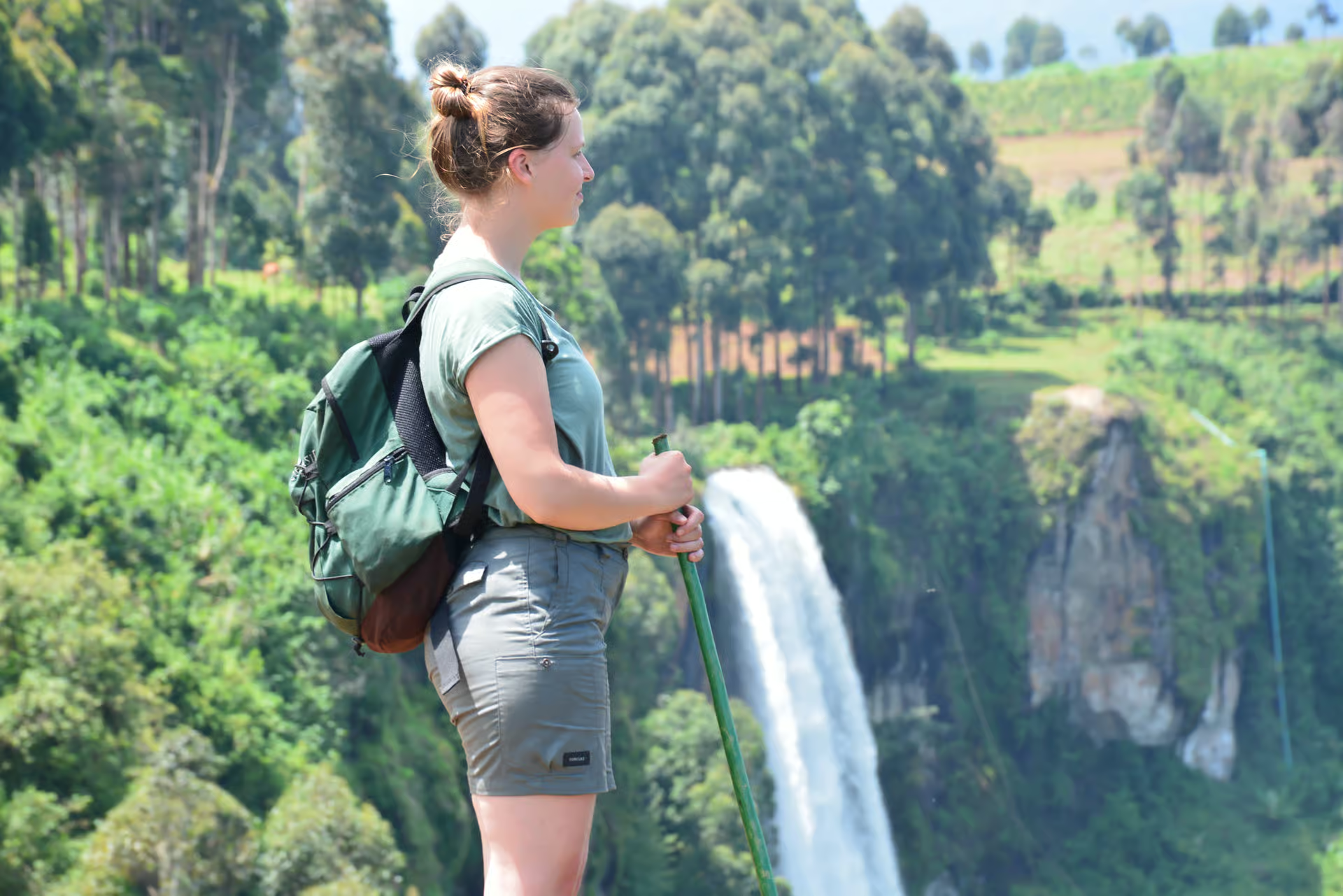
For us, a tour through Uganda does not have to be packed from early morning until late evening every day. The area around Sipi Falls is in fact a place where some flexibility in your itinerary is nice. Shower after a walk, have lunch, and then sit on the veranda for a few hours. With coffee. With a book. Look outside. Done. That might not sound like an activity. That is exactly the point. Too many travelers try to pack as much as possible into one trip. We prefer to do a little less and experience those places properly. That is ultimately also the reason why, given enough time, we prefer to plan two nights in Sipi rather than one rushed stop.
Faqs about Sipi Falls Tours
How many nights do you need in Sipi Falls?
In most cases, we would recommend two nights in Sipi. You can certainly visit Sipi with just one night, but it can feel a little rushed. You arrive, settle in, do an activity, sleep, have breakfast and move on again.
With two nights, Sipi becomes part of the journey rather than just a stop along the way. There is time for the hike, a coffee tour or a local encounter, and perhaps even an abseil if you are looking for something more adventurous. But there is also time to do nothing for a while. Sit outside your accommodation. Enjoy the views. Have a slow morning.
And during a longer Uganda tour, we think that breathing space matters too. Not every part of the trip needs to be filled with activities.
This is how we would spend two nights in Sipi
Day 1: Arrive in Sipi and settle into your accommodation. If you feel like it, you can do a short activity later in the day. Otherwise, simply take your time and enjoy the views.
Day 2: Spend the morning hiking around the three Sipi Falls. Later in the day, visit a local coffee farm or meet a local family. You can also keep the afternoon free and enjoy your accommodation.
Day 3: Have a leisurely breakfast before continuing with the rest of your Uganda tour.
Two nights may not sound like a lot, but they make a noticeable difference. You are not just coming to see Sipi Falls. You have time to slow down and take in the place.
Does Sipi Falls fit into every tour of Uganda?
No. And we think it is important to mention that. Uganda is a big and very diverse country. Trying to fit every beautiful place into one trip can easily leave you spending too much time on the road and not enough time enjoying where you are.
If you have limited time and your priorities are gorillas, chimpanzees and classic wildlife safaris, we may recommend leaving Sipi out. Not because Sipi is not worth visiting, but because a good itinerary also needs breathing space. If you have more time, enjoy hiking, or want to see more of everyday life in Uganda beyond wildlife, Sipi starts to make much more sense.
It also works particularly well as part of a journey through eastern and northeastern Uganda. For example, Sipi can be combined with Karamoja, Kidepo Valley National Park and later Murchison Falls National Park. This gives you a very different kind of Uganda trip, with the landscape and the experience changing as you travel from one region to another.
If you want to combine Sipi with the Big Five, chimpanzee trekking in western Uganda and gorilla trekking in the south, we generally recommend at least 14 days. On a shorter trip, we would usually leave Sipi out. The extra kilometres can otherwise come at the expense of your travel pace and the time you have at the other destinations.
But if you deliberately choose a route through the east and north of Uganda, Sipi can fit very naturally into a shorter trip, especially when combined with Kidepo.
There is no single right itinerary for Uganda. Because we put together tailor-made trips, we look at what you actually want from your time here and build the route around that.
Sometimes that means adding Sipi.
Sometimes, honestly, it means leaving it out.
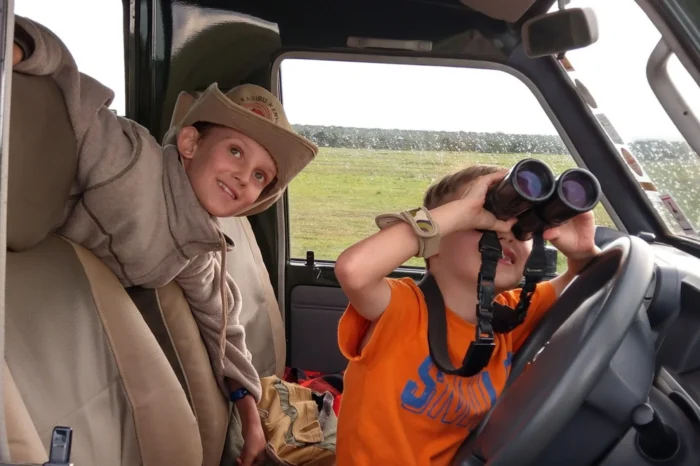
Is Sipi Falls suitable for children?
Yes, Sipi Falls can be a great place to visit with children, but we would not simply answer this with a “yes” for every family.
The age of the children, how much they are used to walking, and the conditions on the trails all make a difference. A family travelling with active teenagers is quite different from one travelling with children of four and six.
Sipi is particularly enjoyable for active travelers who like being outdoors and discovering the local area on foot. The same can be true for families, especially when the children are already used to longer walks at home.
For the full hike to all three waterfalls, we would not necessarily set a strict minimum age. In our view, hiking experience and fitness are more important than age alone. We would, however, think twice about taking very young children on the full route if they are not used to walking for several hours.
The good thing is that the hike does not have to be all or nothing. It can be adapted along the way. You can visit just one or two of the waterfalls rather than completing the entire route, depending on how the children are doing.
Some sections of the trails are steep, and after rain they can become muddy and slippery. With children, these sections require a little extra attention.
Your local guide can also adjust the pace and route as you go. If the full hike starts to feel like too much, there is no need to push on simply because that was the original plan.
For families, we would rather make the walk enjoyable than turn it into a test of endurance.
What is the best time to visit Sipi Falls?
You can visit Uganda throughout the year. The drier periods are roughly from June to September and from December to February. During the rainy seasons, the landscape becomes particularly green and lush, although the hiking trails can also be wetter.
For Sipi Falls, this means there is not necessarily one period that is best for everyone. If your main priority is comfortable hiking, you may prefer the drier months. If you would rather see the landscape at its greenest, the rainy season has its own appeal.
The waterfalls themselves can also be especially impressive after a rain shower, when there is more water flowing over the falls.
So, the best time for Sipi really depends on what you want from your visit.
What should you bring for a visit to Sipi Falls?
The most important thing is to have shoes that are comfortable for several hours of walking and have enough tread for uneven ground. Sturdy hiking or trail shoes are ideal. Heavy mountaineering boots are not necessary.
It is also worth being prepared for changeable weather. Sipi receives quite a lot of rain, so a lightweight raincoat or poncho is useful to have in your day bag. Bring enough water for the walk, and do not forget sunscreen and, if you like, a cap or hat. Uganda lies on the equator, and the sun can be surprisingly strong even when the sky is cloudy.
Walking sticks are not something you need to bring with you. If you feel you need one, a suitable stick can usually be found along the trail, and your local guide will be happy to help you find one. In other words, come prepared for a proper walk, but you do not need to arrive with a suitcase full of hiking equipment.
Include Sipi Falls in your tour of Uganda?
Sipi Falls is not the kind of destination we say every traveler must visit at all costs. That actually makes the place all the more interesting. For the right trip, Sipi Falls is a lovely change of pace. A few days without long game drives. Walking among coffee and banana plantations. A local guide who tells you more than you would ever learn from a travel book yourself. And afterwards, just sitting and looking at the landscape. Whether Sipi fits into your trip depends on how much time you have and what you want to experience in Uganda. That is what we always look at first at Choose Uganda Safaris. We live and work in Uganda ourselves and tailor every tour. No standard route to which we simply add a few days, but a logically structured journey. With enough variety and enough time to truly experience the places along the way.
Would you like to know if Sipi Falls fits into your tour? Feel free to contact us. We will then create a free, customized travel proposal.
Tours Featuring Sipi Falls
All can be customized to your budget, travel pace, and interests.
10-Day Uganda Family Safari: Discover the beauty of Uganda
Entebbe - Lake Albert - Murchison Falls - Budongo Forest - Ziwa - Jinja - Mbamba - Entebbe

From $6794 per person
18 Days Safari Adventure: All Peals of Uganda
Entebbe – Jinja - Sipi Falls – Karamoja - Kidepo - Murchison Falls - Kibale Forest – Queen – Lake Mutanda/Bwindi - Mburo - Entebbe
$363
3 Day Trip to The Heavenly Sipi Falls
3 Day Trip to Sipi Falls From US $363 Per Person 3 Day Trip to The Heavenly Sipi Falls From USD $363 Call A Safari Expert +256 (703) 740 870 or Book Now Sipi Falls is in eastern Uganda, on the …
3 days
$2,915
7-Day Big Five, Kidepo, & Cultural Adventure
7 Day Big Five, Kidepo, & Cultural Safari From US $2,915 Per Person Tour Overview This 7-day safari takes you deep into Uganda's wild north, where incredible wildlife, breathtaking landscapes, and rich local culture come together in one …
Contact
Useful Info
Safaris BY Type
1
Chat