

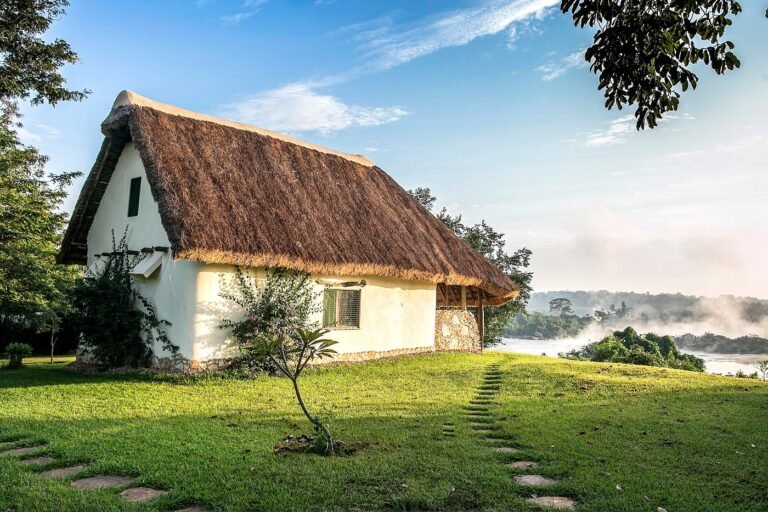
Semi-Luxury, midrange and budget friend...
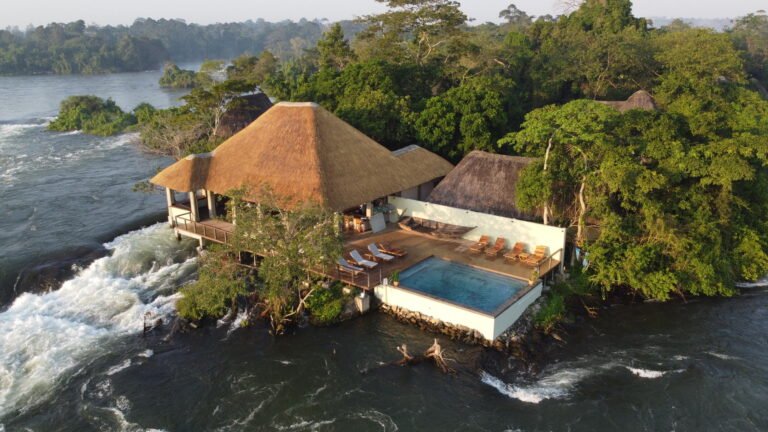
Lemala Wildwaters Lodge is one of the finest luxury lodges in Uganda It is located on a private island in the middle of the Nile, the longest river on Earth The lodge lies about 25 kilometres from...
Jinja is a city in eastern Uganda. It is located about 80km (2-hour drive) from Kampala. It is also known as the adventure capital of Uganda. And rightly so. This is where the longest river on Earth begins its 7,088-km journey. The Nile flows out of Lake Victoria (Africa’s largest lake), right here in Jinja. From this point, it travels all the way to the Mediterranean Sea in Egypt. In Jinja, you can go white-water rafting, kayaking, tubing, bungee jumping, mountain biking, horse riding, and quad biking. Adrenaline seekers love it. But is also a place to unwind completely – ending your trip through Uganda with a good book by the water.
Jinja is home to the source of the Nile, the longest river on the planet. For many travelers, that sounds dramatic. In reality, the scene is surprisingly calm. The source is a narrow point where Lake Victoria flows into the Nile. There is no roaring waterfall. No rushing currents. Instead, you will find a simple sign, a small viewing area, and quiet water drifting by. It is interesting from a historical perspective. And it is nice to say you have been there. But honestly, it is not the highlight of a trip to Jinja. The real magic starts a little further downstream.
A few kilometers away from the source, the Nile changes character. The water speeds up. Rapids form. The river becomes wild and powerful. This stretch of the Nile is famous around the world. It is one of the best places for white-water rafting in Africa. Some say even in the world. This is where Jinja truly earns its name as Uganda’s adventure city.
Rafting is the most popular activity in Jinja. And it is suitable for many different travelers. If you want something gentle, you can choose a grade 3 rafting trip. This option is calm and safe. The chance of falling out of the boat is very small. It is perfect if you want fun without fear. There is also family rafting. This takes place on calmer sections of the river. Children can join. It is more about enjoying the scenery than chasing adrenaline.
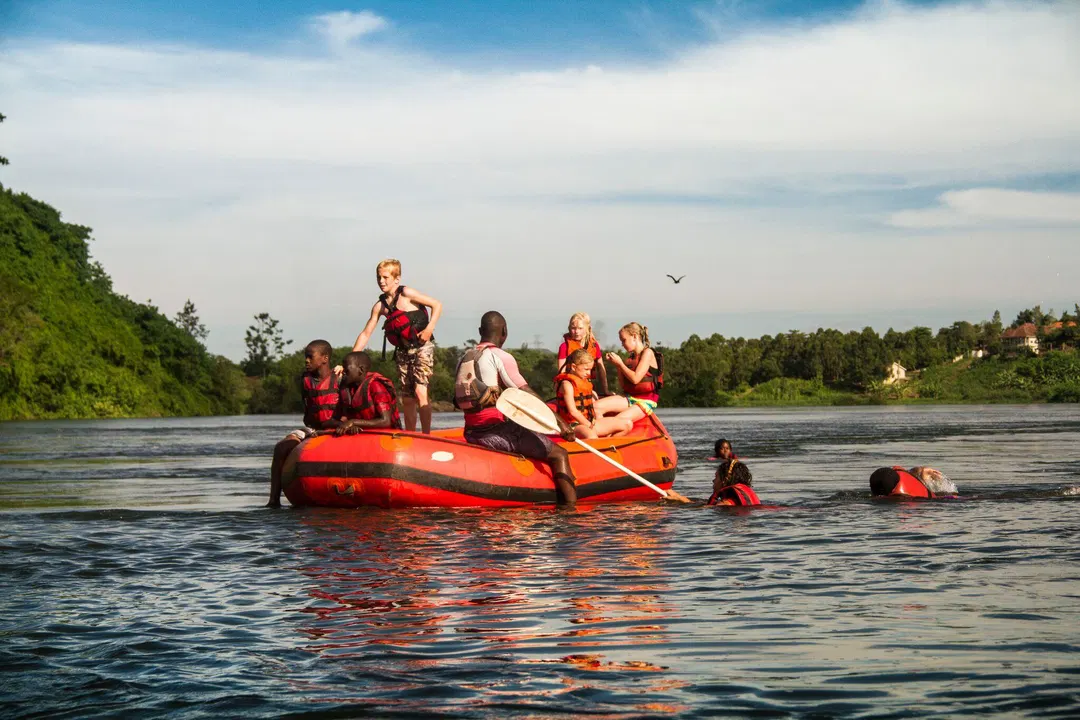
For thrill seekers, there is grade 5 rafting. This is serious adventure. The rapids are strong. The waves are high. You will get wet. Very wet. Grade 5 rafting is for people who are not afraid to taste a sip of the Nile. Safety is taken very seriously. Rafting companies in Jinja are highly professional. Guides are well trained. Safety boats follow the rafts at all times. Before entering the water, you receive clear instructions. This makes rafting exciting, but also well organized.
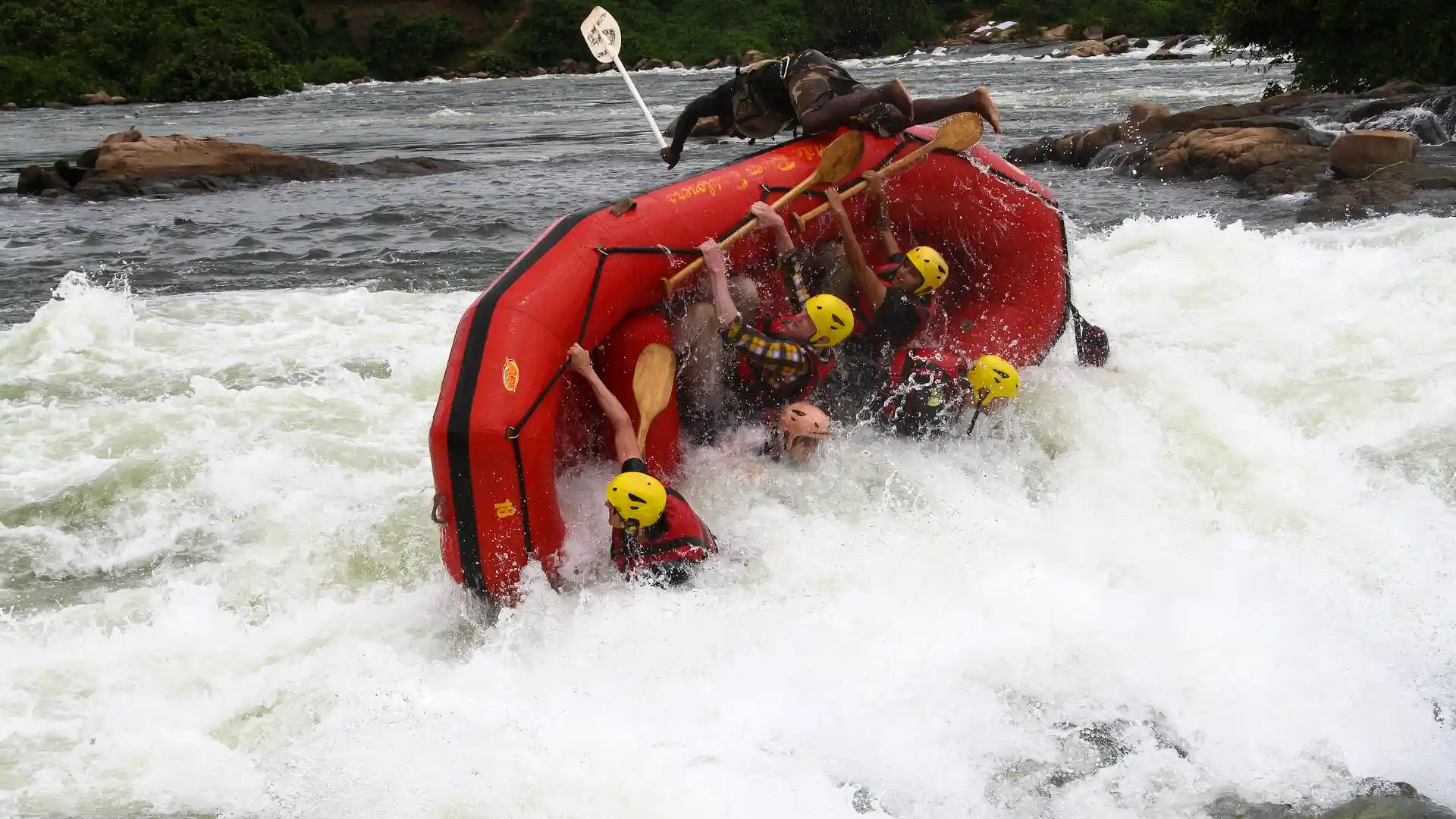
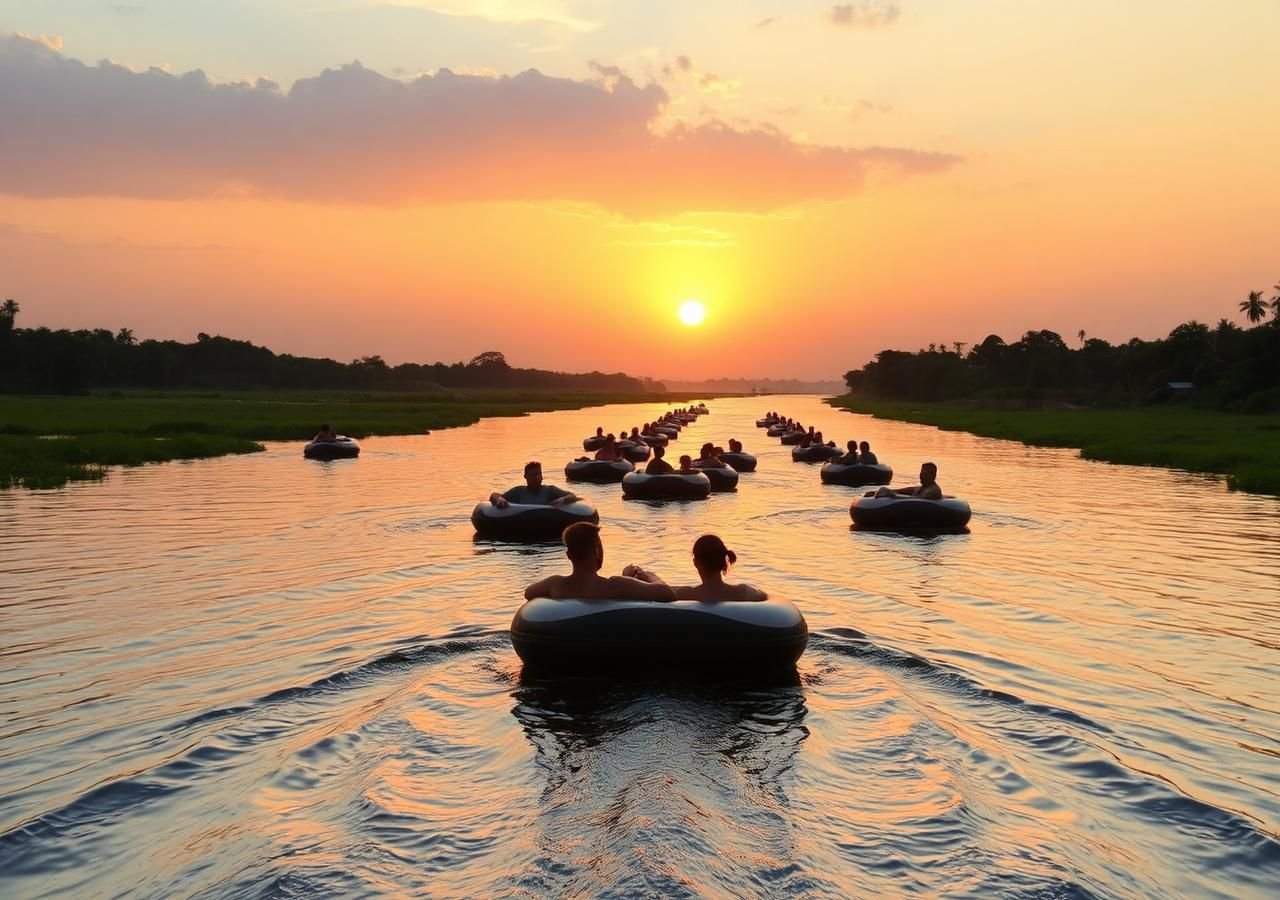
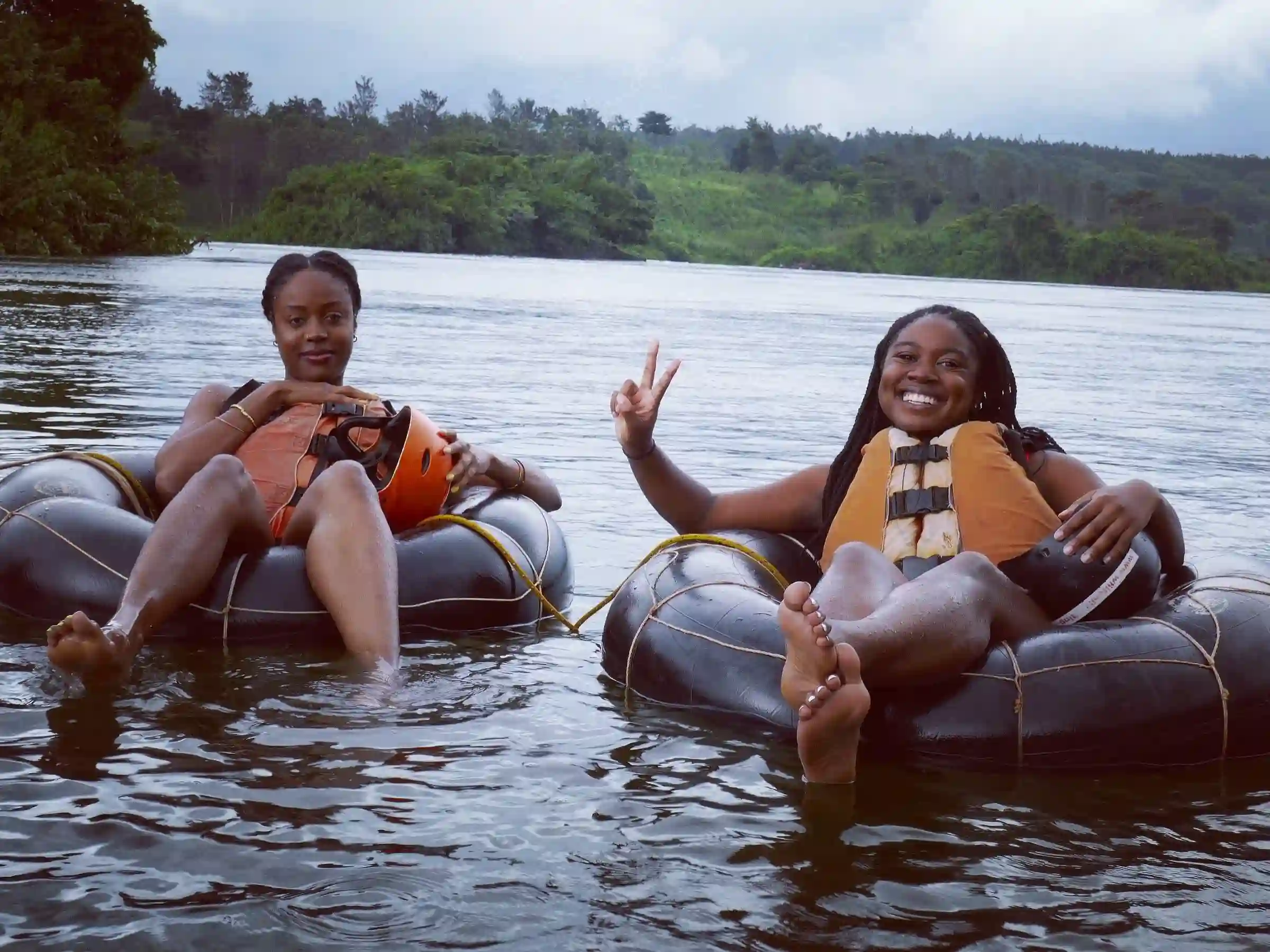
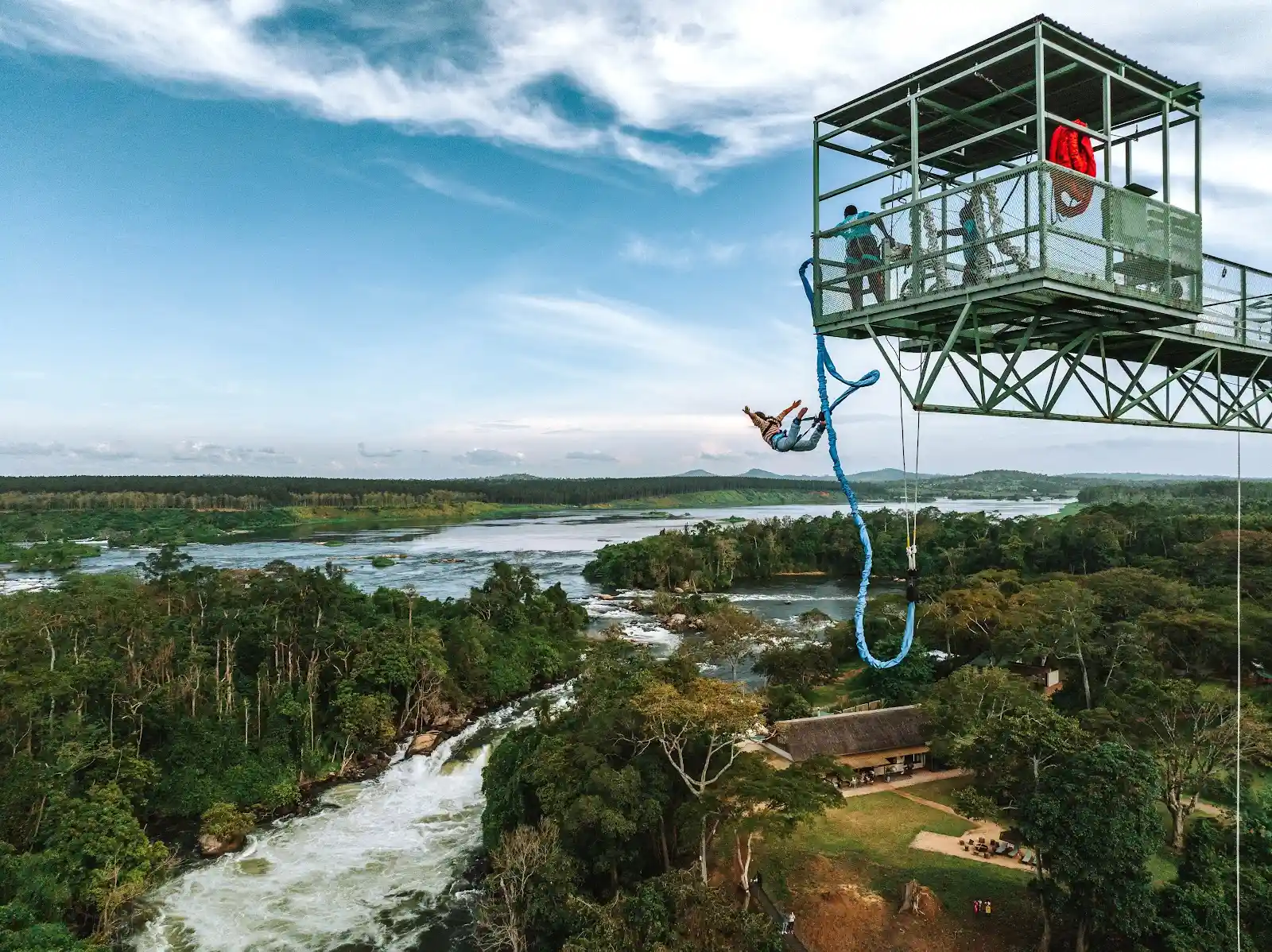
Rafting is not the only way to enjoy the Nile. Over the years, new activities have been developed. One popular option is tubing. You sit in a large inflatable tube. The current carries you downstream. The route is gentler than rafting. Tubing is fun and relaxed. You still feel the power of the river, but in a softer way. It is a good choice if you want to enjoy the Nile without too much intensity. Kayaking is another option for experienced paddlers. The rapids in Jinja attract kayakers from all over the world. Other activities include boat cruises to the source of the Nile, bungee jumping and water slides.
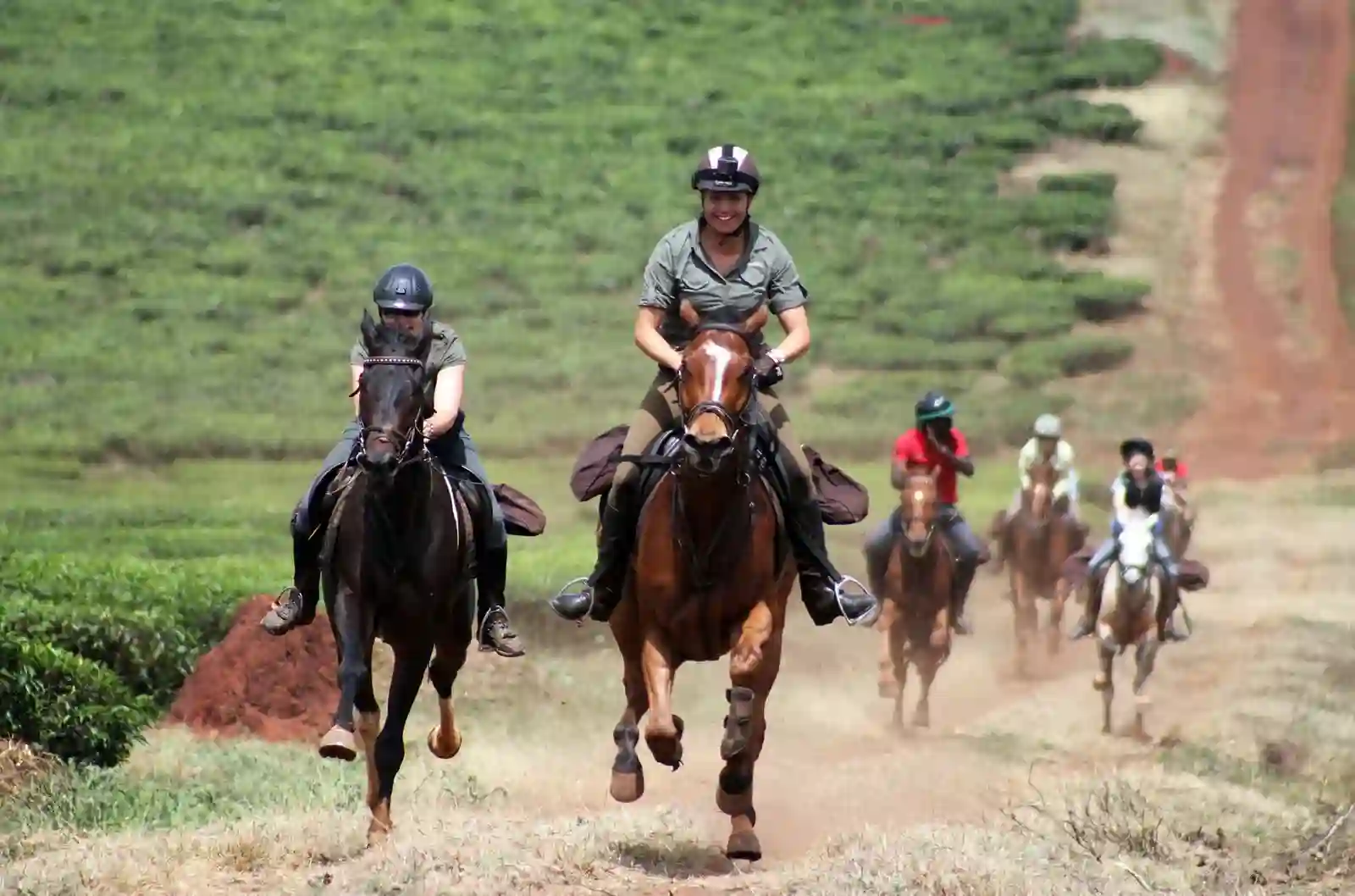
Jinja is not only about the Nile. The area around the city is green and beautiful. There is a growing number of activities on land. Horseback riding is a popular choice. You can ride along the river. You pass villages and farmland. It is a peaceful way to explore the area. Quad biking is another exciting option. You drive through dirt roads and countryside. It is dusty, fun, and adventurous. Mountain biking is also common. You can cycle through the city or head into the surrounding countryside. The routes offer great views and local encounters. You can also visit nearby farms. Meet farmers. Learn how crops are grown. This gives you a deeper understanding of daily life in Uganda.
Jinja is not only an adventure destination. It is also one of the most characterful cities in Uganda. Unlike Kampala, Jinja grew more slowly. Kampala expanded rapidly, and many old buildings disappeared. In Jinja, much of the colonial architecture remains. You will see old buildings with wide verandas. Large windows. Tree-lined streets. Walking through Jinja feels different. You get a sense of the past. Of what the city looked like many years ago. This history is complex. The buildings are beautiful. But they also remind us of colonial times. Of inequality and oppression. Jinja is a good place to reflect on Uganda’s history. To learn. And to understand how the past still shapes the present.
Jinja feels calmer than the capital. Traffic is lighter. The air feels fresher. Life moves at a gentler pace. Cafés overlook the river. People take time to talk. Sunsets are slow and golden. This relaxed atmosphere is one of Jinja’s biggest strengths.
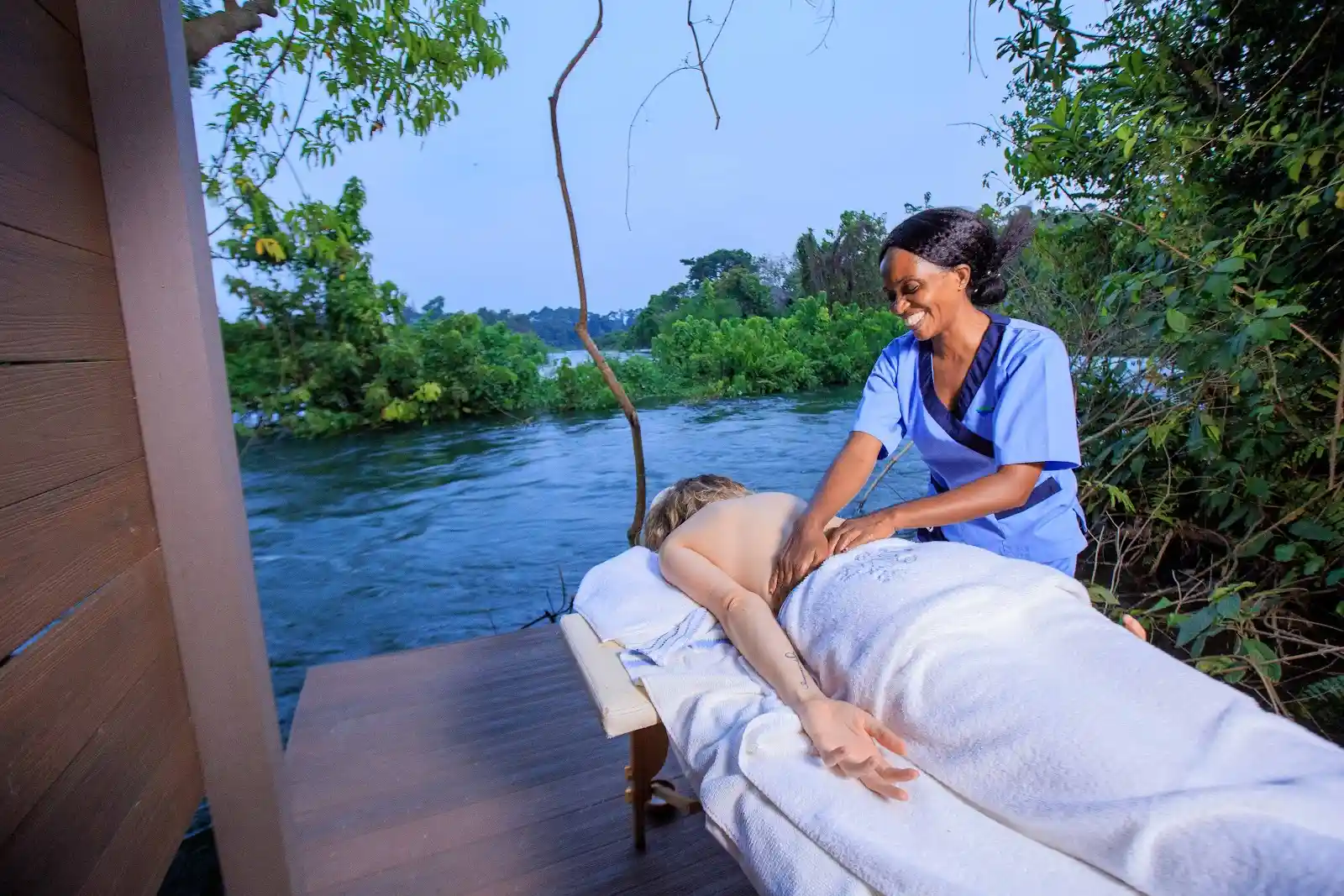
After days of game drives, trekking, and long distances, many travelers want rest. Jinja is ideal for this. Just outside the city, you will find quiet lodges by the river. Green gardens. Comfortable rooms. Views of the Nile. You can lie in a hammock with a book. Watch the rapids from a distance. See rafters pass by. Instead of flying to the coast or going to Zanzibar, you can end your Uganda tour in Jinja. It is closer And it still feels special. You combine adventure with relaxation. Excitement with calm.
Jinja offers something rare. It combines nature, adventure, history, and relaxation in one place. You can feel the power of the Nile. Learn about Uganda’s past. Connect with local life. And still slow down at the end of your journey. It is not just a stop. It is an experience. Jinja is more than the source of the Nile. It is Uganda’s adventure heart. And its peaceful escape. Whether you come for rafting, history, or rest, Jinja leaves an impression. It stays with you. If you are planning a trip to Uganda, Jinja deserves a place on your itinerary.
Entebbe - Lake Albert - Murchison Falls - Budongo Forest - Ziwa - Jinja - Mbamba - Entebbe
Entebbe -Kampala – Jinja – Ziwa Rhino Ranch – Murchison Falls National Park – Bwindi Impenetrable National Park – Entebbe
Entebbe – Jinja - Sipi Falls – Karamoja - Kidepo - Murchison Falls - Kibale Forest – Queen Elizabeth NP – Lake Mutanda/Bwindi - Lake Mburo - Entebbe
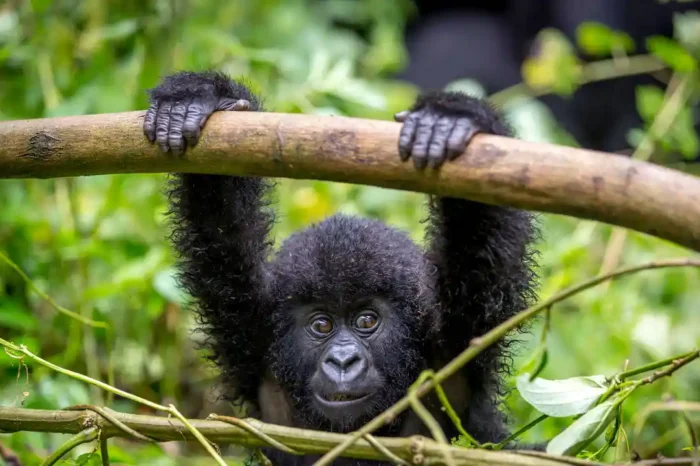
The trip begins leisurely in Entebbe. Located near Kampala on the shores of Lake Victoria, Entebbe has a relaxed and local feel. From there, you visit the tropical mountains...
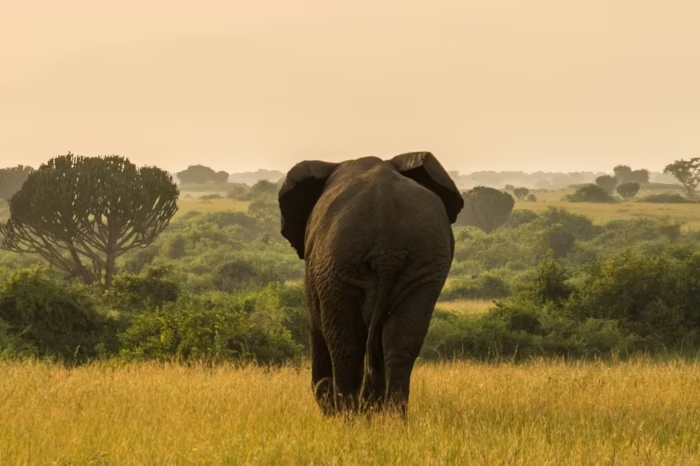
Discover the wonders of Uganda over 15 days: spot majestic wildlife in stunning national parks and stay in hand-picked, atmospheric lodges. Set out on thrilling game drives in search of the Big Five, including elusive …
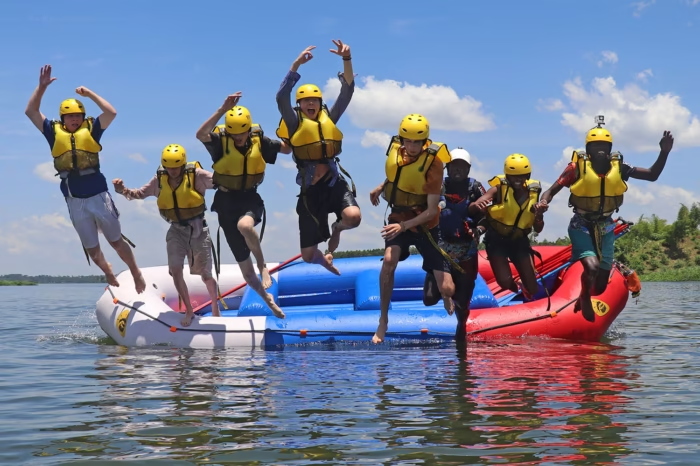
This 1-day trip takes you to Jinja, the adventure capital of Uganda. Jinja is home to the famous Source of the Nile, a place where the longest river on Earth exits Africa’s largest lake (Lake …
You can get from Kampala to Jinja by driving east along the Kampala–Jinja Highway. The distance is about 80 kilometers. The journey usually takes around 2 hours, but it can take longer during morning or evening traffic leaving Kampala. The road is fully paved and easy to follow, passing through Mukono and Lugazi before reaching Jinja.
Along the way, there are several good stops that make the trip more interesting. Many travelers stop at Namawojjolo for roasted chicken and quick roadside food. You can also stop near Mabira Forest for a short nature walk or zip-lining. Another popular stop is Sezibwa Falls, a quiet place with waterfalls and local cultural stories. After Lugazi, the road opens into wide sugarcane plantations and green countryside, which signals you are getting close to Jinja.
The most comfortable option is a private car or tour transfer, especially if you want to stop at these places freely. Buses and shared taxis also run this route, but they stop often and take a bit longer. Either way, the journey is straightforward and ends in the heart of Jinja, near the Source of the Nile and the main activity areas.
If you want to understand Jinja, don’t just go for the adrenaline stuff. The history here is actually really interesting, and you feel it as you move around the town.
Start with the Source of the Nile. This is the most famous spot. It’s where the Nile River begins its long journey out of Lake Victoria. It became known during the time of early explorers like John Hanning Speke. Today it’s a calm place with a monument, gardens, and boat rides. But behind the calm feel, it’s one of Africa’s most important geographical discoveries.
Then there’s the old industrial side of Jinja. If you walk around town, you’ll notice old colonial buildings and the railway area. Jinja used to be one of Uganda’s biggest industrial towns. Cotton, sugar, and transport all grew here. The railway helped connect everything. You can still see signs of that past, even though some parts are quiet now.
And don’t miss the areas near Lake Victoria. Long before colonial times, local fishing communities lived and traded around these shores. Places like Samuka Island carry that older, quieter history. It’s not always written on big signs, but if you pay attention, Jinja feels like a place where old stories and modern adventure live side by side.
If you are visiting Jinja for the first time, keep it simple. Go slow. Enjoy the mix of calm and adventure. Start at the Source of the Nile. This is the heart of Jinja. It is peaceful and beautiful. You stand where Lake Victoria turns into the Nile River. You can take a short boat ride. You can also just sit and enjoy the water and breeze.
Then try something on the river. Jinja is full of life on the Nile. You can go white-water rafting if you love adventure. The river is fast and exciting. If you want something calm, take a sunset boat ride. The water becomes golden in the evening. It feels quiet and special.
After that, walk around the town. Jinja is simple but full of life. You will see markets, small shops, and friendly people. You can try local food or just sit and watch the town move. If you have more time, you can visit nearby nature spots like forests or waterfalls. Jinja is not just about activities. It is about feeling the river, the air, and the slow rhythm of the place.
White-water rafting in Jinja has different packages depending on how strong the adventure is and who is paying. A full rafting trip costs about $140 for non-residents, $100 for East Africa residents, and UGX 250,000 for Ugandan citizens. If you want something more intense, the extreme rafting option costs $160 for non-residents and $120 for East Africa residents, while Ugandan citizens still pay UGX 250,000.
There is also a family rafting option for a lighter and safer experience. Adults pay about $60, while children between 5 and 12 years pay $30. This option is designed for families and is less intense, but still gives you a real feel of the Nile. It is suitable for children from 5 years and above, and usually requires at least two adults and two children.
Most rafting packages include a lot of value. You get free transport to and from the river, professional safety guides, food and drinks, and photos. Videos are included for groups of five or more people, while smaller groups can request them for an extra $20. Family rafting also includes snacks, water, and photos, making the whole experience smooth and well-organized.
Bungee jumping in Jinja costs $115 for non-residents, $100 for East Africa residents, and UGX 200,000 for Ugandan citizens. It is one of the most popular adrenaline activities on the Nile, offering a short but intense free-fall experience right above the river.
The jump has a minimum weight of 35 kg and a maximum weight of 110 kg. There is no minimum age limit, but all jumpers must meet the weight requirement. Guests are advised to arrive at least 30 minutes before their scheduled jump time, and jumps are available at most times during the day depending on booking.
Safety is a top priority. The operation is run by a highly experienced, award-winning team using ISO-certified equipment. The structure is built to international (U.S. and Canadian) standards, with regular inspections and safety audits. Please note that all payments are non-refundable once you step onto the platform, so commitment is required once the experience begins.
The Source of the Nile boat cruise costs about USD 45 per person. It is a relaxed and scenic trip where you watch the sun set over Lake Victoria and the start of the Nile River. The cruise begins near Jinja’s main port and slowly moves through calm waters, giving you beautiful views of the river and its surroundings. Along the way, you can see rich wildlife like African fish eagles, kingfishers, monitor lizards, otters, and sometimes even owls. The experience is peaceful, with plenty of time to enjoy nature and take photos.
The cruise usually requires a minimum of 4 people to operate. It includes return transport from places like Kalagala, Lemala Wildwaters Lodge, Adrift Overland Camp, or Adrift River Club. You also get unlimited drinks on board, and a complimentary beverage such as beer, soda, or water. For safety, life jackets are provided and must be worn at all times.
Kayaking on the Nile offers a mix of adventure and calm water experiences, depending on how far and how strong you want the river to be. Prices start from around USD 75 for short guided tours and go up to USD 160 for more advanced tandem kayaking experiences on stronger rapids.
For beginners, there is a White Water Intro option. A half-day trip costs $95 per person (for 2 or more people) or $120 for solo kayakers. A full-day experience costs $125 (2+ people) or $150 for solo travelers. These trips are guided and give you a safe introduction to kayaking on moving Nile waters.
Shorter and more relaxed experiences include the 2-hour Kalagala tour at $75 per person (minimum 2 people), and the 2-hour Source of the Nile kayak or stand-up paddleboard tour, also at $75 (2+ people) or $100 for solo participants. For a more immersive experience, the Kalagala cultural full-day tour costs $125 (2+ people) or $150 for solo kayakers, combining river adventure with local cultural interaction.
The prices of horse riding in Jinja depend on the duration. A 1-hour ride costs $45, a 1.5-hour ride costs $55, and a 2-hour ride costs $65. There is also a maximum weight limit of 85 kg for safety and horse comfort. During the ride, you move through quiet paths near the River Nile, passing local communities and green riverine landscapes. Horses are gentle and well-trained, making the experience smooth even for beginners. The activity includes a helmet and saddle, and it is guided to ensure safety and enjoyment throughout the journey.
Mountain biking in Jinja is a fun way to explore villages, forests, and the countryside around the Nile. It is affordable, flexible, and perfect if you want to see more of the area at your own pace.
A half-day bike rental (up to 4 hours) costs $15 per person (minimum 5 people). A full-day rental costs $20 per person (minimum 3 people). These options are great if you just want a bike and freedom to explore on your own or with a group.
For guided experiences, the Kalagala Village Tour (5–25 km) costs $35 per person (minimum 2 people). If you want something more immersive, the Mabira Forest Tour costs $65 per person (minimum 2 people) and includes local lunch and snacks. This ride takes you through forest trails, villages, and scenic countryside, giving you a deeper feel of life around Jinja.
Swimming in Jinja is a question many visitors ask, especially around the Nile. The simple expert answer is: no, it is not generally safe to swim in the Nile River here.
The main issue is the water flow. The Nile in Jinja is not calm. It has strong currents and hidden underwater forces, especially near rapids and channels. Even areas that look slow can change quickly. This makes swimming risky, even for strong swimmers.
There is also wildlife and water safety to consider. In some parts of the river, there can be hippos or crocodiles, and the depth can change suddenly. Because of this, most activities on the Nile are done with safety gear and trained guides, like rafting or kayaking, not open swimming.
So instead of swimming, visitors enjoy safer ways to experience the water—boat cruises, kayaking, or rafting with professionals. These give you the Nile experience without the real danger.
If you want the best sunset views in Jinja, focus on the Nile and Lake Victoria. This is where the light becomes soft, golden, and very peaceful.
One of the most special places is Lemala Wildwaters Lodge. It sits on an island in the middle of the Nile. At sunset, the river flows on both sides of you. The water turns gold and the sound of rapids fills the air. It feels very private and magical.
Another great spot is the Nile Bridge area. From here, you see the river stretching wide under the sky. As the sun goes down, the reflections on the water are beautiful. You also get a strong view of the river’s movement and energy.
You can also go to Samuka Island. It is quiet and surrounded by Lake Victoria. Sunsets here are soft and calm, with birds flying over the water. For a more social vibe, the Jinja Sailing Club is perfect. People gather here in the evening, sit by the lake, and watch the sun drop slowly into the horizon.
You can go zip lining on your way to Jinja, especially in Mabira Forest. It sits along the Kampala–Jinja Highway, so many people stop there during the journey.
The zip lining takes place high in the forest canopy. You move between tall trees with views of green jungle all around you. It feels like flying over nature. The experience is guided and safe, with full safety gear provided.
Most travelers do it as a stopover activity when driving from Kampala to Jinja. It breaks the journey nicely and adds an adventure before you even reach the Nile.
To explore Jinja properly, you need at least 2 to 3 days. That is the sweet spot where you don’t rush, and you actually feel the place instead of just passing through it. With 2 days, you can cover the essentials. Day one is usually for the Source of the Nile, a boat cruise, and a sunset experience along the river. Day two is for adventure activities like white-water rafting, kayaking, or bungee jumping. It is full, active, and very exciting, but still manageable.
With 3 days, Jinja becomes more relaxed and complete. You get time for everything above, plus slower experiences like walking through the town, visiting local markets, horse riding, or short trips to places like Mabira Forest or Sezibwa Falls on the way in or out. This extra day makes a big difference because Jinja is not just about activities — it is also about atmosphere, river life, and slow sunsets.
So in short, 1 day feels rushed, 2 days is good, and 3 days is ideal if you want the full Jinja experience.
Yes. Beginners can try bungee jumping in Jinja, but only if they meet the safety requirements and follow the instructions carefully.
From a safety point of view, it is a highly controlled activity. You are not left alone at any point. Professional instructors guide you step by step, from harnessing to the final jump. The equipment is internationally certified, and the operation follows strict safety checks. Before jumping, everyone receives a briefing, and staff double-check everything. This is why it is considered a managed adventure, not a free-risk activity.
There are clear limits for who can jump. You must usually be at least around 35 kg in weight, and there is a maximum weight limit (often around 110 kg). You also need to be in good health. People with serious heart conditions, high blood pressure, or pregnancy are not allowed to participate. Age restrictions may apply, but beginners who meet the physical requirements are welcome.
So yes, beginners can absolutely do it, and many first-timers do. The fear is normal, but the system is designed to support you fully. Most people say the hardest part is stepping off the platform, not the jump itself.
Yes. Jinja has very rich cultural experiences and craft markets, and they are actually a big part of the town’s identity beyond adventure tourism. The most popular place is Jinja Central Market. It is busy, loud, and full of life. You’ll find handmade crafts, fabrics, baskets, wood carvings, jewelry, and local art mixed with fresh food stalls. It’s a real local experience, not just a tourist spot, and it gives you a strong feel of everyday life in Jinja.
You can also find smaller craft shops near the Source of the Nile and Nile Avenue. These places are more relaxed and focus on souvenirs like handmade drums, beads, paintings, and woven items. Many of the crafts are made by local artisans and community groups, so you often get to see the cultural meaning behind what you are buying.
So yes, Jinja is not only about the Nile and adventure sports. It also has real cultural depth, where markets and craft spaces let you connect with local creativity, stories, and daily life in a very direct way.
The best time to visit Jinja for outdoor activities is during the dry seasons, when the weather is more stable and the river conditions are ideal for adventure.
The best months are June to September and December to February. During these periods, you get plenty of sunshine, less rain, and easier travel conditions. This is perfect for activities like white-water rafting, kayaking, bungee jumping, boat cruises, and cycling because everything runs more smoothly and safely.
The wet seasons (around March to May and October to November) are still possible to visit, but they come with heavier rains and sometimes stronger river conditions. This can make some outdoor activities less predictable or harder to schedule.
So in simple terms: if you want the full Jinja experience with sunshine, clear skies, and easy adventure planning, go in the dry months.
Yes. Jinja is absolutely worth visiting, and many travelers even rank it as one of the most enjoyable stops in Uganda.
What makes Jinja special is its balance. It is not just one type of place. It mixes adventure, nature, and relaxed town life in a very easy way. You can do intense activities like white-water rafting on the Nile, then just sit quietly by the river in the evening watching the sunset. That mix is rare and very memorable.
Compared to other places in Uganda, Jinja is not about wildlife safaris or mountains. It is more about experiences and atmosphere. Places like national parks give you big wildlife moments, but Jinja gives you variety in a small area; boat cruises, culture, cafes, river views, and adventure sports all close together. It also feels more relaxed and walkable than big cities like Kampala.
So the honest answer is this: if you want pure wildlife or long safaris, other places may feel stronger. But if you want a place where you can actually do many different things in a short time — and feel the energy of the Nile — then Jinja is one of the best stops in Uganda.
Semi-Luxury, midrange and budget friend...
Lemala Wildwaters Lodge is one of the finest luxury lodges in Uganda It is located on a private island in the middle of the Nile, the longest river on Earth The lodge lies about 25 kilometres from...
We founded Choose Uganda Safaris with a dream in hand: to organize the most beautiful trips for people who want to discover Uganda. Since then, we have built a passionate local team with one goal: to make your Uganda trip an unforgettable experience.
Chat