Which animals can you see in Uganda?
We have a huge variety of wildlife in Uganda. Besides the famous Big 5, you can find giraffes, zebras, hippos, crocodiles, hyenas, various species of antelopes, and more than 1080 bird species, among others. But Uganda is, of course, also well known for its primates. You can visit mountain gorillas, chimpanzees, and golden monkeys here, all in their natural forest home.
Of course, you won’t find all these animals in every national park. Lake Mburo National Park, for example, is a good place to see zebras and giraffes, while Queen Elizabeth National Park is known for its elephants, lions, leopards, and large numbers of hippos. This is why the route you choose is important. By combining the right national parks and activities, you have a very good chance of seeing virtually all the animals Uganda is famous for during a single trip.
Which animals can you see where? Our practical overview
Lion
- Best places: Murchison Falls, Queen Elizabeth and Kidepo National Parks
- Activity: Game drive
- Chance of seeing: Very high
Elephant
- Best places: Murchison Falls and Queen Elizabeth National Parks
- Activity: Game drive or boat safari
- Chance of seeing: Almost certain
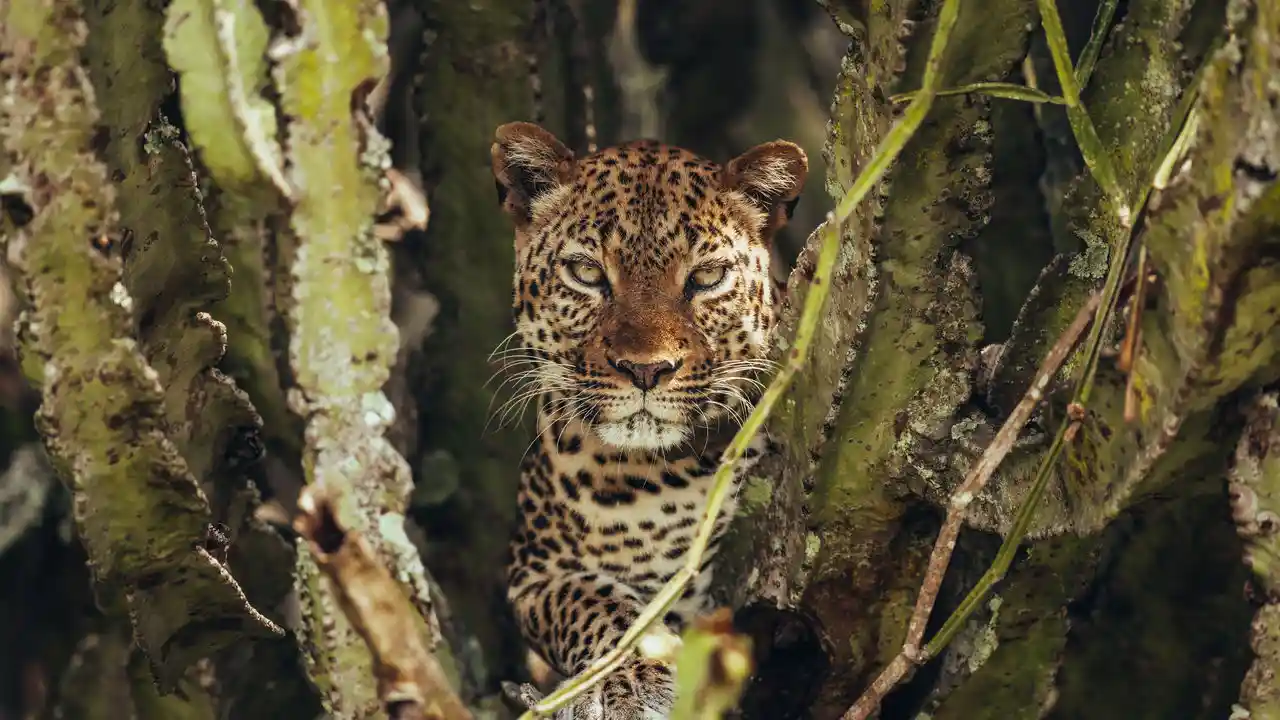
Leopard
- Best places: Murchison Falls and Queen Elizabeth National Parks
- Activity: Game drives
- Chance of seeing: High
Rhinos
- Best place: Ziwa Rhino and Wildlife Ranch
- Activity: Rhino tracking on foot
- Chance to see: Almost certain
Buffalo
- Best places: Murchison Falls, Queen Elizabeth and Kidepo Valley National Parks
- Activity: Game drive
- Chance to see: Almost certain
Zebra
- Best places: Lake Mburo and Kidepo Valley National Parks
- Best activity: Game drive or walking safari
- Chance of seeing: Almost certain
Giraffe
- Best places: Murchison Falls and Lake Mburo National Parks
- Best activity: Game drive or walking safari
- Chance of seeing: Almost certain
Crocodile
- Best places: Murchison Falls and Queen Elizabeth National Parks
- Best activity: Boat safari
- Chance of seeing: Very high
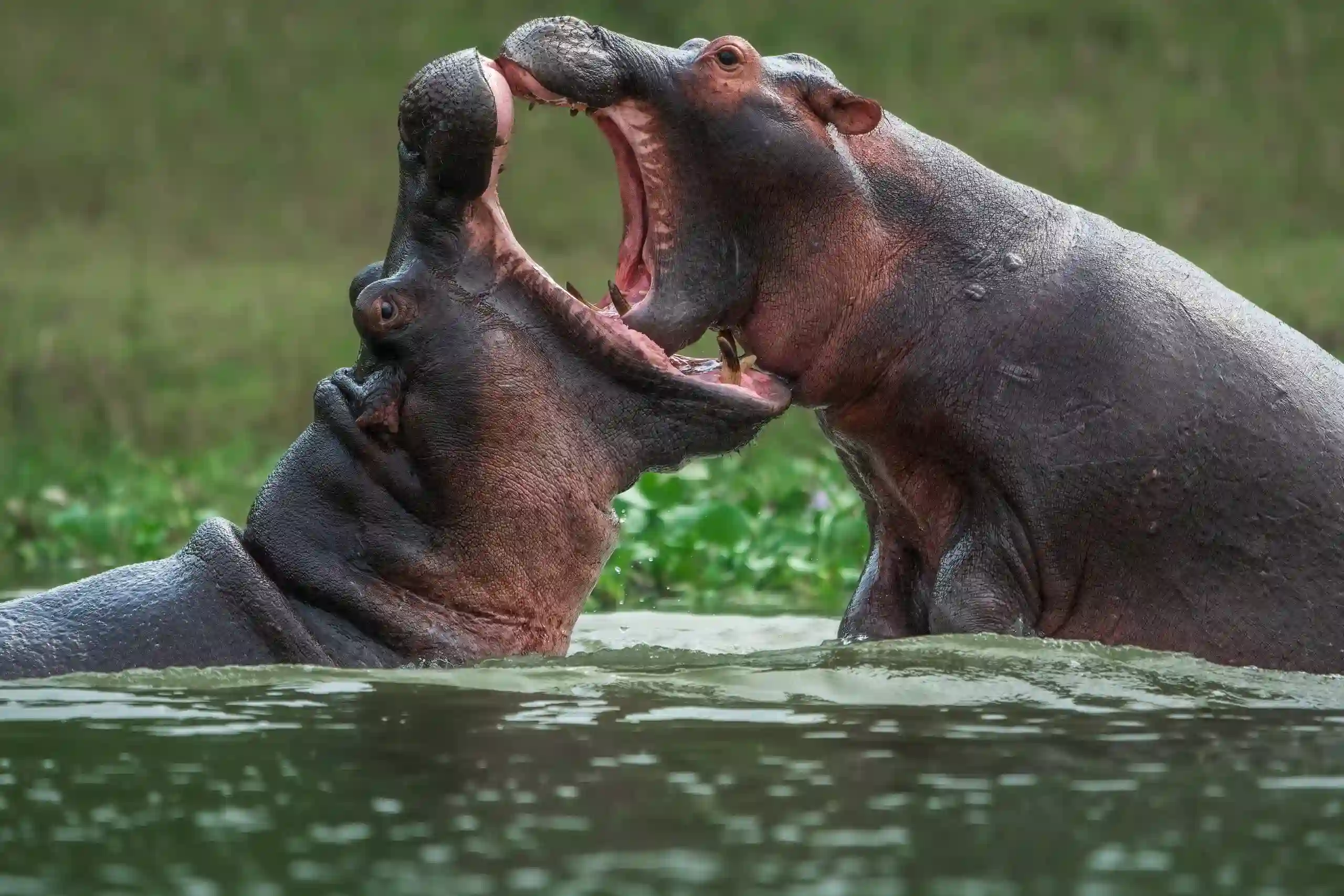
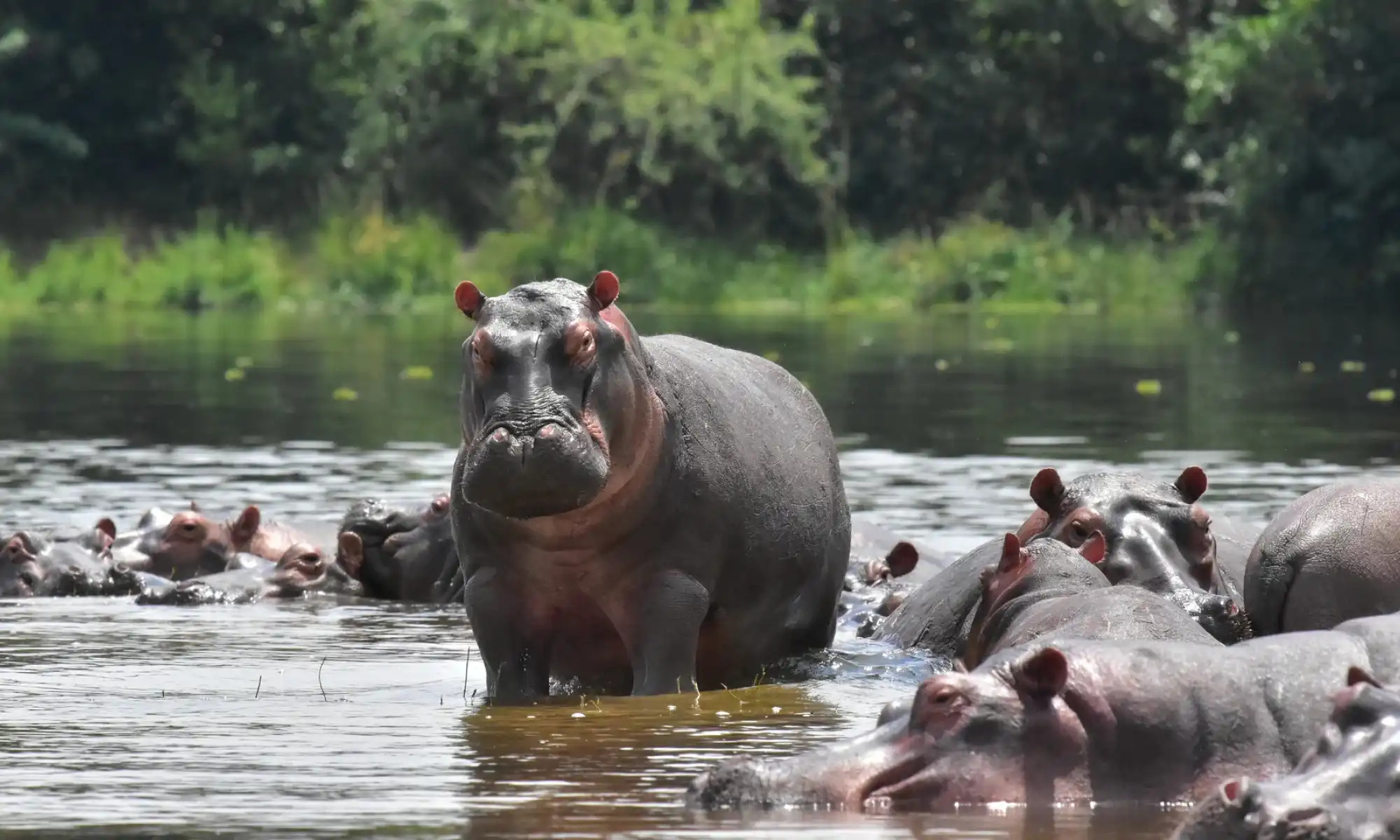
Hippopotamus
- Best places: Murchison Falls and Queen Elizabeth National Parks
- Best activity: Boat safari
- Chance of seeing: Almost certain
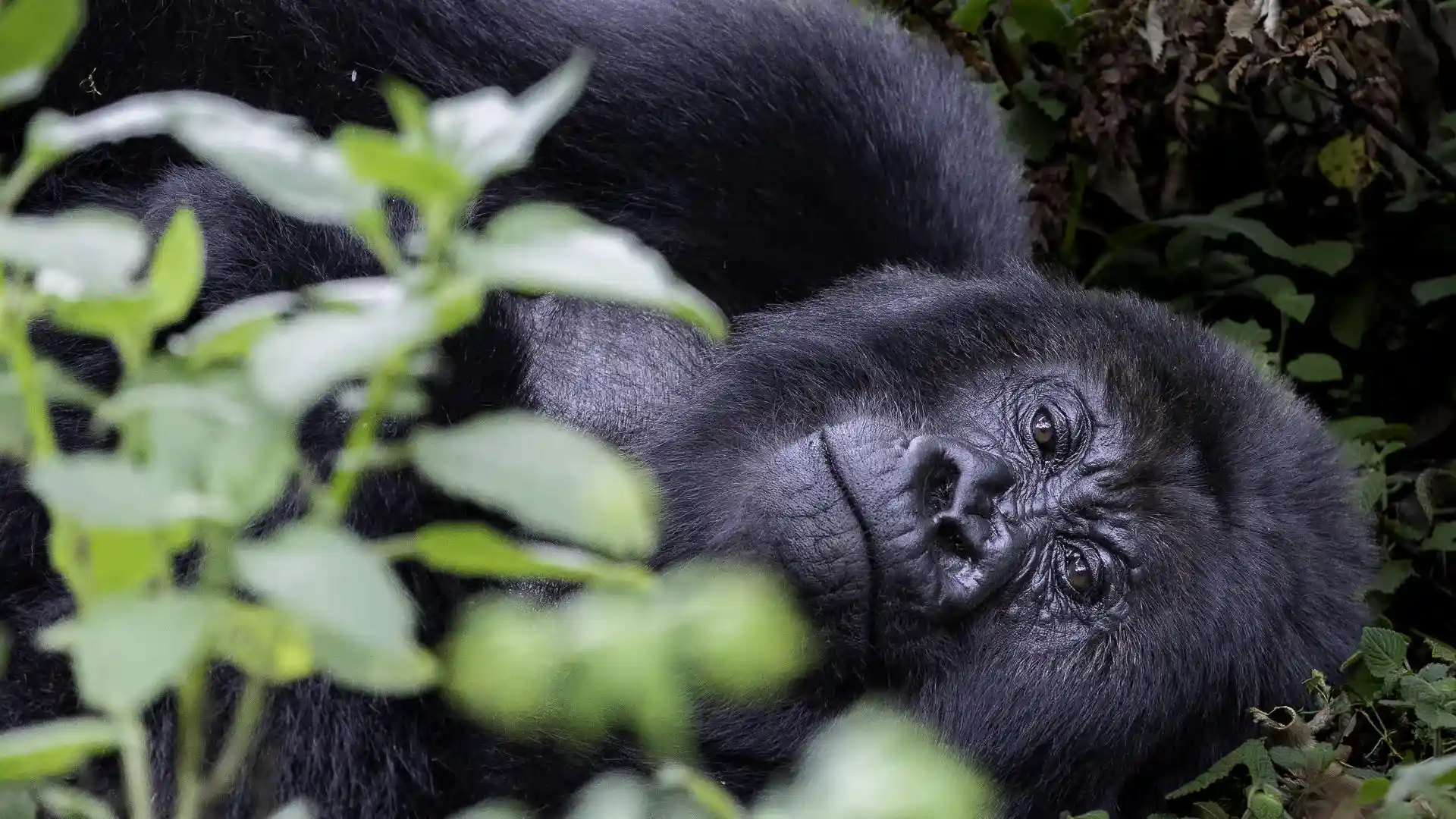
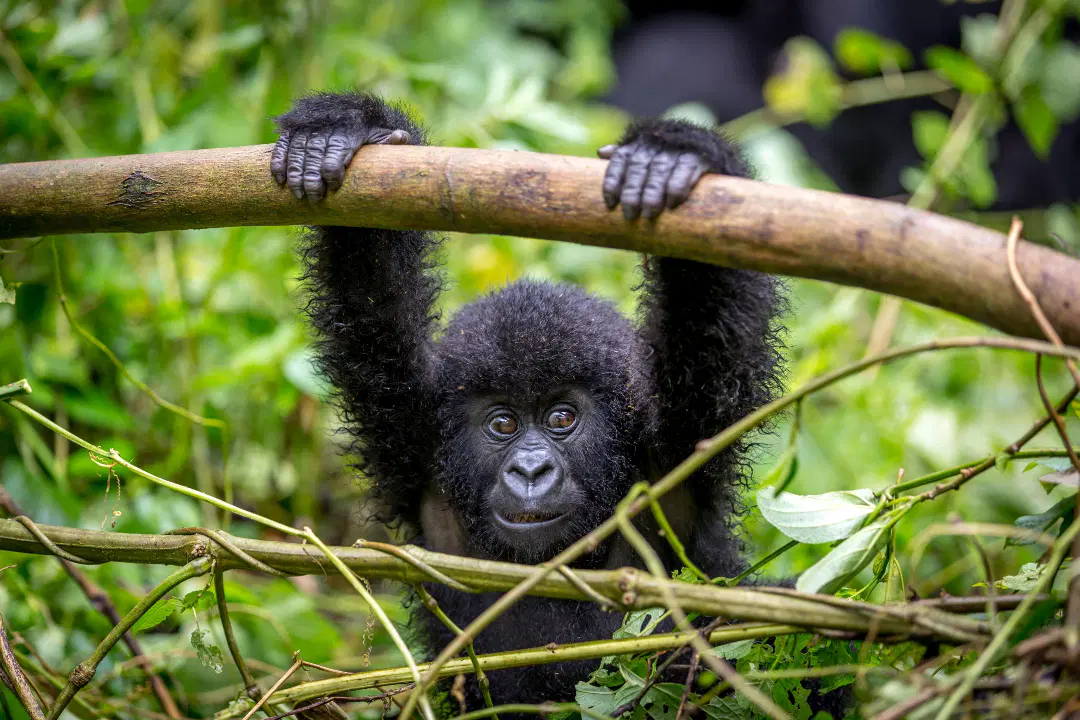
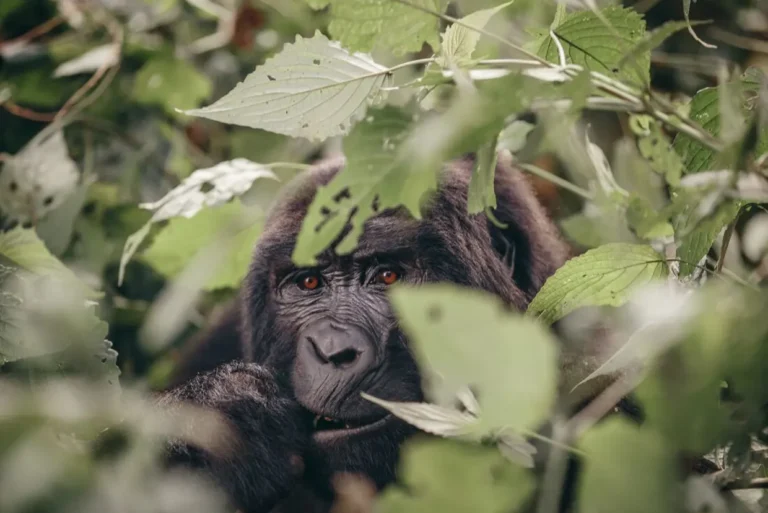
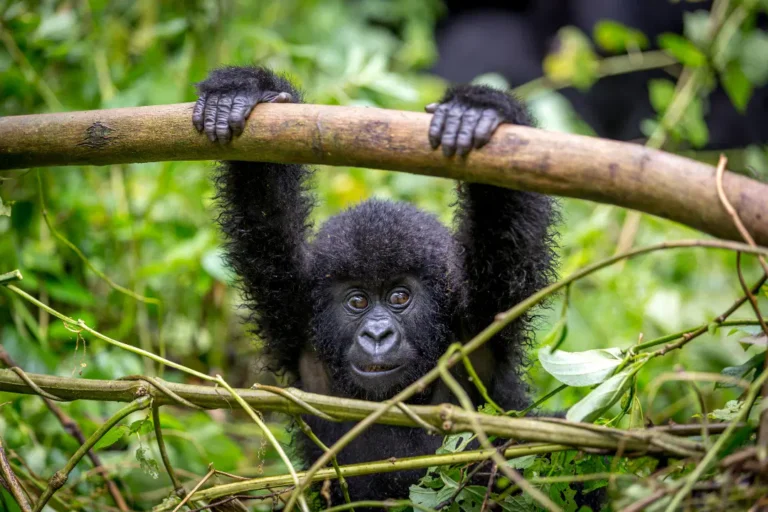
Mountain Gorilla
- Best places: Bwindi Impenetrable and Mgahinga Gorilla National Parks
- Best activity: Gorilla trekking
- Chance of seeing: Almost certain
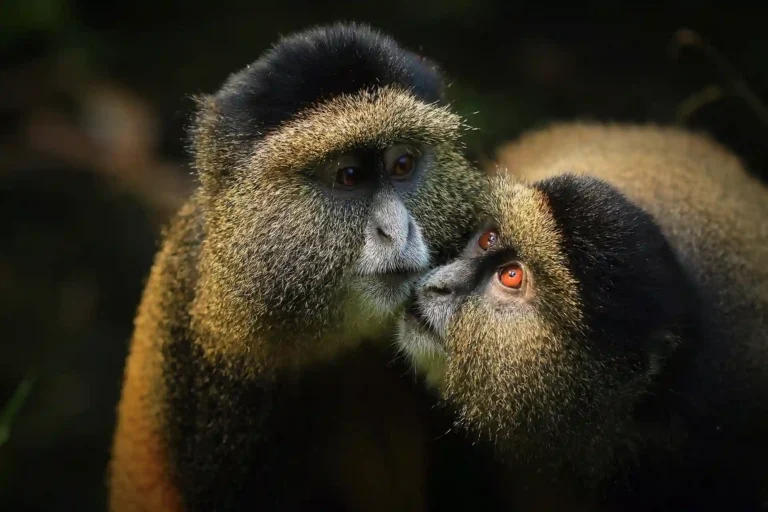
Golden Monkey
- Best place: Mgahinga Gorilla National Park
- Best activity: Golden monkey trekking
- Chance of seeing: Almost certain
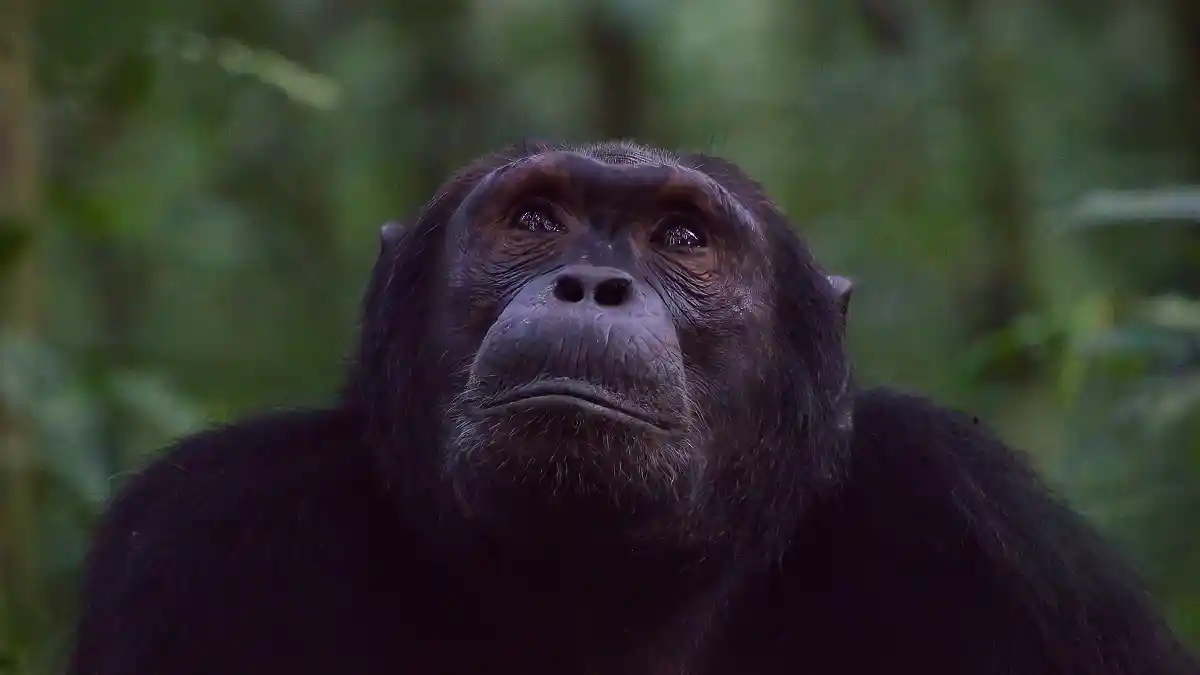
Chimpanzee
- Best place: Kibale Forest National Park
- Best activity: Chimpanzee trekking
- Chance of seeing: Virtually certain
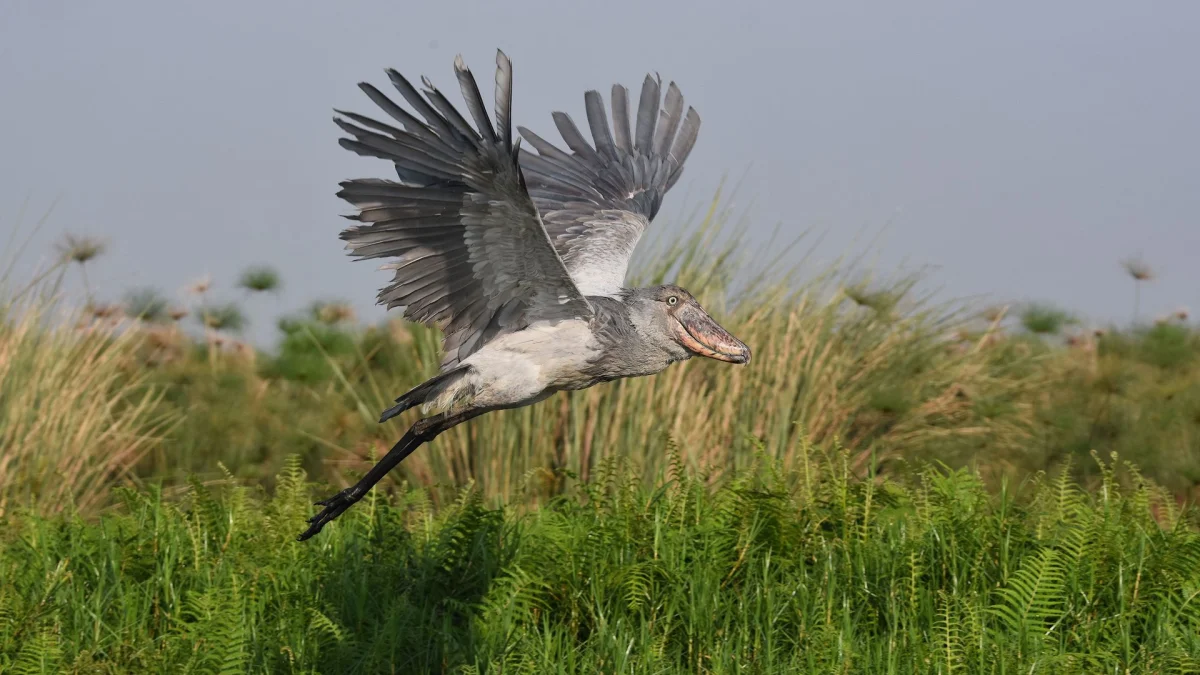
Shoebill stork
- Best place: Mabamba Swamp, on the shores of Lake Victoria near Entebbe
- Best activity: Guided boat trip
- Chance of seeing: Very high
Cheetah
- Best place: Kidepo Valley National Park
- Best activity: Game drive
- Chance of seeing: Very low
These chances are based on a well-planned safari that includes the right national parks and enough time for each activity. Particularly with leopards and lions, it makes a difference whether you do a single game drive or go on safari multiple times with a knowledgeable tour guide. Remember that these are wild animals, so sightings can never be guaranteed. However, most of the animals in this overview are very easy on suitable safaris in Uganda. Cheetahs are the exception. They are very rare and difficult to spot.
Where can you see the Big Five animals in Uganda?
The Big 5 animals consist of the lion, leopard, elephant, buffalo, and rhino. Despite the name, it has nothing to do with animals’ size. The term dates back to Africa’s hunting era. Trophy hunters used it to describe the five animals they considered most dangerous and difficult to hunt on foot. Today, it has become one of the best-known terms in safari tourism, and many travellers hope to see all five during their African safari. In Uganda, you can admire all five. In fact, during a well-planned tour, the chance of seeing the complete Big Five is particularly high.
Lions and leopards: the highlight for many travelers
For many travelers, seeing the big cats is one of the things they most look forward to most on safari. And we understand why.
Take the leopard, for example. Its beautiful coat, distinctive spots, and graceful movements make it a fascinating animal to watch. Sometimes you find one resting peacefully in a tree. On other occasions it walks right past your safari vehicle. Seeing a leopard up close is quite something. You may even be surprised by its size, as it is much bigger than many people imagine.
Leopards are masters of camouflage, which makes them difficult to spot. But they are often seen during our tours in Uganda. Queen Elizabeth and Murchison Falls National Park are particularly good places to look. Our guides know these parks and know where to search.
Lions are also regularly seen in both parks. Moreover, in the southern part of Queen Elizabeth National Park, around Ishasha, you may even encounter the famous tree-climbing lions. Seeing such a large predator lying high in a fig tree is always a special sight.
Sometimes you see multiple lions and a leopard during a single game drive. On other days, you may have to look a little longer. But when you go on multiple game drives in the right parks, the chances are excellent.
Elephants: impressive, no matter how often you see them
When a family of African bush elephants crosses the road right in front of your safari vehicle, you truly realize just how big and how special these animals are. They are so intelligent, sociable, graceful and communicative – you can watch them all day, and never get bored.
In Queen Elizabeth and Murchison Falls National Park, you see elephants almost constantly. Sometimes you find them quietly eating among the trees. At other times, an entire herd crosses your path, with the young ones staying close to their mothers. You can also observe them beautifully during a boat safari. Especially along the Kazinga Channel in Queen Elizabeth National Park, you regularly see elephants coming to drink or cool off at the water’s edge.
Buffalo: Huge herds in Kidepo
You can see buffalo in several national parks, but Kidepo National Park has something special in this regard. Here, you can come across enormous herds so large that it almost appears as if a migration is taking place. Hundreds, sometimes thousands of buffalo spread across the savannah. From a distance, they look like one huge dark mass moving across the plains.
However, Kidepo is less predictable than, for example, Murchison Falls National Park. The animals move across a large area and can sometimes be far from the parts of the park you are visiting. You can have an amazing safari day there, but also a day when you encounter fewer animals than you had hoped. In our opinion, Kidepo is still well worth visiting, not only for its wildlife but also for its beautiful open landscapes, quiet atmosphere and feeling of space.
Rhinos: a remarkable story of return
Rhinos once roamed freely in Uganda, but they disappeared from the wild during the last century due to poaching, political unrest and other factors.
For many years, Ziwa Rhino and Wildlife Ranch was the only place in the country where you could see them. Efforts have since been made to bring rhinos back to other protected areas, including Ajai Wildlife Reserve and Kidepo Valley National Park.
For travelers, Ziwa remains the best place to see rhinos in Uganda. Instead of looking for them from a safari vehicle, you explore the sanctuary on foot with an experienced ranger. This makes for a very different wildlife experience.
You can get surprisingly close to these impressive animals while learning about their behavior, the threats they face and the conservation work helping to secure their future in Uganda.
Another advantage is Ziwa’s location along the route from Kampala to Murchison Falls National Park. This makes it easy to include a rhino visit in your Uganda safari without making a major detour. You can read more in our blog about rhinos in Uganda.
Zebras, Giraffes and other special savannah animals in Uganda
Apart from the Big Five animals, there are many more animals that make a Uganda safari so special.
Giraffes: in Lake Mburo National Park can even be admired on foot
In Uganda, you see giraffes mainly in Lake Mburo and Murchison Falls National Parks. In Murchison Falls, you frequently come across them during game drives. Sometimes you see alone browsing among the trees, while on other occasions you find several together.
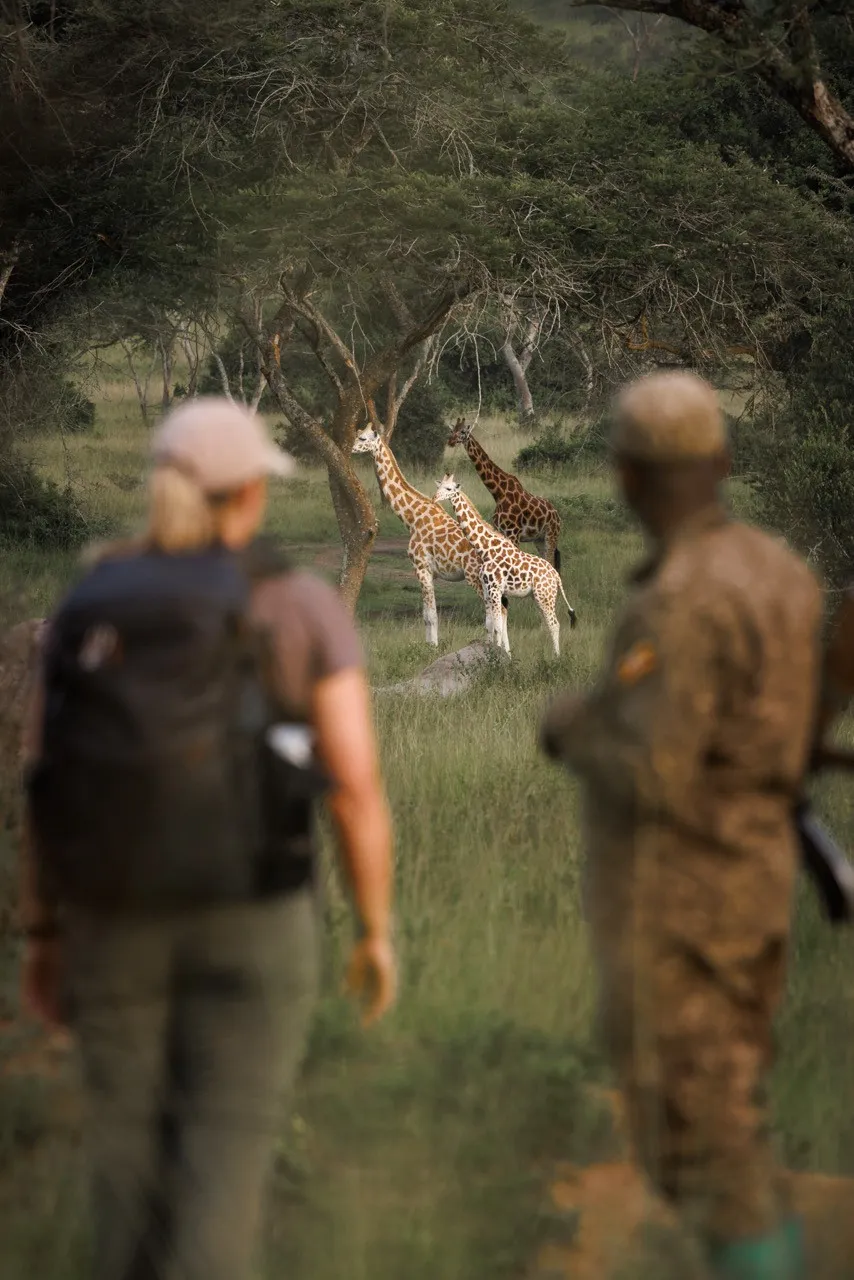
But one experience we personally find particularly beautiful is the walking safari through Lake Mburo National Park. Accompanied by an armed ranger, you set out on foot in search of giraffes, zebras, antelopes, and other wildlife. You can sometimes get surprisingly close while keeping a safe distance. And when you are standing on the ground yourself, without a car around you, you truly see just how impressively large, how tall a giraffe really is.
In our opinion, this is one of the most beautiful wildlife experiences in Uganda. And it is a nice change after a few days spent on safari mainly from the car.
Read more about Lake Mburo National Park.
Zebras: mainly in Lake Mburo and Kidepo
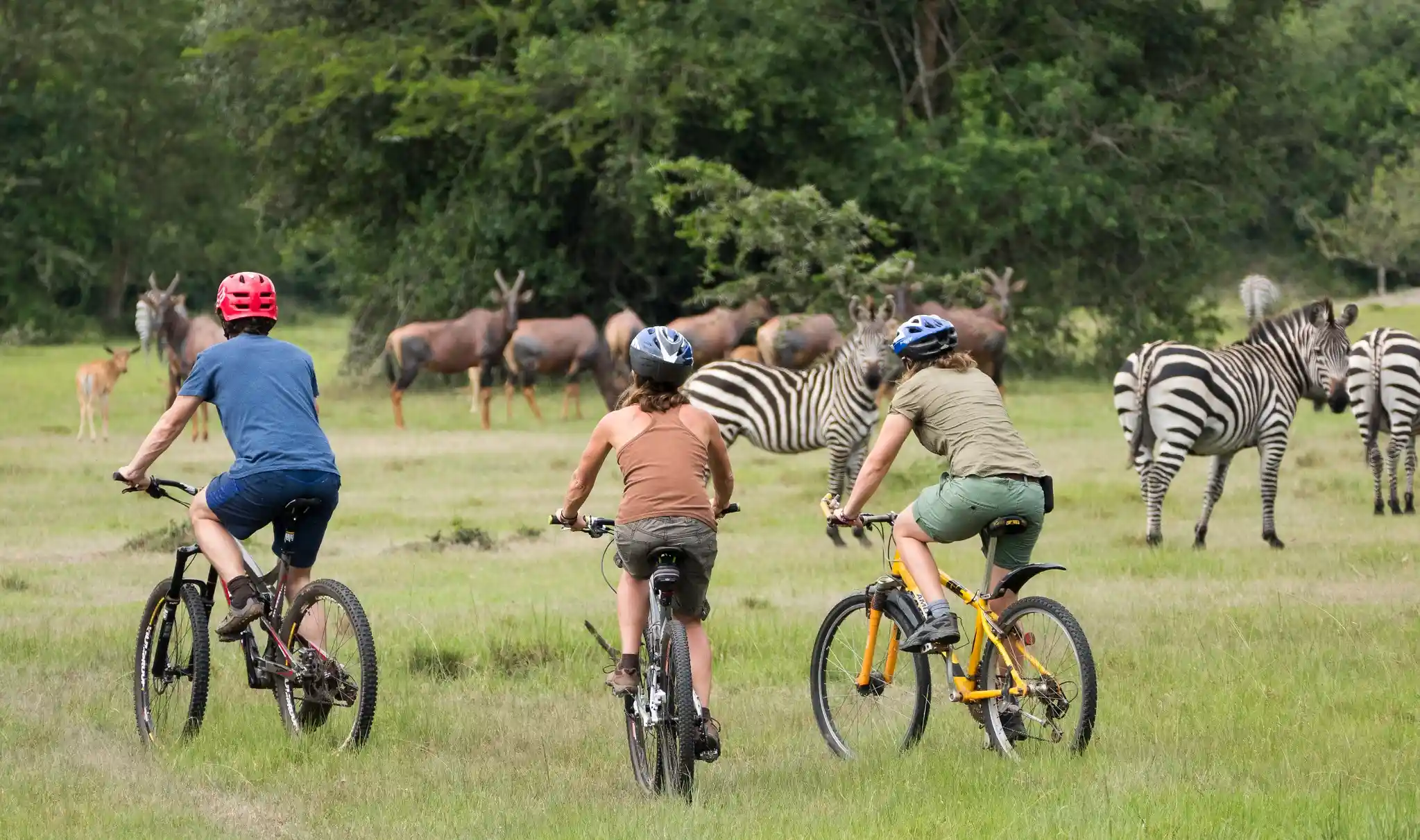
In Uganda, zebras are mainly found in Lake Mburo and Kidepo Valley National Parks. Lake Mburo is particularly good for seeing them. You regularly come across herds grazing on the open grasslands, often alongside impalas, topis and giraffes. You can watch them during a game drive, but also get a different perspective on a walking, cycling safari or horseback safari.
Moreover, Lake Mburo National Park is located on a logical route from gorilla trekking destinations of southwestern Uganda back to Entebbe or Kampala. That is why we often include it towards the end of our tours, as a final opportunity to enjoy more Uganda’s wildlife before returning home.
Hippos and crocodiles: the most beautiful from the water
Murchison Falls and Queen Elizabeth National Parks are excellent places to see hippos and crocodiles. The Kazinga Channel in Queen, in particular, is famous for its large hippo population.
During a boat safari here, you see them gathered in the water, often with only their eyes and ears showing above the surface. Every now and then, one comes up, opens its enormous mouth or moves along the water’s edge. Crocodiles can often be seen lying motionless on the banks, basking in the sun. In Murchison Falls National Park, you enjoy a boat trip on the Nile River towards the famous waterfalls. En route, you almost always see hippos and often crocodiles, elephants, buffaloes, and countless waterbirds.
For us, a boat safari is one of the most pleasant ways to watch wildlife. You see animals from a completely different perspective than during a game drive.
Gorillas and chimpanzees: what makes Uganda truly special
What sets Uganda apart from other safari destinations in Africa is the combination of savannah animals and primates. On a single tour in Uganda, you can see lions, elephants, zebras, and giraffes, but also trek into the rainforest in search of mountain gorillas and chimpanzees.
Mountain gorillas in Bwindi and Mgahinga
Chimpanzees in Kibale and other forests
Chimpanzees are just as fascinating as gorillas, but watching them is a very different experience. They are much more active, make a lot of noise and often move quickly through the trees or across the forest floor. For chimpanzee trekking, we usually recommend Kibale Forest National Park. The chance of seeing chimpanzees here is particularly high, over 95%. Kyambura Gorge in Queen Elizabeth National Park and Budongo Forest Reserve near Murchison Falls National Park also offer possibilities. Which location suits best depends on the route and the interests of the travelers.
Golden monkeys in Mgahinga
Another special primate you can see in Uganda is the golden monkey. These small, beautifully colored monkeys reside in the volcanic Virunga Mountains, in the far southwest of Uganda. They actually live in Mgahinga Gorilla National Park near the southern area of Bwindi. They are lively, curious, particularly photogenic, and are generally easy to observe. Golden monkey trekking is especially interesting for travelers who enjoy monkeys, photography, and a less strenuous hike. Moreover, the activity can easily be combined with a stay around Bwindi, Lake Mutanda or Kisoro.
You may also like: How many nights do you plan around a gorilla trekking?
The shoebill: one of the most special birds in Uganda
An animal we certainly don’t want to leave out is the shoebill stork. With its enormous, shoe-shaped beak, tall body and prehistoric appearance, it is unlike almost any other bird you will see on Earth. It can grow to over a meter tall and often stands completely still in the swamp, sometimes for several minutes, waiting patiently for prey to come within reach.
If you would like to see a shoebill, we almost always recommend a visit to Mabamba Wetland, not far from Entebbe. You explore the marsh in a small boat, accompanied by a local bird guide who knows the waterways and where shoebills are regularly spotted.
The chances of seeing one here are particularly good. Our travelers see this bird here very regularly, although it remains a wild animal, of course. The boat trip itself is also beautiful. You glide through narrow channels surrounded by papyrus, with plenty of other birds to look out for along the way. Read more about birding in Uganda.
Can you also see cheetahs in Uganda?
Yes, cheetahs still live in Kidepo National Park, but spotting one during a safari is very rare. Their numbers are low, and they move across large, open areas of the park.
For that reason, we would never promise a cheetah sighting or plan an entire safari around the possibility of seeing one in Uganda. If seeing cheetahs is high on your wish list, some safari areas in Kenya and Tanzania offer much better opportunities.
That certainly doesn’t make Kidepo any less worthwhile. The park has some of the most beautiful landscapes in Africa, with vast open plains, rugged mountains and a wonderful sense of wilderness. You can also look out for lions, buffaloes, elephants, giraffes and zebras during your game drives. But anyone going to Kidepo should above all enjoy the complete landscape, the tranquility, and the sense of remote wilderness, not just a list of animals to tick off.
You can read more about this in guide on Kidepo Valley National Park.
How do you combine the best safari parks in one tour?
For travelers coming to Uganda for the first time who would like to see several different animals. We often craft an itinerary that combines various habitats. A logical Uganda safari itinerary of approximately 12 days to 3 weeks might look something like this:
- Entebbe and Mabamba Wetland: a great start with the shoebill stork.
- Ziwa Rhino Ranch: on the way to Murchison Falls, you go in search of rhinos on foot.
- Murchison Falls National Park: game drives for lions, leopards, elephants, giraffes, and buffaloes, combined with a boat safari.
- Kibale Forest National Park: searching for chimpanzees in the rainforest.
- Queen Elizabeth National Park: game drives and a boat safari on the Kazinga Channel.
- Ishasha and Bwindi: tree climbing lions and then the gorilla trekking.
- Lake Mburo National Park: finish with giraffes, zebras, and a walking safari before traveling back to Entebbe.
This is not a fixed route that works best for everyone. Sometimes we choose to stay longer in a particular park, leave out a destination, or include Kidepo National Park. Kidepo is located far to the northeast of Uganda and requires quite a bit of extra travel time. We therefore recommend this park mainly for travellers who have enough time and consciously choose the remote
For us, what matters most is giving you enough time to enjoy the wildlife viewing. We would much rather plan two good game drives and a beautiful boat safari than rush from one national park to another just to cover more ground.
You may like: how to plan a relaxed safari in Uganda?
What is the difference between a safari in Uganda, Kenya, and Tanzania?
Tanzania and Kenya have traditionally been the classic safari destinations in East Africa. They are famous for their vast savannah plains, large concentrations of wildlife and well-known parks such as the Masai Mara and the Serengeti. If you dream of seeing enormous herds of wildebeest and zebras, or witnessing the Great Wildebeest Migration, Kenya and Tanzania are excellent choices.
Uganda offers a rather different kind of safari. Its landscapes are much more varied. One day you may be watching elephants and lions on the open savannah. A few days later, you could be walking through a real tropical rainforest in search of primates. So, you experience nature in many different ways. In Kenya and Tanzania, a classic safari often revolves largely around game drives from the car. In Uganda, you can combine this with gorilla trekking, chimpanzee trekking, walks among giraffes, boat safaris, and active treks through the mountains.
There is a difference in the level of crowding. Particularly during the high season, the most famous safari parks in Tanzania and Kenya can be quite busy. In Uganda, tourism is largely on a smaller scale. And in some areas, you encounter very few other visitors. However, that doesn’t mean you are alone everywhere. You may also run into other travellers during popular activities such as mountain gorilla trekking or game drives at well-known locations. However, the sense of peace and space is often very different in Uganda.
So, where should you go? We don’t believe that Uganda is by definition a better safari destination than Kenya or Tanzania. If you only want to go to Africa for classic game drives and large numbers of savannah animals, you can find excellent options in Tanzania or Kenya. But if you also enjoy hiking, want to see unique primates, and discover diverse landscapes, you will find a combination in Uganda that you will find in few other places.
What is the best time to travel to see animals in Uganda?
You can see wild animals in Uganda all year round. The drier seasons, roughly from December to February and from June to early September, are often pleasant for game drives and nature walks. The roads and trails are usually more passable during these times.
But you can also enjoy a beautiful safari during the greener months (rainy months). The landscape is often particularly beautiful then. There are also fewer travelers. And gorillas and chimpanzees can be visited all year round. Rain can make the hike more difficult, but it does not automatically mean you have less chance of seeing the animals.
The best time to visit Uganda for wildlife viewing therefore also depends on the route, the activities you want to undertake, and your personal preferences.
Spotting animals in Uganda: our top tip
You will already notice that Uganda is home to an incredible number of extraordinary wild animals. Don’t just try to tick off as many animals as possible. Of course, it is fantastic when you see the entire Big 5 during your safari. And we fully understand that you would love to encounter a leopard, lion, or gorilla. But some of the most beautiful moments arise precisely when you take your time. A group of giraffes that you can observe up close during a walking safari. A family of elephants calmly crossing the road. Hundreds of buffaloes roaming the landscape of Kidepo Valley. Or a leopard that suddenly appears after a long search.
That is why we work with experienced Ugandan tour guides who not only know where to find animals but also understand when it is worthwhile to stay somewhere a little longer.
We organize fully customized private safaris in Uganda. We are happy to help you determine which parks and activities best suit the animals you want to see, without you having to be constantly on the move. Curious what such a trip might look like? Feel free to contact us. We will then create a free proposal that fits your wishes and budget.