Meet the Gorilla Families of Buhoma

Gorillas form long-lasting family bonds, each headed by a dominant male known as silverback. Uganda is home to over 50 families of mountain gorillas, most of them found in Bwindi Impenetrable Forest National Park. Bwindi is divided into 4 sectors: Buhoma, Ruhija, Rushaga and Nkuringo. Each sector is a self-standing gorilla trekking destination, with its own gorilla families, accommodation, and approach routes. Not all gorilla families are accessible to visitors. Only groups that have become accustomed to the presence of humans are opened up for trekking. 

When booking your gorilla permit, you book it for a specific sector, so you need to be at that sector for your trek. Buhoma, on the northern side of Bwindi, sits at a lower altitude than the other sectors, and its terrain is somewhat gentler. It is also the park’s most established gorilla trekking sector, as this is where gorilla trekking tours began in Bwindi in 1992. There is a wide choice of accommodation, and Buhoma is easy to reach when coming from north, for example, from Queen Elizabeth National Park. Somewhere beneath its canopy are seven habituated gorilla families, each with their own composition, behaviour and habitat. These are the gentle giants of Buhoma.

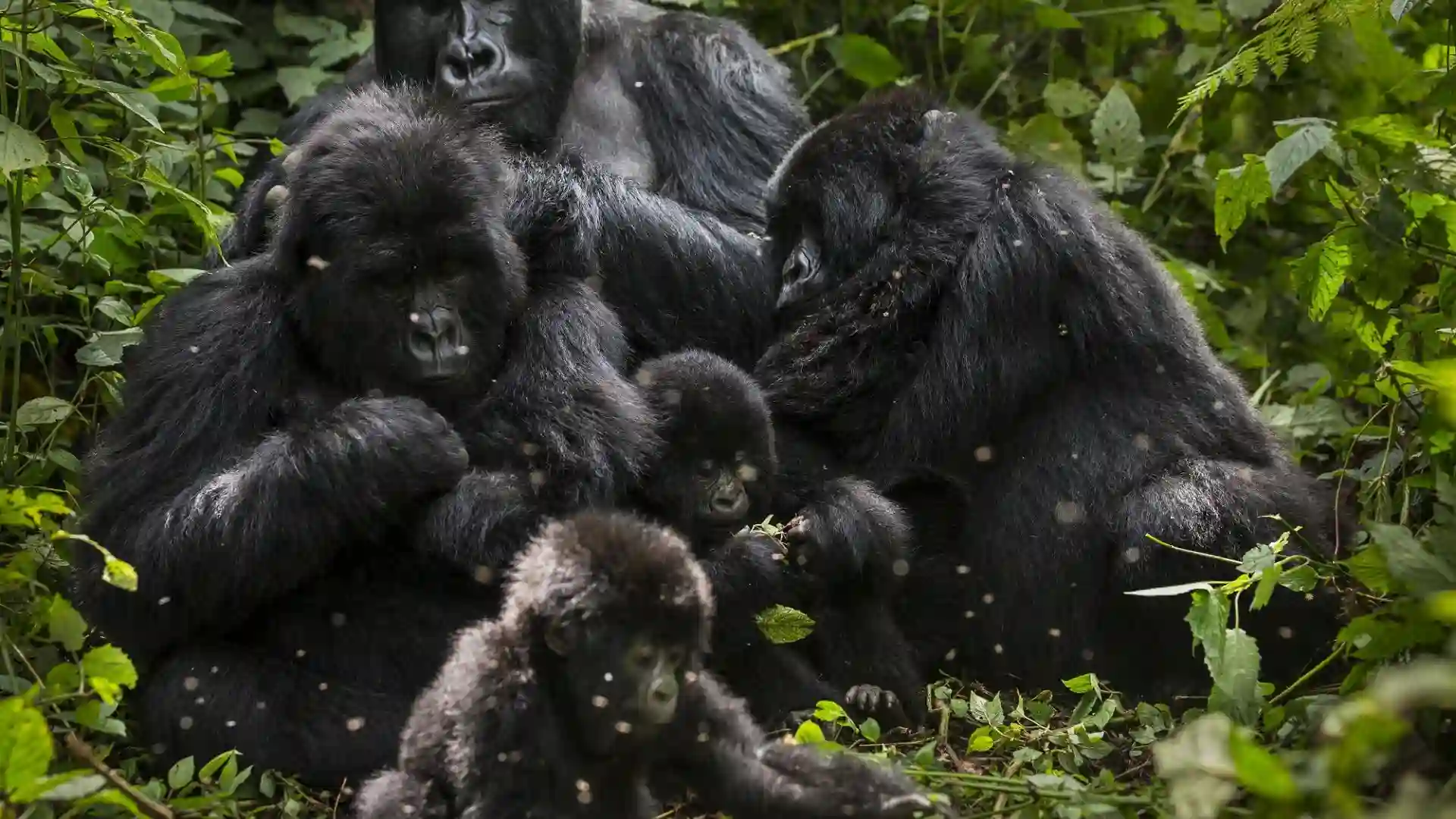
gorilla families of Buhoma.webp

What are the names of gorilla families in Buhoma?

Each habituated gorilla family is given a name so researchers and rangers can identify and follow the group over time. The names often have a story behind them, whether linked to a place, an individual gorilla or something that happened during the family’s history.

1. The Binyindo Family – What’s in a name?

Spend enough time getting to know the gorilla families in Bwindi and you soon realise that their names can tell you something about the individuals behind them. The Binyindo family is a good example. The family is led by Kavuyo, a distinctive silverback whose name means “Trouble Maker.” You can also recognise him by his appearance: a damaged ear, deep-set eyes and a prominent nose. 

Around him are several other memorable names. There is Kajura, meaning “Born in Drizzling Rain,” and Rushooba, whose name means “Moves Slowly.” Then there is Nyampaka, or “The Argumentative One.”

The names naturally make you curious. What did Kavuyo do to earn the name Trouble Maker? Does Rushooba really move that slowly? And what made Nyampaka so argumentative? 

Spend an hour with the family and you may begin to find your own answers.

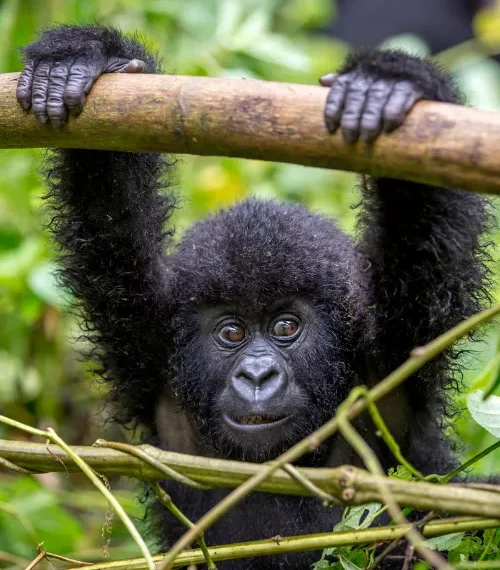
Baby-Gorilla-Standing-Bwindi-Uganda.jpg

2. The Katwe Family – Protectors & troublemakers

If the Binyindo family has some memorable names, the Katwe family is not far behind. At its head is Murinzi, born in 2002, whose name means “Protector.” Sharing the family with him is the much older silverback Mahaane, born around 1990, whose name means “Complicated.” Two silverbacks from different generations make for an intriguing family dynamic.

Then there is Karureeta, whose name translates as “Chaos Initiator.” Alongside her are the more patiently named Kangume, and the younger Kasiru, Mirangara and Miracle.

As with all gorilla names, the meaning is only part of the story. A name may reflect something observed about an animal or an event in its life, but it does not necessarily tell you what that gorilla is like. Still, when you meet a gorilla called the Chaos Initiator, it is hard not to wonder what she might get up to.

3. The Muyambi Family – Every individual has a story

The third gorilla family brings us to another appropriately named silverback. Muyambi means “Helper”. And the silverback who carries the name has another useful distinction: a prominent horizontal ridge above his nose makes him easy to pick out among the family. He shares the group with senior male Kituta, females Kikombe, Kisho and Bucerere, blackback Rushokye, and young Kura, whose name means “Elections.” 

Kisho is just as distinctive in her own way. Her left eye is damaged, and her ears are deeply wrinkled. With a small family like Muyambi, such details soon begin to matter. You start noticing the shape of a nose, the fold of an ear, or the particular way one gorilla behaves. Within an hour, the family no longer feels like a collection of gorillas. You begin to recognise them as individuals. That is often what stays with you. 

You arrive hoping to see mountain gorillas. You leave remembering them one by one.

Gorilla-2.jpg.webp

4. The Kanywani Gorilla Family – Friendly by name

The Kanywani family takes its name from its silverback, Kanywani, whose name means “Friendly.” He leads a small, close-knit family of three adult females – Musingye, Kamushongi and Karuhuura – and the youngest member, Kibirangwe. With so few gorillas in the group, you can often see their relationships more clearly. 

Watch them for a while and the individual characters begin to emerge. Notice who sits beside whom, which gorillas stay close, and how Kibirangwe interacts with the adults. These small details are easy to miss at first. But they are often what makes an hour with the Kanywani family so memorable.

father_son_gorilla_bwindi___ (1)
3 Day Gorilla Trekking Uganda

5. The Rushegura Family – Life in a large family

The Rushegura family offers a very different view of gorilla life. This is one of Buhoma’s larger families, led by the dominant silverback Kabukojo. Around him are adult females, blackbacks and youngsters from several generations. Another silverback, Karembezi, adds further strength to the group.

Among the younger males are Kimuriru and Ndeeba, whose playful behaviour brings yet another energy to the family. With so many individuals together, there is always something happening. One gorilla may sit quietly feeding while youngsters tumble and chase one another nearby. Elsewhere, an adult settles into the vegetation as another moves through the group.

You cannot watch everyone at once, nor do you need to. Choose one interaction and follow it for a while. You may see a youngster testing the patience of an adult, two family members keeping close, or a silverback quietly watching over the group. This is the Rushegura family at its most interesting: a community of different ages, personalities and relationships living together in the forest.

6. The Habinyanja Family – Look a little closer

Not every gorilla encounter is defined by activity. Sometimes the most memorable moments are the quiet ones. The Habinyanja family is a small group led by silverback Ruyombo, alongside adult females Rutinda and Rukondo, blackbacks Kazahi and Nyanjura, and the young Prunus.

With fewer individuals to follow, you have more chance to notice the small things. Watch where a youngster goes when it wants reassurance. See which gorillas choose to stay close. 

A glance, a gentle touch or a subtle change in position can say more than you might expect. Gorillas do not perform for visitors. Sometimes they play, move through the forest or display their strength. 

At other times, they simply feed and rest beneath the canopy. With Habinyanja, there is value in doing less and watching more. Look a little closer, and a quiet hour can reveal a great deal.

gorilla_family_together.webp

7. Mubare Gorilla Family – The Oldest Family in Bwindi

The Mubare family is where the story of gorilla trekking in Buhoma begins. Named after the Mubare hills, where the group was first habituated, it became Bwindi’s first gorilla family to open to visitors in 1992. More than thirty years later, Mubare is still here, although the family has changed considerably since those early days.

The first great silverback was Ruhondeza, who led the family for many years. When he died of old age in June 2012, leadership passed to his eldest son, Kanyonyi. Five years later, in November 2017, another silverback, Maraya, challenged Kanyonyi and killed him, taking over the group.

Maraya remains the dominant silverback today. The family is now small, with nine members: one silverback, four adult females and four babies. Watching Mubare means watching a family with a long history behind it – one that has been part of Bwindi’s gorilla story since the very beginning.

Visit Buhoma a gorilla trekking trip

Bwindi has four gorilla trekking sectors. But when your permit takes you to Buhoma, you experience a classic adventure. Buhoma is warmer and lower, with its own atmosphere, terrain and history. Beneath its canopy, Maraya, Kanywani, Kavuyo, Kabukojo, Murinzi, Ruyombo and Muyambi lead families with stories entirely their own. Which family you encounter is only one part of the experience. 

Gorillas move, conditions change and no two days beneath the canopy unfold in quite the same way. That unpredictability is part of what makes trekking in Bwindi so compelling. You can learn their names and read their stories before setting out. But it is only when the vegetation parts and you meet them in their forest home that your own story with the gorillas of Buhoma begins.

Luxury Uganda Safaris

Frequently Asked Questions

When you book a gorilla permit, you choose a trekking sector, not a specific gorilla family. The park authorities assign you a family on the day of your trek, taking into account the available groups, the terrain and your fitness level. Some families live in steeper parts of the forest, while others may be closer to established trails. 

Rangers consider factors such as your age and physical ability when deciding which group is most suitable. On the morning of your trek, you can request a particular family, although this cannot be guaranteed. Booking early gives you more choice of trekking sector and travel date, but the family you eventually meet is part of the experience. This system helps distribute visitors between the habituated groups while keeping the trek manageable for both you and the gorillas.

Gorilla trekking in Buhoma starts in the morning. You should be at the park headquarters for registration and briefing before the trek begins. Registration usually starts at 7:30 am and briefing at 8:00 am. Trekking usually begins at 8:30 am.

For a Buhoma trek, it is therefore best to have breakfast early and be ready at the briefing point in good time. The actual walking time varies because the gorillas move through the forest. A trek can last roughly 2 to 6 hours, depending on where the family is found. Once you reach them, normal gorilla tracking allows up to one hour with the family.

A maximum of eight visitors can trek with a habituated gorilla family in Uganda. This limit applies to the gorilla family itself, rather than to the whole Buhoma sector. That means the family you meet will not be surrounded by a large crowd. Your trekking group will also include your UWA guide and trackers, who lead the search and help you observe the gorillas without disturbing them. The limit is an important part of how gorilla tourism is managed. Different families are assigned to visitors within each sector, while the number of people visiting each family remains controlled.

Buhoma has a good range of accommodation, from simple community-run stays to some of Bwindi’s finest lodges. Your choice will largely depend on the level of comfort you want and how much you would like to spend. For affordable luxury, consider Buhoma Lodge or Mahogany Springs. Both offer comfortable accommodation in a beautiful forest setting. For mid-range stays, Engagi Lodge and The Haven Community Lodge are good options.

If you are looking for something more exclusive, options include Erebero Hills, Volcanoes Bwindi Lodge and Sanctuary Gorilla Forest Lodge. For budget-friendly accommodation, Ride 4 A Woman Guest House and CTPH Camp offer simpler stays and are particularly suitable for travellers who would rather put more of their budget towards the safari itself.

Buhoma is generally considered the more manageable sectors for gorilla trekking in Bwindi, although no gorilla trek can be described as easy. The sector lies at a lower altitude than Ruhija, Rushaga and Nkuringo, and its terrain is generally less steep. This can make a noticeable difference, particularly for travellers who are less comfortable with long climbs.

However, the gorillas decide how difficult your trek will be. They move freely through the forest, and their location changes from day to day. You may spend a few hours walking through relatively gentle terrain, or find yourself climbing steeper slopes in search of a family that has moved deeper into the forest. You do not need to be exceptionally fit, but you should be comfortable walking for several hours on uneven, sometimes slippery ground. Your guide sets the pace, and porters are available to carry your daypack and assist on more difficult sections. If you are choosing between Bwindi’s four sectors, your fitness, age and overall travel plans are worth considering. Buhoma’s lower altitude and generally gentler terrain make it an attractive option for travellers who want to keep the physical demands of gorilla trekking more manageable.

No. We understand the temptation, especially when a curious youngster comes close. But these are wild animals, and they must be treated as such. Mountain gorillas are also highly vulnerable to human diseases. A cold or other respiratory infection that may be minor to us can be serious for them. 

This is why strict rules are in place to limit close contact and reduce the risk of disease transmission. If you are unwell, you should not go trekking. When you find the gorillas, follow your guide’s instructions and maintain the required distance of about 7 meters. If a gorilla approaches you, do not reach out or try to touch it. Stay calm and allow it to move around you.

Gorilla sightings in Bwindi are about 99% reliable in our experience. We have never had a client go gorilla trekking in Uganda and return without seeing the gorillas. That is because the habituated families are monitored by trackers who set out ahead of the trekking groups and follow their movements through the forest. Still, these are wild animals. They are free to move, and their location can change from one day to the next. Thick vegetation, steep terrain and weather can also affect how long it takes to reach them. So, while we cannot promise exactly where or when you will find the family, you are not simply walking into the forest hoping to get lucky. Experienced trackers are following a known gorilla family, and in the overwhelming majority of treks, that search ends with an unforgettable encounter.

Yes. For many people, meeting family of gorillas in the wild is one of the highlights of a trip to Africa. Gorilla trekking in Uganda is about more than simply seeing the gorillas. It starts with a trek through the beautiful rainforest, following trails in search of a gorilla family with an experienced local ranger guide. Then comes the moment you have been waiting for. You find the gorillas and suddenly you are standing just a few metres away from them, in their natural habitat. Their strength, calmness, and remarkably human-like behaviour can make the whole forest feel quiet for a moment. There are no fences or barriers between you and the gorillas. Just the rainforest, the family, and the experience unfolding in front of you. It is this closeness and the feeling of seeing them exactly where they belong that makes gorilla trekking so special. For many travellers, it becomes one of those rare wildlife encounters they remember for years.

You might also like

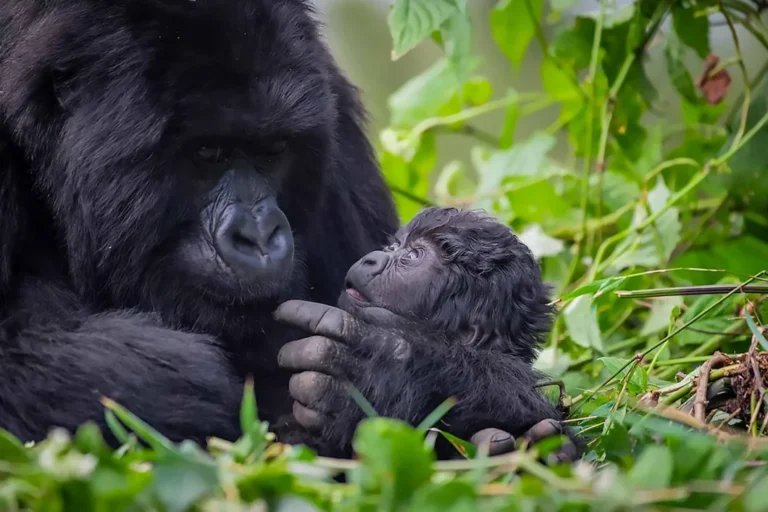
baby mother gorilla in Bwindi Impenetrable National Park
Meet the Gorilla Families of Buhoma

Gorillas form long-lasting family bonds, each headed by a dominant male known as silverback Uganda is home to over 50 families of mountain gorillas, most of them found in Bwindi Impenetrable Forest...


Murchison Falls National Park (2)
What Are the Tipping Customs in Uganda?

Neary every traveler struggles with tipping How much should you give When should you give it And to who should you tip It can feel a little uncomfortable You want to show appreciation, but you...


Best Time To Visit Uganda (2).webp
Best Time to Visit Uganda | Dry Vs Rainy Season

You can come for a tour of Uganda at any time of the year The country is always beautiful and travelling around is easy in every season The climate is pleasant However, there are some differences...


Share

Meet the Gorilla Families of Buhoma