We help you on your way
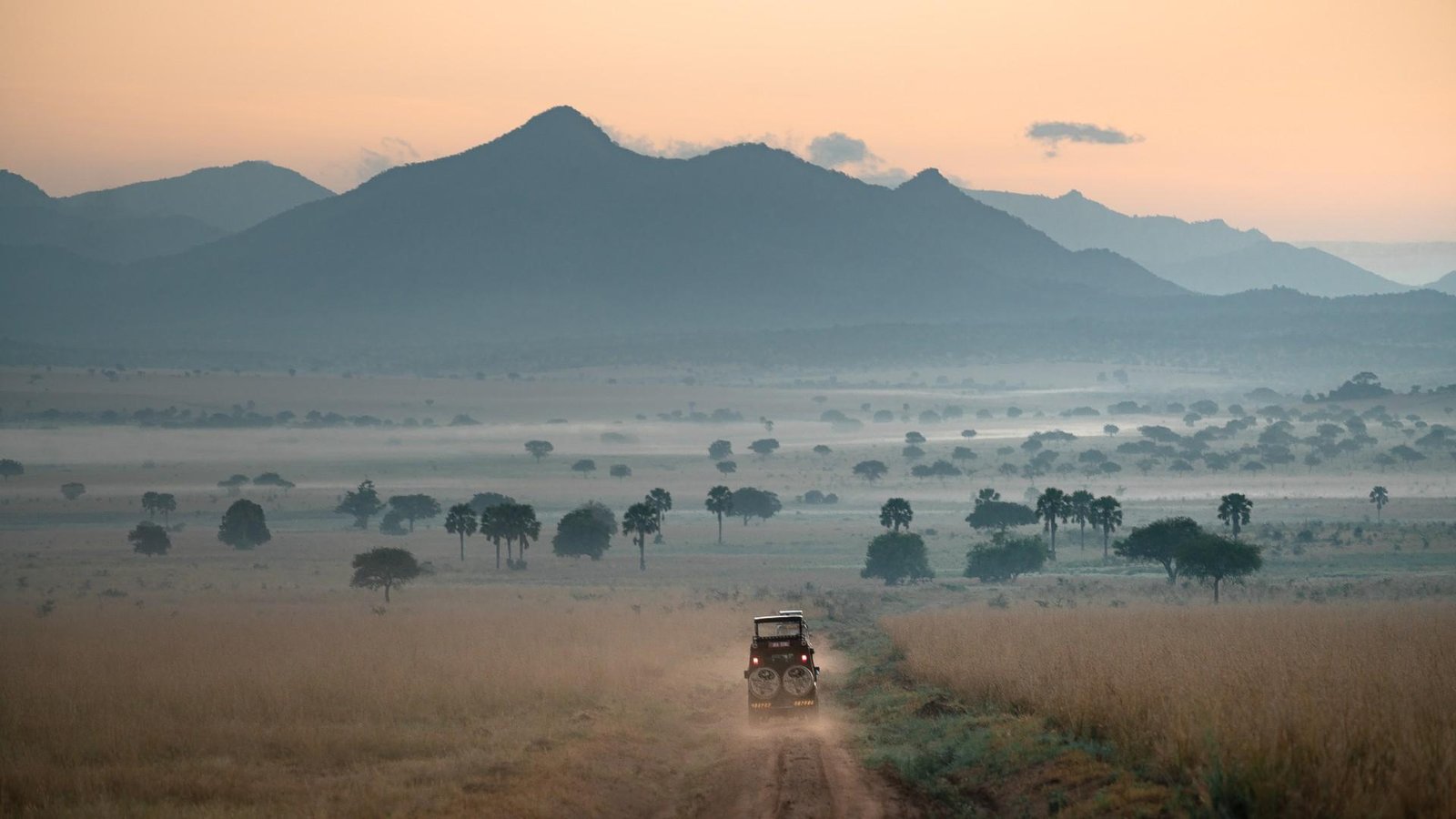
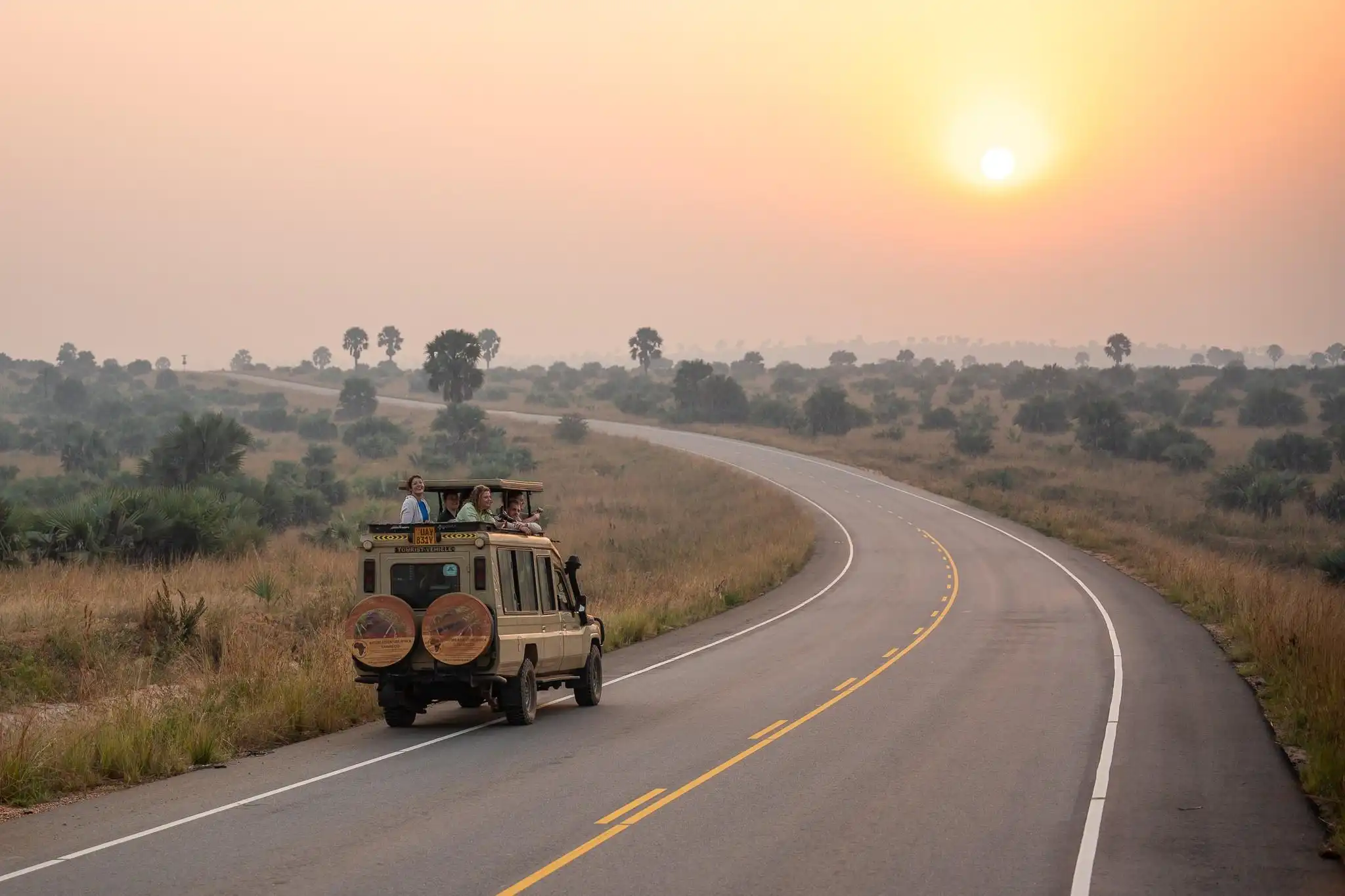
You travel in Uganda with Choose Uganda Safaris in your own Land Cruiser and a professional private tour guide. Your activities, accommodations and meals are arranged; we provide drinking water along the way. Your guide knows the route, but also knows the practical things: where you can withdraw money, where to stop for lunch, and where to arrange something if you need it.
Before you even board your plane, we will already have gone through the important practical details with you. Your visa, luggage, tipping, dietary requirements and anything else that matters for your particular trip. You do not have to figure everything out yourself or arrange everything from home. This blog is mainly for the questions that come afterwards. Not just what is officially possible or required, but how things actually work when you are travelling through Uganda.
Internet in Uganda: are you reachable while traveling?
Yes – in surprisingly many places, you are. In Kampala, Entebbe and other larger towns, the mobile network is generally good, and you will have mobile data in many places during your trip.
However, once you drive into a remote area, national park, or deep into the rainforest, the signal can naturally become weaker or disappear completely for a while.
All accommodations we work with have Wi-Fi.
But do not expect the same speed everywhere as you have at home. At one lodge, you can send your photos to your friends and family without any problem, while at a remote location, the connection can be slower and you may simply need a little more patience.
If you would like to be independent of Wi-Fi while travelling, a local SIM card is the easiest solution.
A local SIM card: MTN or Airtel?
MTN and Airtel are the two main mobile providers in Uganda, and both are good choices. Which one gives you the best coverage can vary depending on where you are travelling.
Getting a local SIM card is simple. You will find the MTN and Airtel counters in the arrivals hall of Entebbe International Airport (EBB), where your SIM can be registered and a data bundle activated straight away. You only need your passport for this.
Mobile data is also cheap. As a rough guide, expect to pay around 6 to 11 USD for 10 to 20 GB of data, depending on the provider and bundle. For WhatsApp, browsing the internet and sharing photos, that is more than enough for most travellers.
The available bundles change regularly. Therefore, it makes little sense to figure out at home which bundle you will need in a few months.
Will WhatsApp continue to work with a Ugandan SIM card?
Yes. WhatsApp will continue to work with your number, even if you put a Ugandan SIM card in your phone. Your contacts can therefore keep reaching you on WhatsApp exactly as they normally do.
If your phone supports two SIM cards or eSIM, you can keep your own number active while using the Ugandan SIM for mobile data.
Just remember to turn off data roaming on your home-country SIM. Otherwise, that cheap Ugandan data bundle could quickly turn into a surprisingly expensive affair.
And an eSIM?
That is also an option. The main advantage of an international eSIM is convenience: you can install it before you leave home and be online as soon as you arrive in Uganda.
We do not consider it necessary, though. A local SIM from Airtel or MTN is easy to arrange at the airport, is usually cheaper and is nowdays also available as an eSIM.
And what if you simply do not want to be online all the time while travelling? Then you do not need to arrange anything at all. The accommodations have Wi-Fi, and your tour guide is your first point of contact along the way.
Besides, being without signal for a few hours every now and then isn’t the end of the world either. Sometimes it is actually quite nice to put your phone away and simply enjoy where you are.
Money in Uganda: dollars, shillings, or just withdraw cash?
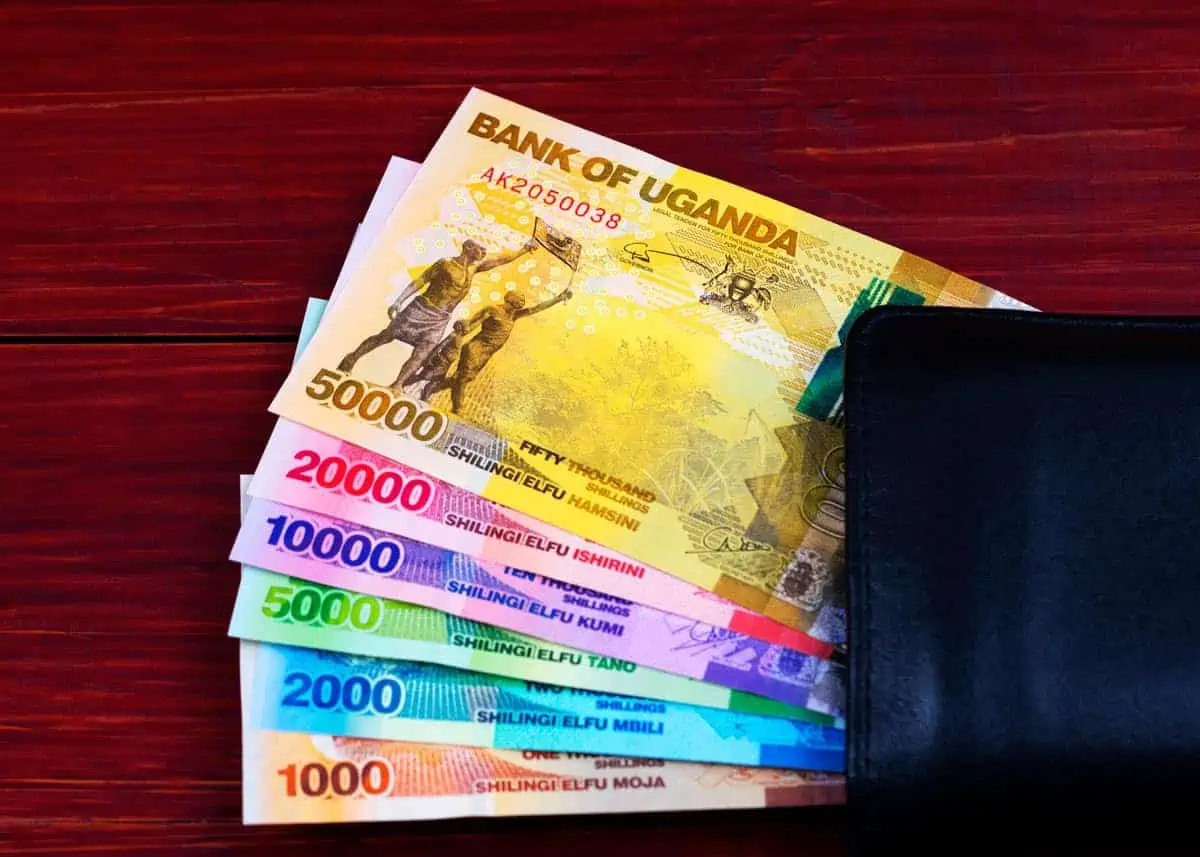
Uganda’s official currency is the Ugandan shilling (UGX).
During a tour of Uganda with Choose Uganda Safaris, many of the major expenses are already taken care of. Your accommodations, private transport, fuel, meals included in your programme and planned activities are arranged in advance.
That makes a big difference to how much money you actually need while travelling.
Most of your own spending will be on drinks that are not included, tips, souvenirs, personal expenses, and any optional activities. There is therefore no need to travel through Uganda carrying large amounts of cash.
In practice, the easiest approach is a combination of Ugandan shillings, a limited amount of US dollars, and a debit or credit card. This gives you enough flexibility without having to worry about carrying too much cash.
Do you need to take dollars to Uganda?
A limited amount is convenient, especially for tips and certain optional activities.
It is useful to have a limited amount of US dollars, especially for tips and certain optional activities. But you certainly do not need to arrive in Uganda with a large bundle of cash.
For everyday expenses, Ugandan shillings are much more practical. So there is no need to buy a huge stack of dollars before you leave home.
If you do bring US dollars, make sure the notes are recent, clean and undamaged. Old, marked or damaged bills are often refused or exchanged at a less favourable rate. Smaller denominations are particularly useful for tips.
You can also exchange euros in Uganda quite easily, but you generally cannot use them directly in shops and restaurants. So, you don’t need to bring a large amount of cash with you there either.
Can you withdraw money in Uganda?
Yes, you can.
In Kampala, Entebbe, and larger towns along the way, you will find ATMs where you can withdraw Ugandan shillings. Your tour guide knows the route and can advise you on where it is easiest and most convenient to withdraw money during your trip.
Before you leave home, check with your bank that your debit or credit card is activated for use outside Europe, USA, etc… It is a small thing, but one you do not want to discover only after arriving in Uganda.
Keep in mind that ATMs often have a maximum withdrawal amount, and both the Ugandan bank and your own bank can charge a fee.
Withdrawing a small amount every day is therefore not very efficient.
Can you pay with a debit card or credit card?
More and more often, but still far from everywhere.
Visa and Mastercard are accepted at many lodges, hotels, large restaurants and larger stores. But for smaller businesses, local markets and shops, cash is still important.
So, do not rely entirely on your card. It is always wise to carry some cash and have a second card as a backup. And preferably, do not keep all your cards in the same place. If you lose one, you still have another way to pay.
Tipping in Uganda: is it customary?
Tipping is customary in Uganda’s tourism industry, but for us, a tip should remain what it is meant to be: a genuine token of appreciation for good service.
At many lodges, you will find a communal tip box. The money is shared among the staff, so it does not only go to the person serving your dinner. The kitchen team, housekeeping and other people working behind the scenes also benefit from it.
You can tip local guides and rangers directly if you are happy with their work. And then there is your own tour guide, who will often travel with you for much of your trip.
You do not have to figure out the amounts yourself along the way. Before departure, we can share our tipping guidelines with you, so you have a good idea of what is customary.
But it is only a guideline. In the end, you decide what you would like to give and what feels right to you.
Which plug do you need in Uganda?
Uganda uses British Type G sockets with three rectangular pins. A simple British travel adapter is therefore all you need.
You can charge your phone, camera and other devices at your accommodation. Some lodges run fully or partly on solar power, so the electricity supply can sometimes be a little different from what you are used to at home.
Our Land Cruisers are also equipped with charging points. So, even on longer travel days, you can keep your phone, camera or power bank charged. If you travel with several devices, a compact USB charger with multiple ports is a useful addition to your luggage.
Camera and binoculars: are they really useful?
These days, modern phones can take excellent travel photos.
So, if you are not particularly interested in photography, there is no need to buy a complete camera setup just for your trip to Uganda.
If you enjoy photography, however, Uganda is a wonderful destination. A telephoto lens is ideal for wildlife, while a wider lens is more useful for landscapes, lodges, villages and people.
Bring enough memory cards and at least one spare battery. Expensive camera equipment should always be carried in your hand luggage.
The same goes for binoculars. If you already have a good pair at home, bring them. During game drives, safaris and boat trips, it is great to be able to look beyond what your eyes can see and get a closer view of wildlife and birds.
But if you do not own a pair and expect never to use binoculars again after Uganda, there is no need to buy an expensive pair just for this trip.
What kind of clothes do you take to Uganda?
You do not need to buy a totally new safari wardrobe for Uganda.
Comfortable, lightweight clothing is what matters most. Neutral, quiet colours are practical on safari, but you certainly do not have to spend three weeks dressed in beige and khaki.
Bring a mix of short and long clothing. Long trousers are useful for walks and treks, and they also help protect you from mosquitoes in the evening.
And bring something warm.
Uganda lies on the equator, but much of the country is at a considerable altitude. During an early morning game drive, in the higher areas and in the evening, it can be surprisingly chilly. A light sweater, fleece or jacket is therefore well worth packing.
A lightweight raincoat or poncho should also have a place in your bag. Rain can come at any time, even outside the main rainy seasons, especially in green areas such as Bwindi Impenetrable Forest, Mgahinga, Kisoro, Kibale Forest and Sipi.
Want to know more about Uganda’s climate and seasons? Read our guide to the best time to travel to Uganda.
What do you wear on a gorilla trek?
Wear clothes you can move comfortably in and, importantly, do not mind getting dirty.
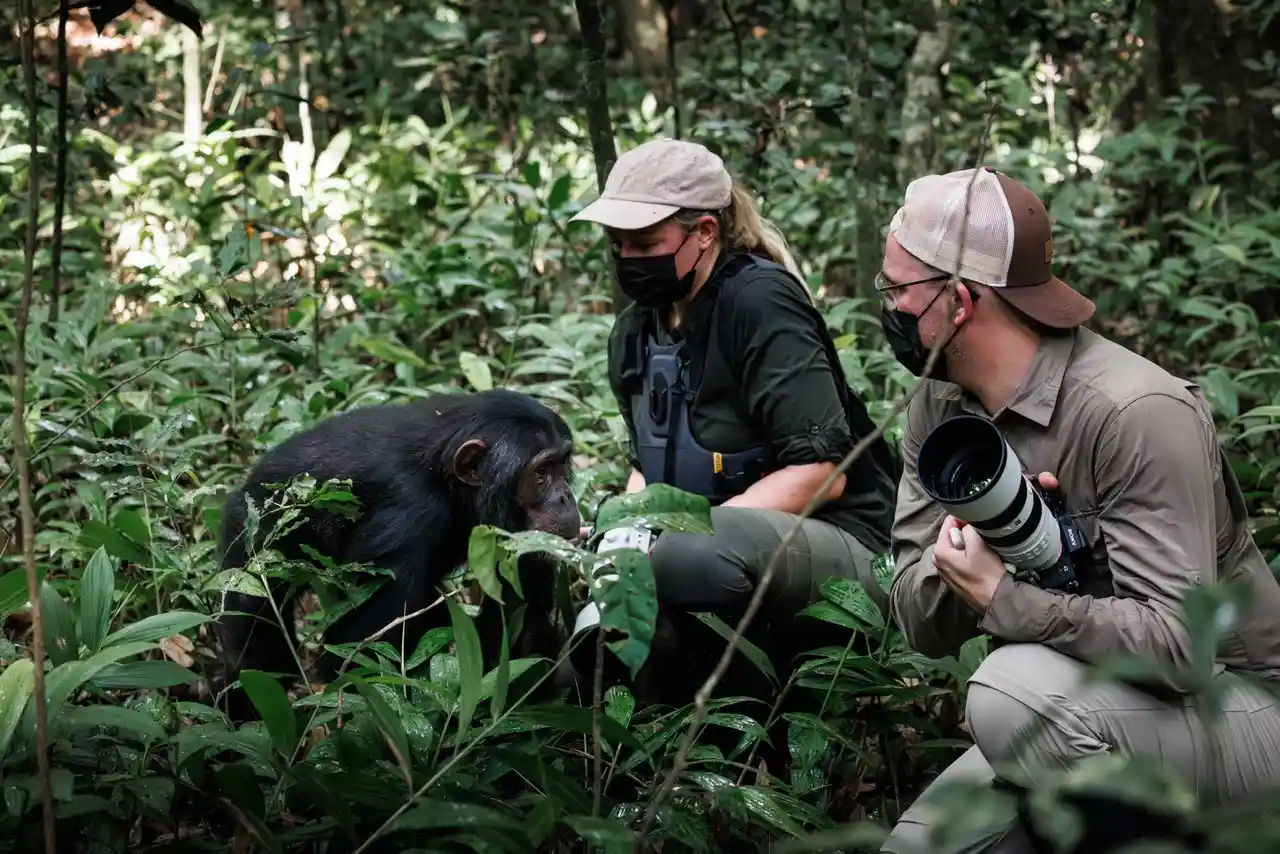
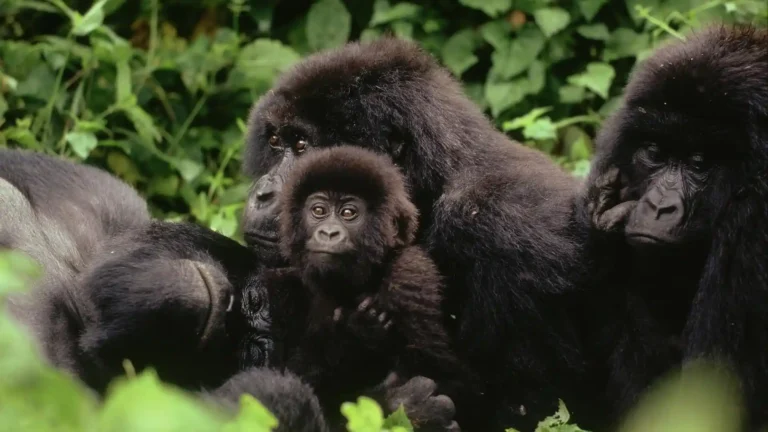
We recommend long trousers and sturdy hiking or trail shoes with good tread. The trails can be muddy and slippery, and during a gorilla trek you may sometimes leave the main trail and hike through dense vegetation.
A lightweight raincoat should also be in your daypack. You are walking through tropical rainforest, after all, and all that lush greenery needs plenty of rain to grow.
Gaiters are often recommended to keep insects and dirt out of your trousers. As far as we are concerned, you don’t need to buy them specifically for this trip. A pair of long socks pulled over your trouser legs works just fine in practice.
Simple gardening or work gloves can also be useful when you need to hold on to vegetation, but that is not a mandatory purchase either.
Want to know exactly what a gorilla trek is like? Read our detailed guide to gorilla trekking in Uganda.
Do you need real hiking boots?
Not for most Uganda tours.
For regular travel days and game drives, a comfortable pair of sneakers is perfectly fine. For gorilla and chimpanzee trekking, as well as longer walks, you mainly need shoes with good grip.
For most travellers, good hiking or trail shoes are more than enough. The brand or label on the shoe matters much less than how well it fits and how comfortable you feel walking in it. Make sure you have worn them a few times before your trip.
Putting on a brand-new pair of hiking boots for the first time on the morning of your gorilla trek is therefore a brilliant plan. Your feet should already know the shoes before you head into the forest.
Sun, mosquitoes and other insects
Uganda lies on the equator, so the sun can be strong. You do not always notice it straight away, especially when it is cloudy or you are travelling at higher altitudes.
Bring sunscreen with a good protection factor and a pair of sunglasses. A cap or hat is also useful, especially during game drives and boat trips. With the roof of the Land Cruiser open, you can spend much longer in the sun than you realise.
Mosquitoes and other insects are simply part of travelling in a tropical country. A good mosquito repellent and long, lightweight clothing are particularly useful in the late afternoon and evening.
All the accommodations we use on our tours are equipped with mosquito nets. So, there is no need to take up valuable space in your luggage with your own.
Vaccinations and malaria: what do you need to arrange?
Health is one of the things that naturally comes up when preparing for your trip to Uganda.
For Uganda, vaccination against yellow fever is no longer mandatory. Other vaccinations may be advised, and malaria prophylaxis may also be recommended.
For personal medical advice, we recommend speaking with your doctor or a specialised travel clinic. Which vaccinations or medication are appropriate for you depends, among other things, on your health and is ultimately a medical decision.
It is therefore something to look into well before departure, rather than discovering three weeks before your trip that you should have arranged something. By taking care of it early, you have enough time to get the right advice and arrange anything you may need.
The Uganda Visa
Most travellers need a tourist visa to enter Uganda.
The standard single-entry tourist visa costs USD 50 and is applied for online before departure through the official Ugandan immigration service. Your passport must be valid for at least six months from the date of arrival.
One important tip: always use the official website of the Ugandan immigration service. There are several commercial websites that offer to arrange the visa for you, often for an additional fee. There is usually no need to pay someone else to submit a straightforward visa application on your behalf.
Want to know more about Uganda visa? Read our tips for applying for a Uganda visa.
Travel insurance and cancellation insurance
Good travel insurance with worldwide coverage is important when travelling to Uganda.
It is not only about lost luggage. More importantly, you want to know that medical expenses and the activities included in your trip are properly covered. If you already have annual travel insurance, do not automatically assume that everything is covered. Check the policy and, in particular, the coverage limits and any exclusions that may apply to your trip.
The same applies to cancellation insurance. A Uganda safari can be a significant investment, and the cancellation cover included in an annual policy may have a maximum amount per person or per trip that is lower than the actual cost of your holiday.
It is therefore worth checking this before you leave, rather than finding out afterwards that your insurance does not cover the full amount.
What do you put in your hand luggage?
The things you really do not want to be without.
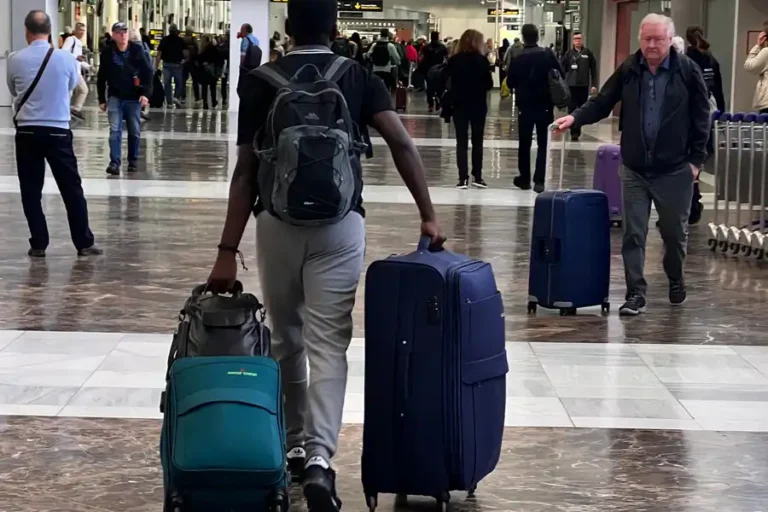
That sounds obvious, but on an international flight, checked luggage can sometimes arrive a little later than you do. Usually, it catches up with you quickly, but it is still frustrating when everything you need is packed in that one suitcase.
So, keep any daily medication in your hand luggage, along with important travel documents, expensive camera equipment and anything else that would be difficult to replace.
A clean T-shirt, underwear and a few basic toiletries for the first day are also a good idea.
You do not need to turn your hand luggage into an emergency kit. The idea is simply to have enough with you to get through the first day comfortably if your suitcase decides to spend an extra night at another airport.
Food and drink during your tour
During a tour with Choose Uganda Safaris, most meals are already included in your trip.
The accommodation we work with are used to welcoming international travellers and pay plenty of attention to good food. But it would also be a shame to leave Uganda without trying something local.
Take a Rolex, for example. Despite the name, there is no Swiss watch involved. It is a chapati filled with egg and often some vegetables. Simple, affordable and probably the most famous street food in Uganda.
Or try matoke, one of the country’s best-known traditional dishes.
Vegetarian, an allergy or other dietary requirements? We discuss this with you before departure and make sure the accommodations on your route know about it. That way, you do not have to explain the same thing at every lodge.
And what about drinking water? You do not need to worry about that either. We provide safe drinking water in the Land Cruiser throughout your tour, and safe drinking water is also available at your accommodations. Bringing your own reusable water bottle is still a good idea.
Can you have clothes washed on the way?
Yes. At almost all lodges, you can have your clothes washed for a small fee.
So, there is no need to pack a completely new outfit for every day of a three-week trip. On longer journeys, it is easy to have some clothes washed along the way, often around the halfway point.
Clothing is often air-dried in Uganda. So, during wet weather, laundry can sometimes take a little longer to come back.
Most accommodations do not wash underwear because of local customs. It is therefore handy to bring a small amount of travel laundry detergent, so you can easily wash a few items yourself when needed.
Suitcase or travel bag?
A hard suitcase is certainly not a problem, but soft bags are easier to fit into a Land Cruiser. This becomes especially useful when travelling with four or more people, as the luggage can be stacked more easily.
It is also a good idea to bring a small daypack. You will use it during treks, hikes and other activities for things like water, sunscreen, your camera and a raincoat.
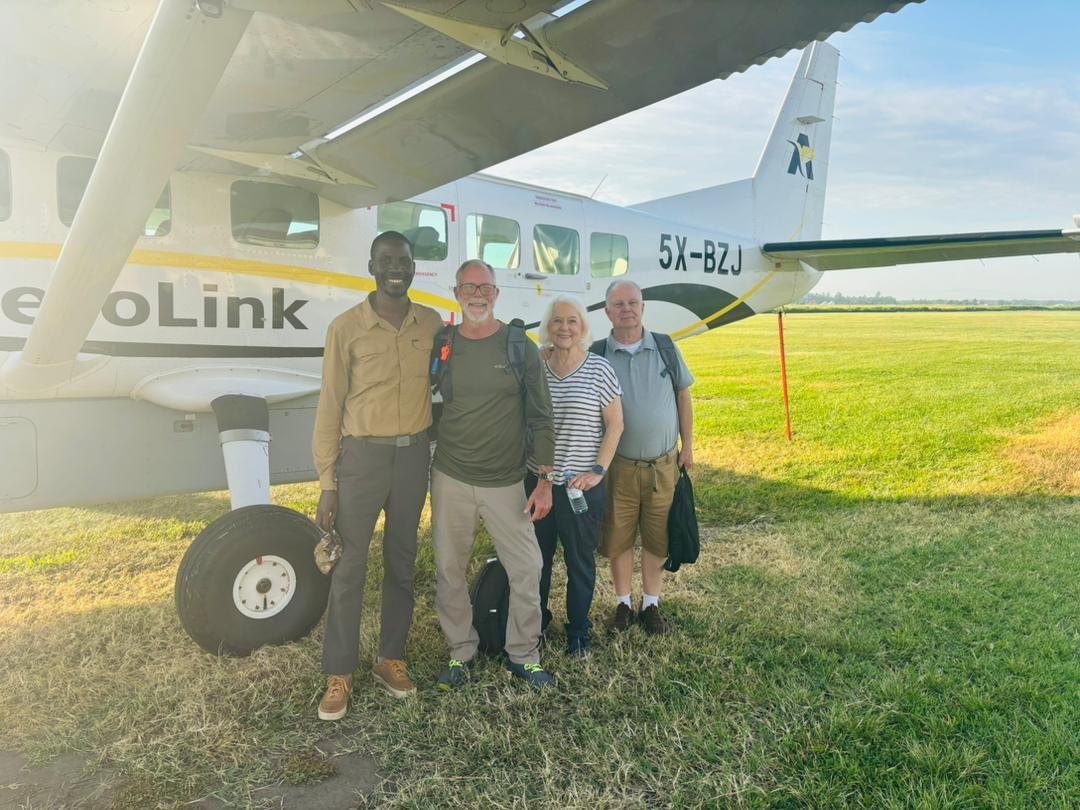
If your itinerary includes a domestic flight, we take the airline’s different baggage allowance (15kg) into account when planning your trip.
What does a day of travel through Uganda look like?
That is a difficult question to answer in kilometres or fixed departure times, but it is useful to know what you can expect.
You travel privately with Choose Uganda Safaris. The Land Cruiser is yours, and you have your own tour guide. A travel day is therefore not a bus itinerary where everyone has to be in seat 12B at 7:43 AM because twenty people are waiting.
Some times are fixed. A gorilla trek, boat safari or other activity, for example, has an agreed-upon start time. On other days, however, there is much more flexibility.
Want to stop for a photo, have a cup of coffee, buy some fresh fruit or take a closer look at something happening along the road? That is usually no problem. And that is part of travelling through Uganda. The country is not only what you see inside the national parks.
Along the way, you pass villages and small towns, farmland, markets, tea plantations and ordinary daily life. Sometimes, an unexpected stop along the road becomes one of the memories you talk about long after the planned highlights of your trip are over.
Long travel days are sometimes part of Uganda.
Uganda may not look particularly large on a map, but the number of kilometres does not tell the whole story. Road conditions vary, and a 250-kilometre journey can take considerably longer than you may be used to. Traffic, roadworks, unpaved roads and the route itself can all affect how long you are on the road.
That is why, when putting together a trip, we do not simply look at distances. We look at the pace of the entire journey and try to find the right balance between activities, travel days and time to slow down. Still, on some routes, a longer drive is simply part of travelling through Uganda.
And we do not necessarily see that as a disadvantage. The landscape is constantly changing outside your window. You pass villages, farmland and small towns, and get to see parts of Uganda that you would miss if you simply flew from one lodge to the next.
How are the toilets along the way?
A surprisingly common question, and a perfectly reasonable one.
During longer travel days, there are places to stop for a toilet break. Depending on the route, this may be at a restaurant, petrol station, lodge or another suitable stop. Your tour guide knows the road and where it is best to stop along the way.
Just do not expect a motorway-style toilet at every stop. Especially outside the larger towns, facilities can be much simpler than you may be used to.
A small pack of tissues and some hand sanitiser in your daypack is therefore always useful.
And if you need a toilet break earlier than planned, just tell your tour guide. There is no reason to sit quietly for another two hours when a simple stop can solve the problem.
Responsible travel
Travelling through Uganda also means meeting people whose financial circumstances may be very different from what you are used to at home.
Children, in particular, may happily wave at the Land Cruiser, come closer out of curiosity or try to make contact.
Some travellers therefore bring sweets, pens, notebooks or small gifts from home to hand out along the way. However well-intentioned, we recommend not doing this.
When visitors hand things out from their cars, children in places frequented by tourists can quickly learn that waiting for vehicles or asking travellers for gifts can bring a reward. Something that starts with good intentions can therefore unintentionally encourage begging.
There is another side to it as well. As a visitor, you cannot know which child receives something, who receives nothing and what effect this may have on relationships within the community.
And then there is the very practical issue of sweets. You are giving children something that is bad for their teeth in places where access to affordable dental care cannot always be taken for granted.
Would you like to contribute something during your trip? Please talk to us or your tour guide. We know local initiatives and organisations and can help you find a way to contribute that is genuinely useful and reaches the people who need it.
It may be less spontaneous than handing out a bag of sweets from the Land Cruiser, but it can make a much more meaningful difference.
What exactly do you not need to take with you to Uganda?
Online packing lists for Africa can be quite impressive. But if you are travelling on a well-organised private tour, much of that equipment is simply unnecessary.
You do not need a sleeping bag or your own mosquito net. All the accommodations we use provide them.
Heavy hiking boots are also unnecessary for most trips. Good walking or trail shoes are usually more than enough.
There is no need to bring a water filter or purification tablets either. We provide safe drinking water along the way.
The same goes for a full pharmacy. Bring your personal medication and a basic travel first-aid kit, of course, but you do not need to prepare for every medical situation that could theoretically happen during a trip to Africa.
And, as mentioned above, leave those bags of sweets, pens and notebooks at home. Handing them out randomly along the road is not the best way to help.
Do you need special apps in Uganda?
Not really.
You probably already have everything you need. WhatsApp is useful for staying in touch, and Google Maps can be fun to open now and then to see where you are and how far you have travelled.
For an organised tour, you do not need much more than that.
You travel with your own tour guide, who knows the route, and your itinerary is arranged in advance. You do not have to work out every morning how to get from A to B, where to refuel or which road to take.
That is our job. You can simply enjoy the journey.
Travel to Uganda well-prepared, without having to figure everything out yourself.
By the time you board the plane, we will have gone through the practical preparations with you. From visas and luggage to tipping, dietary requirements and the latest details of your trip.
For things that require personal advice, such as vaccinations, you will also know well in advance where to get the right information. As far as we are concerned, that is part of organising a private tour. It is not only about booking the right accommodations and activities. It is also about making sure you know what you need to know before you leave.
What remains is mostly packing your own bag. And after reading this blog, you will probably find that you need less than you thought. Then it is time to let Uganda unfold around you. Because no matter how carefully we plan your trip, some of the moments that make travelling through Uganda special are the ones nobody could have planned in advance.