
Birding trips to uganda

Birding Uganda with Local Experts

Uganda birding tours

Uganda is a birdwatching paradise. The tropical climate and diverse landscapes attract all sorts of birds. The country has more than 1,080 species of birds, representing over 50 percent of all bird species found in Africa. Uganda also has the highest number of professional bird guides in East Africa. New bird species are still being discovered in Uganda every year.

The beauty of birding in Uganda

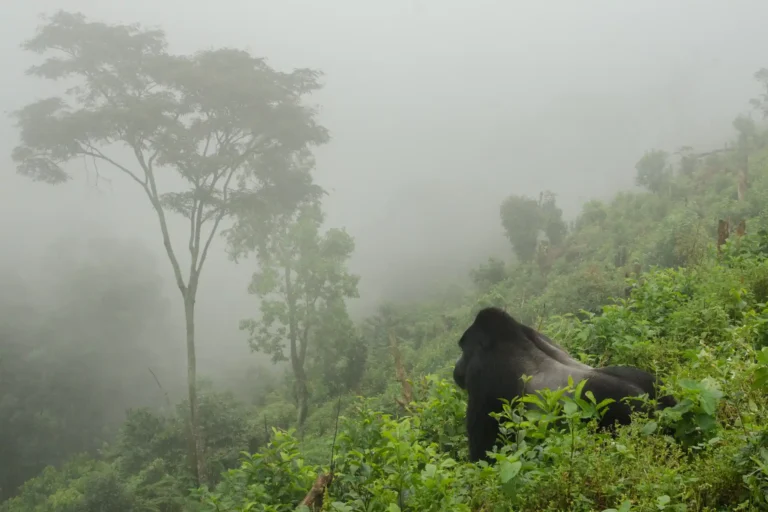
During your Uganda birding tours, you can explore the whole country. Every national park in Uganda is worth a visit for birders. So, apart from seeing your dream birds, it is a fantastic trip where you see and get to know a unique country. If you like, you can also combine your birding tour in Uganda with other activities, such as gorilla trekking or chimpanzee tracking.

Everything is tailored to you, as a bird watcher

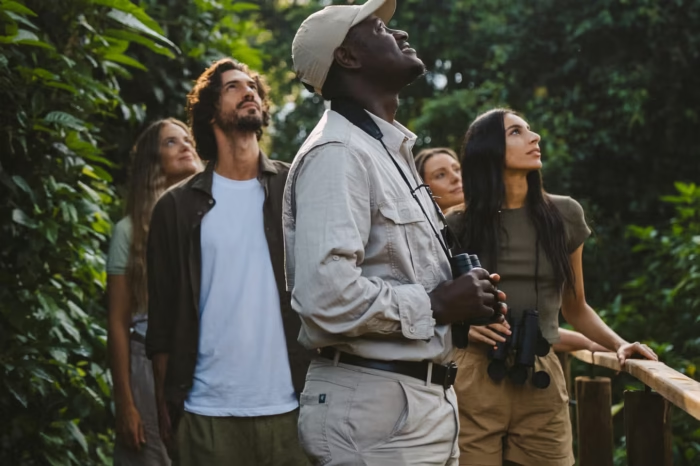
  • If you are coming to Uganda for a birding tour, we will tailor your trip specifically to your needs. 
  • We will use seasoned birdwatching guides. 
  • We will plan your route so you can check off all the birds on your list. 
  • As a birdwatcher, you will often visit areas that other tourists avoid, such as Semuliki National Park, Budongo Forestand Bugoma Forest.  
  • We will select lodges with convenient locations. 
  • The vehicle you will travel in will be spacious, giving you plenty of freedom to capture stunning images. 
  • Moreover, the vehicle is equipped with charging stations, so you will never run out of power.

A wide variety of birds in uganda

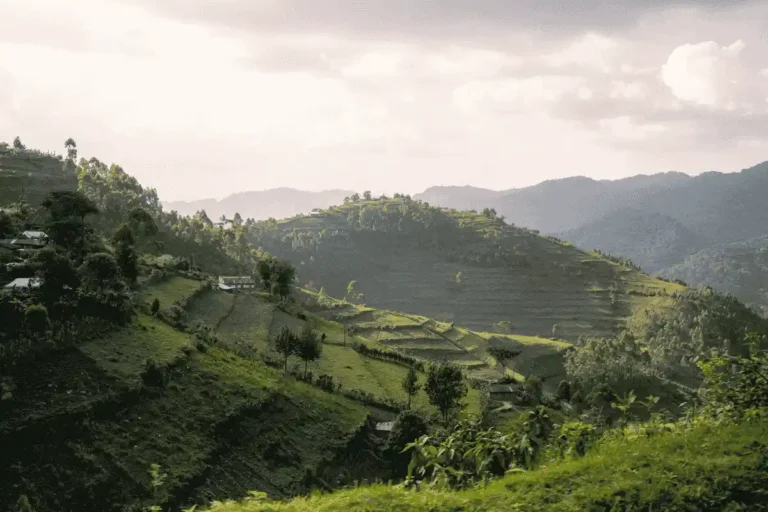
Uganda is a super diverse country. Every few hours’ drive, you see completely different vegetation and a completely different landscape. And therefore, completely different birds as well. In Uganda, we have several species that you won’t find anywhere else on Earth. These birds should not be missing from your list:

Birds-of-Uganda-shoebill-stork.jpg

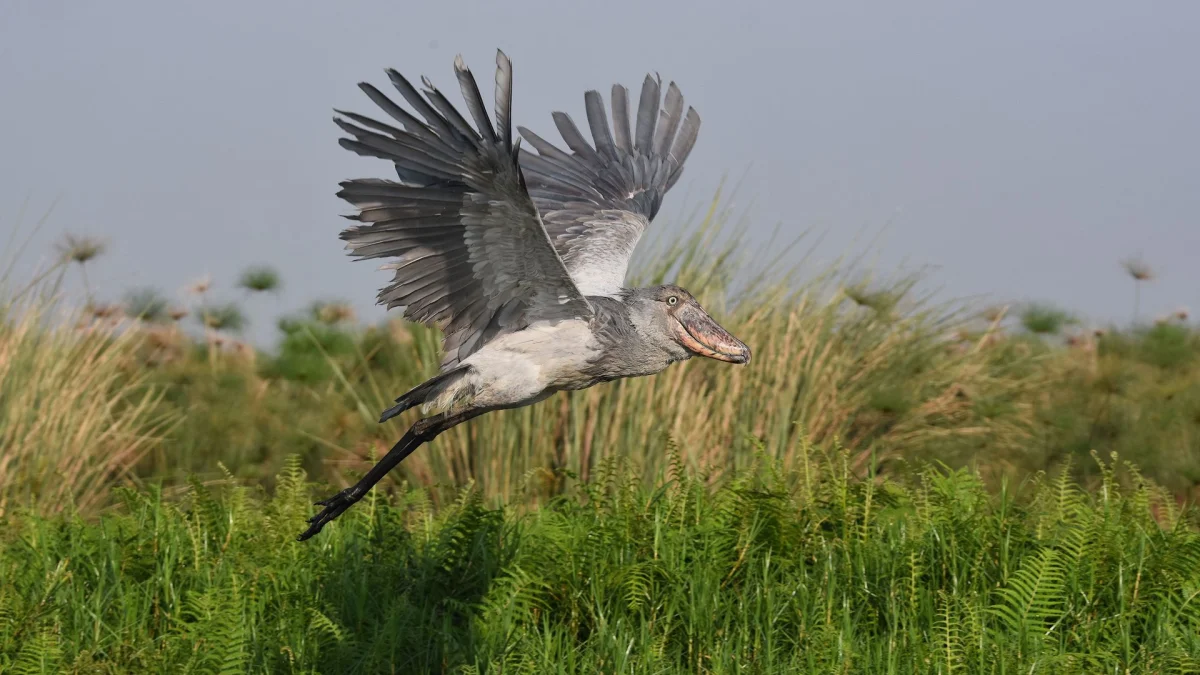
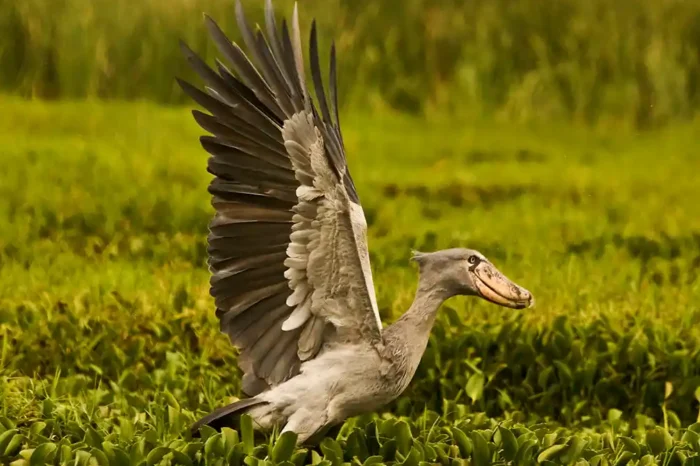
Sheobill

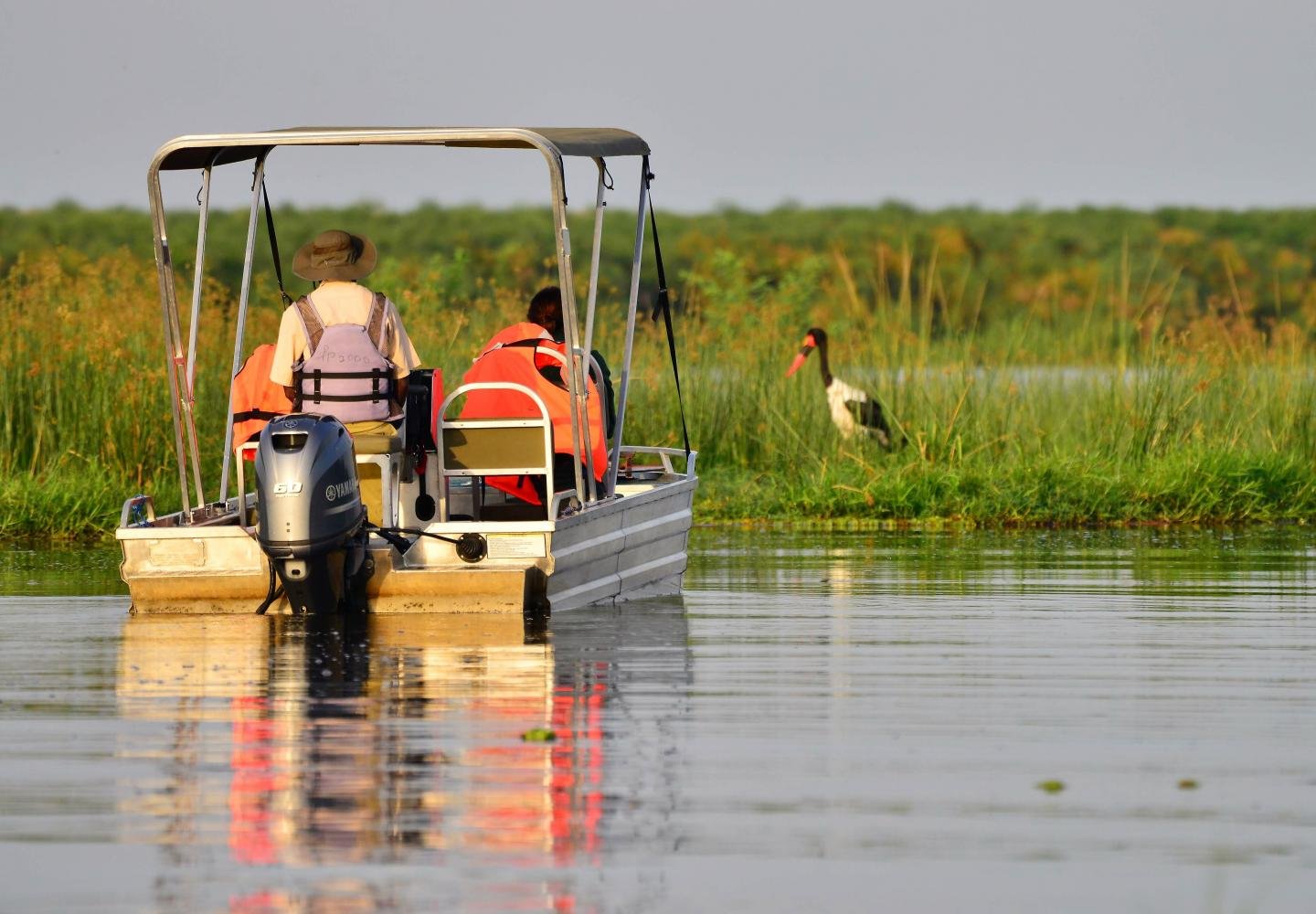
The shoebill is one of the most remarkable birds on Earth. It looks like no other bird alive. Its huge bill and prehistoric stare are unforgettable. This bird can stand up to 1.6 meters tall. Yet it lives quietly in just a few wetlands in East Africa. Sadly, these fragile habitats are under growing threat. The shoebill is also famously hard to spot. In Uganda, your best chance is in Mabamba Swamp, home to the country’s largest population. As your boat glides closer, the bird stands perfectly still. For a moment, you may wonder — is it real, or a statue? Want to know more? Read more about the shoebill.

The Green Breasted Pitta.webp

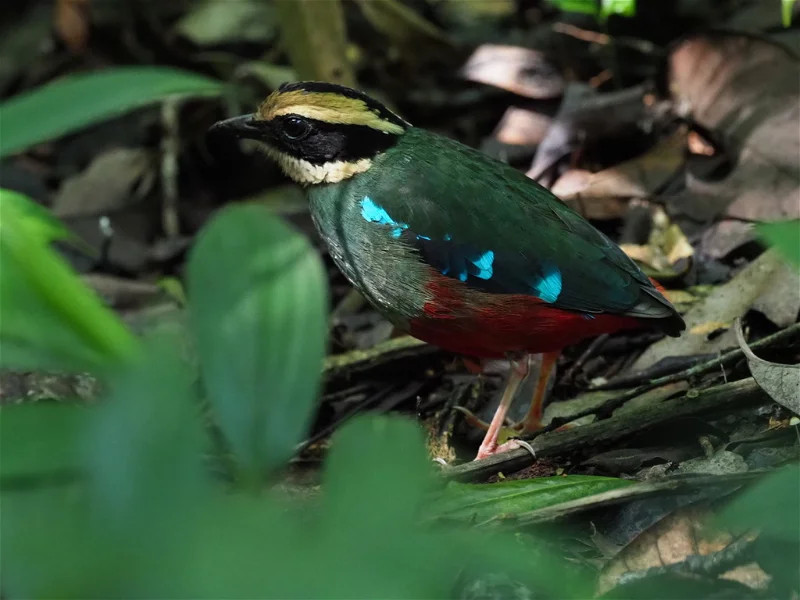
Green-breasted pitta

The green-breasted pitta is one of the most beautiful birds to see in Uganda. It sits high on many birdwatchers’ wish lists. Why? Because it is famously hard to find. You need luck. A sharp eye. And an excellent guide. This shy bird hides deep in the lush green forest. It stays quiet and well concealed. Spotting one feels like a real achievement. Want to try your luck? Your best chance is in Kibale National Forest Park, where sightings are most frequent. Kibale rainforest is located in western region of Uganda. The forest is also home to many primates including over 1500 wild chimpanzees.

bird watching in Bwindi Impenetrable Forest National Park

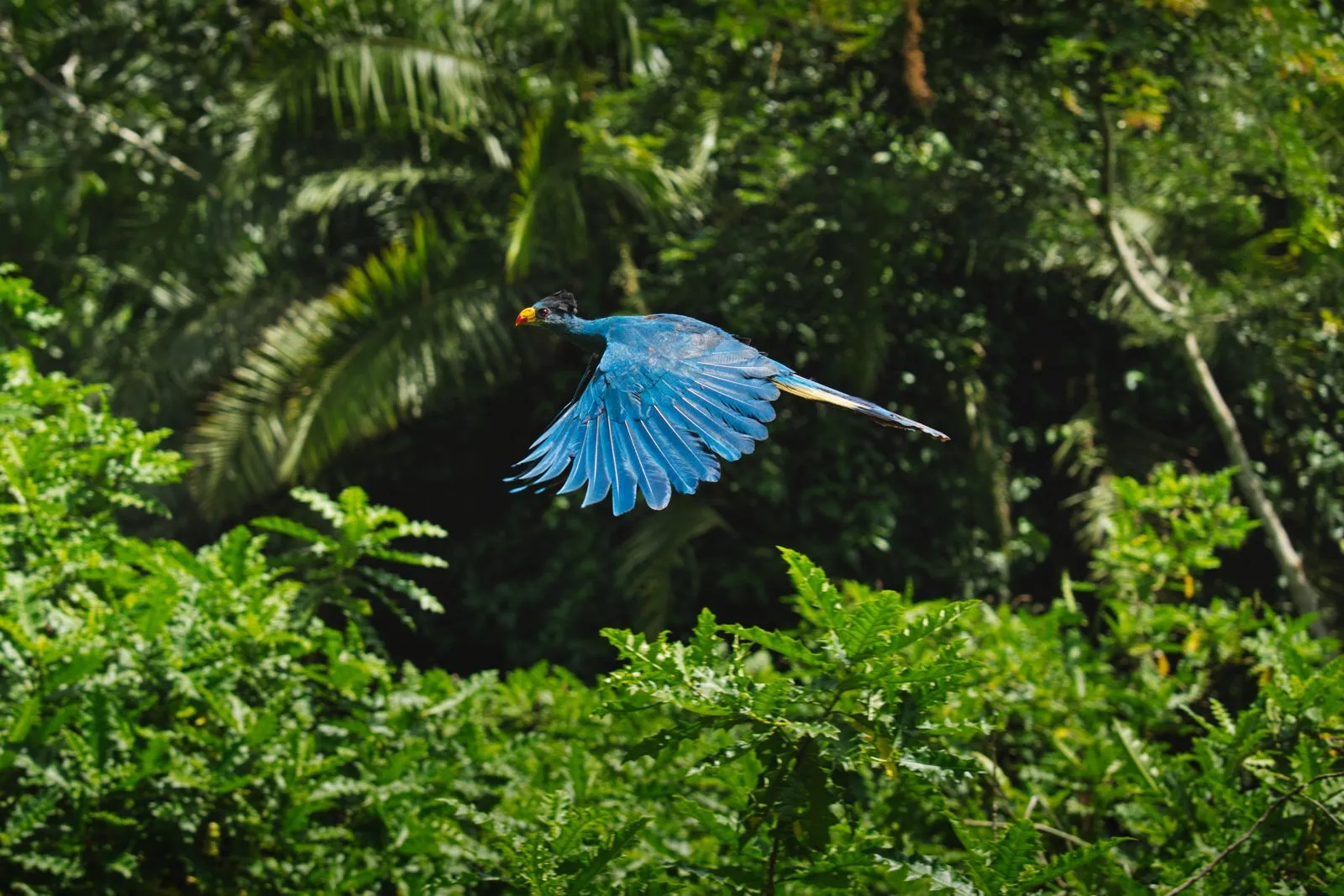
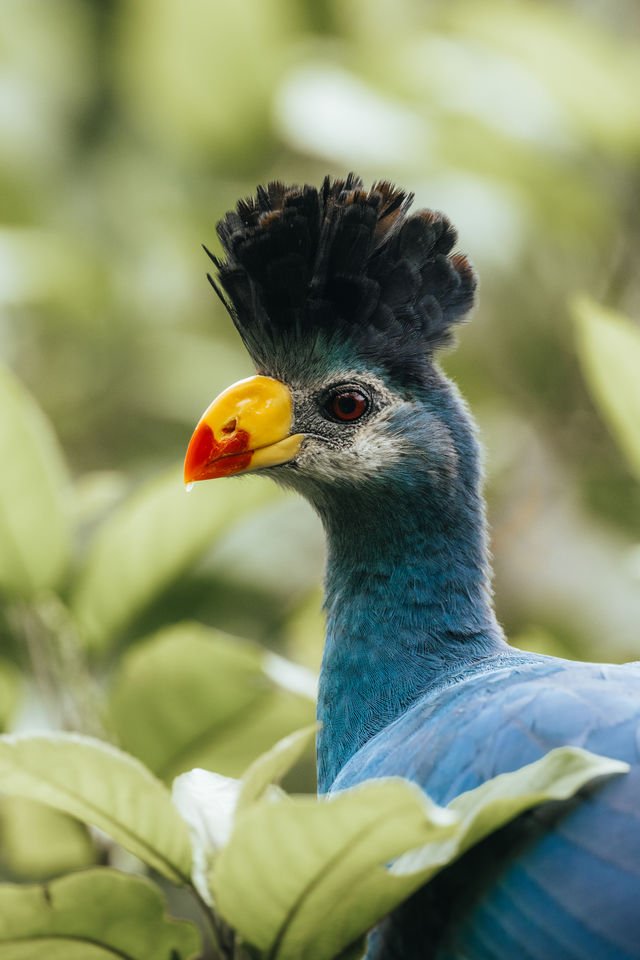
Great blue turaco

The great blue turaco is a bird with beautiful blue feathers. They are also called the “lipstick bird” because they have a red tip on their beak. There is a great chance you will see a great blue turaco during your Uganda birding tours. They even live in Kampala, but you will see them especially often in southwest Uganda. They prefer lush, green habitats and forest edges.

Uganda Cranes

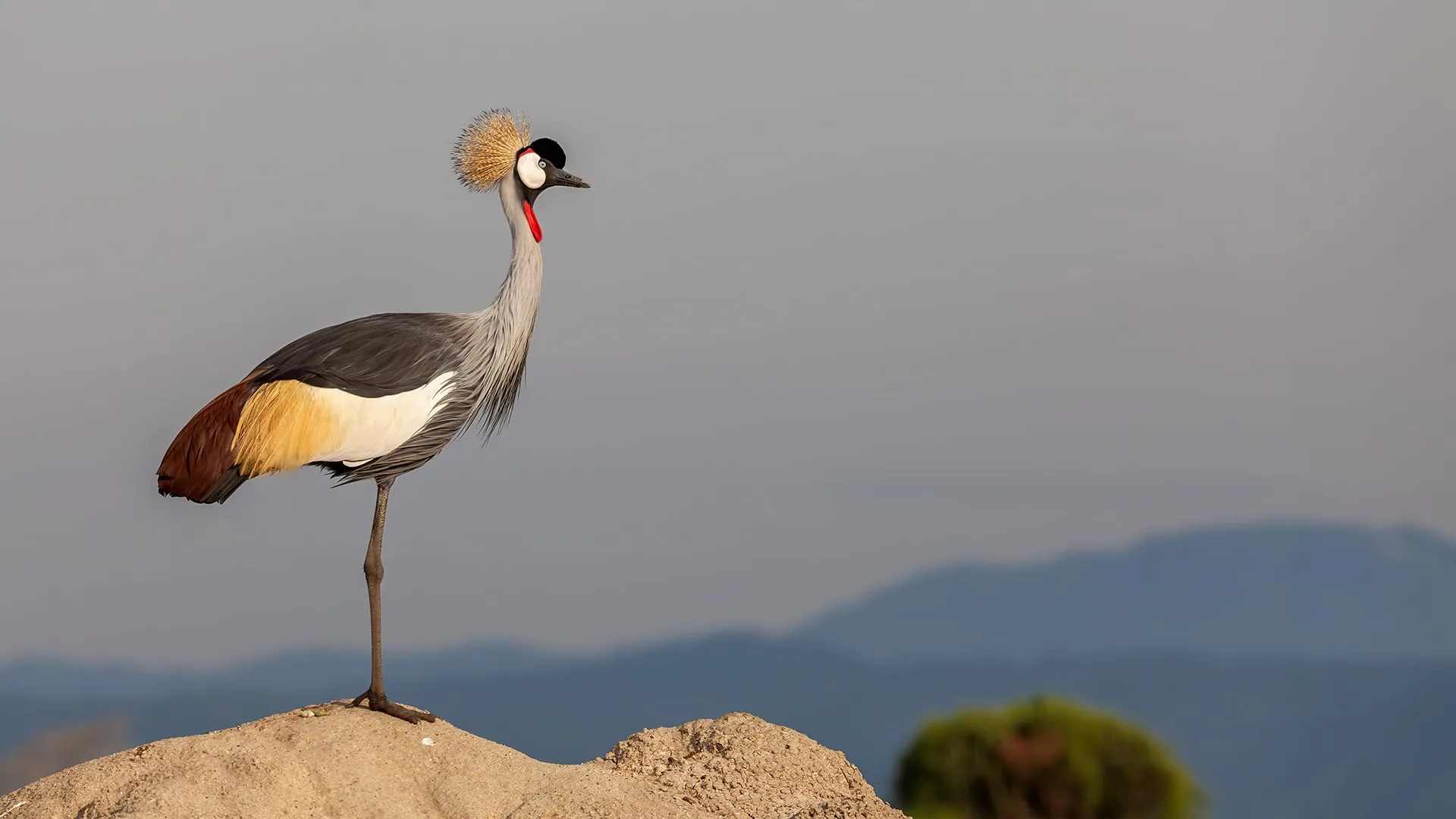
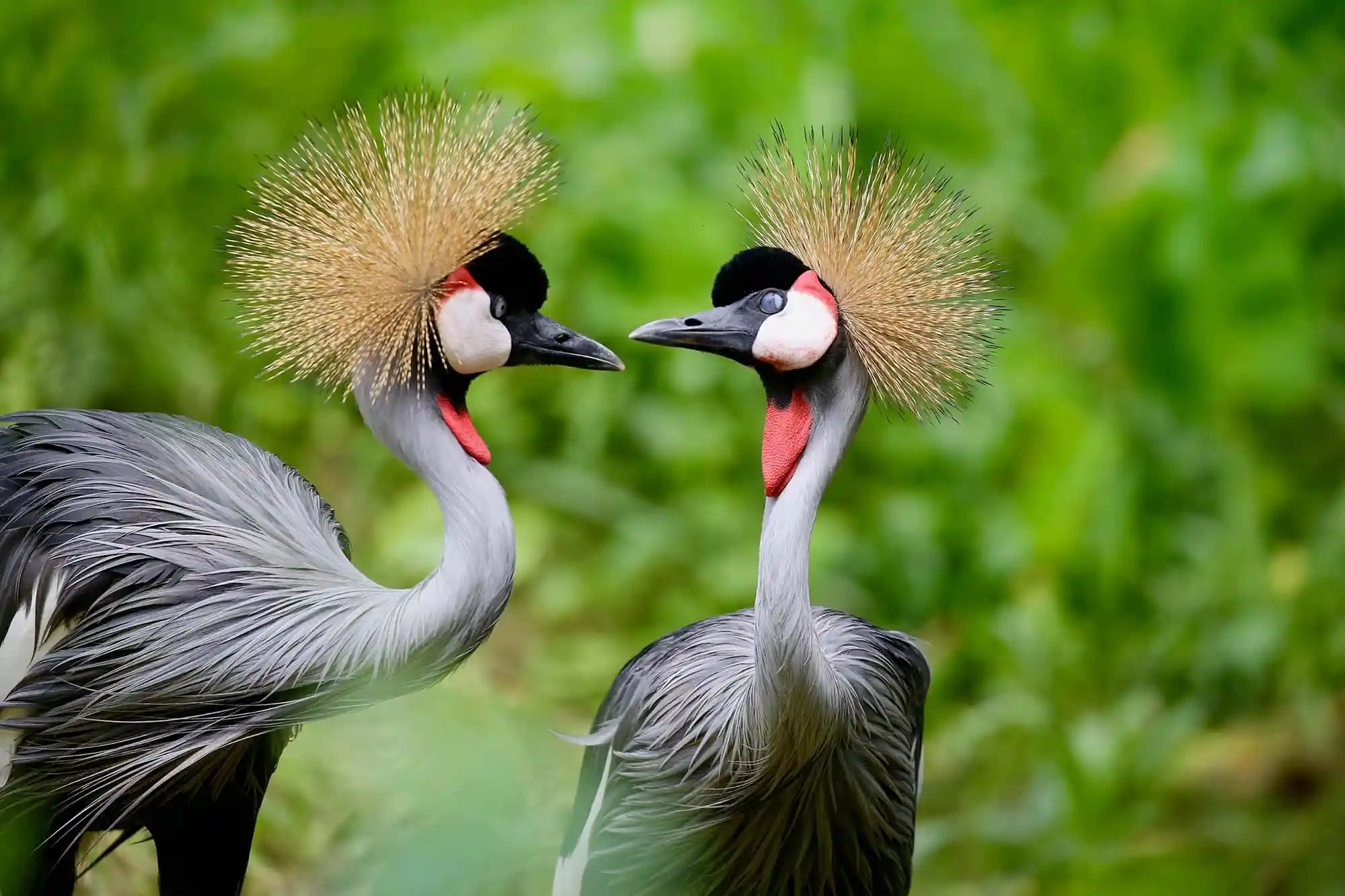
Grey Crowned Crane

This is Uganda’s national bird and a prominent symbol featured on the national flag and coat of arms. It is known for its elegant appearance, with a golden crown of stiff feathers, a grey body, and an elaborate courtship “dance” involving bowing and jumping. It is commonly found in wetlands and grasslands across the country.

Great Blue Turaco

These birds should also not be missing from your list:

  • The Shelley’s crimson wing
  • The standard-winged nightjar
  • The short-tailed Warbler
  • The Doherty’s Bushshrike
  • The bar-tailed trogon
  • The black breasted barbet
  • Blue-headed sunbird
  • Dusky crimsonwing
  • Golden-winged sunbird
  • Grauer’s broadbill
  • Grauer’s swamp warbler
  • Grauer’s warbler
  • Handsome francolin
  • Jackson’s spurfowl
  • Nahan’s francolin
  • Red-faced barbet
  • Red-throated alethe
  • Regal sunbird
  • Ruwenzori turaco
  • Strange weaver

Of course, there are also many other beautiful, colorful birds worth seeing on your Uganda birding tours. Think of parrots. Or waterfowl. The African grey parrot. Or the African finfoot.

Unique Uganda Birding tour Packages

All Can Be Customized

Faqs about Birding tours in uganda

A birding trip to Uganda can feel nerve-wracking. We can imagine you have practical questions about this. However, when everything is arranged down to the last detail, that tension quickly fades, leaving plenty of room to simply enjoy yourself. We have already answered the most frequently asked questions about Uganda birding tours for you below.

Shoebill Stork: The shoebill is Uganda’s most sought-after bird. Many visitors come specifically hoping to see this unique and prehistoric-looking bird. The best places to find it are Mabamba Swamp, near Entebbe and Kampala, and Murchison Falls National Park, where sightings are possible.

Albertine Rift Endemics: Birdwatchers travelling to Uganda often search for species found only in the Albertine Rift region. The best places to look are Bwindi Impenetrable National Park and Mgahinga Gorilla National Park, home to rare birds such as the African Green Broadbill, Shelley’s Crimsonwing, and Handsome Francolin.

Other Specials: Uganda also offers the chance to see some remarkable birds, including the Great Blue Turaco, Green-breasted Pitta, and the Grey Crowned Crane, Uganda’s national bird.

Uganda has a pleasant tropical climate throughout the year. Most days are warm and comfortable. However, the weather can vary from one region to another because of the country’s different landscapes and elevations.

We mainly operate our birding tours during the dry season, from June to August. During these months, rainfall is usually less frequent. Forest trails are easier to explore. Birding is more enjoyable, and photography conditions are often better. It is also an excellent time to combine bird watching with gorilla trekking, chimpanzee tracking, and wildlife safaris.

Even during the dry season, you should always be prepared for occasional rain, mist, or drizzle. Uganda is rich in wetlands, forests, lakes, and mountains, so the weather can change quickly. Entebbe is usually warm and humid. Higher-altitude areas such as Bwindi Impenetrable National Park and Mgahinga Gorilla National Park are much cooler, especially early in the morning and after sunset. Nights in these areas can also feel quite cold.

The best advice is to pack layers. Bring lightweight clothing for warm days. Pack a warm fleece or jacket for cooler mountain areas. A lightweight waterproof jacket is also essential for birding walks and gorilla trekking. We also recommend carrying a waterproof daypack or dry bag to protect your binoculars, camera, phone, and other equipment if you encounter rain during your adventure.

Comfortable, lightweight clothing is best for birding in Uganda. We recommend wearing green, brown, or other neutral colours, as these blend naturally into the environment and are less likely to disturb birds. Avoid bright colours such as white, red, orange, and other vivid shades.

Long trousers and long-sleeved shirts are ideal. They protect you from the tropical sun, biting insects, and thorny vegetation. Choose lightweight fabrics that breathe well and can be rolled up if the weather becomes warm.

Some birding takes place in the mountains, where mornings and evenings can be surprisingly cool. A warm fleece or light jacket is essential, and it is a good idea to pack warm sleepwear for higher-altitude lodges. Uganda can experience rain at any time of year, so a lightweight waterproof jacket is always worth bringing.

For footwear, we recommend comfortable walking boots with good ankle support, especially for forest trails and uneven terrain. A second pair of walking shoes is useful if your boots get wet, while sandals or trainers are perfect for relaxing at your lodge after a day in the field.

Don’t forget a sunhat, sunglasses, sunscreen (SPF 30 or higher), and swimwear if your accommodation has a swimming pool. Casual clothing is suitable for evenings at the lodges, where the atmosphere is relaxed and informal.

A good pair of binoculars is one of the most important things to pack for your birding tour. You should also bring your camera, extra batteries, chargers, sunglasses, sunscreen, insect repellent, a flashlight, toiletries, prescription medication, prescription glasses (plus a spare pair), a daypack, and any travel plug adapters you may need. If you use a bird field guide for East Africa or Uganda, it is worth bringing along.

Remember to pack all essential travel documents, including your passport, travel insurance details, and proof of yellow fever vaccination, which is required for entry into Uganda. It is also useful to carry some cash or a bank card for personal expenses.

If you enjoy keeping bird lists, bring two different coloured pens and a 30 cm (12-inch) ruler. These simple items make your daily bird checklist much easier to organise.

In terms of books, “The Birds of East Africa” field guide and the associated app are highly recommended for Uganda. Another good option is the Merlin bird app (with the Uganda country package downloaded) which gives you access to a large range of photos and calls of almost all of Uganda’s bird species.

Yes, absolutely. Combining bird watching with gorilla trekking, chimpanzee tracking, and safari experiences is one of the best ways to explore Uganda’s incredible wildlife.

Many travellers choose this type of itinerary because it allows them to search for rare birds while also experiencing Uganda’s famous primates and national parks. In Bwindi Impenetrable National Park, Kibale National Park, and Queen Elizabeth National Park, you can enjoy unforgettable encounters with mountain gorillas, chimpanzees, and other wildlife while looking for special bird species in forests, wetlands, and savannah habitats.

Most of our birding walks are easy to moderate and take place along forest trails, wetlands, and quiet park roads. A reasonable level of fitness will help you enjoy the experience even more. Some walks are longer than others, especially in Uganda’s mountain forests.

The most demanding birding walk is the hike to Mubwindi Swamp in Bwindi Impenetrable National Park. This full-day hike covers about 16 km (10 miles) and reaches an altitude of around 2,000 metres (6,400 feet). The walk descends to the swamp in the morning before climbing back up in the afternoon. It is well worth the effort, as this is one of the best places to search for the rare African Green Broadbill and many other Albertine Rift endemics. Other birding walks, including those in Kibale National Park and the Buhoma sector of Bwindi, are generally much easier.

Gorilla trekking is more demanding. The trek can take anywhere from 2 to 7 hours, depending on where the gorilla family is located on the day of your visit. The terrain is steep, uneven, and sometimes involves walking through thick vegetation. Good hiking boots and suitable outdoor clothing are essential. If walking is difficult, sedan-chair porter services are available at an additional cost.

Chimpanzee tracking in Kibale National Park is usually easier. The trails are generally flatter, although the forest can be warm and humid.

Uganda is a safe and rewarding destination to visit, especially when travelling with an experienced guide. However, a few simple precautions will help you enjoy your birding tour with confidence. 

Before travelling, we recommend checking the latest travel advice from your local health authority. A yellow fever vaccination certificate is required to enter Uganda, and antimalarial medication is strongly recommended. Insect repellent and lightweight long-sleeved clothing will help protect you from mosquitoes and other biting insects.

To avoid stomach problems, drink only bottled or treated water and avoid tap water. Complimentary bottled drinking water is provided in our safari vehicles throughout your tour.

Uganda is home to wild animals, including elephants, buffaloes, hippos, crocodiles, gorillas, and chimpanzees. While wildlife encounters are very safe when conducted properly, it is important to follow your guide’s instructions at all times and treat animals with respect.

The people of Uganda are warm, welcoming, and friendly. As with any destination, it is sensible to keep an eye on your valuables, especially in busy towns and cities.

Some birding trails and gorilla trekking routes can be steep, muddy, and uneven. Good walking boots and a reasonable level of fitness will help you enjoy these activities safely.

For our birding tours in Uganda, we use customized 4×4 Toyota Land Cruiser safari vehicles designed for comfort, visibility, and easy wildlife viewing. Each vehicle features a pop-up roof, large windows, and extra space for you and your birding equipment.

A reliable 4×4 is important in Uganda because many birding locations involve challenging roads, from muddy tracks to the steep forest roads of Bwindi Impenetrable National Park. The vehicle setup is ideal for birders because the pop-up roof and open windows provide a wide view for spotting birds in forest canopies and wetlands. 

The stable platform also makes it easier to use binoculars, spotting scopes, and camera equipment. With plenty of storage space, your gear stays safe, organised, and protected throughout the journey.

Accommodation ranges from budget, midrange to luxury, reasonably comfortable and well situated. They often feature large gardens or grounds which offer good birding opportunities right on the doorstep. Most accommodation establishments have air-conditioning and/or a fan while all have private bathrooms.

Uganda Birding Guides AND BLOGS

Best Time To Visit Uganda (2).webp
Best Time to Visit Uganda | Dry Vs Rainy Season

You can come for a tour of Uganda at any time of the year The country is always beautiful and travelling around is easy in every season The climate is pleasant However, there are some differences...
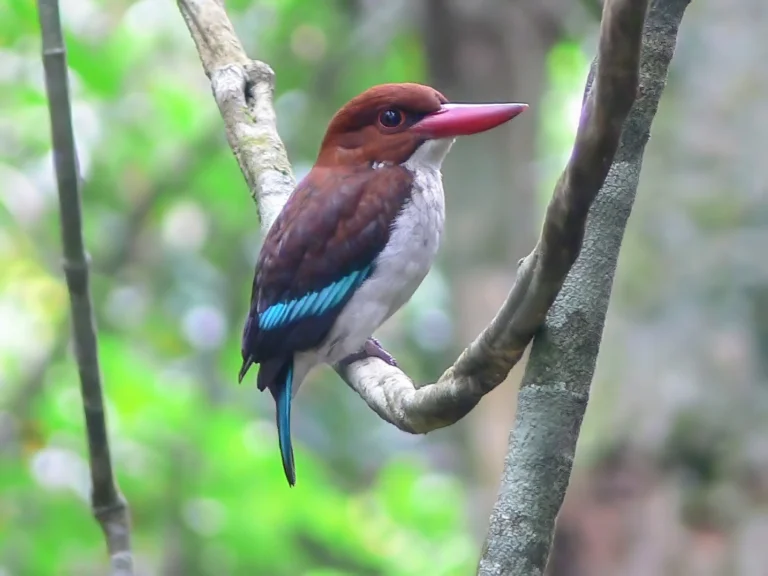

Chocolate-backed Kingfisher, Birding In Budongo Forest
Birding in Budongo Forest (360+ Bird Species)

Budongo Forest is a large (825 km2/319 sq mi) tract of intact, virgin tropical forest on the southern edge of the Murchison Falls National Park In fact, it is the largest natural forest area in all...
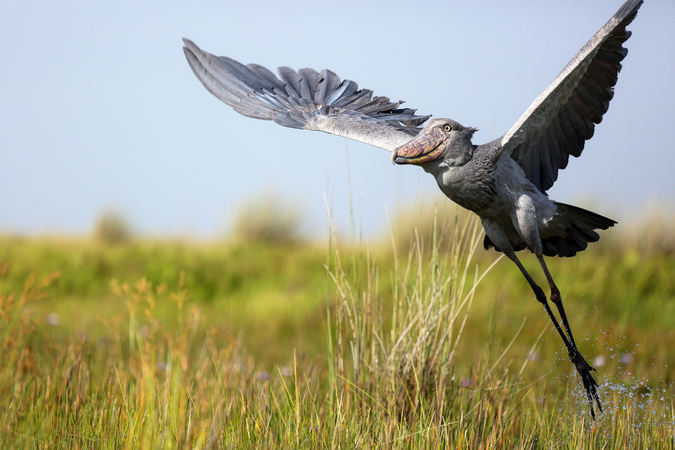

a shoebill flying in Mabamba Swamp
Where can I see shoebill stork in Uganda?

Uganda is the best destination in Africa to see the Shoebill Stork (Balaeniceps rex) in the wild Its vast wetlands, papyrus swamps, and slow-moving waterways provide ideal habitat for this rare and...


Green-breasted Pitta
Birding in Kibale Forest National Park (370+ Species!)

Kibale National Park is a premier East African biodiversity hotspot, protecting a 795-square-kilometer tropical forest that supports over 375 bird species alongside the highest density and diversity...
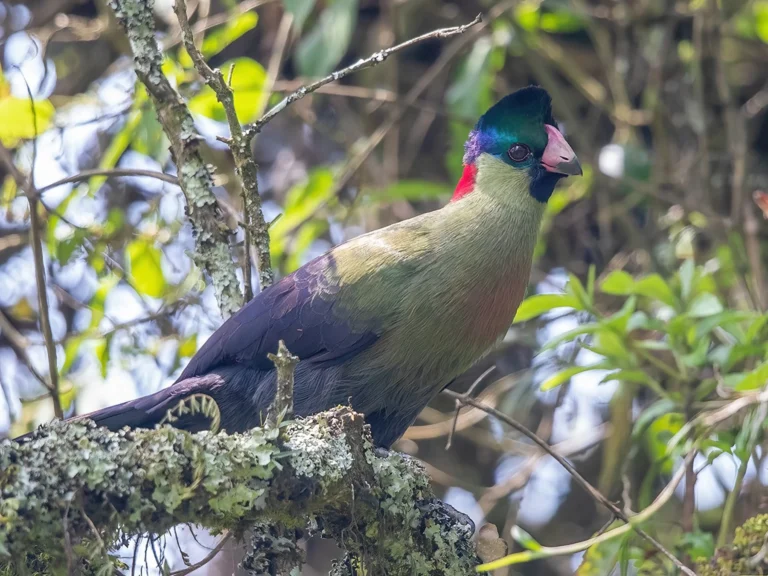

Birding In Bwindi Impenetrable Forest
Birding in Bwindi Impenetrable Forest (350+ Species!)

Bwindi Impenetrable Forest National Park is a premier African forest birding destination and UNESCO Natural World Heritage site, hosting over 350 bird species, including 23 Albertine Rift endemics It...
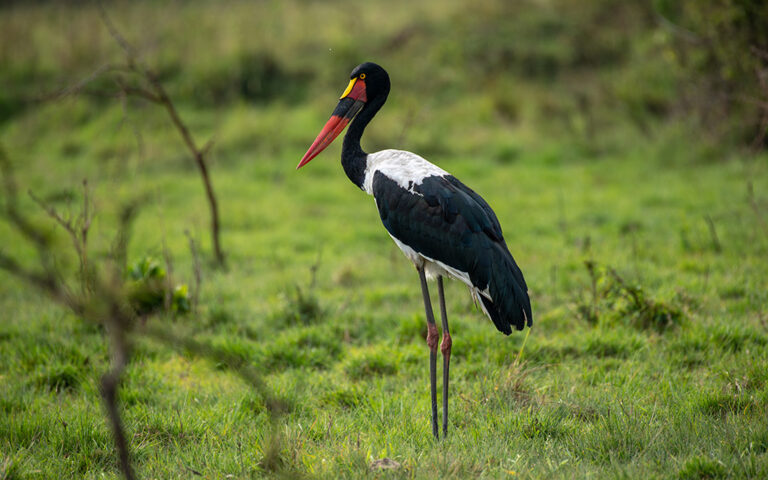

Birding in Queen Elizabeth National Park
Birding in Queen Elizabeth National Park (600+ species!)

Birding in Queen Elizabeth National Park is simply magical Covering 1,978 square kilometers, this Uganda safari park may be smaller than Africa’s iconic destinations — the Maasai Mara in Kenya,...