Is tipping expected in Uganda?
Yes, tipping is common in Uganda. In the tourism and hospitality industry, tipping is generally expected. Everyone who is part of your Uganda trip, everyone who contributes, expects a tip.
This includes guides, drivers, lodge staff, trackers, and others you meet along the way. Some people mention it very subtly. Others may ask more directly. Either way, tipping is considered a normal part of travel and a way of showing appreciation for good service.
Everyone who is part of your journey, everyone who contributes, expects a tip.
Why tipping is important in Uganda?
Uganda is still a developing country. Jobs in tourism are valuable but not always well paid. People often work long hours. They work in all weather conditions. Tourism creates opportunities. But tips often make a real difference in people’s lives. What feels like a small amount to you can mean a lot to someone else. Understanding this helps you tip with kindness instead of pressure.
How much should you tip in Uganda?
The answer is probably not what you want to hear: it depends. There is no fixed amount. The size of a tip depends on the situation, the service you received, the activity, and sometimes even the size of your group. That is exactly why many travelers find tipping confusing.
To make it easier, we will walk you through four common examples and show you how tipping works in practice:
1. Tipping At Lodges
The average lodge in Uganda employs 30 to 40 staff members. These are the people who ensure the lodge is clean and that everything is taken care of. There is often a general tip box on the counter for all these people. So, if you want to tip, put it in the general tip box – that way, everyone benefits, not just the people who are visible. A common tip at lodges is $10 – $20 per day you stayed. So, if you stayed somewhere for three nights, you can expect to tip $30 – $60.
If you want to submit a tip, please do so in the general tip box – that way everyone benefits, not just the people who are visible.
Along the way, you may also come across small situations where you feel like giving something extra. Perhaps someone cleans your muddy shoes or helps you with a special request. For these small gestures, a tip of around US$1 is perfectly fine.
If you prefer not to hand out small tips throughout your stay, there is another option. Simply thank the person and ask if the lodge has a tip box.
You can then leave something for them and their colleagues when you check out. It is a simple way of saying: “I appreciate your help, and I would like the whole team to benefit from it.”
2. Tipping local guides
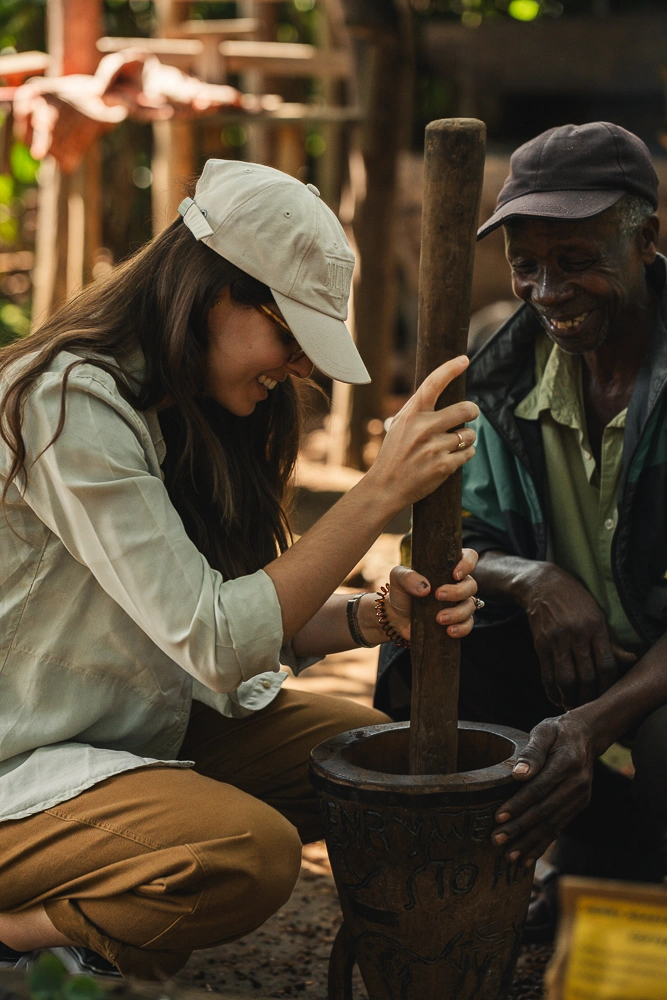
Sometimes you will join an activity led by someone from the local community. A community walk is a good example. For many local guides, guiding visitors is an important source of income.
If your guide was enthusiastic, shared interesting stories, and helped make the experience memorable, it is nice to show your appreciation with a tip. As a guideline, around US$5 is a generous and meaningful tip, in addition to the activity fee.
While it may not seem like a large amount to many travelers, it can make a real difference locally. In fact, the average wage for unskilled work in Uganda is often around US$2 per day. A small gesture from you can therefore have a big impact.
3. Tipping Rangers and Trackers
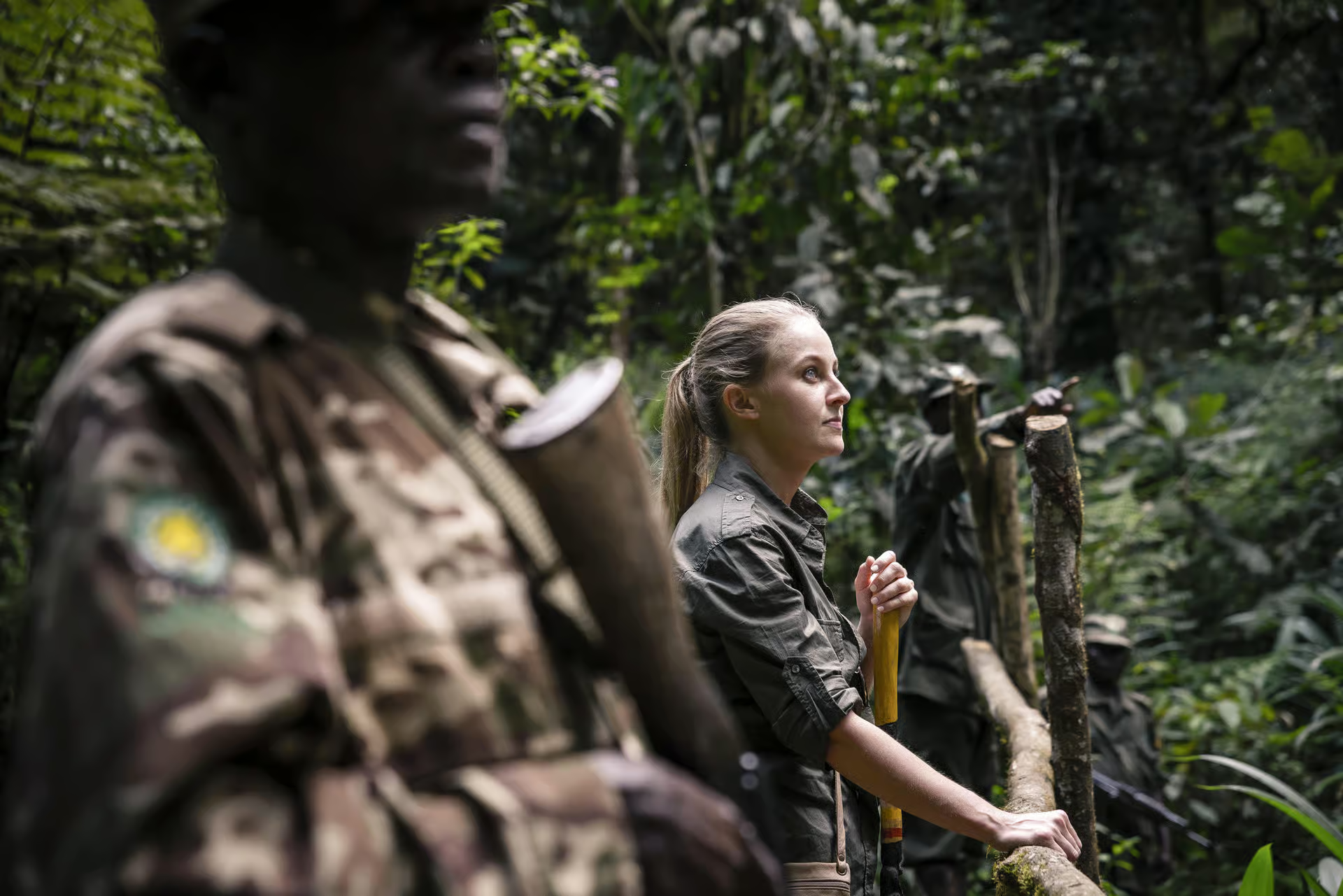
Rangers are the people who lead activities such as gorilla trekking and chimpanzee trekking. They work for the Uganda Wildlife Authority (UWA) and generally have good employment conditions. They receive a salary, pension benefits, and health insurance.
At the same time, rangers are often the people who receive the largest tips. This is largely because many visitors choose to tip generously after such a special experience. As a guideline, if you are two people, you might give around US$20 to US$30 to the ranger team at the end of the trek.
If you are traveling as a group of four, you can consider doubling that amount. The tip is usually shared among the 4 to 5 rangers who accompanied the trek. Rangers work seven days a week and lead treks almost every day. While they receive a salary, tips are an important additional source of income.
Rangers are there 7 days a week; they go on treks every day. They have a base salary, plus a lot of tips.
There is another group involved in your trek as well: the trackers. These are the people who head into the forest early in the morning to locate the gorillas or chimpanzees before visitors arrive. They often spend the entire day following the animals through dense forest.
Most trackers come from nearby communities. They work closely with the Wildlife Authority, but their situation is different from that of the rangers. When you reach the gorillas or chimpanzees, it is customary to tip the trackers too.
A total of around US$20 for the group is common. This amount is usually handed to one representative, who then shares it with the rest of the team. Without the trackers, finding the animals would be much more difficult. Their work plays a vital role in making the experience possible.
4. Tipping your tour guide
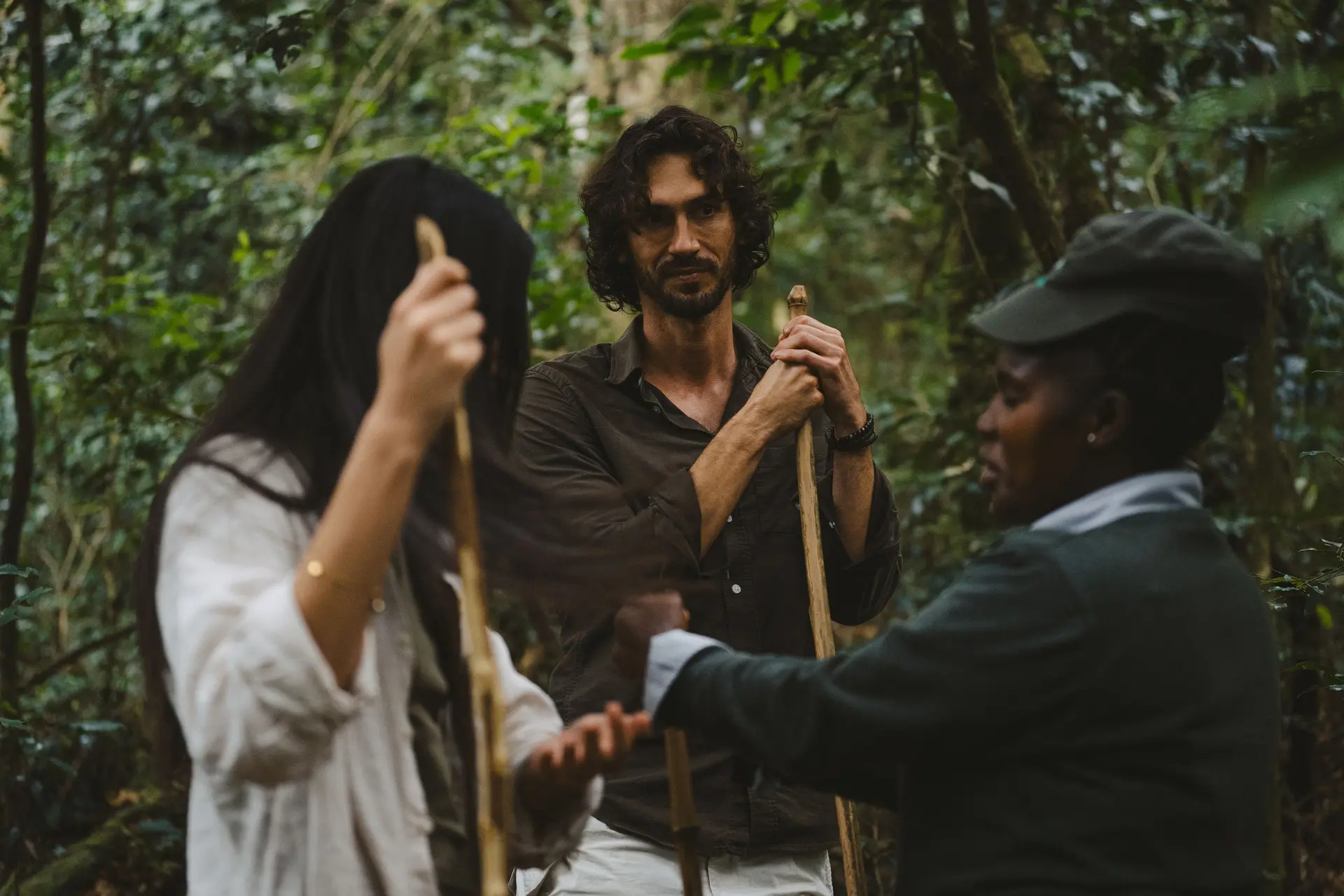
Your tour guide is the most important person of your trip.
He does much more than drive you from place to place. He organizes everything, solve problems, answer questions, and introduce you to Uganda’s people, culture, and way of life.
Being a tour guide is not a typical 9-to-5 job. You have a lot of responsibility, 24/7. The guide is responsible for your experience from the moment the trip begins until it ends. We make sure our guides are paid fairly.
Even so, a tip is a wonderful way to show your appreciation if they helped make your trip special. The amount is, of course, up to you and depends on your experience. As a general guideline, many travelers tip between US$10 and US$20 per day. At the end of the day, the best tip is one that reflects how much you valued the service and care you received throughout your journey.
5. Tipping in Restaurants
During your trip, there will be days when you travel from one destination to another. Along the way, we make sure you stop at local restaurants. This gives you a more authentic experience and allows local businesses along the route to benefit from tourism as well. Because meals are included in your trip, your tour guide will usually take care of the bill. There is no obligation to leave an additional tip.
However, if you enjoyed the service and would like to show your appreciation, you are very welcome to do so. As a guideline, a tip of around 10% is considered generous. For example, if the bill is around US$40, leaving US$4 to US$5 in the tip box is a kind gesture. As always, tipping is optional, but it is a nice way to thank the people who helped make your experience enjoyable.
Do’s and Don’ts of tipping in Uganda
To wrap up the story and send you on your trip relaxed, we would like to leave you with a few simple dos and don’ts. These practical tips will help you understand local tipping customs. That way, you can focus less on what to give and more on enjoying your Uganda adventure.
Do's
- Take small bills with you. It is always a good idea to keep a few small bills with you during your trip. This makes tipping much easier when you want to thank someone for good service or a helpful gesture. Instead of searching for change, you can simply reach into your pocket and leave a small tip when the moment feels right.
- Hand over the tip yourself. Whenever possible, hand the tip over personally. A tip is more than just money. It is a personal way of showing your appreciation. Taking a moment to thank someone directly makes the gesture more meaningful and sincere.
- Ask your tour guide for help. If you are unsure about tipping, simply ask your tour guide. They can tell you whether a tip goes to one person or is shared among several people. This makes it much easier to decide how much to give. Your guide can also explain what is generally expected in different situations, so you can tip with confidence and avoid any uncertainty.
- Give feedback. Suppose you give a small tip because you weren’t satisfied; then provide some constructive feedback. That way, the person in question knows what the problem is. And you also give him or her the chance to do better next time.
Don'ts
Do not give coins. The smallest Ugandan banknote is 1,000 shillings, and this is generally considered the minimum amount for a tip. If you give coins, it is actually an insult. 😂
Do not feel pressured to tip. Like anywhere in the world, some people may be more direct about tips than others. Try not to let it bother you. Tipping should always feel comfortable and genuine. If you do not feel that a tip is deserved, or if a situation does not feel right to you, it is perfectly fine not to give one.