What makes chimpanzees so special?
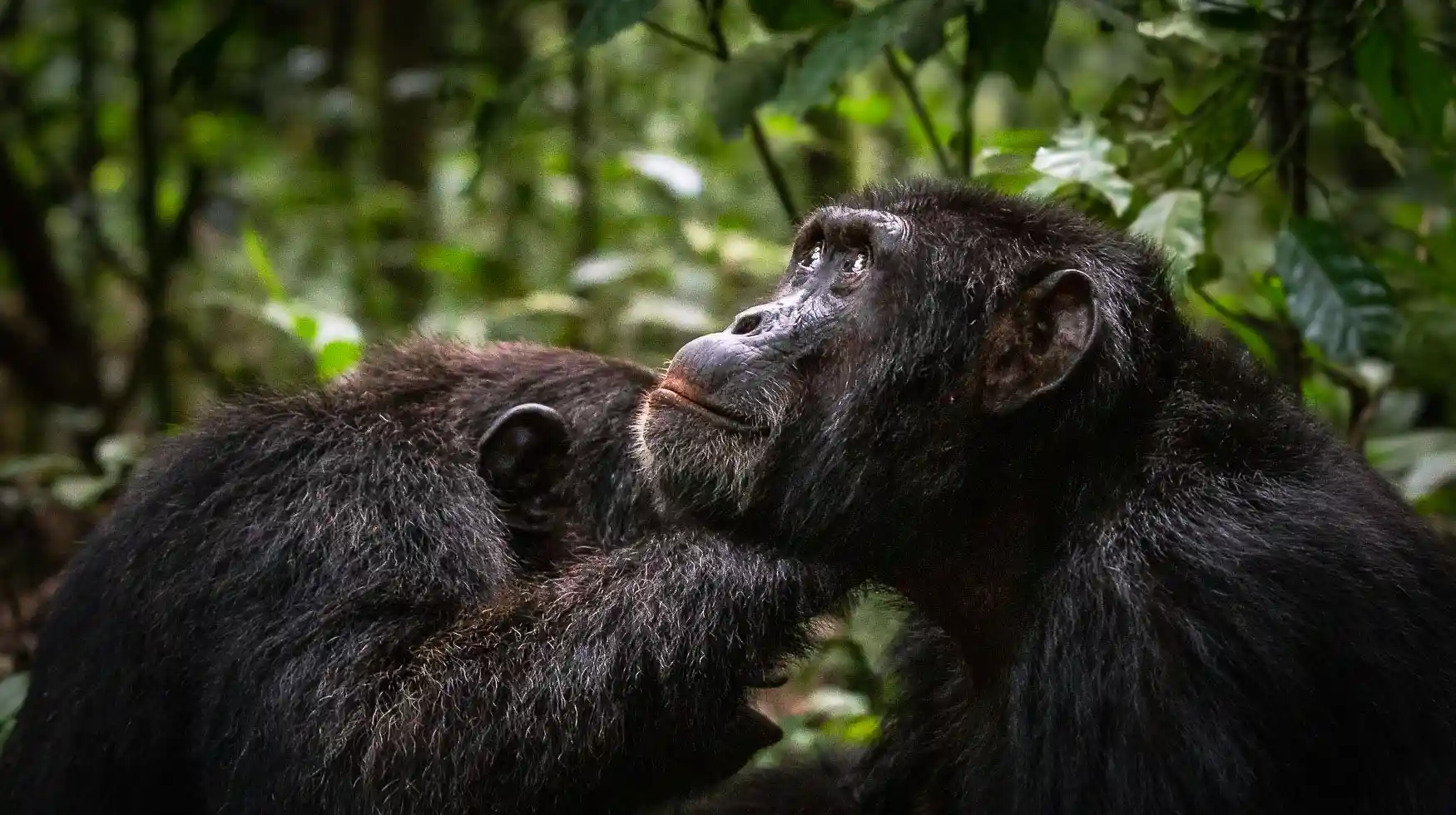
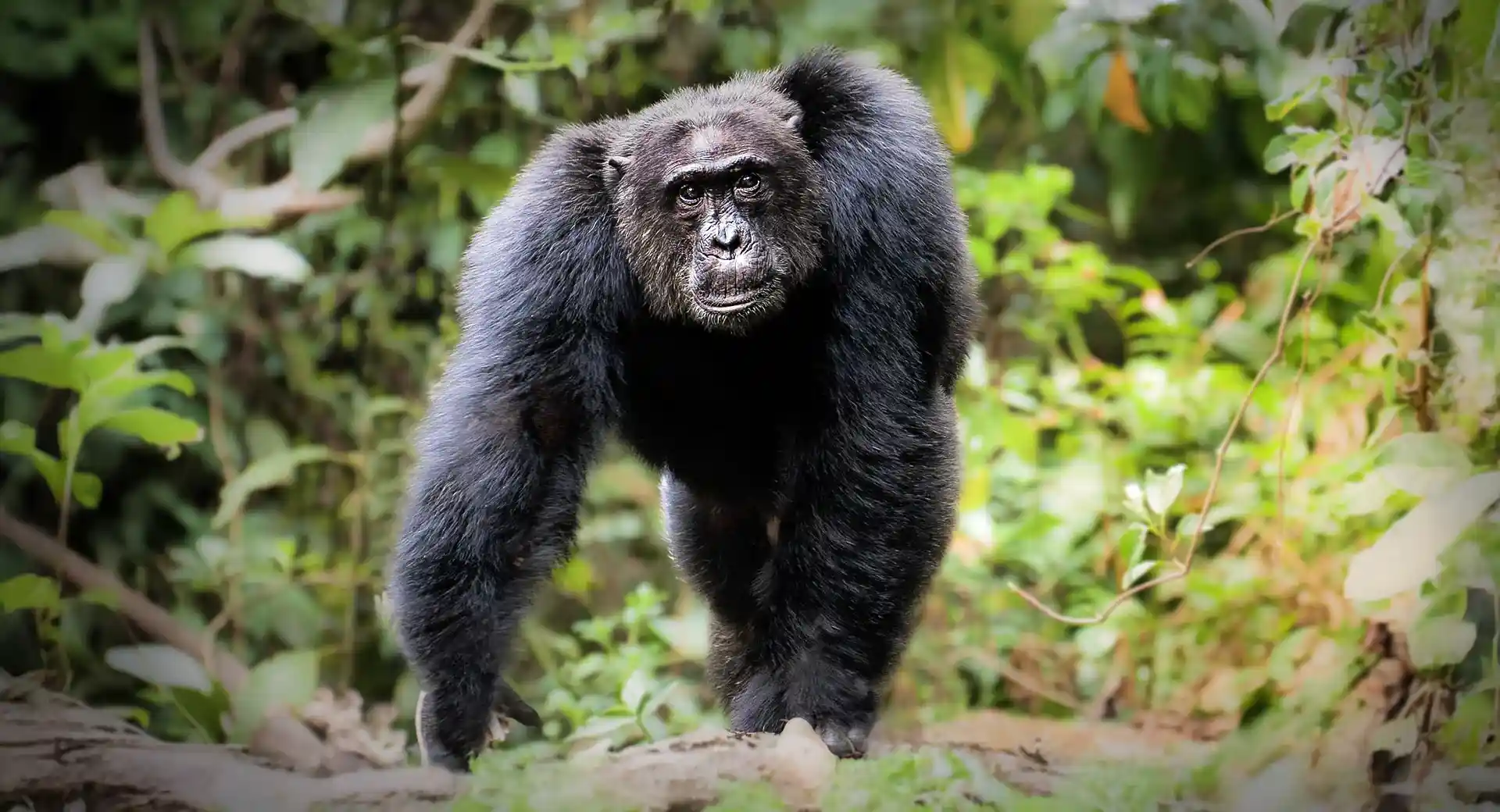
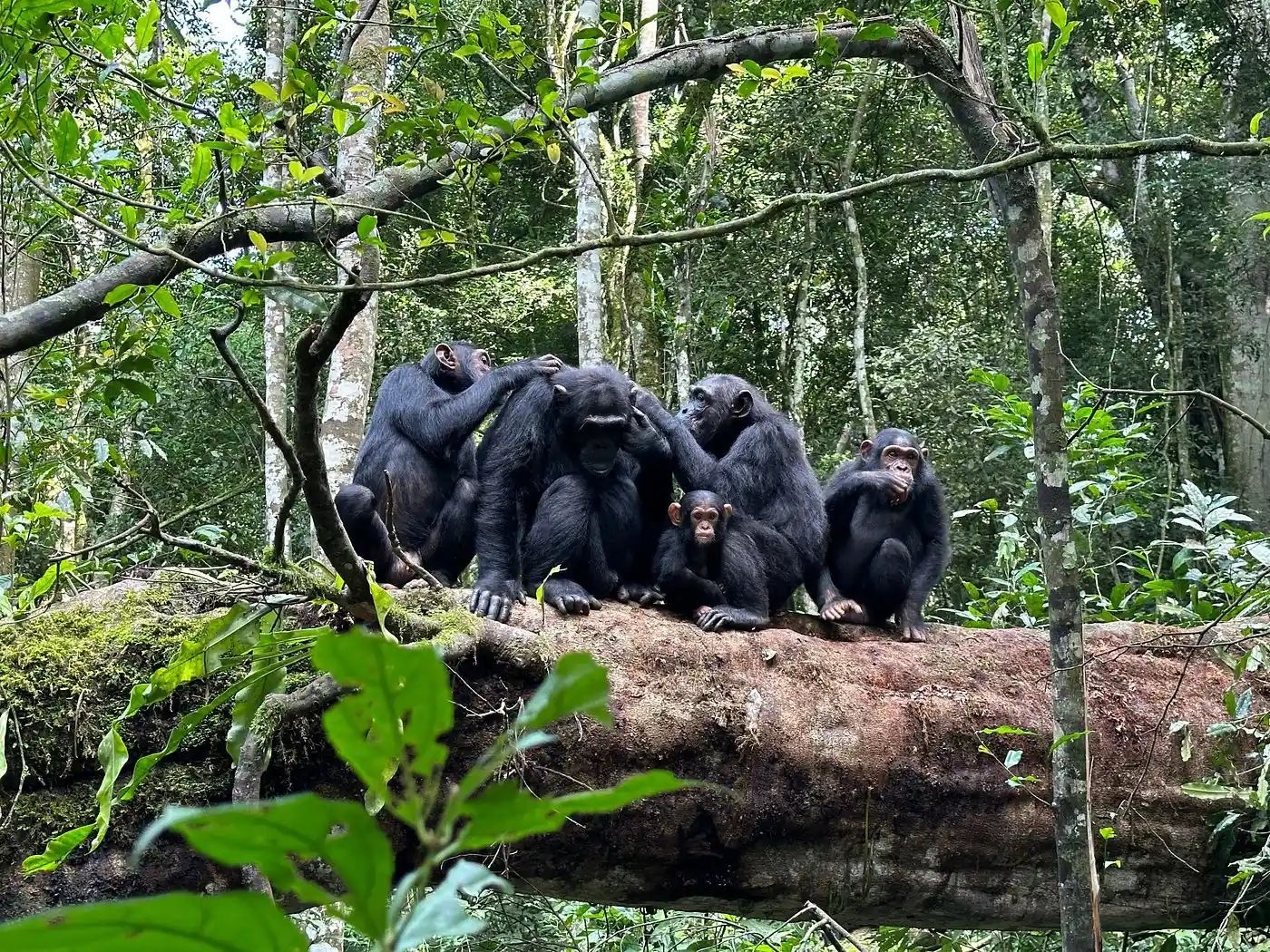
Chimpanzees look a lot like humans. You see it in their size, their faces, and the way they move. Their expressions are full of emotion. When you stand face to face with them, the connection feels instant. Strong. Real. You notice how intelligent they are.
How aware they are of you. How they communicate, play, and interact with each other. It is not just something you see. It is something you feel. And that feeling often becomes one of the most special moments of your entire safari in Uganda.
If you are lucky, you will hear their famous “pant-hooting.” It is loud, wild, and full of energy. A shared call that spreads through the forest. Sometimes, even your presence can trigger it.
Chimpanzees live in large communities of up to 250 individuals. These groups are split into smaller families, usually led by a dominant alpha male.
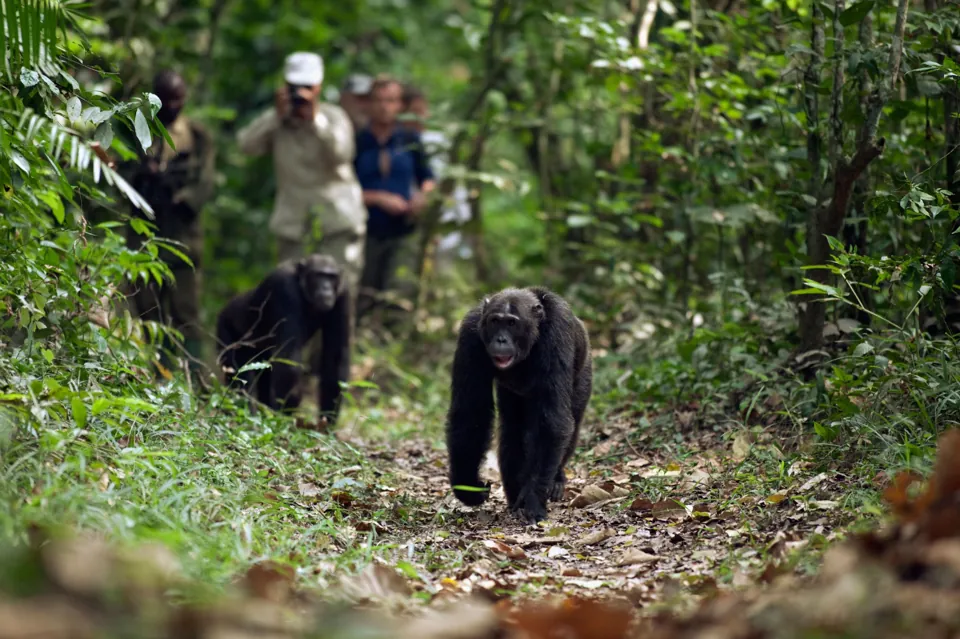
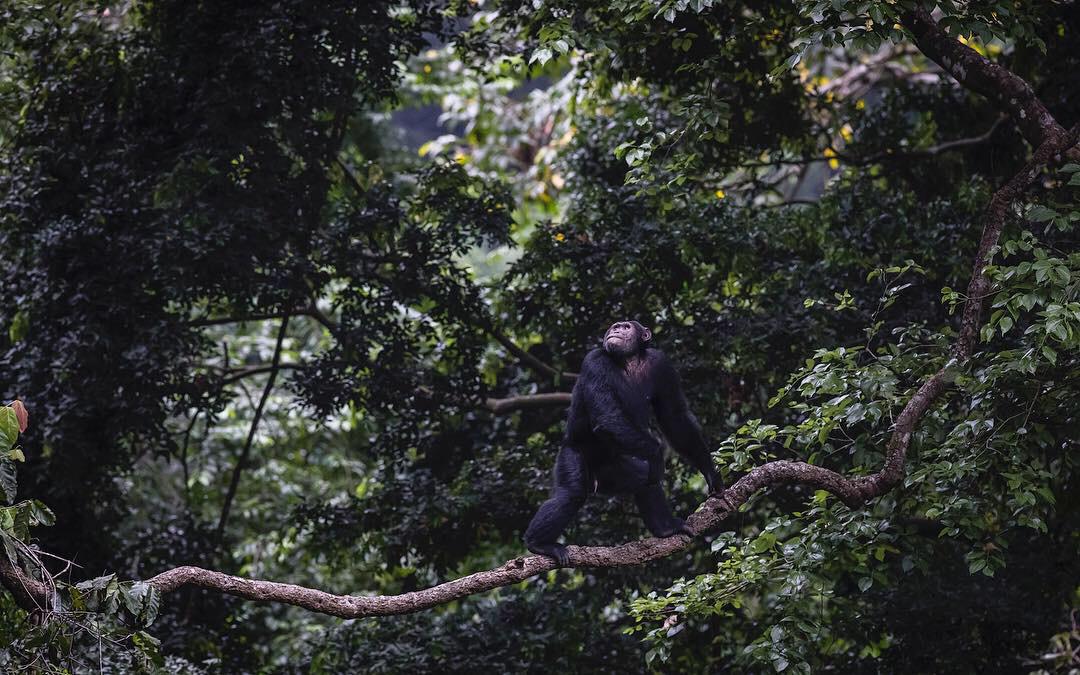
Most of their day is spent high in the trees, where they feed, rest, and groom each other. But when they come down to the forest floor, that is your moment. That is when you can truly see them up close.
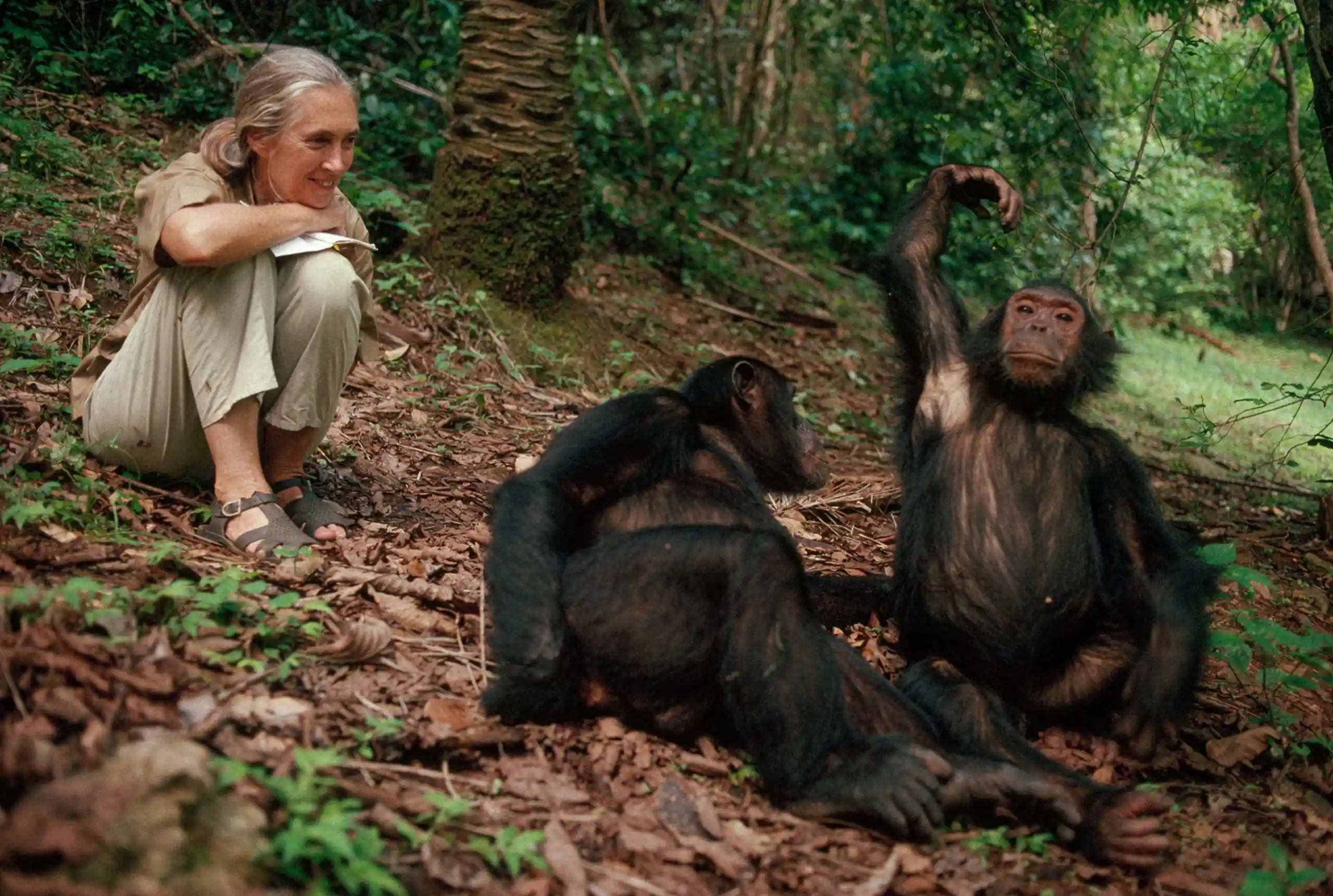
Today, we know chimpanzees are our closest relatives, sharing around 98% of our DNA. But this was not always known. In the 1960s, Dr Jane Goodall lived among chimpanzees in Gombe National Park.
She was the first to observe their complex, human-like behavior. She showed the world that chimpanzees use tools, hunt, and share strong social bonds.
By spending time with them, she slowly gained their trust. This process is called habituation. It allows chimpanzees to feel comfortable around humans without changing their natural behavior. Today, this is what makes it possible for visitors to experience them up close in the wild.
Where in Uganda can you See chimpanzees?
Of the travelable part of East Africa, Uganda has the largest number of chimpanzees: around 5000. About 1500 of them live in Kibale Forest National Park in western Uganda. That park offers the highest chances of sightings and is the best place chimpanzee trekking in Africa.
In Kibale, you can choose a morning trek or an afternoon trek there. If you do chimpanzee trekking in the morning during busy seasons, it can get crowded – that booking an afternoon trek during the high season is a great option. Or you can switch to other areas where the trek is less crowded.
You will also find a population of chimpanzees in the beautiful Kyambura Gorge in Queen Elizabeth National Park. That group is smaller and slightly less habituated. But if you want to avoid standing watching chimpanzees with a large group at the same time, it is a very good alternative.
There is also Kalinzu Forest Reserve near Queen Elizabeth National Park – a chimpanzee community lives there as well. This location offers the same advantages as Kyambura Gorge: you have a beautiful, pure experience with a select group.
The same applies to Budongo Forest Reserve and Bugoma Forest. An added advantage of these alternative places for a chimpanzee trekking: they are cheaper than Kibale.
What the chimpanzee trekking looks like?
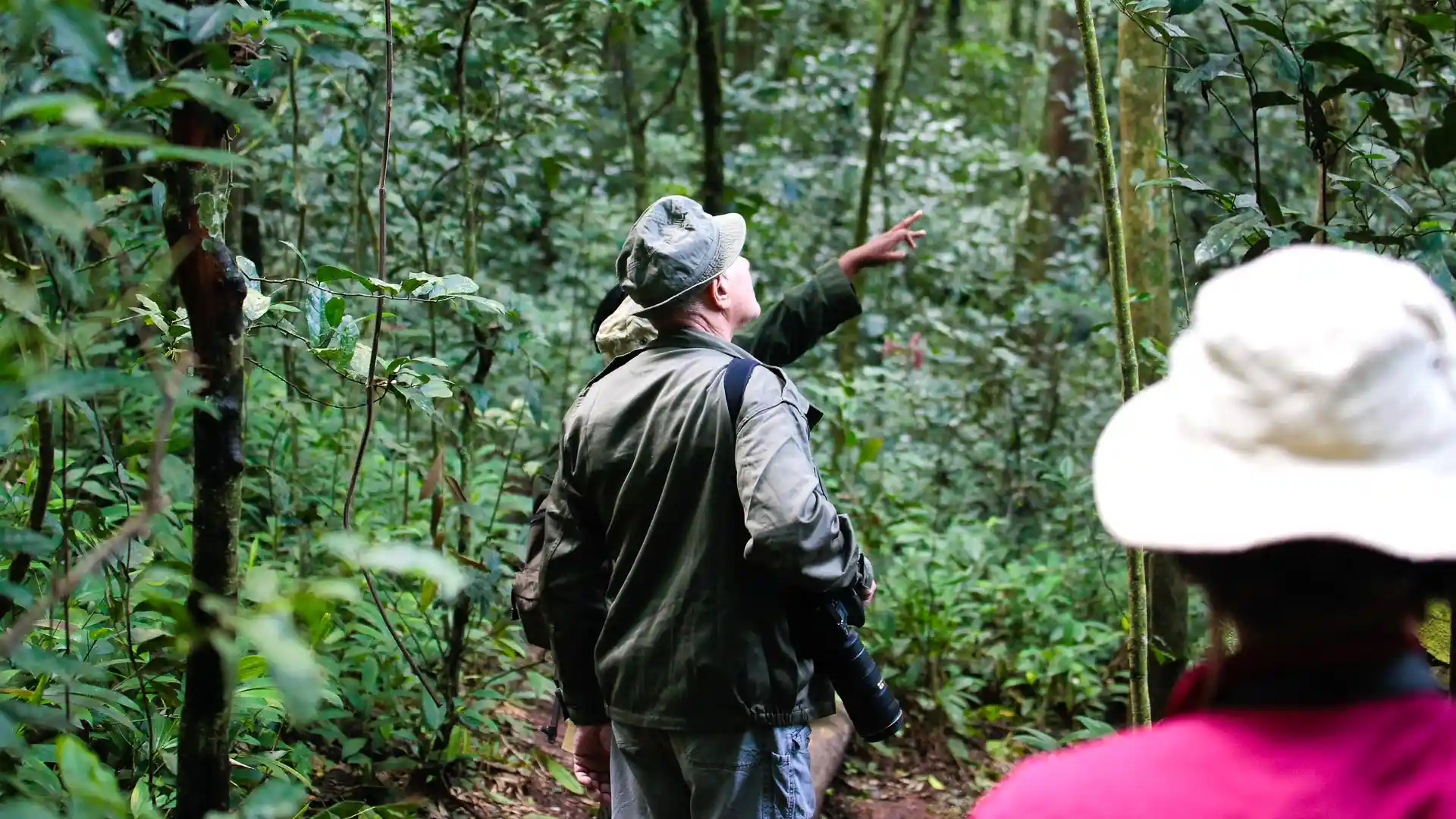
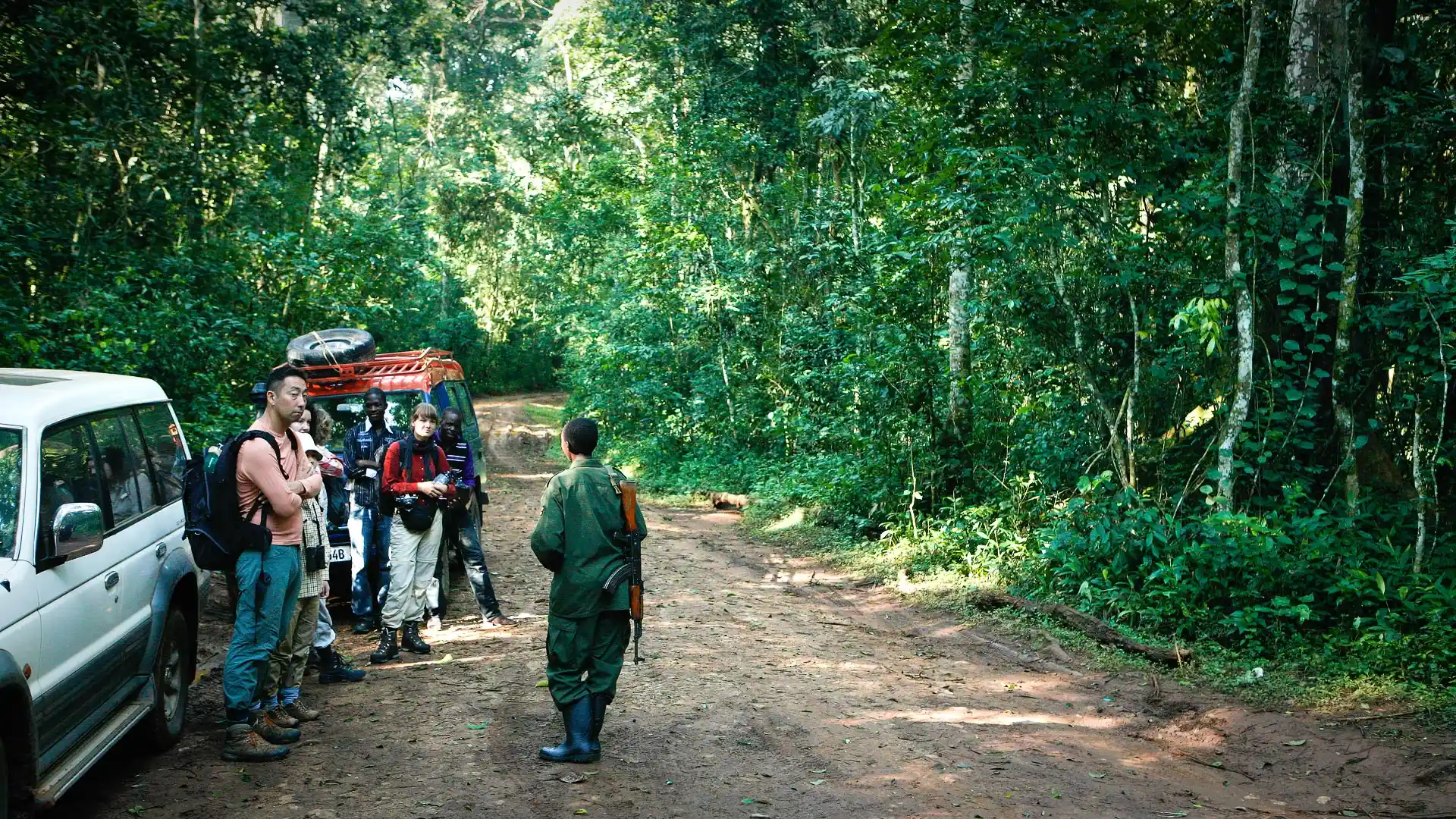
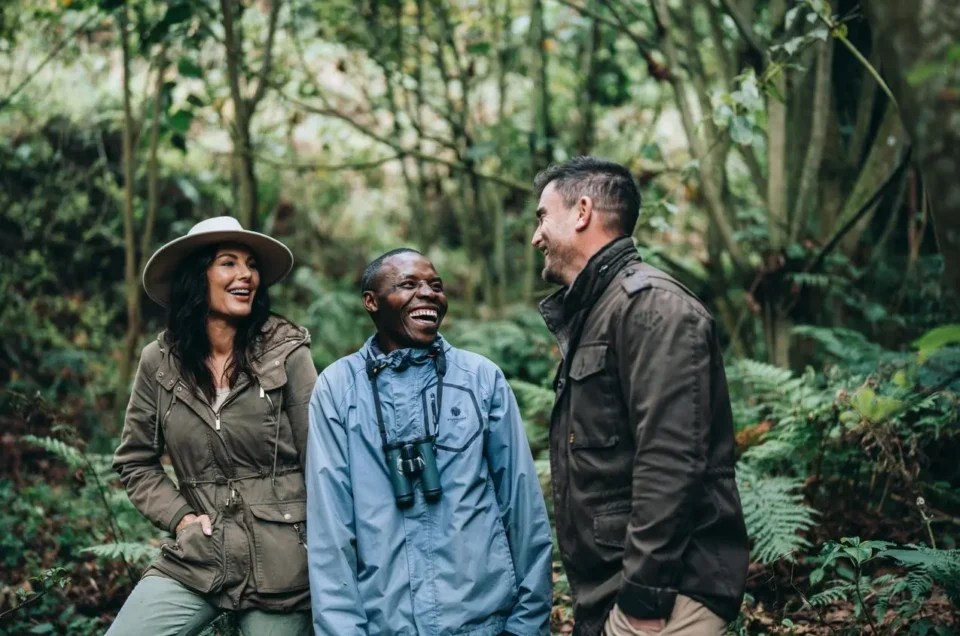
Before you set off, you will receive a short briefing from an expert local ranger guide. The ranger will explain what the trek involves and what you should expect in the forest.
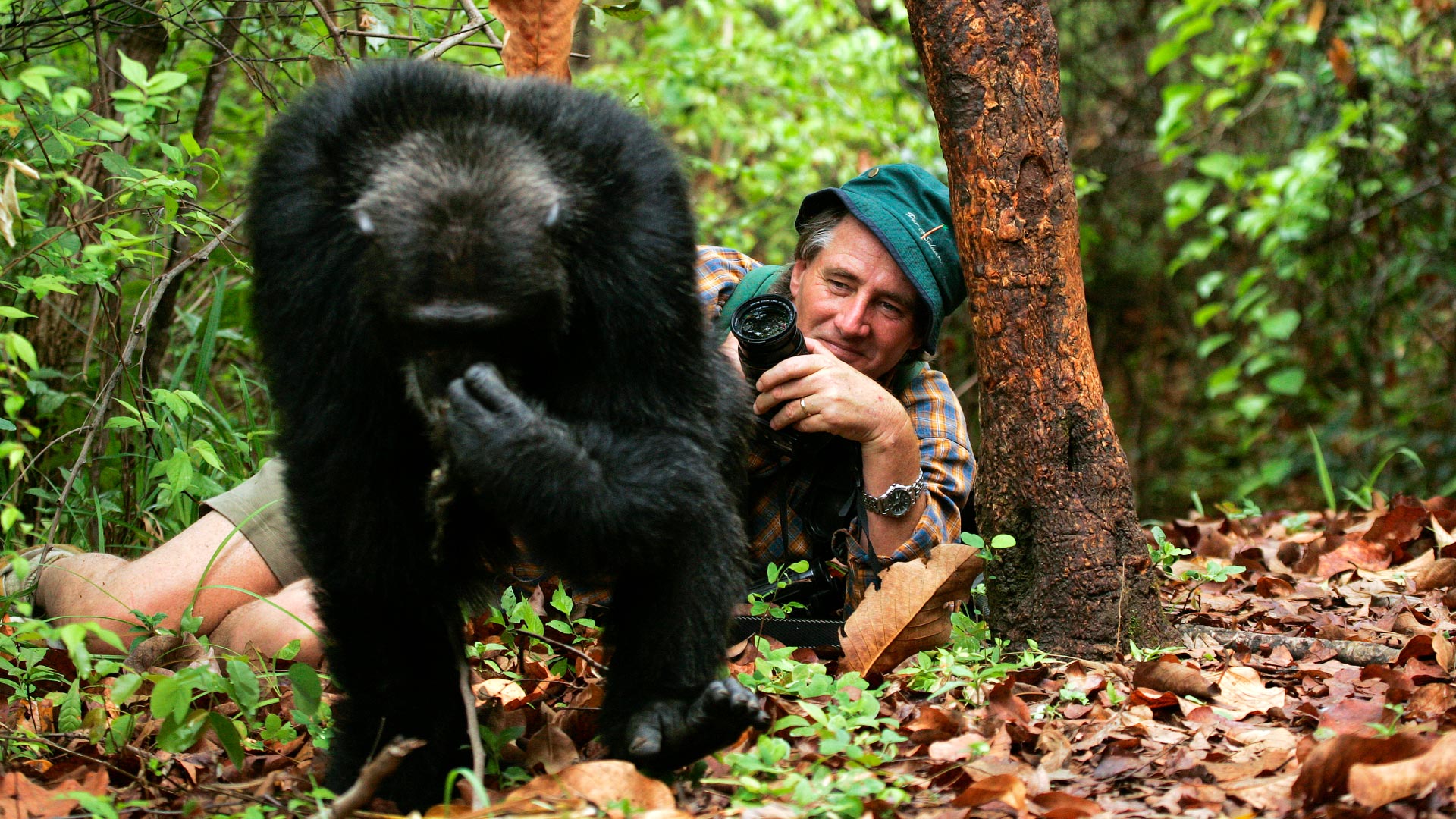
You are also given do’s and don’ts. Top of the list: avoid getting too close to chimpanzees. Not only for your own safety, but also for theirs because viruses, colds, and diseases can easily spread to them due to shared DNA. You will also be advised not imitate their calls.
While it might seem fun to mimic them, it is not a good idea. If you are not careful you can accidentally copy a call that’s sounds like a battle cry. And that can trigger a full group response… bringing 250 angry chimpanzees down upon you.
In the wild, chimpanzees can be involved in what researchers describe as chimpanzee wars, where different groups may become aggressive toward each other.
Once you have been briefed, you are split se into small groups of up to seven people. Each group is led by an experienced ranger guide, who is armed in case of emergencies.
Then you step into the forest, and the trek begins. It is always a question of how easily and quickly you find the chimpanzees. they are wild animals, after all.
Sometimes you can locate them within an hour. Sometimes, it takes two or three hours of hiking. When you finally find chimpanzees, you are allowed to stay with them for not more than one hour. This is your time to observe, photograph, and simply watch their world unfold.
The rangers with you are highly experienced. They know the chimpanzee families inside out. To them, all the chimpanzees have names, they know who the boss is, and they know the roles. They share all sorts of information about ages, what they eat, and why they eat those things.
So, you learn a lot about the behavior of the chimpanzees.
Good to know
- Chimpanzee trekking is generally less strenuous than gorilla trekking.
- In places like Kibale National Park, the terrain is mostly flat and manageable.
- In Budongo Forest, it is also relatively easy and accessible.
- However, in Kyambura Gorge, the hike is much more challenging, with steep and uneven terrain. It is rewarding, but not suitable for everyone.
Chimpanzee Habituation Experience
A chimpanzee habituation experience is intense, in the best possible way. It is longer, deeper, and far more immersive than a standard chimpanzee trek. Your day starts very early, often before the forest fully wakes up in places like Kibale Forest, Bugoma Forest, and Budongo Forest. Together with rangers and researchers, you head out to locate the chimpanzee community at their nesting site.
From the moment you find them, you stay with them as they begin their day. You follow their movements as they feed, travel, interact, and sometimes disappear into thick forest before suddenly reappearing again. Not only does this give you a wonderful opportunity to learn about chimpanzee behavior, it also offers a rare behind-the-scenes glimpse into primatology.
Practical tips for your chimpanzee trekking
There are many small things that can make your trek easier, but here are the most important ones:
- Wear good walking shoes with a strong grip. The forest can be slippery.
- Wear long trousers. Simple, comfortable ones are perfect. No need for special gear or “Indiana Jones” outfits.
- Bring long socks and pull them over your trousers. This helps protect you from insects and ants.
- Use insect repellent before you start the trek.
- Apply sunscreen as well. Even in the forest, the sun can still be strong.
- If you prefer extra support, bring a light walking stick. It can really help on uneven paths.
- Fill your water bottle before you start walking. Stay hydrated during the trek.
- You are not allowed to eat in front of the chimpanzees. But you can bring a snack for before or after the trek, like a protein bar or muesli bar.
How much does a chimpanzee trekking permit cost?
The price of a chimpanzee trekking permit in Uganda depends on the location you choose. As of May 2, 2025, the rates are as follows:
- Kibale National Park: $250
- Kibale Chimpanzee Habituation Experience: $300
- Kyambura Gorge: $100
- Budongo Forest: $120 (high season) / $110 (low season)
- Kalinzu Forest Reserve: $150
This price includes the entrance fee and the services of a guide.
Want to know more about chimpanzees in Uganda? Feel free to contact us. We enjoy answering your questions. Not done reading about this magnificent animal species yet? Then read on about other primate species in Uganda or specifically the gorilla. Already making concrete plans? Then check out the options for Uganda tours tailored to your wishes.
You May also Like