Categories
- Accommodation
- Accommodation at Kibale Forest
- Active
- Active Tour Lodges
- Best Bwindi Guides
- Best Lodges
- Best Luxury
- Birding Guides
- Budget accommodation at Kibale
- Budget accommodation in Uganda
- Budget Hotels in Entebbe
- Budget Murchison Falls Accommodation
- Bwindi Guides
- Bwindi Lodges
- Bwindi National Park Guides
- Culture
- Culture & Nature
- Entebbe Hotels
- Exclusive Lodges In Bwindi
- Exclusive Lodges In Murchison Falls National Park
- Exclusive Lodges in Queen Elizabeth National Park
- Family
- Family Friendly Lodges
- Family Guides
- Good lodges
- Gorilla Trekking
- Gorilla trekking guides
- great blogs
- Guides
- Health Travel Informations
- High End Accommodation At Kibale
- Jinja Accommodation
- Kampala Hotels
- Kibale
- Kibale Guides
- Lake Mburo National Park lodges
- Lodges in Mgahinga
- Luxury accommodation at Kibale
- Luxury Accommodation in Queen Elizabeth National Park
- Luxury Accommodation Options
- Luxury Hotels In Entebbe
- Luxury Lodges In Bwindi
- Luxury Murchison Falls Accommodation
- Midrange accommodation at Kibale
- Midrange Hotels In Entebbe
- Midrange Lodges In bwindi
- Midrange Murchison Falls Accommodation
- Murchison Falls Guides
- Murchison Falls Lodges
- Murchison Lodges
- Nature and Culture lodges
- News
- News and Blogs
- People and culture
- Popular
- Practical tips
- Primate Lodges
- Primates
- Queen Elizabeth Guide
- Queen Elizabeth National Park Accommodation
- Queen Guides
- Related
- Related active
- Related animals
- Related waters
- Semi Luxury Lodges In Bwindi
- Semi-Luxury Entebbe Hotels
- Travel Guide
- Travel Inspirations
- Uganda Honeymoon Lodges
- Uncategorized

The 'Big Seven' of Africa
The ‘Big Seven’ is a group of seven animals found in Uganda and unique to Africa. Most visitors to Africa already know the term ‘Big Five’. It is a hunting term for the lion, leopard, buffalo, rhinos, and elephant.
In Uganda, two more species are added to this group: the mountain gorilla and the chimpanzee. This is why we refer to the ‘Big Seven’ of Africa when talking about the most important animals in Uganda.
By Ssonko Rashidu
Note: Some members of Africa’s ‘Big Seven’ can be classified as species or subspecies. Because science is sometimes divided on this, I use the term ‘(sub)species’ where necessary.
Which animals are part of Africa's 'Big Seven'?
So, which animals make up Africa’s famous ‘Big Seven’? These are the most iconic and sought-after wildlife species you can see in Uganda. Each one offers a unique and unforgettable experience. Click on any of the animals below to learn more about them:
1. Lion
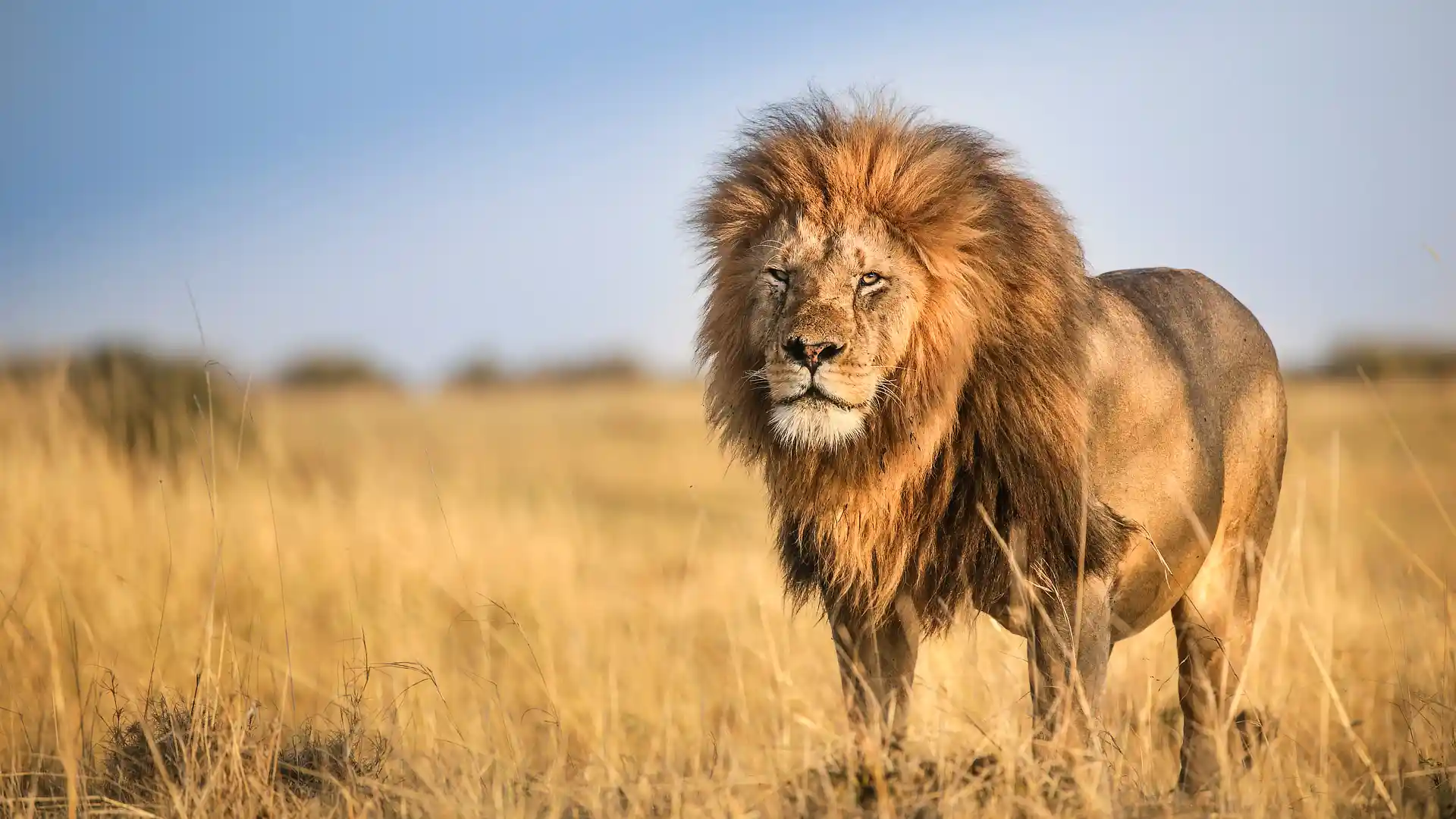
I begin the ‘Big Seven’ of Africa with the lion, the king of the animals. It is a powerful and majestic big cat.
Adult males are easy to recognize because of their large and impressive manes. Every time I see a lion or lioness up close, I am surprised by just how big and strong they are.
Some subspecies of the African lion no longer exist in the wild.
The Cape lion and the Atlas, also known as the Barbary lion, are now extinct in their natural habitat. Today, only about 100 Barbary lions remain, and they live in captivity.
Distribution
If you look at where lions live in Africa today, their range has reduced greatly over time.
In the past, lions were found across most of the continent, except in the deserts. Today, they are mainly found in smaller, scattered areas south of the Sahara.
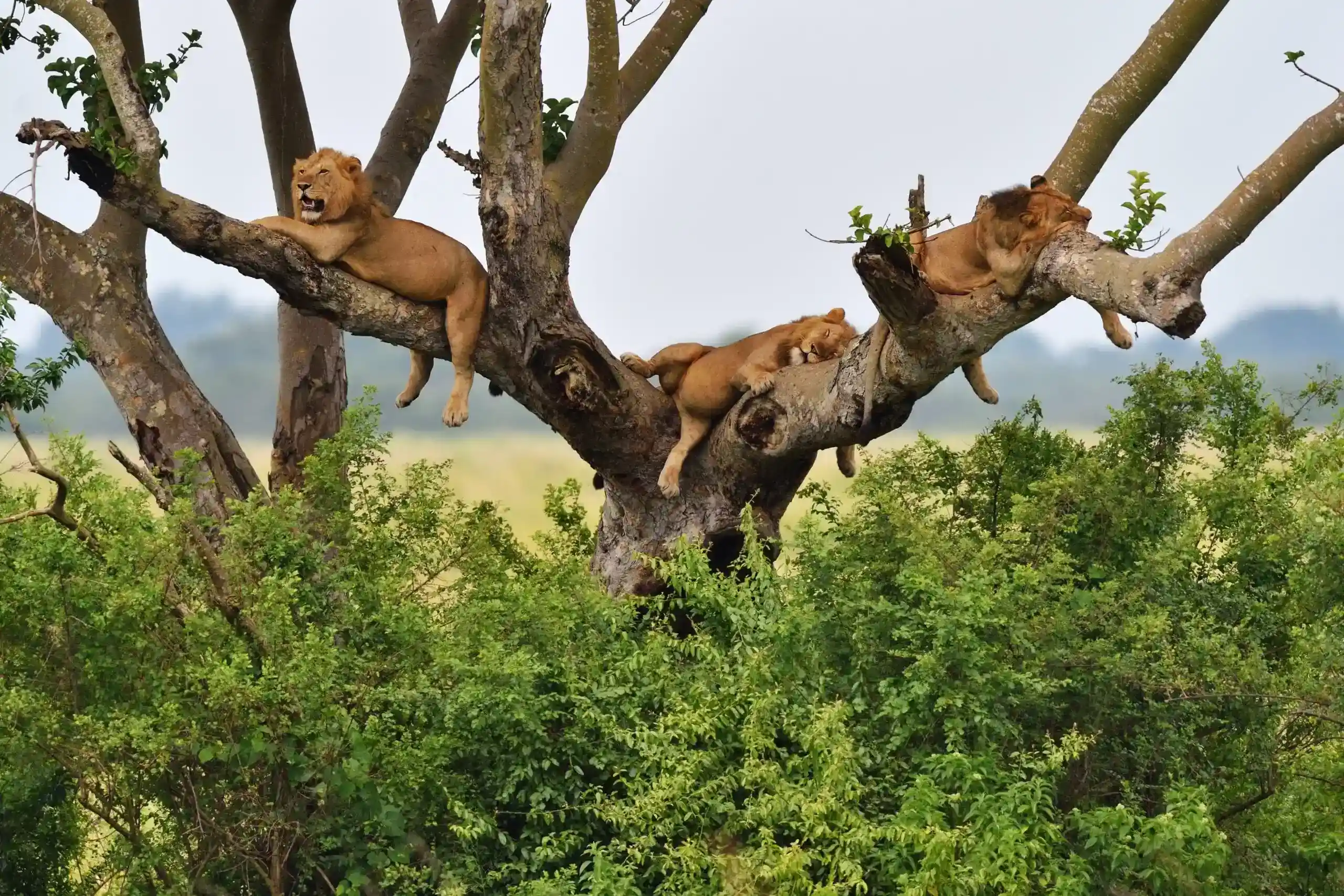
The good news is that you can still see lions in Uganda. You have a strong chance of spotting them in the large savannah parks. These include Murchison Falls National Park, Queen Elizabeth National Park which is especially the tree-climbing lions in Ishasha, and Kidepo Valley National Park in Karamoja region.
A bit of luck
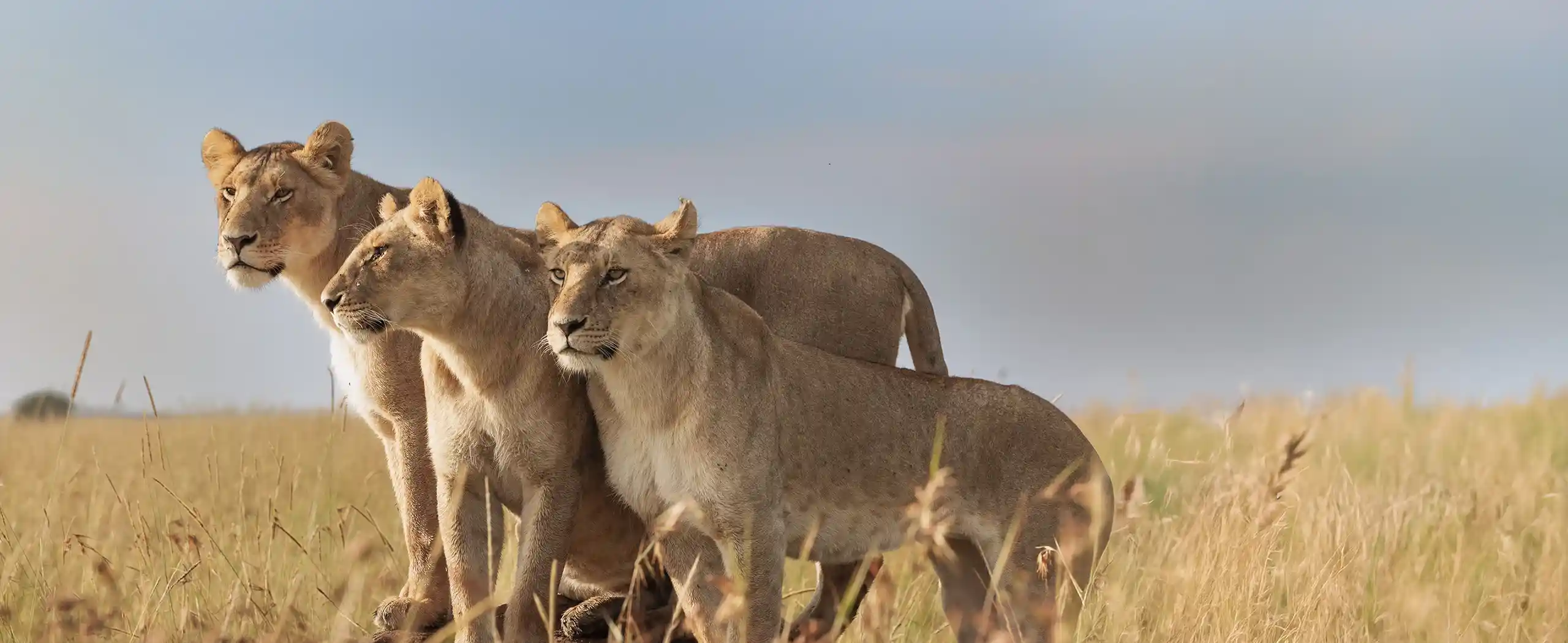
Seeing lions is never guaranteed, but your chances are quite good. However, spotting a male lion often requires a bit more luck than seeing lionesses (female lions).
Male lions are less frequently seen because they spend much of their time guarding their territory. Lions live within defined territories, and it is mainly the male lions that protect them.
Because of this, they are often on patrol, moving around the edges of their area. At the boundaries, they mark their territory by spraying urine in key spots. This sends a clear message to other lions that the area is already claimed. Any intruders that enter are quickly chased away.
Group composition
A lion pride usually consists of about 2 to 12 lions. In some cases, groups of up to 40 lions can be found.
Most of the pride is made up of lionesses and their cubs. A pride can include up to four males, although larger groups of males are sometimes seen, but this is rare.
Large prides are often divided into smaller subgroups that move around the territory. These subgroups change in size and structure over time. When they meet again, they greet each other with clear and sometimes elaborate behaviors for recognition.
The females are mainly responsible for hunting. They work together in groups to catch prey. Males can also hunt, but they are usually focused on protecting the territory.
After a successful hunt, males often join the group to feed. When the prey is large, such as an African buffalo, a male may help bring it down and kill it.
Coalitions
An adult male lion lives for about 15 years. He is strongest between the ages of 5 and 9. During this time, he can lead and protect his own pride, usually for about two years.
Life for a male lion is tough. He must defend his territory and mate with females to pass on his genes. But there is always danger. Not all males have a pride. Some are always looking for a chance to take over another group. These takeovers often lead to serious fights that can last for days.
To increase their chances, male lions often form alliances. These are called coalitions. A coalition can be made up of brothers, members of the same pride, or even unrelated males that join forces.
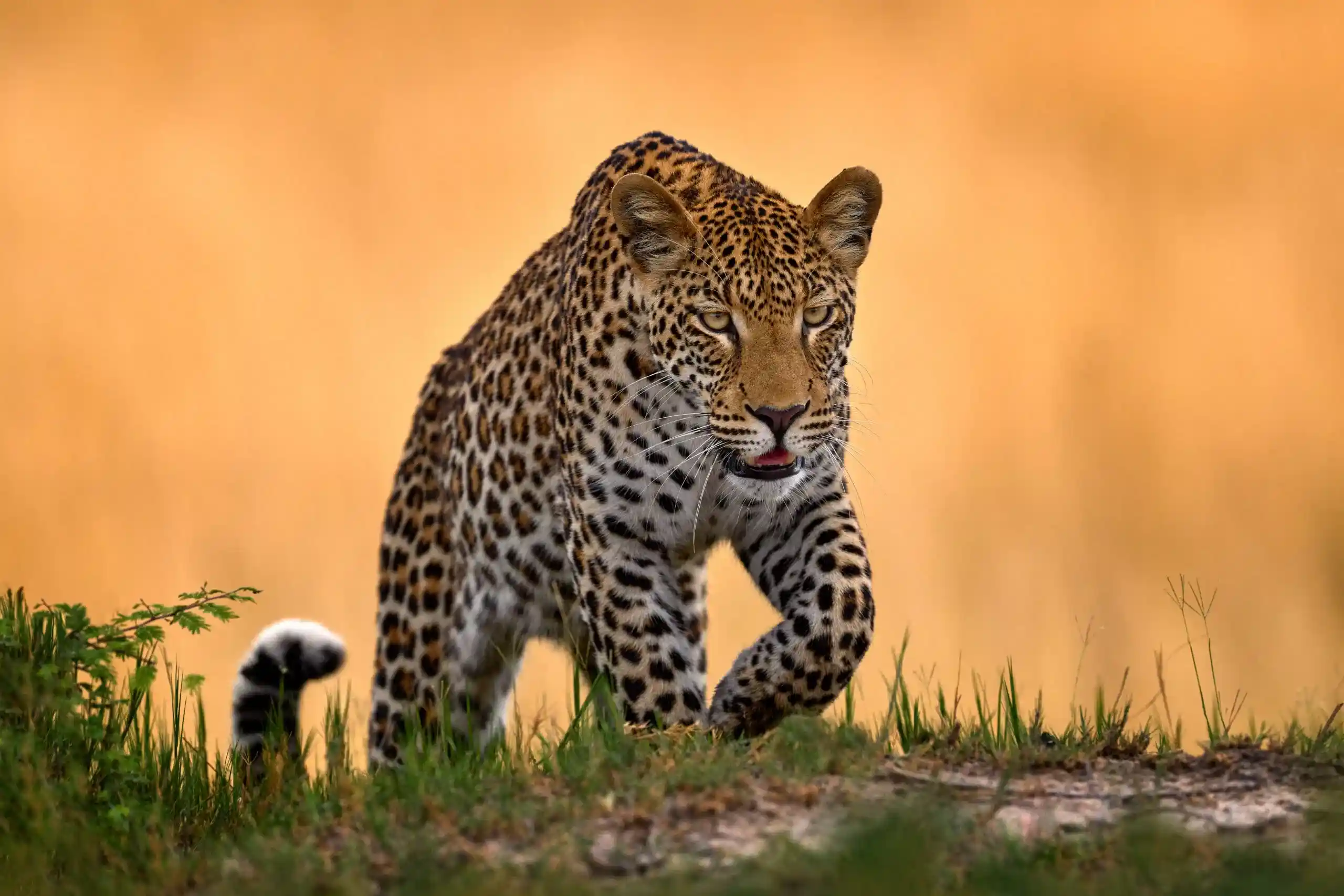
2. Leopard
The leopard is the second member of Africa’s ‘Big Seven.’ Its name has an interesting history. The word “leopard” comes from Middle Dutch: lupaert. This itself comes from the Old French word lupart or leopart.
The first part, lu, comes from lupen, which means to lurk, ambush, or attack from behind, a clear reference to how this cat hunts. The second part, part, was influenced by the Dutch word paert.
Over time, these parts came together, and the word evolved into the “leopard” we use today. This history reflects the leopard’s secretive and stealthy nature, a true master of ambush in the wild.
Distribution
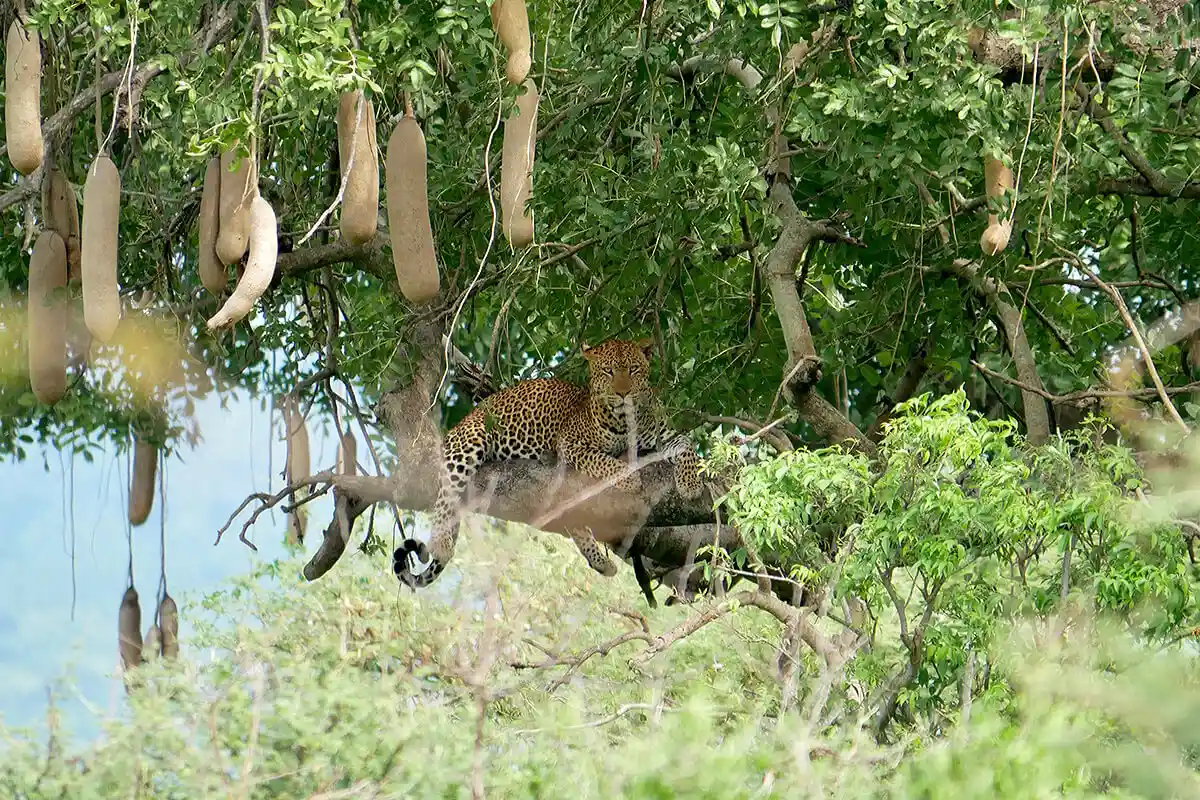
Leopards are one of Africa’s most common big cats. Yet, they are very hard to spot. They are found across almost all of Africa, except the Sahel. Leopards do well wherever there is prey and enough cover to ambush it. You can find them on the savanna if there is enough vegetation. They also live in dense rainforests. Their ability to adapt to different habitats makes them widespread.
A bit too much luck
Seeing a leopard takes more luck than spotting lions. Leopards are mostly active at night. Studies show they are active from about half an hour before sunset until a few hours after sunrise.
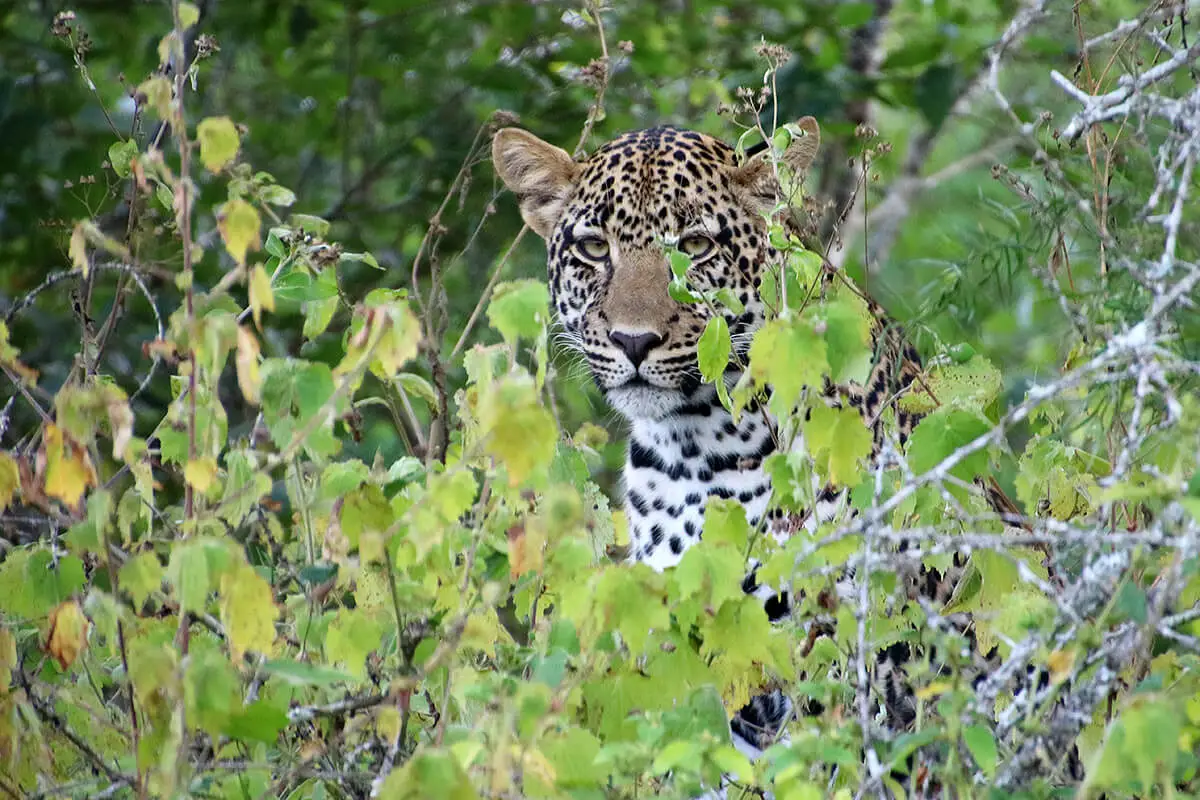
During the day, they hide in dense cover or rest in trees. Leopards are not small, but they are very hard to see. Their spotted coat blends perfectly with their surroundings. This makes them true masters of camouflage.
Our driver guides do everything they can to help you spot one. Sometimes, with a bit of luck, you may even see a leopard in the middle of the day.
Lone wolf
Leopards are typical solitary cats. They spend most of their lives alone. Male and female territories may overlap, but they meet only during the mating season.
Contact between a mother and her cubs is intense. It continues until the cubs can hunt on their own. For example, a 1.5-year-old female leopard was able to catch rock hyraxes, hares, and small birds, but not larger prey. Her mother would kill a gazelle every few days, hide it in a tree, and then bring it to her daughter. They ate it together and then separated again.
This went on for about 6 weeks. When the mother came into estrus again, she sought a male. After that, mother and daughter were never seen together, even though their territories remained close.
Varied menu
Leopards have a very varied diet. They hunt medium-sized antelopes like impala, gazelle, and reedbuck. They also take young of larger grazers such as plains zebra, topi, and hartebeest.
In addition, they eat jackals, hares, birds, reptiles, insects, domestic animals, and carrion.
Contrary to some claims, leopards do not often hunt baboons. Attacking a troop of baboons is very risky. Adult males have large canines and can seriously injure or even kill a leopard.
Young baboons venturing away from the group, however, may become prey if the opportunity arises.
Leopards hunt mostly by ambush, usually at night. They stalk prey until it is 5 to 20 meters away, then pounce. They rarely chase missed prey more than 50 meters, even though they can reach speeds of up to 60 km/h. After a kill, leopards often drag the prey into a tree to keep it safe from lions and hyenas.
3. African buffalo
The African buffalo is the third member of Africa’s ‘Big Seven.’ It is the only bovine found in Africa.
There are several (sub)species including, Cape buffalo, Forest buffalo, and mountain buffalo. The differences between them are mainly in coat color, size, and horn shape.
For example, Forest buffalo have horns that curve backward. This helps them move easily in dense tropical rainforests. Horns that point sideways would be difficult in areas with thick vegetation. All three (sub)species of African buffalo can be found in Uganda.
Distribution
The Cape buffalo is the most widespread in Uganda. Kidepo Valley National Park has the largest herds in the country. They are also common in Murchison Falls and Queen Elizabeth National Parks.
Forest buffalo live mainly in the rainforests of Central Africa. In Queen Elizabeth and Semuliki National Parks, you may sometimes see Forest buffalo near the border with the DR Congo.
Some of these may be hybrids with Cape buffalo. Look carefully at the reddish-brown coat and the horn shape to tell them apart.
Mountain buffalo, also called Virunga buffalo, are only in Mgahinga Gorilla National Park. You need some luck to spot them, as the population is so small.
Short fuse
African buffaloes are unpredictable and can be very aggressive. They do not hesitate to attack lions or other large predators if one of their own is threatened. When a calf or adult is attacked, it emits a distress call. This acts as a signal for the rest of the herd. The herd may then charge the predator together. For example, in Tanzania, one lion and four lionesses were forced to stay in a tree for hours after a herd of 200 buffaloes attacked them. The lions had killed a member of the herd. In another case, a herd encountering lion cubs trampled or killed them with their horns.
One for all, all for one
African buffaloes in a herd look out for each other, even for sick or injured members.
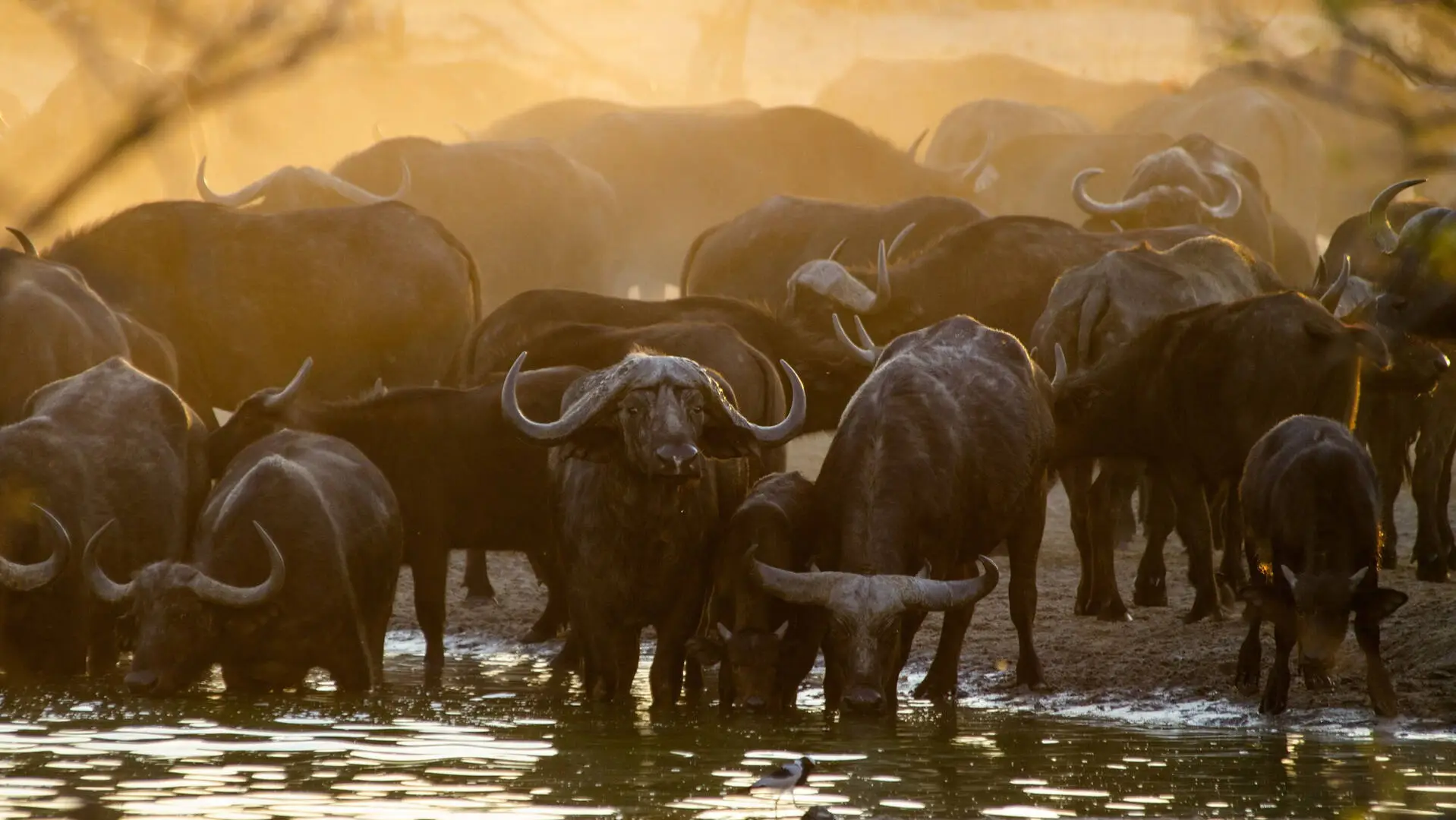
They have a clever way to avoid predators. When attacked, the herd moves together. But they don’t run at full speed. Instead, they trot, forming a solid block of muscles and horns. This makes it harder for predators, like lions, to single out weak animals.
If the herd ran at full speed, young and sick buffaloes would become easy prey. Sometimes, herds do panic and rush across the savanna, which is puzzling.
An adult African buffalo can reach speeds of about 50 km per hour.
Structured animals
African buffaloes live in herds ranging from 50 to over 1,500 animals.
Within the herd, there are smaller groups called clans. These usually consist of related animals: cows with their calves and some young or adult bulls. Young buffaloes can also form clans within the main herd.
During the dry season, adult bulls often leave and form bachelor herds. A strict hierarchy rules the herd. The largest and strongest bulls lead and have the first mating rights.
Other bulls usually accept this, but fierce fights can happen.
Watching bulls fight is spectacular. They can weigh over 800 kg, and their horns can reach 1.4 meters. These battles can cause serious injuries.
Trackers
Young adult buffaloes are low in rank, but they often lead the herd while moving.
They act as trackers, finding the best paths. During the trek, clans stay together, while bachelor males walk along the flanks. High-ranking animals take the front, just behind the trackers, or the rear of the herd.
Weak animals walk at the back, but still ahead of the dominant bulls.
4. Rhinoceros
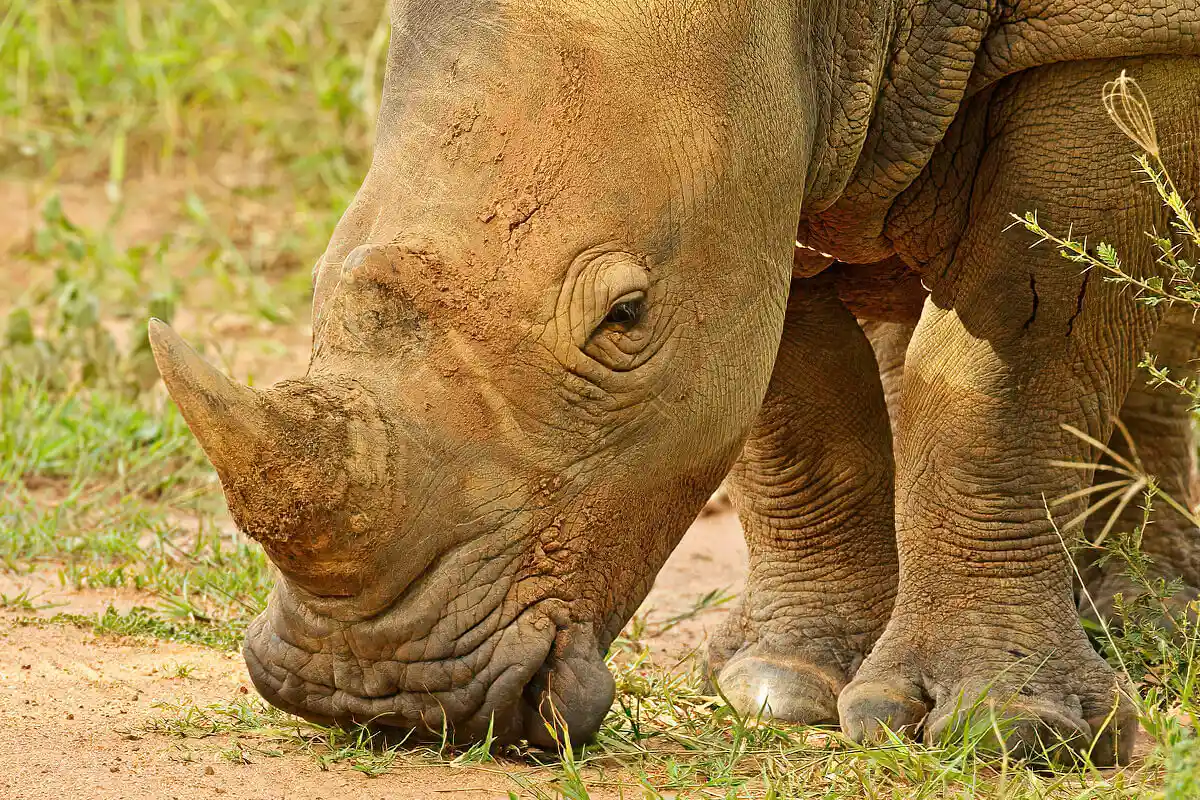
The rhinoceros is the second largest land animal on Earth. And the fourth member of Africa’s ‘Big Seven.’
Africa has two species: the white rhinoceros and the black rhinoceros.
Both face serious threats from habitat loss and poaching for their horns.
The white rhinoceros is listed as ‘Near Threatened’ by the IUCN.
The black rhinoceros is even more at risk, listed as ‘Critically Endangered.’
White and black
The names of the white and black rhinoceros have an interesting history.
The first Afrikaners, of Dutch origin, used the word wijd to describe the shape of the white rhinoceros’s lips. English settlers misunderstood this and translated it as “white” instead of “wide.”
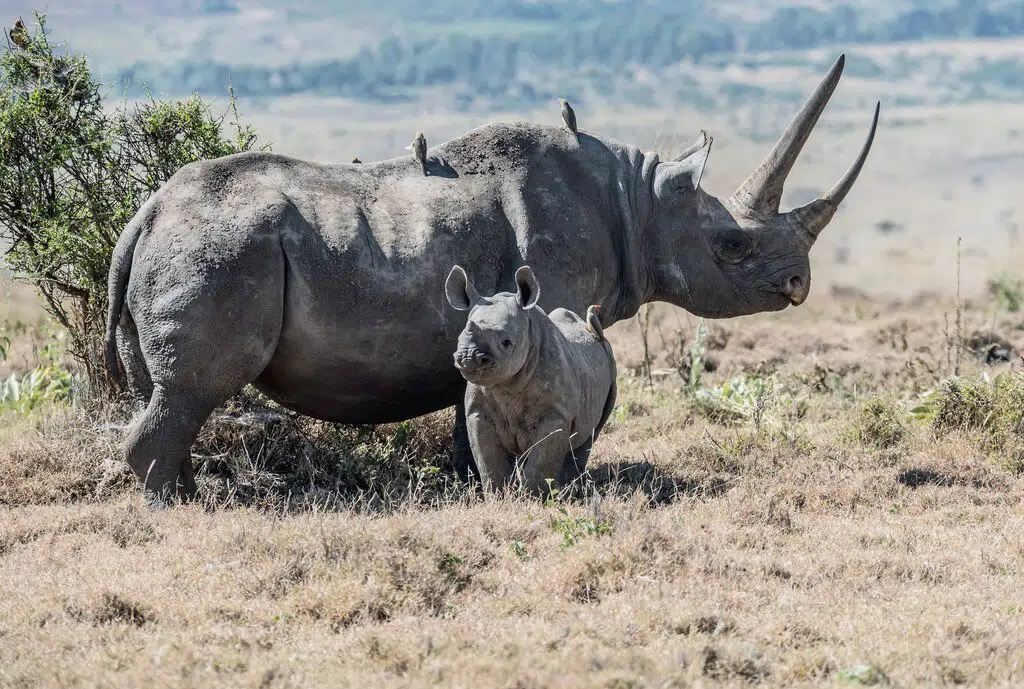
Later, the other species, with pointed lips, was called the black rhinoceros. Both species, however, are actually grey to brownish-grey in color.
Today, the species are often called broad-lipped and pointed-lipped rhinoceros. The main differences are in lip shape, horn size and length, and skull shape. Their feeding habits differ too. The white rhinoceros grazes on grasses. The black rhinoceros browses, feeding on leaves from shrubs and trees.
Distribution
Rhinoceroses once roamed the northern savannas of Uganda.
These included the northern white rhinoceros, a subspecies of the white rhino, and the eastern black rhinoceros, a subspecies of the black rhino.
Around 1960, about 300 northern white rhinos lived in Murchison Falls National Park and Ajai Game Reserve. About 400 eastern black rhinos lived in Kidepo Valley and Murchison Falls National Parks.
Sadly, wars and poaching wiped them out. The last northern white rhino in Uganda was seen in Murchison Falls in 1982. The last eastern black rhino was spotted in Kidepo Valley in 1983.
Najin and Fatu, the last of their kind
Until 2005, a few northern white rhinos still lived in Garamba National Park in the Democratic Republic of Congo. Fierce fighting between militias made sightings impossible by 2008. Only eight animals remained in captivity, most too old to reproduce.
After four of these rhinos died, the remaining two bulls and two cows were moved to Ol Pejeta Conservancy in Kenya. Both bulls, Suni and Sudan, later died in 2014 and 2018. This left only Najin and Fatu, making the northern white rhino functionally extinct. Normal reproduction is no longer possible.
BioRescue, a team of international scientists, harvested eggs from Najin and Fatu.
Using frozen bull sperm, they fertilized some of the eggs. So far, 12 embryos have been created. The plan is to implant them into young southern white rhinos via IVF.
Time is critical. Any calf born must live with Najin and Fatu to learn how to behave like a northern white rhino. Rhinoceroses can live 30 to 40 years. Najin is 38, and her daughter Fatu is 27.
Ziwa Rhino Ranch
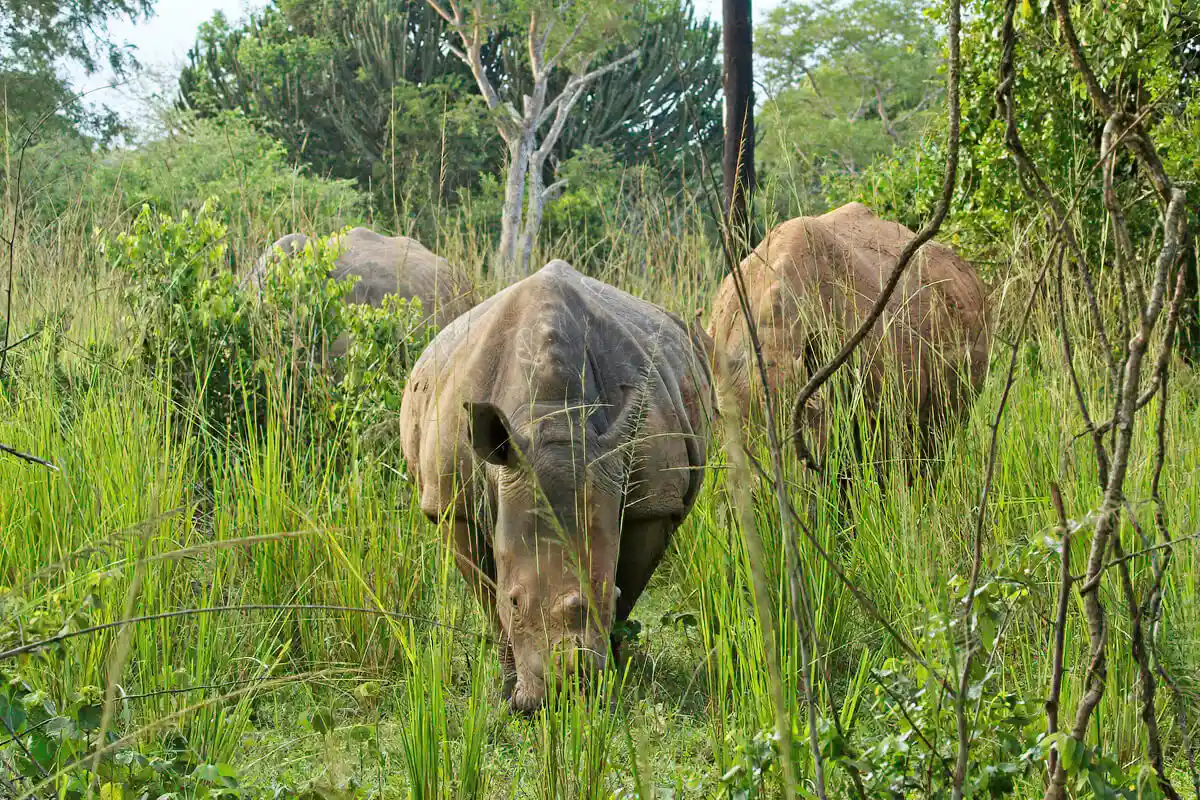
The Ziwa Rhino Ranch was established in 2005 to reintroduce the white rhinoceros to Uganda.
The goal is to bring rhinos back to Uganda’s northern savannas by breeding imported southern white rhinos, the most common subspecies. The 7,000-hectare ranch is home to 48 rhinos, all guarded 24/7.
The plan is to relocate these rhinos to national parks managed by the Uganda Wildlife Authority (UWA).
In March 2026, two white rhinos were released into Kidepo Valley National Park. This marks the first step in returning rhinos to northeastern Uganda.
More rhinos will be introduced in the coming years. The aim is to slowly rebuild the population and give this iconic species a place in Kidepo once again. It is an ambitious, hopeful project showing Uganda’s strong commitment to conservation and ecosystem restoration.
Visit Ziwa Rhino Sanctuary
You can take guided rhino walks at Ziwa Rhino Ranch. Many choose Uganda safaris trips include a visit to Ziwa. It is also possible to travel from Entebbe to Ziwa and back in one day to see the rhinos. Be sure to ask about available options and timings.
5. Elephant
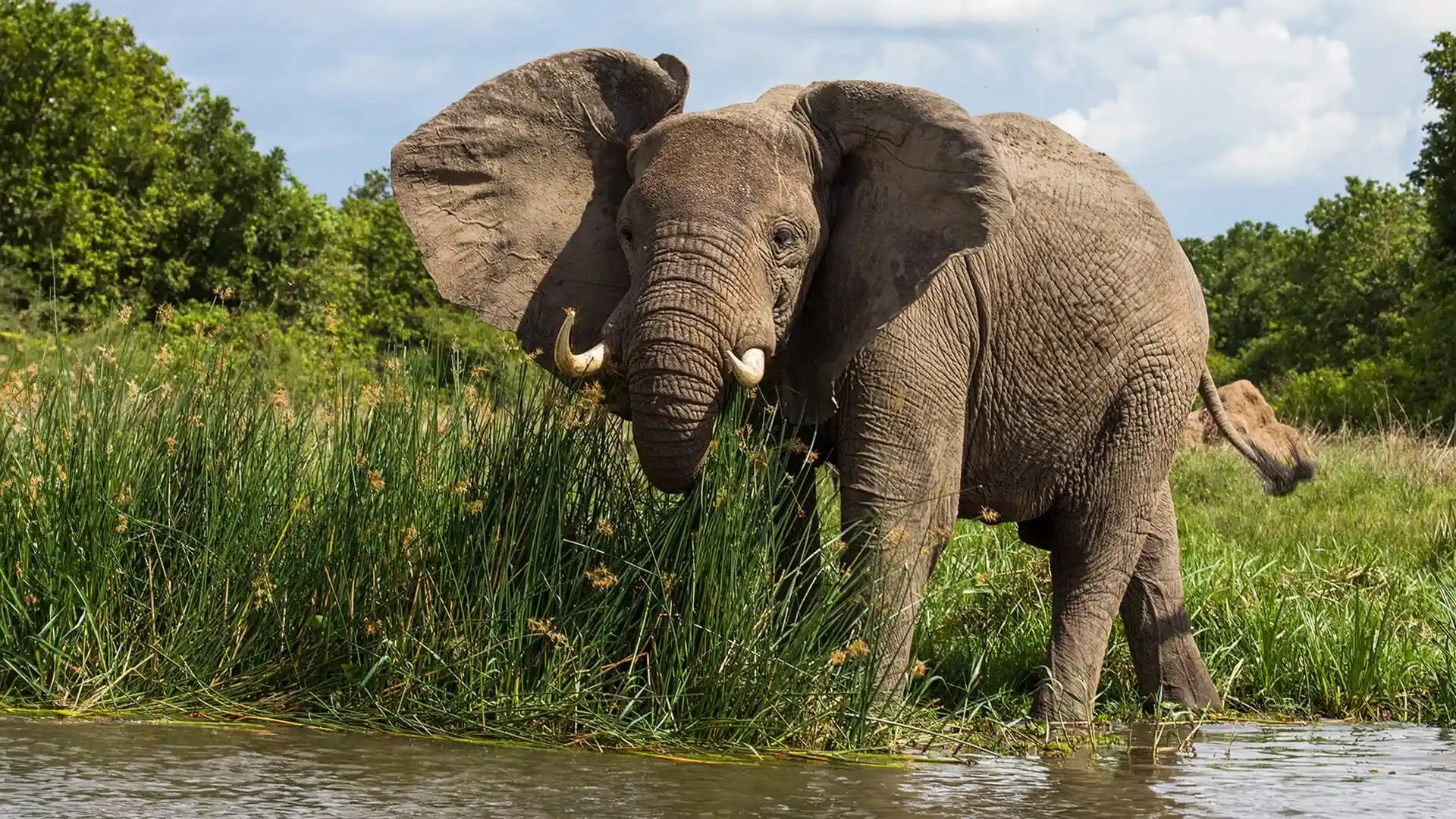
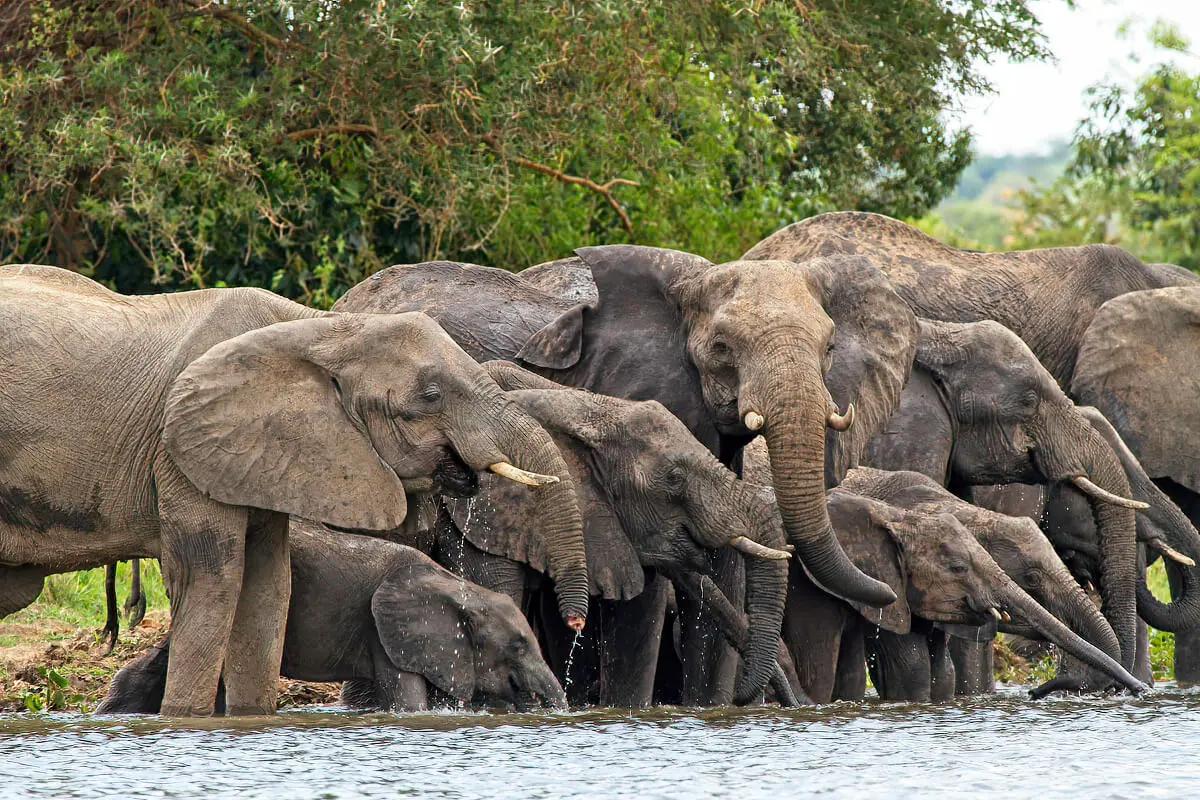
The elephant is the fifth and largest member of Africa’s ‘Big Seven.’ If you have ever been near a herd, you will never forget it. It is amazing to see how adults and older young elephants care for the calves. With sharp ears, you can even hear their low rumbling calls, which they use to communicate across long distances.
Distribution
Africa has two main elephant species: the savanna elephant and the forest elephant. Some scientists consider the desert elephant in Namibia a separate species. The African pygmy and swamp elephants, once thought to be (sub)species, are no longer recognized as such.
The savanna elephant is the most common. In Uganda, savanna elephants are found in Kidepo Valley, Murchison Falls, and Queen Elizabeth National Parks. Here, you can often see large herds.
The smaller and endangered forest elephant, with straight tusks, is rare. It lives only in the rainforests of Bwindi Impenetrable and Mgahinga Gorilla National Parks.
Features
Savanna elephants are the largest land animals on Earth.
Adult males, called bulls, can weigh 5 to 6 tons and reach 4 meters in height. Females are smaller, standing about 2.5 meters tall and weighing 3 to 3.5 tons.
One of the most famous features is the trunk. It is a bundle of muscles that works like a hand. Elephants use it to drink, grab food, shower, kick up dust, and even correct their young.
Their large, floppy ears set them apart from Indian elephants, which have smaller ears. The ears help regulate body temperature. Blood flows close to the surface to release heat.
But don’t be fooled; an elephant flapping its ears at you is not cooling off; it is a mock attack!
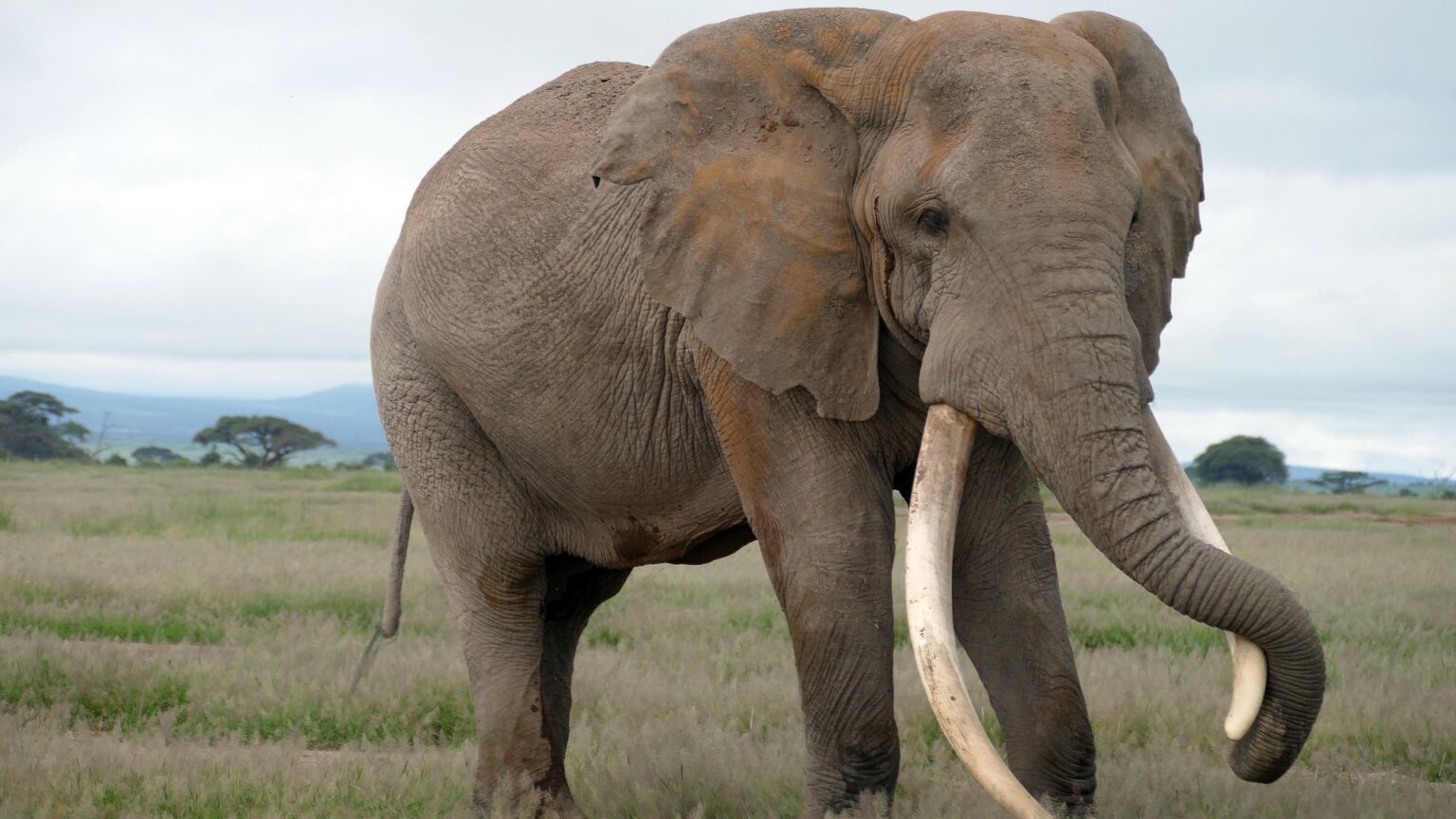
Tusks are another iconic feature. Both males and females have them. Made of ivory, they continue growing throughout life. The oldest elephants with huge tusks, called “tuskers,” are now extremely rare due to poaching.
Herd animal
Elephant herds are made up of cows, their daughters, and young males. Most members are closely related. The herd is led by the matriarch, the oldest and largest female. She guides the group to water and food. When she stops, the herd stops. Once the matriarch becomes too old or weak, the second-oldest female takes over. The former leader then leaves the herd or is left behind.
Musth
Young male elephants leave the herd around age 14 and may join a bachelor group. Many adult males live alone and visit herds only to mate. Female elephants signal they are in heat using infrasound. This period lasts 2 to 6 days. When a bull detects it, he enters ‘musth,’ a state of high testosterone. Bulls in musth are very dangerous. You can spot them by dark spots behind their eyes, caused by gland secretions. Fierce fights often occur between rival bulls. The winner earns the right to mate. About 22 months later, a calf is born carrying his genes.
6. Mountain Gorilla
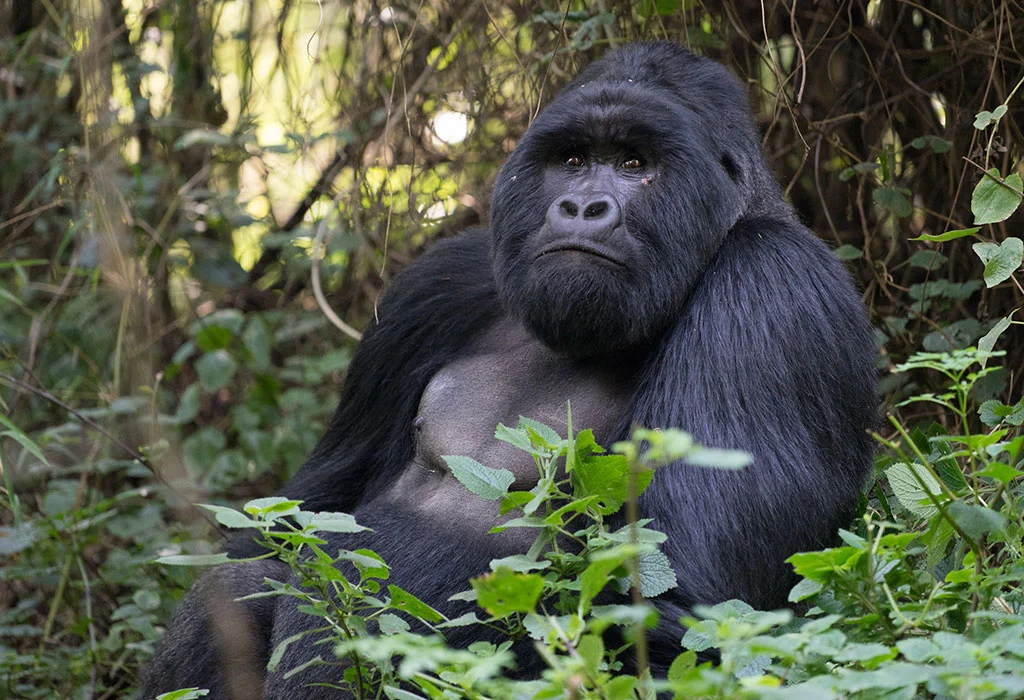
Seeing a mountain gorilla in person is a magical experience. Meeting a family in their natural habitat, after a gentle, or sometimes challenging trek through Uganda’s mountain jungles, is unforgettable. This sixth member of Africa’s ‘Big Seven’ makes gorilla trekking an adventure you will always remember.
Distribution
The mountain gorilla is a subspecies of the eastern gorilla. It exists in only two populations worldwide.
One is in the Virunga Volcano region, spanning DR Congo, Rwanda, and Uganda’s Mgahinga Gorilla National Park. The other is mainly in Uganda’s Bwindi Impenetrable National Park, with a tiny group just across the border in DR Congo’s RN de Sarambwe.
Upward trend
Today, there are about 1,068 mountain gorillas in the world. Thanks to the hard work of authorities, support from local communities, and visiting tourists, their decline has stopped. The population has been steadily growing for years. Still, caution is needed. War, poaching, habitat loss, and diseases continue to threaten them. These gentle giants are not yet fully out of danger.
Two species of mountain gorillas
Mountain gorillas are often named after the regions where they live. You will see them called Bwindi gorillas and Virunga gorillas in books and online. Genetically, the differences are small. Yet they vary in appearance, behavior, and habitat. Interestingly, the two habitats are only about 25 kilometers apart.
Bwind gorillas
Bwindi gorillas live in Uganda, mainly in Bwindi Impenetrable National Park, and in the nearby Sarambwe Reserve in the Democratic Republic of Congo. Because of ongoing unrest along the border, scientists cannot safely survey the Sarambwe population. Still, it is believed that some of these gorillas also roam into Uganda.
Virunga gorillas
As the name suggests, Virunga gorillas live in the Virunga volcanic region.
They live at higher altitudes than Bwindi gorillas and are larger. Their fur is thicker, protecting them from the cold, wet, and windy mountain climate.
When I visited the Virunga gorillas in 2020, I was amazed by Mark, the dominant silverback of the Nyakagezi family in Mgahinga Gorilla National Park, a truly enormous male.
Interestingly, the group had three silverbacks: Mark, his father Bugingo, who was about 50 years old and the former dominant male, and Mark’s brother Mafia. It was a privilege to watch these gorillas moving and feeding in the bamboo forests of extinct Mount Gahinga.
Read more about gorilla trekking.
6. Chimpanzee
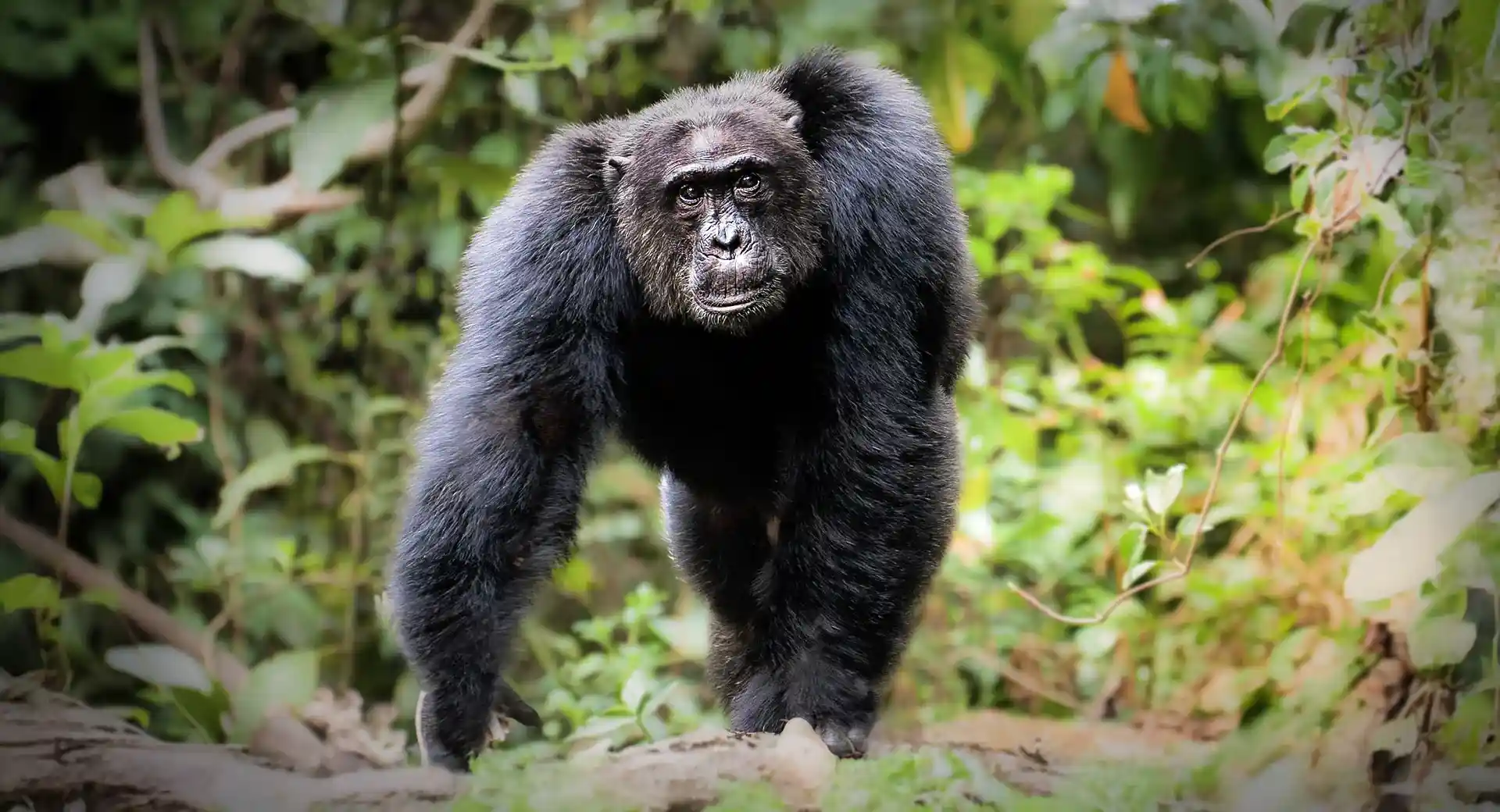
Uganda is home to a second great ape: the chimpanzee, one of our closest relatives. The eastern chimpanzee, found here, is one of the four recognized subspecies. In western Uganda, you can join chimpanzee walks, similar to gorilla trekking. These walks allow you to get very close to this fascinating primate, the seventh and final member of Africa’s ‘Big Seven’.
Distribution
The heart of Uganda’s chimpanzees is Kibale National Park, a lush lowland rainforest that holds the largest chimpanzee population in the country. A significant number of chimpanzees also live in Budongo Forest Reserve and Kalinzu Forest Reserve, making western Uganda a top destination to see these amazing primates in the wild.
Varying group sizes
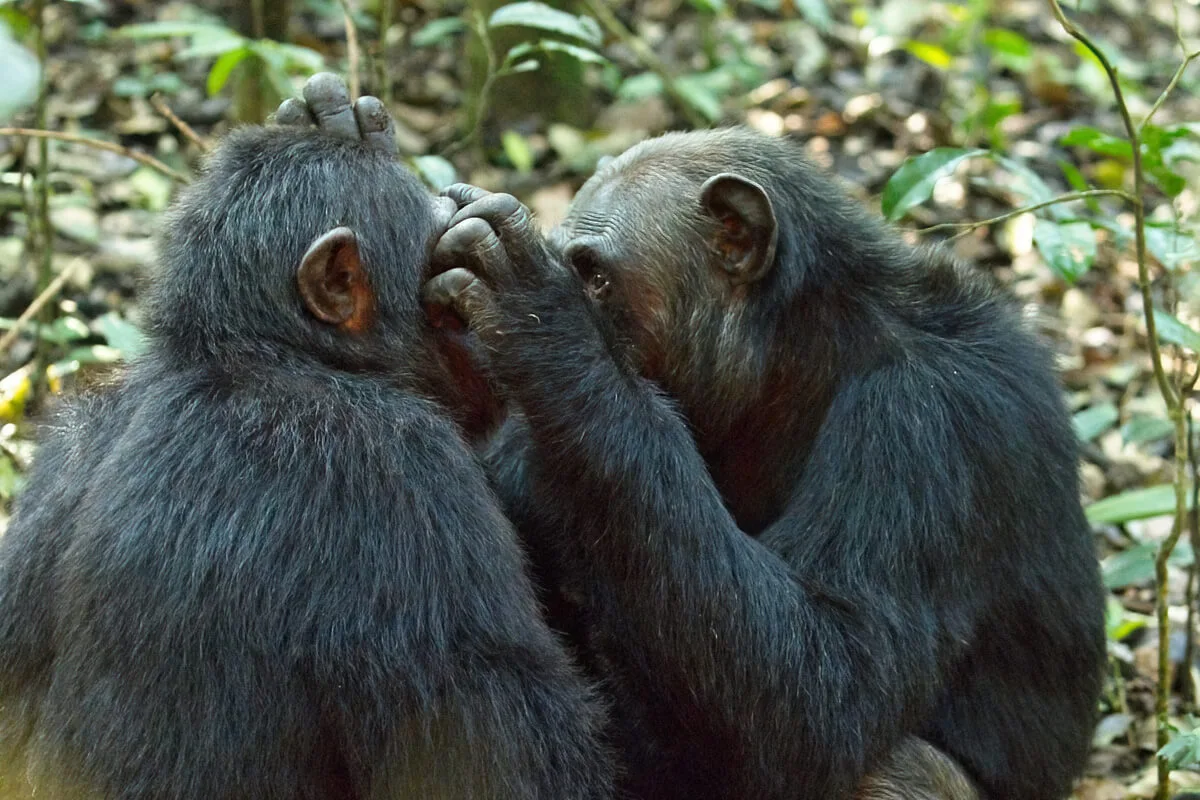
Chimpanzees live in loose groups with constantly changing members. A group can range from just 2 to over 120 individuals. Each group defends its own territory, and outsiders are often chased away aggressively.
Attacks can be serious, sometimes even fatal. Male chimpanzees are known to invade neighboring territories and attack rival group members. In many ways, their behavior mirrors ours. It’s no surprise, chimpanzees share 98% of their DNA with humans.
Just like people
Chimpanzees also mirror humans in politics. Males sometimes form coalitions to achieve a goal, like overthrowing the alpha male (the dominant leader of the group). But, just like in human politics, alliances can break quickly. Former partners can suddenly turn against each other.
Hunters
In the 1960s, Jane Goodall discovered that chimpanzees hunt other vertebrates, including smaller primates. While baboons will sometimes seize and eat an antelope calf, this behavior was previously unknown in other primates. Studies across Africa confirmed that all chimpanzee groups hunt.
Some skeptics argued that meat is only a tiny part of their diet. However, a study in Gombe National Park, Tanzania, showed a group of 45 chimpanzees consumed nearly 700 kilos of meat in one year!
Their prey included monkeys, bush pigs, and small antelopes like dik-dik and duiker. Among monkeys, red colobus and eastern colobus are the most common targets.
Reasons to hunt
Why do chimpanzees hunt? There are three main reasons. First, meat supplements their diet, especially when other food is scarce. Second, a male can use meat to gain favor with a female in estrus, increasing his chance to mate. Third, meat helps build or maintain alliances with other chimps.
However, hunting happens even when food is abundant, and males sometimes mate without offering meat. This shows that meat is mainly used as a form of social “bribery”—to gain friendship and support.
Chimpanzees can hunt alone or in groups. Hunts may happen spontaneously or after careful planning. Males lead the hunt, but females often join too.
Visit Africa's 'Big Seven' in Uganda
Many travelers come to Africa to see the famous ‘Big Five’. In Uganda, you can go even further, you can see the full ‘Big Seven’. On our Uganda trips, you have the chance to encounter them all, from lions and elephants to mountain gorillas and chimpanzees. Want to read more in preparation for your trip? We write a blog every few days to help you on your way.

Contact
Useful Info
Safaris BY Type
1
Chat