By this age, teenagers have quite their own opinions about what they like. Friends matters, their phone is never far away, and for some, the thought of spending three weeks on trip with the family sounds more like a threat than a dream vacation beforehand.
At the same time, Uganda has something that can work especially well at this age: you are really going to experience something. You don’t look at lions and elephants behind a fence, but out in the wild. You hike through the rainforest looking for wild chimpanzees or mountain gorillas.
You can go white-water rafting on the Nile River, enjoy a mountain biking tour, take a nature walk, a safari boat cruise, and stand right among the zebras and giraffes. En route, you observe a world that is quite different from the one in which teenagers grow up.
Therefore, this blog is not only about the question of whether Uganda is suitable for teenagers.
So, this blog is not simply about whether Uganda is suitable for teenagers.
The more interesting question is: when does Uganda become a really good trip for a teenager?
Is Uganda fun destination for teenagers?
Yes. But it depends on the teenager. That may sound like a lame answer, but it is the honest one.
A teenager who is curious, loves animals, enjoys being active, or likes discovering new things has so much to experience in Uganda.
A teenager who is curious, loves animals, enjoys being active or simply likes seeing new places can have a lot of fun in Uganda. There is plenty to do, and much of it is very different from a normal family holiday.
But if your daughter or son would happily spend two weeks lying by a pool, has little interest in nature and would much rather be around shops, beach clubs and peers, then Uganda may not be the perfect destination.
And that is not necessary either. A family holiday should not be about parents deciding what is “good for the children” and hoping they will enjoy it. Especially with teenagers, it is worth thinking about what actually interests them before planning the trip — not just what Mom and Dad would love to see.
A teenager is not a big kid.
In our article about travelling to Uganda with children, we talk a lot about keeping the pace of travel good, having a swimming pool nearby, getting enough rest and making sure activities do not go on for too long.
With teenagers, things are quite different.
They can handle more physically, have a much better sense of where they are and can take part in almost everything you do on the trip. A long walk, an early morning game drive or a full day of activities does not necessarily bother them.
But something else becomes important.
A teenager wants to be taken seriously.
In our view, that does not mean they should dictate the entire itinerary. But it means that it is smart to involve them in the trip planning. Show them where you are going. Ask what they would like to do. Maybe let them choose between another game drive, mountain biking, or an afternoon at the lodge.
Having a little say or a bit ownership can make a big difference.
Because there is a big difference between “my parents are making us go to Uganda” than “I absolutely want to go rafting there”.
Does every teenager get excited about gorillas and safaris?
Probably not. At least, not straight away.
For many adults, gorilla trekking is something that has been on their bucket list for many years. A fourteen-year-old usually doesn’t have a bucket list at all yet.
That does not mean the experience will mean any less to them.
In fact, we often find out that the activities teenagers are least sure about before a trip end up being the ones they talk about afterwards. Seeing a wild gorilla sitting just a few metres away is very different from watching one on TikTok video.
The same goes for a safari. “A few hours sitting in a car looking for animals” may not sound particularly exciting when you describe it that way. Until an elephant comes right up to the Land Cruiser, a lion appears in the grass, or you suddenly find yourself surrounded by a herd of buffalo.
So, you do not need your teenager to be jumping for joy about every part of the trip before you leave. Sometimes it is better to let Uganda do the convincing.
What do teenagers like to do in Uganda?
There is no such thing as a universal teenager, of course. But we have realized that activities where you do something yourself or get very close to an experience often work especially well.
Gorillas and chimpanzees
If the teenager is old enough, primate trekking tours are among the most special activities you can do in Uganda. The minimum age for gorilla trekking is 15.
The age requirement for chimpanzee trekking applies depending on the trekking location, but it is generally 12. We take the different age limits into account when planning the trip.
The difference between gorilla and chimpanzee trekking from a regular safari is significant. You leave the car behind and go into the rainforest jungle yourself. You sometimes hike for an hour or considerably longer. The trails can be muddy, steep, and tiring.
Then suddenly you are standing close to family of mountain gorillas. Especially for older teenagers, it is not only the moment they see the gorillas that makes the trek special. The walk through the rainforest, the search and the anticipation along the way are all part of the adventure.
Rafting on the Nile
Adventurous teenagers often enjoy a day in Jinja. This is where the Nile, the longest river in the world, flows north from Lake Victoria, the largest lake in Africa. Near the source of the Nile, you can get on the water for one of Uganda’s most famous outdoor activities: rafting.
There are different rafting options depending on age and ability. For older teenagers, the serious work on the white-water rapids can truly be one of the activities that is still being talked about weeks later. And honestly: after a few days of watching animals, sometimes it is just nice to bounce off something yourself.
Safari, but not the same thing for five days
Teenagers can enjoy a safari just as much as adults, but variety matters.
A game drive looking for lions, leopards, and elephants is fantastic. Spending another six hours the next day watching antelopes. Watching antelopes for another five hours the following day in the same position is not necessarily better.
The good thing about Uganda is that a safari does not have to mean doing the same thing every day. It can easily be alternated.
One day you are driving through the savannah. The next, you are on a boat safari among hippos and crocodiles. Later, you might be walking through the rainforest or getting on a mountain bike. For Choose Uganda Safaris, that variety is more important with teenagers than cramming the itinerary with as many game drives as possible.
Walking, cycling, and heading out on your own
With teenagers, you can make the trip much more active than you would with young children.
Think of hiking at Sipi Falls, mountain biking, walking safaris, canoeing or an active excursion around one of the lakes.
It may seem like a small change, but it can make quite a difference to the feel of the trip.
After spending a few hours in a safari vehicle, sometimes it is simply nice to get out, stretch your legs and keep moving.
And then that phone
Let’s not pretend that a teenager arrives in Entebbe and suddenly forgets for weeks that TikTok, Snapchat, Instagram, WhatsApp and friends exist.
That is probably not going to happen.
For teenagers, the phone is simply part of everyday life. That does not change just because there happens to be an elephant outside the window.
We would not make a battle out of it either.
Internet is available in many places in Uganda, and our lodges have Wi-Fi. Our Land Cruisers also have charging points, although there will be times and places with little or no network. The result is simply a different rhythm from what they are used to at home.
And perhaps that is precisely one of the nice sides.
Not because Uganda needs to become a forced digital detox, but because there is often enough happening during the day for the phone to become less interesting by itself.
And yes, spending an hour in bed in the evening with Wi-Fi and friends back home can easily be part of the same trip.
A holiday with teenagers does not need to become a parenting experiment.
Three weeks with your parents. Fun?
This may actually matter more than which animals you are going to see.
At home, teenagers have their own lives: school, sports, friends, part-time jobs and increasing independence. Then you go on a two-week road trip in Africa and suddenly spend a lot more time together than you normally would.
That can actually be a lot of fun.
Experience shows that parents and teenagers do not always have the same ideal of what makes a good holiday. While at the same time, sharing new experiences is a big part of what makes a family trip special.
That does not mean you have to spend every hour together.
At the lodge, a teenager can perfectly well listen to music, swim, read or message friends at home while the parents sit down for a drink.
You don’t have to constantly organize “quality time”.
Often, the best moments happen when nobody is trying too hard to create them.
The tour guide makes a real difference for teenagers.
When you are a vacation with a family, a good tour guide always matters. With teenagers, perhaps for slightly different reasons than with younger children.
They do not necessarily want someone talking to them like a schoolteacher for three weeks, explaining every bird, tree and animal along the way.
A good guide knows when to explain something, when a joke is more appropriate than a biology lesson, and when to just leave someone alone for a moment.
Our tour guides spend a lot of time with families. And that often leads to a very different bond that develop during a trip than you expect beforehand.
They talk about Uganda, but just as easily talk about football, music, school, cars, or what it is like to grow up as a young person in Uganda.
For teenagers, those conversations can sometimes be just as interesting as the formal cultural activities.
Uganda shows a different world
This is probably something parents need to approach carefully.
Tell a sixteen-year-old that coming to Uganda is “very good for his development,” and their enthusiasm may immediately halve.
But once they are here, they start noticing things for themselves. In developed countries, teenagers possibly grow up in a world where almost everything is available. Smartphones, streaming, school, sports clubs, public transport, shops, and almost constant internet.
Daily life here in Uganda looks different in many places.
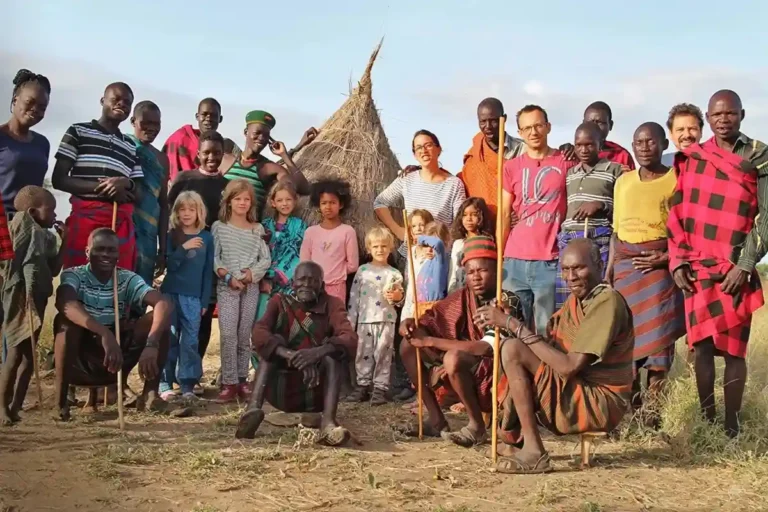
You drive past schools where children walk home in their uniforms. You see families making a living from a small piece of land. You drive through Kampala, past markets and villages. And then you meet young generation of Ugandans who use smartphones, listen to music, and have plans for the future.
That last part is important to us.
Uganda should not be presented as a lesson in “look how little other people have.” That would be unfair to our country and to the people who live here.
What is interesting is both the difference and the similarities.
Sometimes, a conversation with a Ugandan peer evokes more emotion than when a parent tries to explain how privileged someone is at home.
So let those conversations happen.
Do you have to visit local villages or schools with teenagers?
We are not really in favour of activities where a village or school becomes primarily an attraction for tourists.
But when there is genuine contact with local people, it can be a valuable part of the trip. Teenagers are old enough to ask questions, have a conversation and make their own connections.
That might happen while walking with a local guide, visiting a community project, joining a sports activity or simply meeting people along the way.
It doesn’t have to be made heavy or educational.
Playing football together with local people sometimes has more effect than an hour of explanation.
Long travel days with teenagers
Uganda is not a country where you drive for thirty minutes and arrive at the next lodge. Most serious tours in Uganda features longer travel days.
With teenagers, that is usually not a problem. You travel in a spacious Land Cruiser with your own personal guide, and there is room to stop en route when needed.
And a travel day is not simply time spent getting from one highlight to the next. You pass through towns, villages and farming areas, while the landscape keeps changing. Along the way, there is time to stop for lunch, fruit, coffee or simply because something catches your eye.
Still, we are not going to pretend that every hour in the car is exciting. Sometimes a teenager has simply had enough and puts on their headphones. That’s fine.
What matters to us when planning a family trip is the rhythm of the whole journey. Not every day needs to be full from morning until evening.
A swimming pool simply remains important, by the way.
Teenagers may not be little children anymore, but that does not mean they suddenly stop enjoying a swimming pool.
After a hot game drive or an active day, having an afternoon to swim and relax at the lodge can be exactly what everyone needs.
So, when we choose accommodation for a family, we look beyond what the parents might like. A beautiful lodge with a great view is wonderful, but when you are staying for two nights, other things matter too: space, a swimming pool, the atmosphere, Wi-Fi and what there is to do around the lodge.
The best family accommodation is not necessarily the most expensive or the most luxurious.
Give teenagers influence on the trip
If there is one thing we would suggest before planning a Uganda safari with teenagers, it is simple: involve them from the beginning.
Not after everything has been booked and you arrive with a 14-day itinerary in your hands.
Show them some photos. Talk about trekking through the rainforest to find gorillas. Show them what white-water rafting on the Nile looks like. Ask whether they would rather go mountain biking or spend another day on safari.
We have also noticed that teenagers often have more influence on the family holiday than parents expect. That makes sense. They are on the trip too, and they should have things they are genuinely looking forward to.
You don’t have to let them decide on everything.
But when everyone has a few things, they are excited about, the trip usually feels much better than when the whole itinerary is built around the parents’ bucket list.
When would we not recommend Uganda for teenagers?
We think it is just as important to be honest about when Uganda may not be the right choice.
If your teenager has little interest in nature, animals or active adventures, and would much rather spend the holiday at the beach, shopping, going out and meeting other teenagers, we would not try to make Uganda fit at any cost.
The same goes when the idea of coming to Uganda mainly comes from the parents and the rest of the family is not really interested.
Uganda does ask for some curiosity.
You do not need to be an adventurer, and nobody expects you to be excited about getting into a Land Cruiser at six in the morning every day. But a bit of a desire to explore what lies around the next bend certainly helps.
By the way, sometimes combining the trip with a few days at the beach at the end can provide exactly the balance a family is looking for. After gorilla trekking, wildlife safaris, hiking, and rafting, having nothing to do for a few days on Zanzibar can be a pretty pleasant prospect for both parents and teenagers.
How do we structure a tour of Uganda with teenagers?
A family travelling with a 13-year-old who loves animals needs a different kind of trip from a family with two boys aged 16 and 18 who mostly want to be active.
That is why, when family contact us for a trip to Uganda, we want to know more than what the parents have in mind. We want to know about the children too.
What are they interested in? What do they enjoy doing at home? Are they sporty, into photography, or fascinated by animals? Do they enjoy walking, or does the word hike already put them off? Are they looking for adventure, or would they be just as happy with a swimming pool and good food?
Those details tell us much more than their ages ever could.
From there, we look for the right balance of safari, primates, active activities, local encounters, driving time and time to simply relax.
The aim is not to make every minute exciting for a teenager. That would be impossible anyway.
It is to put together a journey where everyone has something they can genuinely enjoy.
Uganda with teenagers: perhaps especially now
A vacation with young children is a different kind of trip. Once they are grown up, planning three weeks off together often suddenly becomes much complicated.
The teenage years fall exactly in between. Your children are old enough to really experience Uganda. They can walk through the rainforest, talk to people they meet, take part in activities and begin to understand the world around them in a way that younger children cannot.
And yet, you are still travelling together as a family.
Maybe that is what makes these years such a special time to visit Uganda.
Not because your teenager will come home after three weeks as a completely different person. And not because you will suddenly enjoy every minute together.
There will probably still be someone sitting in the Land Cruiser with their earbuds in.
But then you are standing together watching elephants, walking through the rainforest or drifting past hippos, and these are things you simply cannot experience at home.
And years later, those may be the moments that come back at the dinner table, when someone says, “Do you remember when we were in Uganda…?”
Planning a safari in Uganda?
A good safari in Uganda is more than just a sum of beautiful places and activities. Especially when traveling with teenagers, the trip as a whole need to be right.
Not too many long travel days in a row, sufficient variety between safari, active pursuits, and relaxation, and above all: room for what every family member enjoys. The gorillas you have been dreaming of for years, but just as much that rafting trip your son or daughter is looking forward to.
At Choose Uganda Safaris, we therefore tailor every trip entirely to your specific needs. We are Ugandans and know how to structure an itinerary so that it not only sounds great on paper but is also a pleasant journey along the way. When you contact us, we would love to hear what is important to you – from both parents and teenagers.
Based on this, we create a travel proposal that incorporates everyone’s wishes and ensures everything flows together logically. This way, it becomes not just a trip through Uganda, but truly *your* trip through Uganda. Request a free safari proposal or find further inspiration on our family safari page.