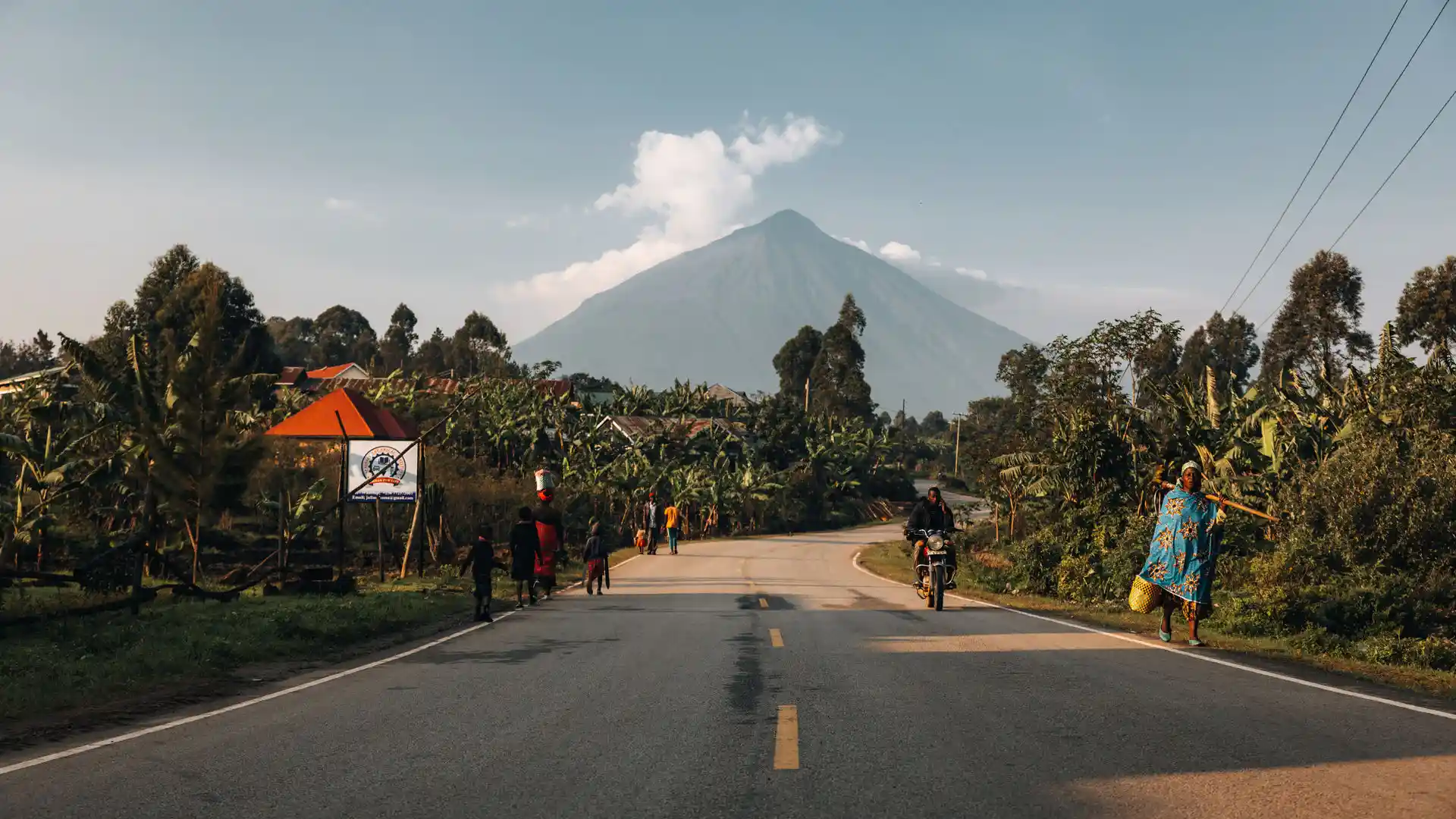
Spectacularly situated in the shadow of the Volcanoes
The town of Kisoro sits at about 1,900m above sea level. It is surrounded by the towering volcanoes: Mt Mhavura (4,437m), Mount Gahinga (3,474m), and Mount Sabinyo (3,669m). This dramatic setting offers stunning views and a cool, pleasant climate. With Bwindi Impenetrable Forest and Mgahinga National Park nearby, Kisoro is a perfect base for nature lovers and adventure seekers.
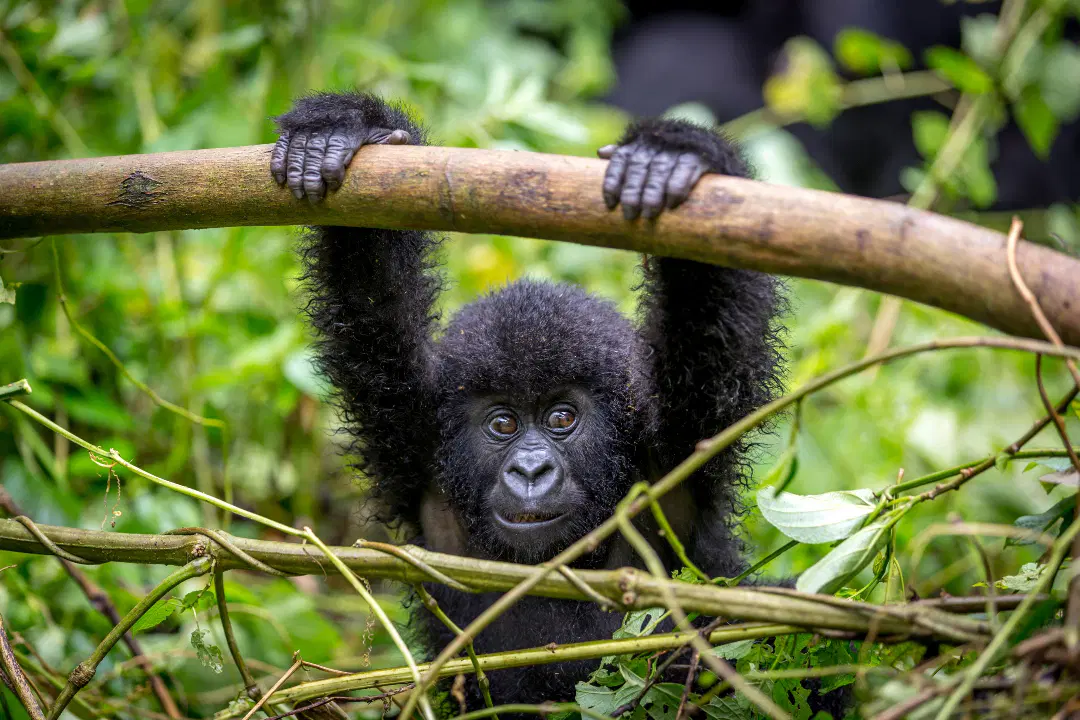
Meet the mountain gorillas of Uganda
Gorilla trekking is the biggest highlight of Kisoro. In the nearby Bwindi Impenetrable National Park and Mgahinga Gorilla National Park, you can come face to face with these powerful primates.
With a gorilla permit from the Uganda Wildlife Authority, you walk into the forest with a professional ranger guide. You search for a gorilla family deep in the jungle. It is unforgettable. Many travelers say it is the best moment of their Uganda safari tour.
What are the best things to do in Kisoro?
Kisoro offers several hiking routes with wide, stunning views. You can climb Mount Sabyinyo, where you reach the tri-border point of Uganda, Rwanda, and Congo. You can also take a shorter walk to the caldera viewpoint in Sagitwe Village. From there, you look out over Kisoro town and the rolling hills, especially beautiful at sunset. Kisoro also offers many other activities.
1. Village Walk to a small village near Kisoro
During this walk, a local guide takes you to one of the small villages around Kisoro.
Along the way, you learn about daily life in the community. You see how beer is brewed, how bees are kept, and how farming is done. You also get a close look at the traditions of the local Bafumbira People.
On Mondays and Thursdays, you can also visit the busy local market of Kisoro with your guide after the walk. It is a lively and authentic experience.
Cost: USD 30 per person
Duration: Approx. 3–4 hours
2. Coffee Tour
In Kisoro, Arabica coffee has been grown organically for years by local farmers.
They use no pesticides and no soil-depleting methods. Instead, they rely on natural and biodegradable materials for fertilizing and pest control. On this tour, you follow the full coffee journey.
You learn how coffee is planted, grown, picked, and processed. You also grind and roast your own beans. Roasting looks simple, but it is not. The beans burn quickly. You must stir constantly over an open fire and keep them moving in the pan. It takes focus and patience. At the end, you taste the coffee you made.
Kisoro coffee is strong and rich. You also take some home with you as a special souvenir.
Cost: USD 35 pp
Duration: Apprx. 2 to 3 hours
3. Visit to a Batwa village around Kisoro
You travel by car to a Batwa village near Kisoro. Here, you learn about the life and history of the Batwa.
They once lived in the forests around Kisoro. They were moved out of the jungle about 20 years ago. Today, many Batwa live in difficult conditions. A visit to their village helps support the local community.
But the real value comes from the conversations. If you take time to speak with them, with your guide translating, you hear powerful personal stories about their past and present life.
The Batwa once lived alongside mountain gorillas in Bwindi Impenetrable National Park. Because of this, they have deep traditional knowledge about these animals.
Cost: USD 80 pp
Duration: Approx. 5–6 hours
4. Caldera viewpoint
This is a short walk to the caldera viewpoint near Sagitwe village. From here, you enjoy wide views over Kisoro and the surrounding hills. It is a simple but very rewarding experience. The best time to go is in the afternoon. You can relax at the top and watch the sunset slowly light up the landscape.
Cost: USD 20 pp
Duration: approximately 1 hour
5. Climb a Volcano
Within Mgahinga Gorilla National Park, three dormant volcanoes rise above the landscape: Mount Muhabura, Mount Gahinga, and Mount Sabyinyo. They rise from cloud forest, bamboo, and open moorland, forming the dramatic backdrop of the region, once featured in “Gorillas in the Mist.”
You can climb all three, but Mount Sabyinyo is the most popular. It is possible to reach the summit and return to Kisoro in one day. The hike is demanding, as you gain altitude quickly.
A ranger and porters accompany you for support along the way. The effort is worth it. At the top, when the sky clears, you see Uganda, Rwanda, and Congo all at once.
Please note: only possible by arrangement.
Cost: USD 90 pp
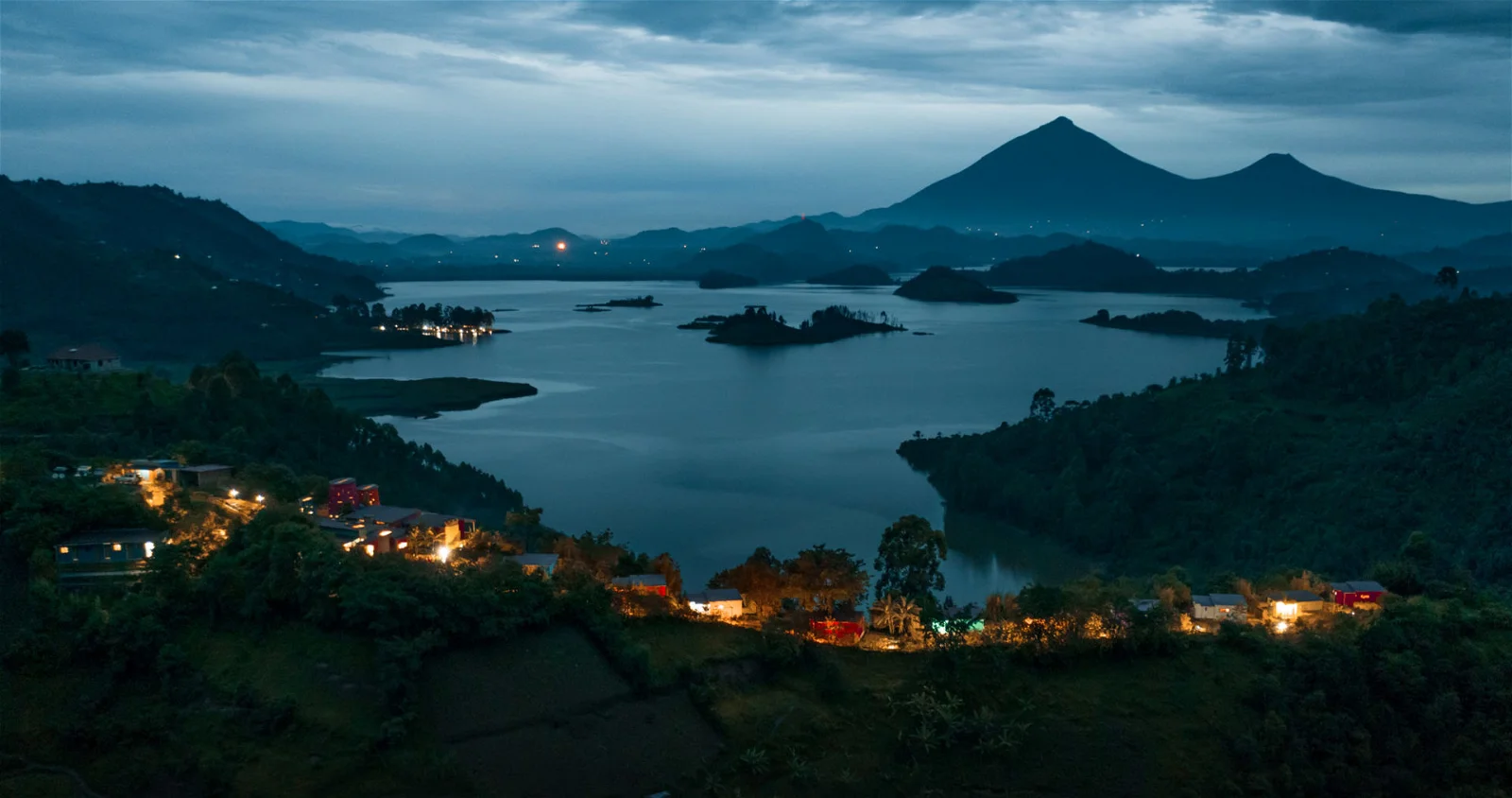
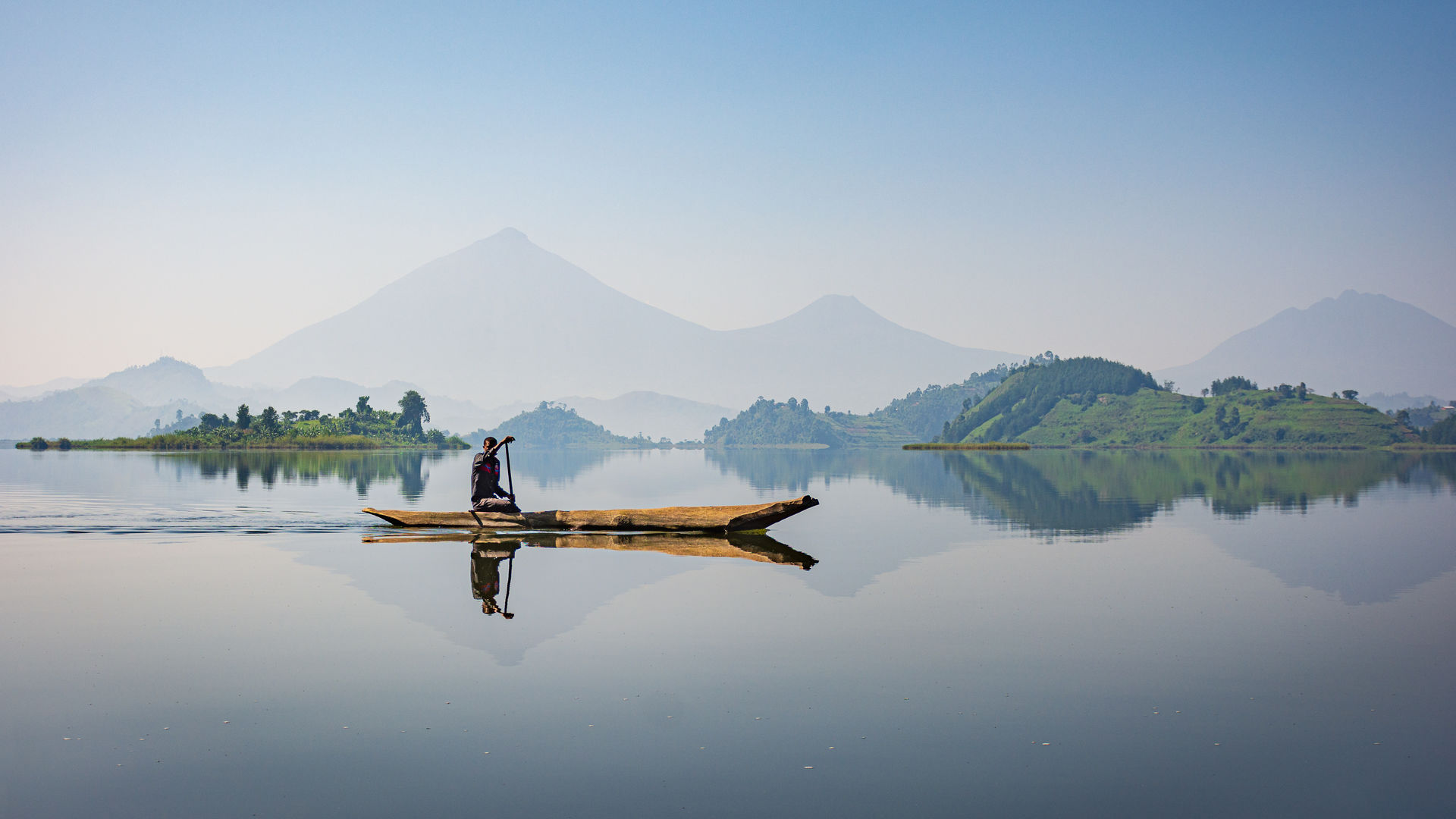
6. Lake Mutanda
There are two ways to explore Lake Mutanda. You can go on foot or by car.
Both give you beautiful views of the lake and the hills around Kisoro. If you go on foot, you climb a hill first. From the top, you see wide views over Kisoro and the lake.
Then you continue walking for about an hour to reach the boats. These are traditional dugout canoes made from hollowed tree trunks. They take you across the water to an island. On the lake, you may see spotted-neck otters and many bird species.
Costs: USD 30 pp (hike/canoe); USD 40 pp (hike/boat)
Duration: On foot: 6–8 hours (about 4 hours walking); by car: 4–5 hours
7. Birdwatching in Kisoro
The Kisoro district is rich in birdlife. You find an impressive variety of species here. Some are even endemic and cannot be seen anywhere else in Uganda. For the best birding experience, you set off early in the morning.
Echuya Forest Reserve
You drive about 20 km to Echuya Forest Reserve, an ancient bamboo forest. It is home to many bird species, including several that are only found in the Albertine Rift. You may also see primates such as baboons, diademed monkeys, and eastern colobus monkeys. There is even a chance to spot the rare Ruwenzori sun squirrel.
Cost: USD 50 pp
Duration: 2–5 hours
Lake Chahafi
You drive about 45 minutes to Lake Chahafi near the Rwanda border. From there, you take a canoe across the small but beautiful lake. You enjoy views of Mount Muhabura along the way. The trip continues into the swamp, where you walk through rich bird habitat. You may see otters, pelicans, kingfishers, and many other species. Lunch is served at a lakeside resort before you return to Kisoro.
Cost: USD 80 pp (excluding lunch)
Duration: approximately 6 hours
8. Golden Monkey Tracking
A popular activity in Mgahinga Gorilla National Park is golden monkey tracking.
The Golden monkey is a rare and endangered species found only here in Uganda, and in a few areas of Rwanda and the Democratic Republic of Congo.
It is a beautiful primate with orange-golden fur, and dark legs and face. You usually find them in bamboo forests, where they feed on their favourite food: bamboo shoots. They live in groups of around 30 and make soft chattering sounds while feeding, which makes the experience even more special.
Cost: USD 90 pp
Duration: 4–6 hours (about 1 hour with the monkeys)
Difficulty: moderate to difficult (depending on where the monkeys are)
Ascent: depends on the location of the monkeys
Climate and practical tips
Kisoro sits in the highlands of southwestern Uganda near the Virunga Mountains. The climate is cool and often called “eternal spring.” Temperatures stay mild all year. Days are usually 22–24°C.
Nights can drop to 10–13°C. The best time to visit is during the dry seasons. These are June to September and December to February. July is often the clearest month. Perfect for gorilla trekking and hiking.
Rain falls in two main seasons. March to May and September to November. April is usually the wettest month. Expect heavy afternoon showers. Pack in layers. Bring light clothes for daytime. Add a warm fleece for mornings and evenings. A rain jacket is essential. Waterproof boots are highly recommended.
Quick-dry clothes work best in humidity. The sun can be strong, even on cloudy days. Use sunscreen and wear a hat. Bwindi and Mgahinga are close by. Book gorilla permits early. Kisoro is safe when you travel with guides. Dry months are best for comfort. Wet months are quieter and more budget-friendly.
Planning your visit to Kisoro
Kisoro is easy to reach by road or domestic flight. The drive from Kampala takes about 8 to 10 hours. It is long, but very scenic. You pass through changing landscapes and get a real feel for Uganda along the way.
When you arrive, you feel the difference immediately. The air is fresh. The mountains are close. The atmosphere is calm and welcoming. A wide range of activities awaits you in the region.
We are happy to help you arrange gorilla trekking and other experiences in and around Kisoro. Would you like to learn more about our trips to Kisoro or other highlights of Uganda? Request a free travel proposal or explore our Uganda tours. You can also contact us anytime.