
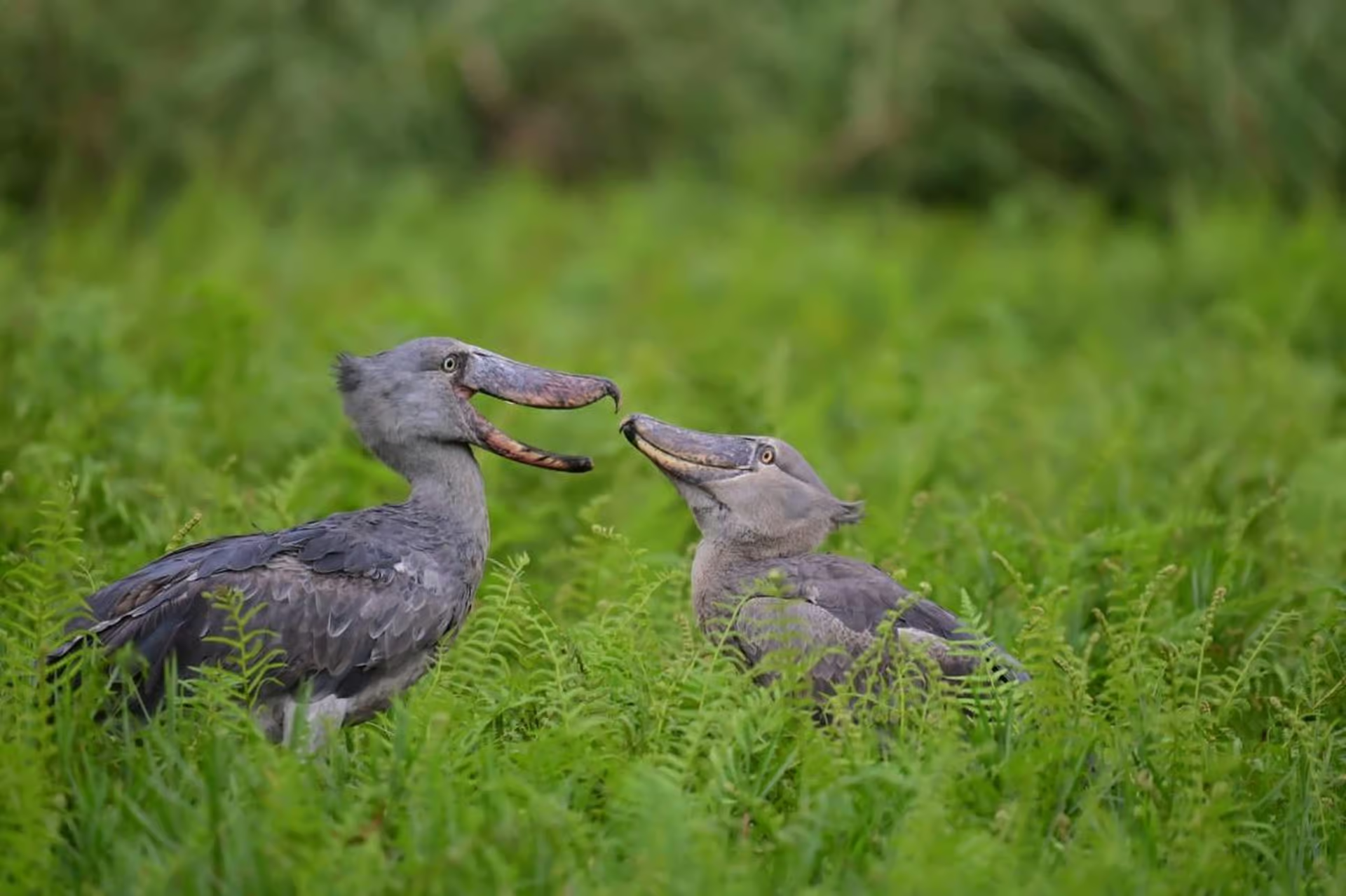
Uganda is the best destination in Africa to see the Shoebill Stork (Balaeniceps rex) in the wild. Its vast wetlands, papyrus swamps, and slow-moving waterways provide ideal habitat for this rare and legendary bird. The most reliable places to see the Shoebill Stork in Uganda are Mabamba Swamp, Ziwa Rhino & Wildlife Ranch, and Murchison Falls National Park, with the best sightings usually occurring on early morning boat or canoe trips. Looking like something from the age of the dinosaurs, the Shoebill is one of the most extraordinary birds on Earth.

Standing up to 140 cm (55 inches) tall and instantly recognizable by its massive, shoe-shaped bill, it is impossible to confuse with any other species. Despite its stork-like appearance, the Shoebill is actually more closely related to pelicans than to storks. The Shoebill’s enormous bill is perfectly adapted for hunting, particularly ungfish, along with other fish, amphibians, snakes, rodents and baby crocodiles. A master of patience, it can stand motionless for hours before striking with sudden force. Listed as Vulnerable on the IUCN Red List, with fewer than 6,000 individuals remaining in the wild, seeing a Shoebill in Uganda is a rare and unforgettable wildlife experience.
Top Locations for Shoebill Stork Sightings in Uganda
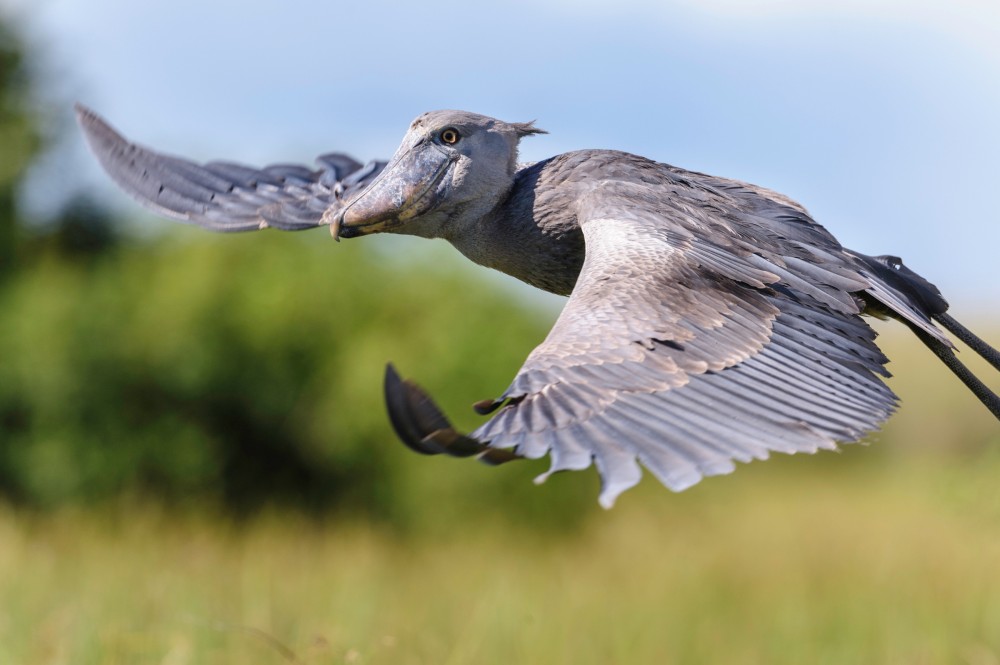
1. Mabamba Bay Wetland
Mabamba is the most famous and accessible location for guaranteed shoebill sightings. This Ramsar-listed Important Bird Area (IBA) is a must-visit for any birder traveling to Uganda, known for its high success rate in spotting the bird.
- Location: Situated on the northern shores of Lake Victoria, approximately 50 km west of Kampala and easily accessible from Entebbe International Airport, making it ideal for a day trip or a visit at the start or end of a longer safari.
- Experience: Visitors take a motorized canoe with a local, experienced guide through a maze of narrow channels and thick papyrus and water lilies. The shoebills here are more habituated to human presence, often allowing for closer viewing and excellent photography opportunities as they stand motionless, patiently waiting to strike their prey.
- Best Time: Early morning hours, typically between 6:00 am and 10:00 am, are optimal as the birds are most active during this time, hunting for lungfish.
- Other Wildlife: The wetland is also home to over 300 other bird species, including the Papyrus Gonolek, White-winged Warbler, and African Jacana, as well as an array of butterflies and sitatunga antelopes.
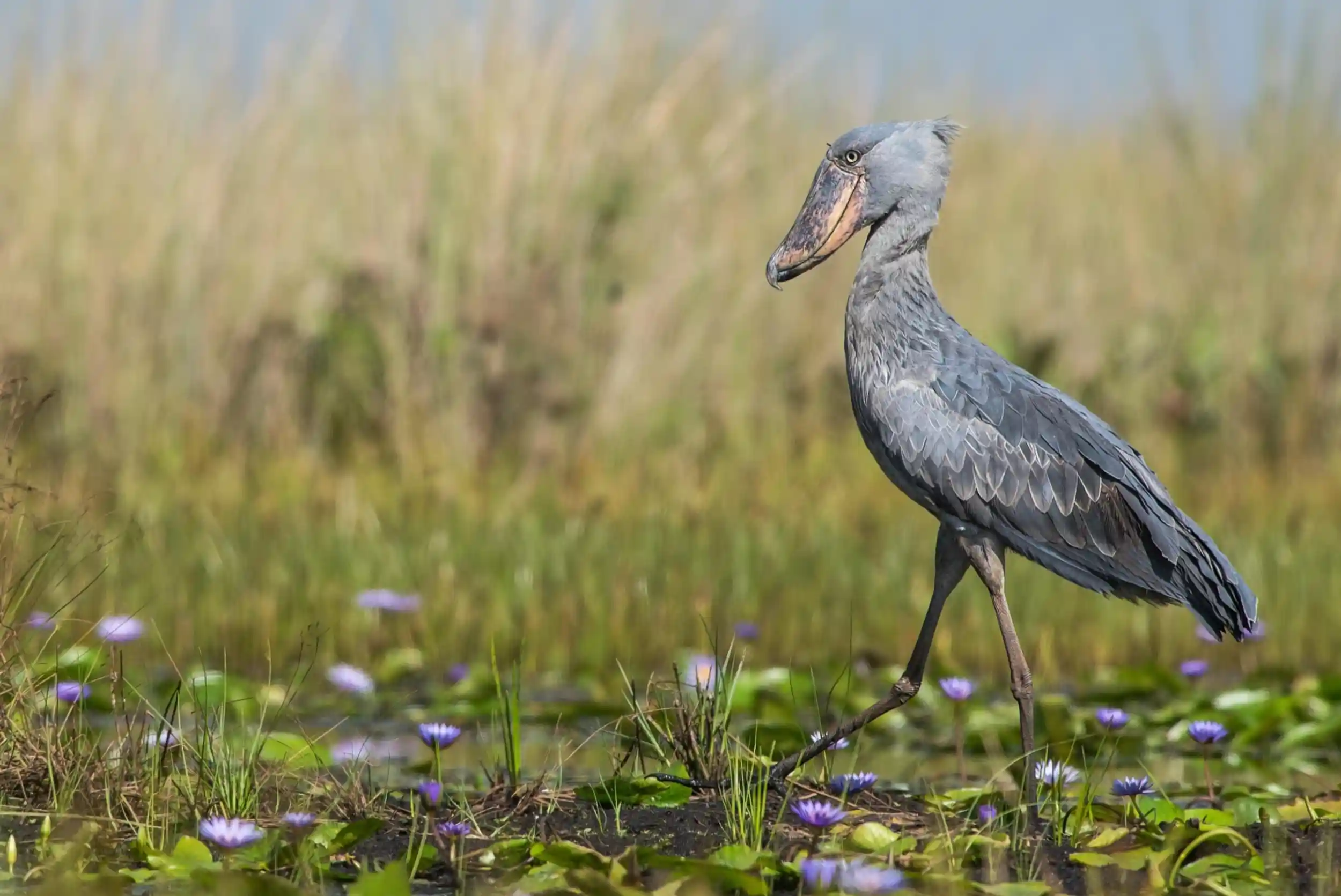
2. Ziwa Rhino & Wildlife Ranch (Lugogo Swamp)
While primarily known as the only place in Uganda to track white rhinos on foot, the Ziwa Rhino & Wildlife Ranch is also a highly reliable location for shoebill sightings.
- Location: Located in the Nakasongola district along the Kampala-Gulu highway, approximately 125 km from Murchison Falls National Park.
- Experience: An early morning “Shoebill Trek” (around 6:00 am) involves a guided canoe ride on the vast Lugogo Swamp with experienced rangers. The sanctuary offers a unique opportunity to combine two of Uganda’s most sought-after wildlife experiences: the rare shoebill and the endangered white rhino.
- Best Time: Early morning is the best time for high chances of spotting the bird, requiring an overnight stay at the sanctuary since the gates open after the activity has commenced.
- Other Wildlife: The swamp boasts over 300 bird species and other wildlife such as bushbucks, otters, and various monkeys.
3. Murchison Falls National Park
Uganda’s largest national park provides a more adventurous, wild setting for observing the shoebill, typically found in the delta region where the Nile River meets Lake Albert.
- Location: Northwest Uganda, roughly a 6-hour drive from Kampala.
- Experience: A dedicated boat safari to the Nile Delta offers the best chance of a sighting. Guides navigate the marshy areas, scanning the papyrus-lined banks for the bird. The experience is often combined with general wildlife viewing on the Nile, including elephants, buffalo, hippos, and crocodiles.
- Best Time: The dry seasons (December to March and June to September) are ideal, as lower water levels concentrate the fish and make the birds more visible.
- Other Wildlife: The park is a biodiversity hotspot, home to over 450 bird species and over 76 mammal species.
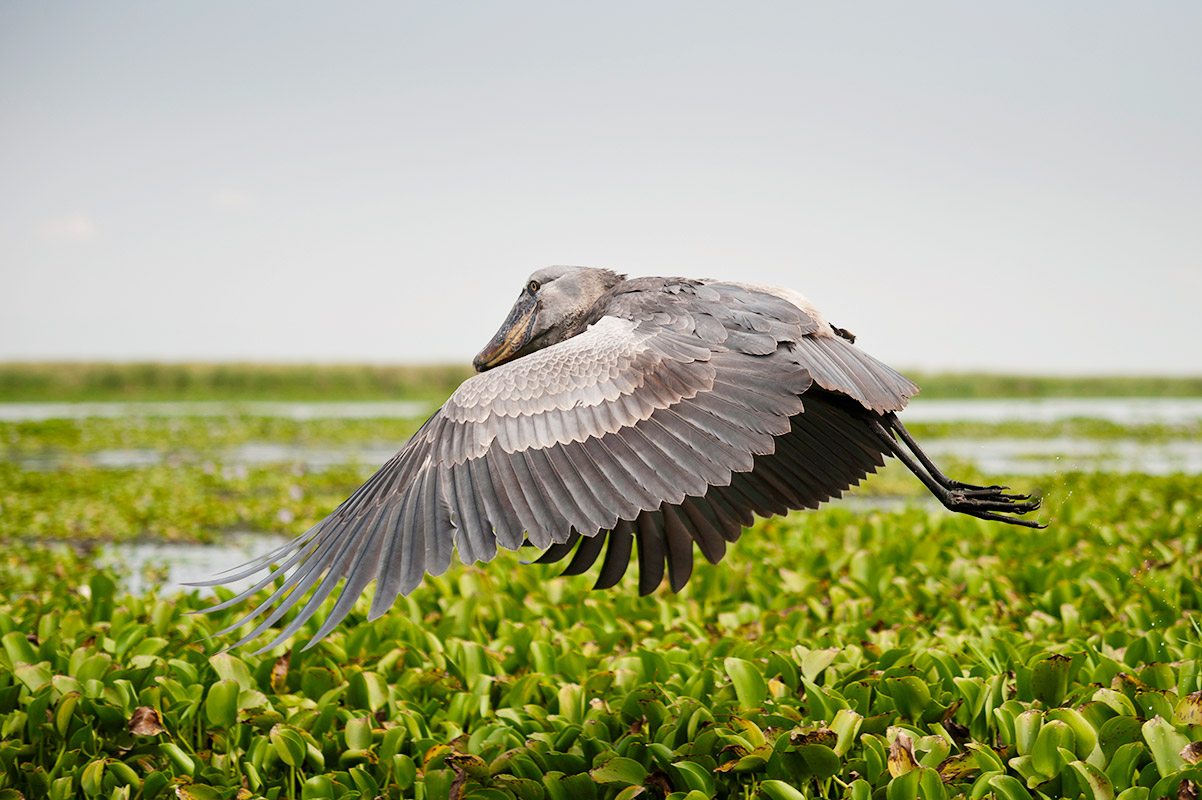
4. Queen Elizabeth National Park (Ishasha Sector)
While less consistent than Mabamba or Ziwa, the expansive Queen Elizabeth National Park offers potential shoebill sightings, especially in its remote southern sector.
- Location: Western Uganda, near the border with the Democratic Republic of Congo.
- Experience: Shoebills are occasionally seen around the swamps along the shores of Lake Edward and the Ishasha River. This area is also famous for its unique tree-climbing lions, allowing for a combined, diverse safari experience.
- Best Time: Sightings are possible during boat safaris on the Kazinga Channel, and the dry season can sometimes offer better access to the marshy edges.
5. Lake Mburo National Park
A smaller, more compact national park, Lake Mburo also supports a healthy population of shoebills within its eastern swampy shores.
- Location: Western Uganda, about a four-hour drive from Kampala, making it a convenient stopover on the way to Bwindi Impenetrable National Park.
- Experience: A boat cruise on the lake offers opportunities to spot shoebills among the papyrus, alongside other water birds like pelicans, herons, and the rare African finfoot.
- Other Wildlife: The park is known for its zebras, giraffes, impalas, and a rich diversity of birdlife, with over 350 species recorded.
6. Uganda Wildlife Education Centre (UWEC)
For those with limited time or who prefer a guaranteed sighting, the Uganda Wildlife Education Centre in Entebbe is an excellent option.
- Location: Located right in Entebbe, very close to the international airport.
- Experience: The center functions as a zoo and a rehabilitation facility for rescued wildlife, and it houses a captive shoebill in an enclosure that extends to the edge of Lake Victoria. While not a wild encounter, it provides an assured view and an opportunity for conservation education.
- Accessibility: It’s a quick 10-minute drive from the airport, ideal for a visit before a flight or during a short stay in Entebbe.
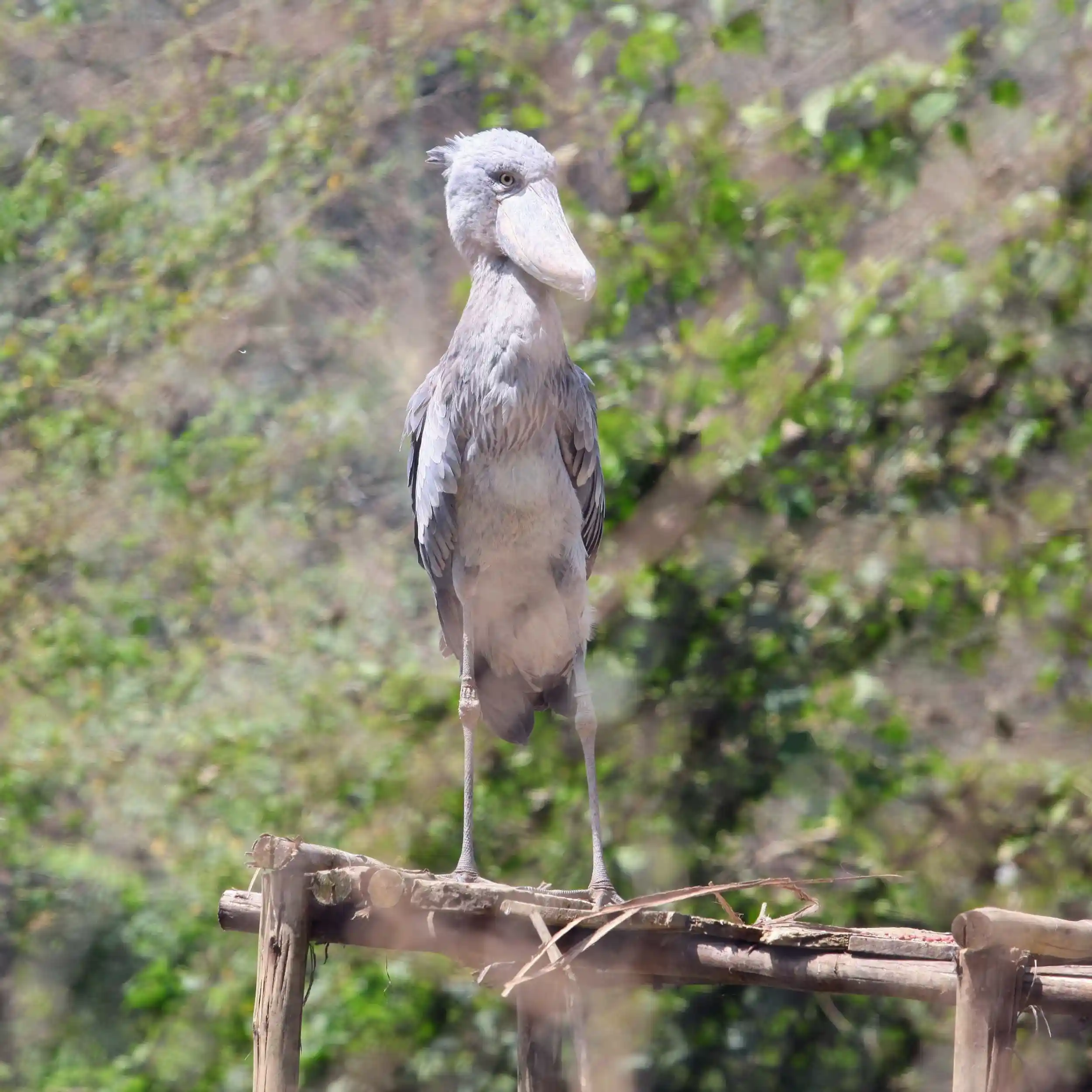
Tips for a Successful Shoebill Stork Sighting
To maximize your chances of spotting a shoebill stork in Uganda, follow these enhanced professional birding tips:
1. Strategic Timing
- Optimal Season: Visit during the dry seasons (December–February and June–August). Lower water levels concentrate prey in shallow areas, forcing the birds into more visible hunting grounds.
- The “Golden Hour”: Aim to be on the water by 6:00 AM or 7:00 AM. Early mornings offer a 99% sighting success rate in prime locations like Mabamba, as birds hunt actively before the midday heat forces them to seek shade.
- Avoid Disruptions: Early starts also ensure you arrive before the swamp becomes crowded with other tourists or local fishing activity, which can startle the birds.
2. Specialized Guiding
- Hire Local Experts: Instead of a general wildlife guide, look for certified birding specialists. In Mabamba, many guides are former fishermen who have intimate knowledge of specific individual birds’ territories.
- Advanced Booking: Popular sites like the Mabamba Swamp highly recommend booking in advance to secure the most experienced boatmen and avoid disappointment.
3. Essential Gear & Preparation
- Optics: Carry high-quality 8×42 binoculars for a wide field of view in dense papyrus. For photography, a 300mm+ telephoto lens is necessary to capture details without approaching too closely.
- Attire: Wear neutral earth tones (khaki, green, or brown) to blend into the swamp. Avoid bright colors like red or yellow, which can be perceived as threats.
- Swamp Protection: Waterproof boots or sturdy closed shoes are essential. Bring DEET-based insect repellent and a wide-brimmed hat to manage the intense equatorial sun and mosquitoes.
4. Ethical Viewing Practices
- Silence is Key: Shoebills are highly sensitive to noise. Maintain a whisper and ensure your camera’s shutter sound is disabled to prevent the bird from flying away.
- Maintain Distance: Allow the guide to position the boat at a distance that respects the bird’s “flushing distance.” If a shoebill stops hunting and starts watching you intently, you are too close.
Shoebills Breeding Season
The timing of the shoebill’s breeding season is closely tied to local water levels. Eggs are laid toward the end of the rainy season, as water levels begin to recede, allowing chicks to fledge during the drier months when feeding conditions are more stable. Shoebills are solitary nesters, constructing large grassy mound nests—sometimes reaching up to 3 meters in width—on floating vegetation or small islands, typically hidden among dense papyrus stands.
A typical clutch consists of two eggs, which are incubated for approximately 30 days. Fledging occurs at around 100 days of age, although usually only one chick survives to maturity. Shoebills reach reproductive maturity between three and four years of age and are remarkably long-lived, with lifespans that may extend up to 50 years.
Shoebill Stork Conservation Status
The Shoebill is classified as Vulnerable on the IUCN Red List, with an estimated global population of fewer than 6,000 individuals remaining in the wild. This iconic species faces numerous threats, including illegal hunting, habitat loss and degradation caused by human activity, climate change, and the pollution of river and wetland ecosystems. In some regions, cultural beliefs and taboos further endanger the Shoebill. Certain communities regard the bird as an omen of bad luck, leading to its capture or persecution. Ironically, encountering a Shoebill in its natural habitat is a rare and remarkable experience—one that many wildlife enthusiasts consider a symbol of great fortune rather than misfortune.
