
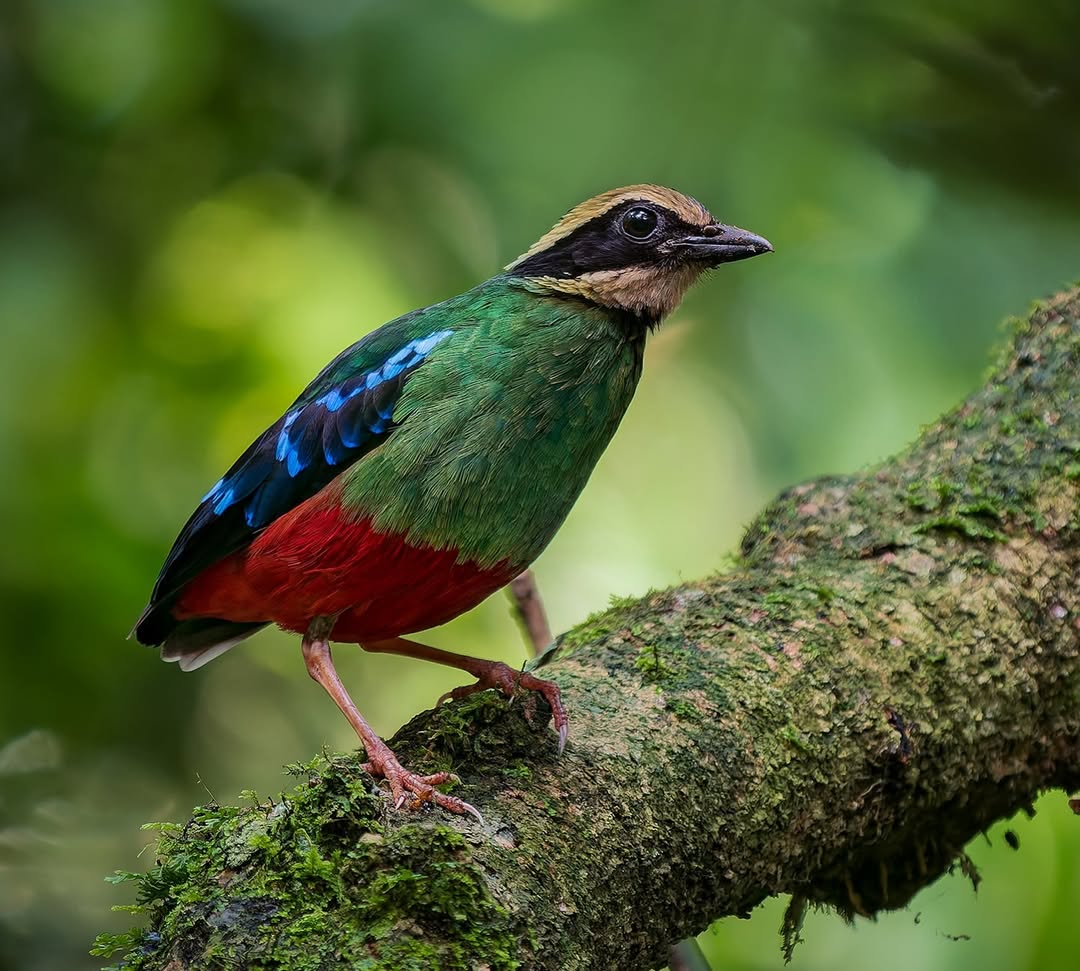
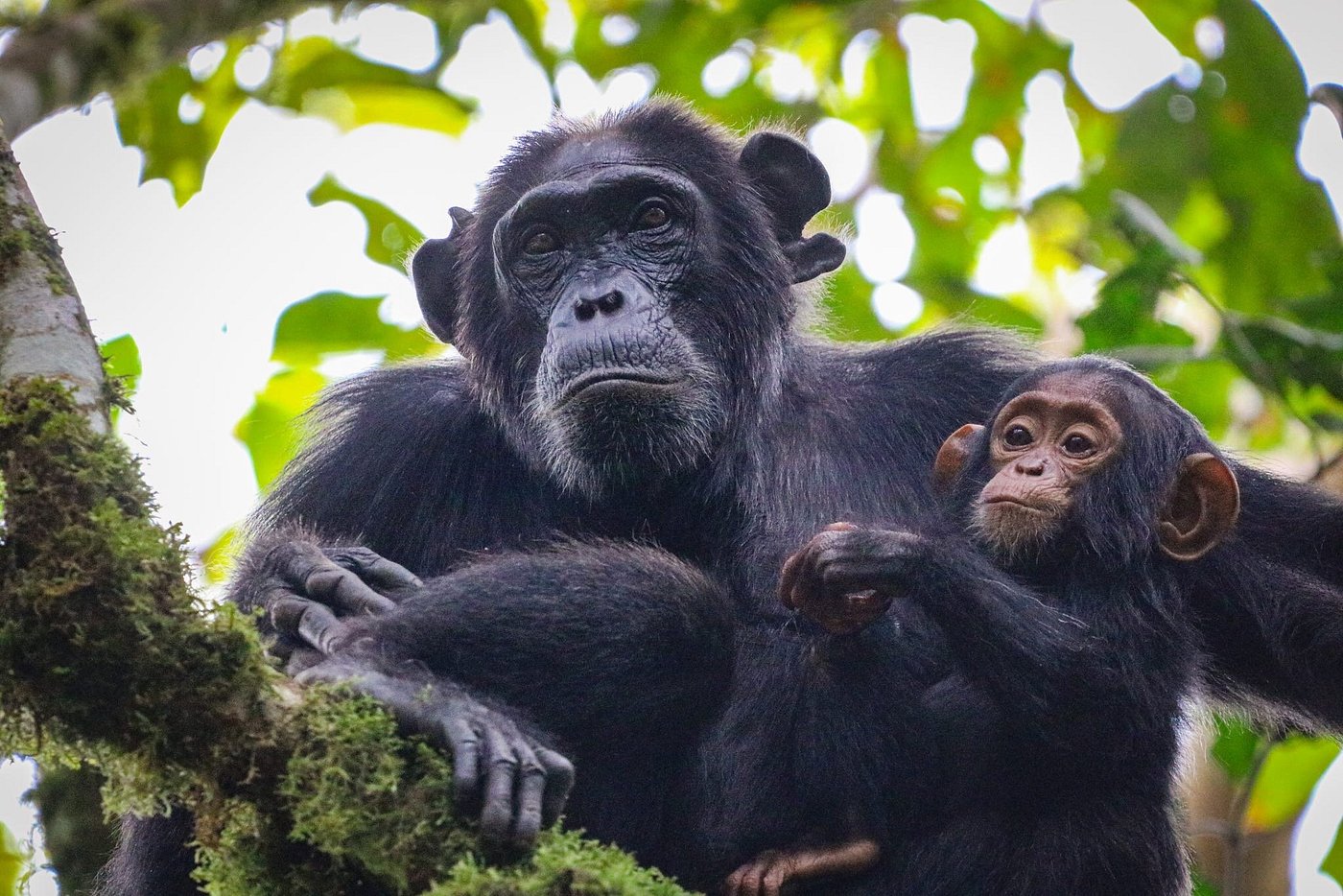
Kibale National Park is a premier East African biodiversity hotspot, protecting a 795-square-kilometer tropical forest that supports over 375 bird species alongside the highest density and diversity of primates in Africa. For birders, the ultimate prize is the rare Green-breasted Pitta, best sought in the early morning near the Kanyanchu hub, while primate enthusiasts flock here to track some of the 1,500 Chimpanzees that swing through the canopy. Beyond these highlights, a single walk can reveal unique avian endemics like the Nahan’s Francolin alongside several of the park’s 13 primate species, including the endangered Ashy Red Colobus, the L’Hoest’s monkey, and the nocturnal Bushbaby.
Most visitors maximize their experience by pairing forest-interior birding with a visit to the community-led Bigodi Wetland Sanctuary, a vital corridor where one can spot the vibrant Great Blue Turaco and the Grey-cheeked Mangabey in a single afternoon. Birding in Kibale Forest National Park and primate treks are most accessible during the dry windows of June to August and December to February, though the wetter months offer the best chance to see birds in their striking breeding plumage.
Key Bird Species In Kibale Forest National Park
Kibale Forest National Park is one of Uganda’s most biodiverse avian habitats, hosting over 375 species. Its unique position at the intersection of lowland and montane forests makes it a haven for specialized forest interior birds and endemics.
The "Big Three" Specialties
These species are the primary targets for serious birders visiting the park:
- Green-breasted Pitta: The park’s most iconic resident and one of only two pitta species in Africa. It is elusive, typically detected in the early morning by the male’s “brrr-rrrt” wing-drumming display as he hops between branches.
- African Pitta: A rare, brightly colored forest floor dweller with buff underparts and turquoise-tipped wings. Unlike its green-breasted relative, it lacks the dark green breast.
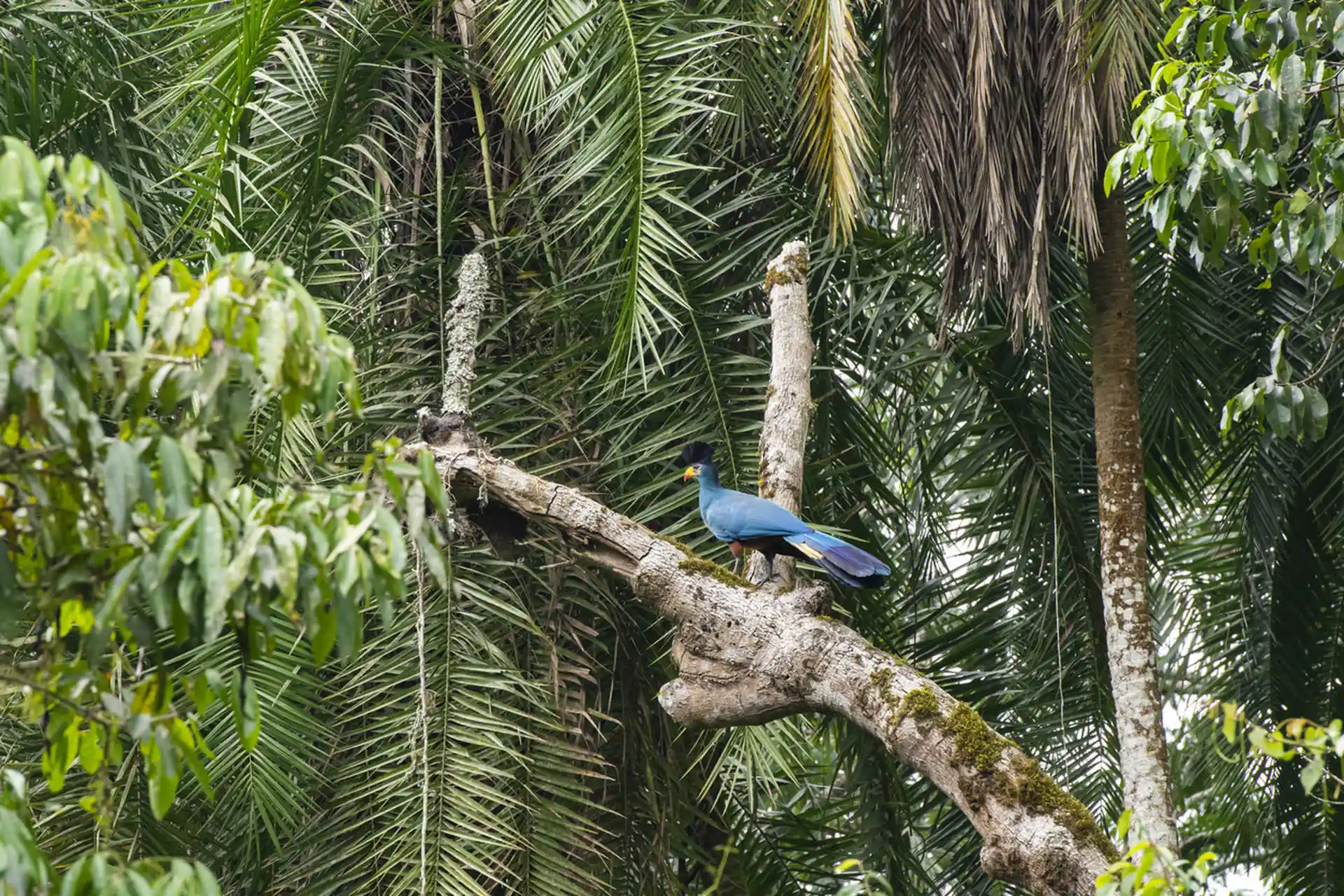
- Great Blue Turaco: The “Home of the Great Blue Turaco” is a title often given to the nearby Bigodi Wetland Sanctuary. This massive, vibrant blue bird is a common yet spectacular sight in the canopy.
Albertine Rift Specials
While Kibale is famed for its lowland species, it serves as a critical habitat for six specific Albertine Rift Endemics. These birds are restricted to the unique high-altitude forests of the Albertine Rift valley and are prime targets for birders in the park.
- Dusky Crimsonwing
- Black-capped Apalis
- Collared Apalis
- Blue-headed Sunbird
- Purple-breasted Sunbird
- Red-faced Woodland Warbler
Other Notable Birds In Kibale Forest National Park
- Abyssinian ground thrush
- Afep pigeon
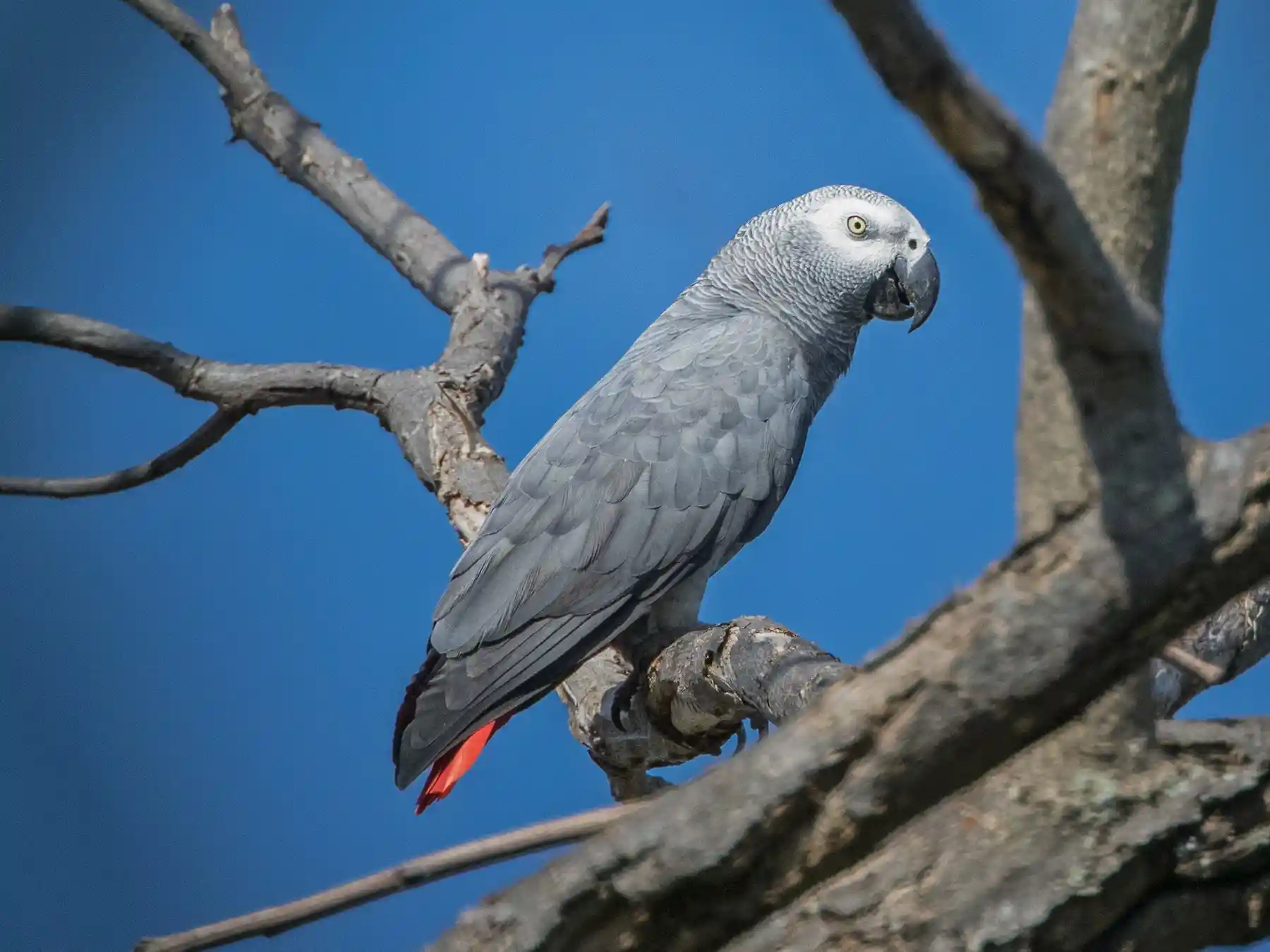
- African grey parrot
- Black bee-eater
- Black-capped apalis
- Black-eared ground thrush
- Blue-breasted kingfisher
- Blue-headed bee-eater
- Blue-headed coucal
- Blue-throated roller
- Brown illadopsis
- Brown-chested alethe
- Cassin’s hawk-eagle
- Cassin’s spinetail
- Crowned eagle
- Double-toothed barbet
- Green-headed sunbird
- Little greenbul
- Masked apalis
- Nahan’s francolin
- Papyrus gonolek
- Red-bellied paradise flycatcher
- Red-chested owlet
- Red-headed bluebill
- Scaly-breasted illadopsis
- Western nicator
- White-headed wood-hoopoe
- White-naped pigeon
- Yellow-rumped tinkerbird
Top Birdwatching Spots In Kibale National Park
Bigodi Wetland Sanctuary
Bigodi Wetland Sanctuary, a community-run conservation success adjacent to Kibale National Park, is a critical avian hotspot frequently referred to as the “Home of the Great Blue Turaco” due to the abundance of this spectacular bird. The sanctuary provides an essential ecological corridor with a mix of papyrus, forest, and wetland habitats, hosting over 200 bird species, including sought-after specialists like the Papyrus Gonolek, Shining-blue Kingfisher, and White-spotted Flufftail. The guided 4.5km circular boardwalk trail, especially the recommended 7:30 AM walk, offers excellent opportunities to spot these birds, as well as up to eight primate species like the Grey-cheeked Mangabey and Ugandan Red Colobus monkeys. Managed by KAFRED, tourist revenue directly supports local schools and clinics, making a birding trip to Bigodi an impactful and essential Ugandan experience.
Kanyanchu River Camp
Kanyanchu River Camp serves as the primary hub for birding and primate activities in the central sector of Kibale National Park, specifically famous as the starting point for the elusive Green-breasted Pitta search. Located roughly 35km from Fort Portal, the camp anchors the Kanyanchu Chimpanzee Trail, where morning birding walks typically begin at 7:00 AM to capitalize on high canopy activity. Beyond its world-renowned chimpanzee trekking, the Kanyanchu area offers sightings of unique forest specialists such as the Red-chested Paradise Flycatcher (a camp specialty), Sabine’s Spinetail, Blue-breasted Kingfisher, and the rare African Grey Parrot. Facilities at the camp are geared toward immersive nature experiences, featuring basic bandas, campsites, a canteen, and a dedicated treehouse for wildlife viewing, while its surrounding self-guided grassland trails allow for casual observations of many of the park’s 13 primate species.
Sebitoli Forest Camp
Located in the northern sector of Kibale National Park, Sebitoli Forest Camp serves as a quieter, highly accessible alternative to Kanyanchu for birders seeking a blend of forest and riverine species. Positioned just 12km from Fort Portal along the main road, the camp provides immediate access to a unique habitat matrix where the Mpanga River attracts aquatic specialists like the Shining-blue Kingfisher and African Black Duck, alongside forest canopy dwellers such as the Black Bee-eater and Joyful Greenbul. The area is renowned for its high primate density, particularly the Ugandan Red Colobus, and its trail system offers excellent opportunities to spot the rare Nahan’s Francolin, which is difficult to find elsewhere. While the facilities remain basic, Sebitoli’s proximity to the Kihingami Wetland and its less-congested trails make it a strategic starting point for birding expeditions focused on capturing both forest-interior and wetland-edge specialties.
Best Time for Birding In Kibale
Kibale offers excellent birdwatching throughout the year. The peak period is from June to September, which coincides with the main fruiting season. During this time, food is plentiful and many species display their vibrant breeding plumage. Although migratory birds are not a major presence in the forest, several species can be seen from November to April.
The driest months—December to February and June to July—provide the most comfortable conditions for birdwatching, with fewer rain interruptions. In contrast, March to May and September to November experience heavier rainfall, which may occasionally limit time spent in the field.
Recommended Gear for Birding in Kibale
Given the rainforest environment, appropriate gear is essential for a comfortable experience:
- Binoculars and a field guide book
- Comfortable, sturdy walking shoes or hiking boots
- Lightweight rain jacket or poncho
- Insect repellent and sun protection (sunglasses/hat)
Getting There and Accommodation
The park is approximately a 5 to 6-hour drive from Kampala/Entebbe by road. You can find accommodation ranging from budget to luxury options near the park and the Bigodi area, such as Primate Lodge or Kibale Forest Camp, which cater to birders and chimpanzee trekkers.