
Birding in Queen Elizabeth National Park is simply magical. Covering 1,978 square kilometers, this Uganda safari park may be smaller than Africa’s iconic destinations — the Maasai Mara in Kenya, the Serengeti in Tanzania, and Kruger National Park in South Africa — yet it supports more bird species than any of these parks. It harbours over 600 species — in fact, a number that, according to BirdLife International, no protected area in Africa can beat.
This extraordinary diversity of birdlife is thanks to the park’s rich mosaic of habitats, from acacia woodlands and open grass savannahs to sparkling lakes, winding rivers, dense papyrus swamps, rainforest, and even extinct volcanic crater lakes.
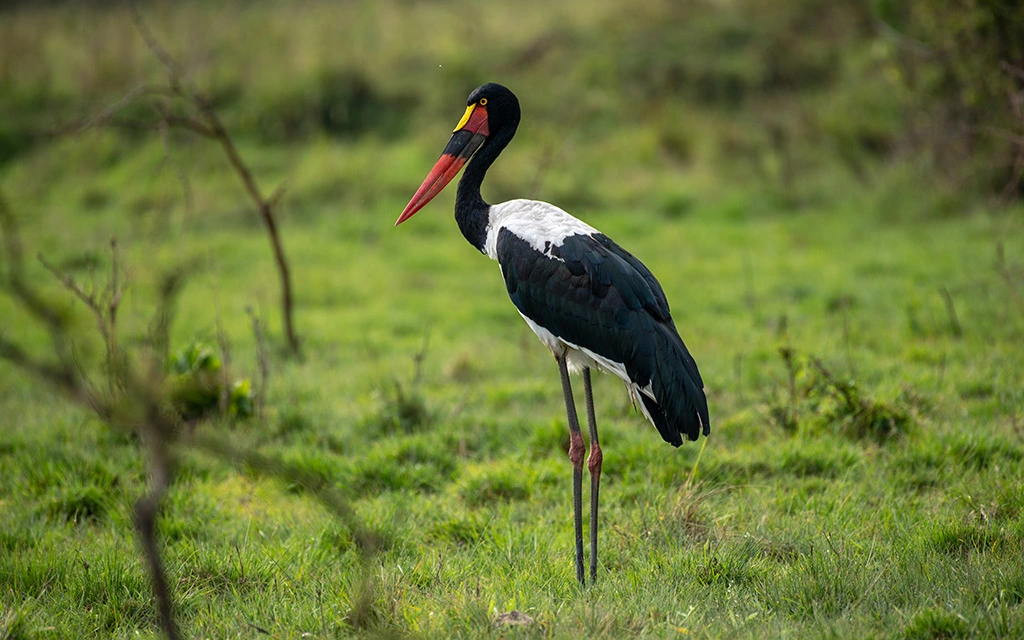
Birding in Queen Elizabeth National Park can be experienced in many exciting ways. Glide along the Kazinga Channel on a boat, scanning for waterbirds, herons, and vibrant kingfishers. Stroll through forest trails, listening for the calls of rare and elusive species. Or drive across the open savannah, keeping watch over the treetops and skies for eagles, hornbills, and other spectacular birds.
Best Birding Spots In Queen Elizabeth Park
Kazinga Channel
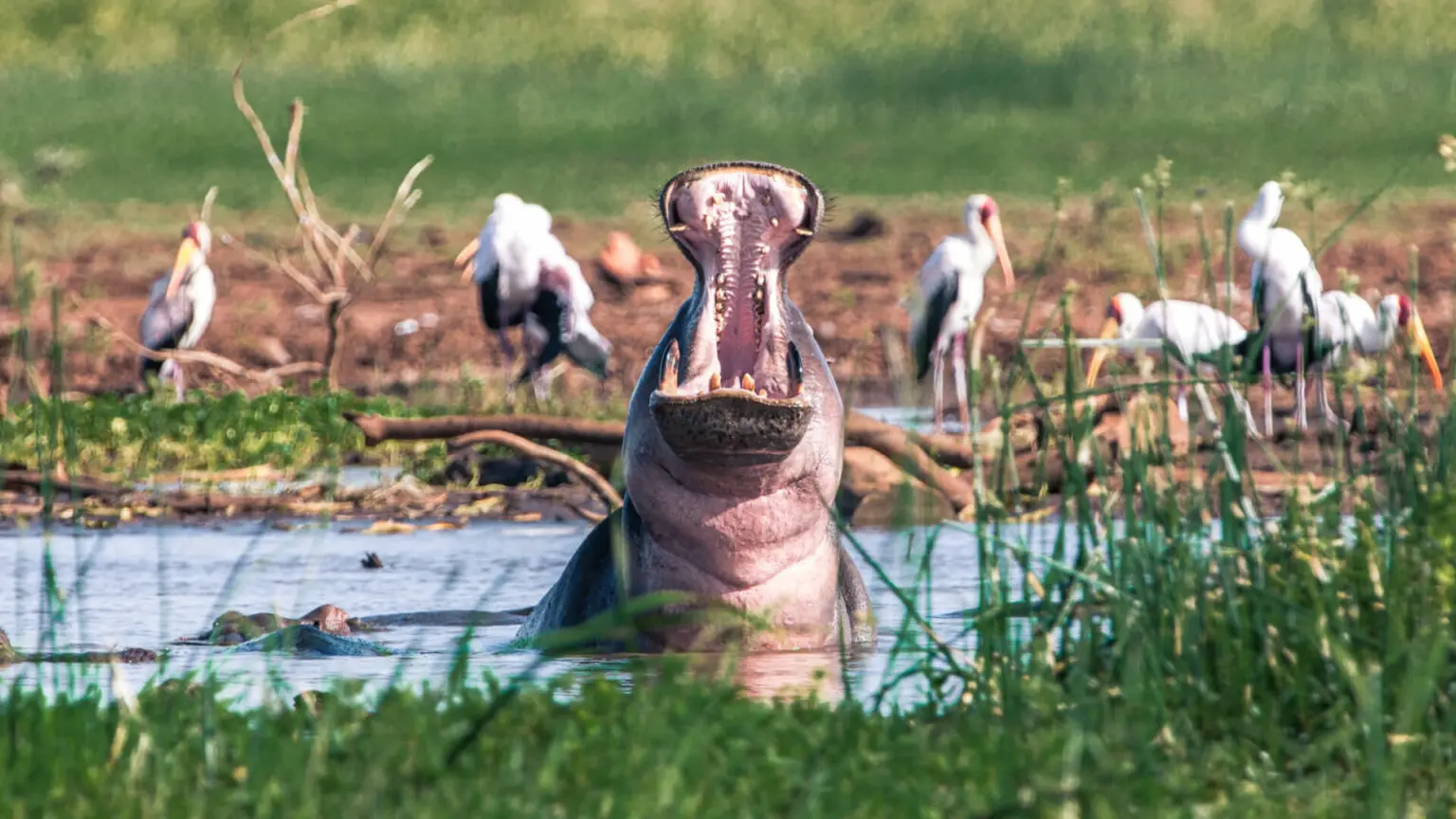
Situated in the heart of Queen Elizabeth National Park, the Kazinga Channel stretches 32 km, connecting Lake George in the north to Lake Edward in the south. The scenery is simply beautiful, with wide-open waters framed by papyrus swamps, lakeside grasslands, and scattered acacia trees along the shores. A boat cruise along the channel provides an unparalleled opportunity to observe waterbirds, including Great White Pelican, Pink-backed Pelican, African Fish Eagle, Pied and Malachite Kingfishers, African Skimmer, Glossy Ibis, White-breasted Cormorant, African Openbill, and Saddle-billed Stork. The channel also supports one of Africa’s densest hippo populations, along with Nile crocodiles, and elephants and buffalo that frequently come to drink along the banks.
Kasenyi Plains
Kasenyi Plains is a prime destination for both wildlife viewing and birding in Queen Elizabeth National Park. The open, short-grass savannah dotted with solitary euphorbia trees and clumps of bush provides ideal habitats for grassland birds such as Grey-crowned Cranes, Red-throated Spurfowl, Yellow-throated Longclaw, Black-bellied Bustards, and various larks and plovers. Raptors including Lappet-faced Vultures, African White-backed Vultures, and Martial Eagles are commonly seen soaring above the plains. The area is also a critical breeding ground for Uganda Kob (Uganda National Animal), where thousands gather during the season, attracting predators such as the resident lion prides. Buffalo, elephants, bushbucks, and warthogs are frequent visitors, while vultures perched in trees may indicate a nearby kill. The combination of stunning grassland scenery, abundant birdlife, and diverse mammals makes Kasenyi Plains a must-visit for both birdwatchers and safari enthusiasts.
Mweya Peninsula
Mweya Peninsula, covering 10 square kilometers, is one of the best places in Queen Elizabeth National Park for birdwatching. The lodge grounds and surrounding bush are home to Marabou Storks, Red-chested Sunbirds, Black-headed Gonoleks, and a variety of weavers, making it a vibrant spot for both casual and serious birders. Raptors and waterbirds are also commonly seen around the peninsula, taking advantage of the nearby lakes and Kazinga Channel. The peninsula itself juts between Lake Edward, Lake George, and the Kazinga Channel, where the waters merge, offering breathtaking views of the African riverbank landscape with elephants and buffalo on the opposite shores, occasionally framed by the snow-capped peaks of the Rwenzori Mountains. Mweya serves as the park’s tourism hub, hosting the historic Mweya Safari Lodge, several budget-friendly UWA guesthouses, and the Visitors Centre. It is also the main starting point for the park’s iconic Kazinga Channel boat cruises.
Kyambura Gorge
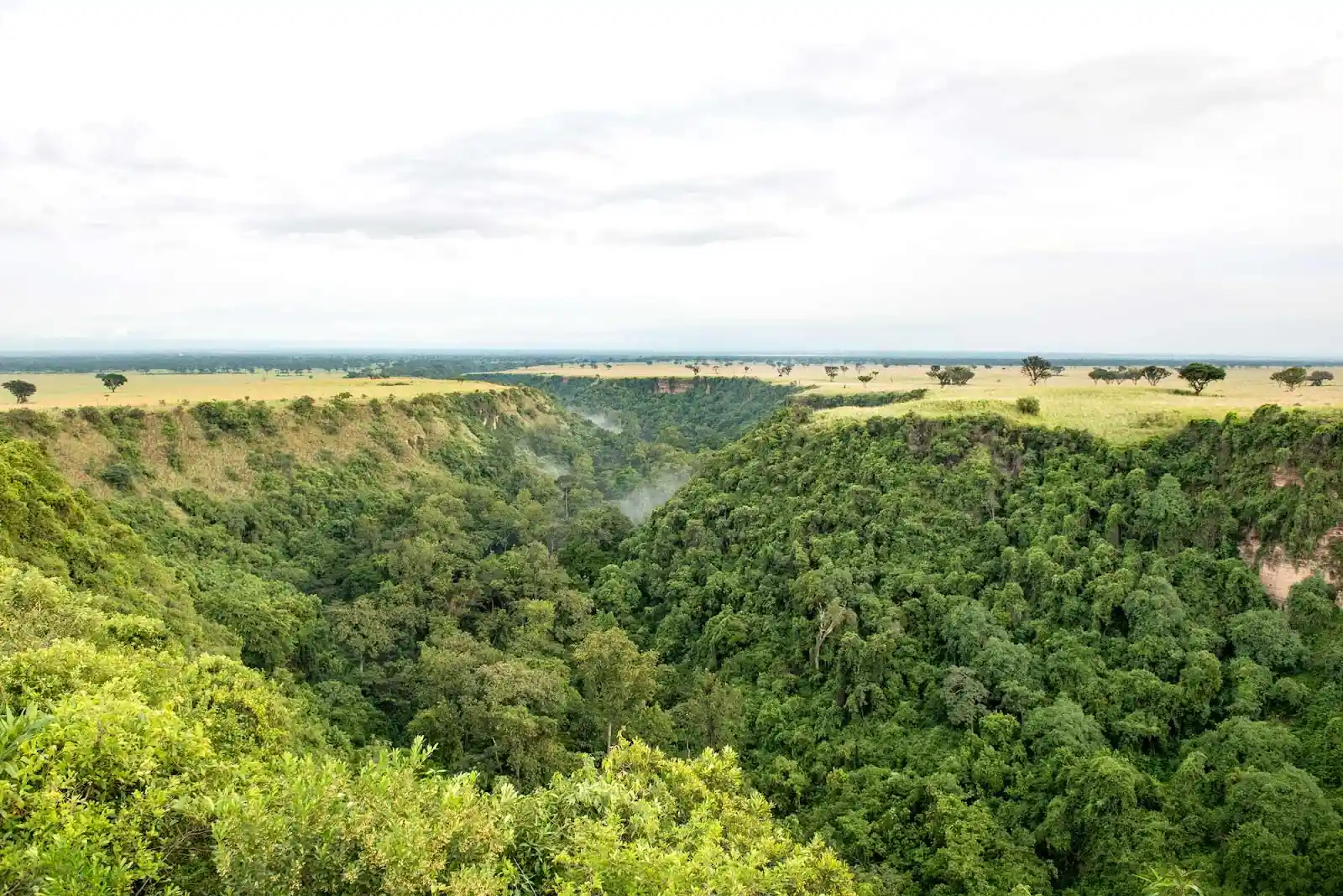
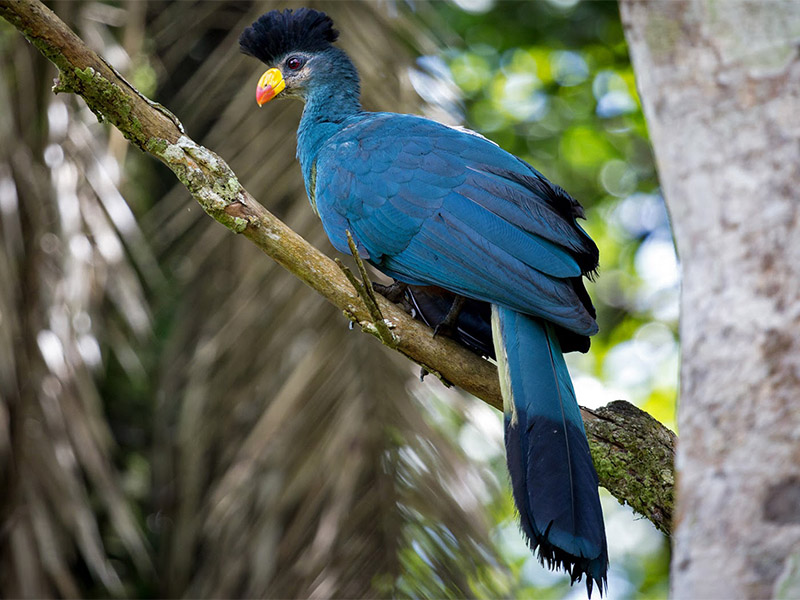
Kyambura Gorge, located in the north-eastern part of Queen Elizabeth Park, is a top destination for birdwatchers and wildlife enthusiasts alike. The forested rim of the gorge provides a unique habitat for many special birds, including Black Bee-eaters, Blue-breasted Kingfishers, Great Blue Turacos, Black-and-White Cascade Hornbills, Martial Eagles, Verreaux’s Eagle-Owls, African Fish Eagles, Pelicans, African Broadbills, African Falcons, Papyrus Canary, White-winged Warblers, and Black-rumped Buttonquails. Kyambura Gorge lies about 30 km from the park offices and forms part of the Western Rift Valley. The gorge was carved by the Kyambura River, which flows through a dense “underground forest” 100 meters below the Kichwamba escarpment. Its dramatic cliffs and lush vegetation create a stunning backdrop for wildlife viewing. The gorge is famous for its resident chimpanzees, some of which have been habituated for guided treks with UWA guides.
Maramagambo Forest
Maramagambo Forest supports a rich diversity of forest species, including Forest Greenbuls, Sunbirds, Woodpeckers, the striking Rwenzori Turaco, White-naped Pigeon, and rare forest flycatchers.
Along the forested shores of Lake Nyamasingiri, birders may encounter rarities such as Scaly-breasted Illadopsis, Snowy-headed Robin-Chat, Chestnut Wattle-eye, while the lake itself is home to the elusive African Finfoot. This medium-altitude rainforest stretches west from the Katunguru–Ishasha Road nearly to Lake Edward. Its vastness inspired its name — derived from a local phrase meaning “the end of words,” in reference to a legend about young people who got lost in the forest for days and returned speechless. The forest also features the famous Bat Cave, with a viewing room to observe millions of bats and resident rock pythons, and the deep Blue Lake.
Maramagambo is home to numerous primates, such as unhabituated chimpanzees, Black-and-White Colobus Monkeys, L’Hoest’s Monkeys, Red-tailed Monkeys, Vervet Monkeys, Olive Baboons, and Blue Monkeys, as well as smaller nocturnal species like bush babies and pottos. Other mammals include Giant Forest Hogs, Yellow-backed Duikers, Pygmy Antelopes, and Giant Elephant Shrews.
Katwe Crater Lakes
Queen Elizabeth National Park lies within Africa’s Great Rift Valley, a geological wonder formed millions of years ago by tectonic and volcanic activity. This dramatic landscape is dotted with craggy peaks, ancient craters, and rolling green hills, making it a joy to explore. In the park’s western section, the Katwe Crater Lakes are a series of volcanic lakes surrounded by rocky rims and open grasslands, with Lake Munyanyange being the most prominent.
These lakes are a paradise for birdwatchers, attracting waterbirds such as Lesser Flamingos, Greater Flamingos, herons, egrets, waders, and African Jacanas, creating spectacular viewing opportunities, particularly during the migratory season. The lakes also host hippos and monitor lizards, adding to the wildlife spectacle. The surrounding grasslands support Uganda Kob and buffalo, making this area not only visually stunning but also rich in wildlife encounters.
Ishasha Sector
The remote Ishasha Sector, in the southern part of Queen Elizabeth National Park, is a haven for both birdwatchers and wildlife enthusiasts. The swamps, floodplains, and riverine forests along the Ishasha and Ntungwe Rivers provide excellent birding habitats. Here you can spot rare and striking species such as the Shoebill Stork, African Crowned Eagle, Goliath Heron, African Fish Eagle, Black Bee-eater, Broad-billed Roller, Cassin’s Grey-Flycatcher, and several vulture species. The papyrus-lined shores of Lake Edward are ideal for waterbirds, including herons, plovers, and other wetland specialists. The Ntungwe River floodplains host species such as Black Coucal, Compact Weaver, and Fan-tailed Widowbird, making Ishasha a diverse and rewarding birding destination.
Beyond birds, Ishasha is famous for its tree-climbing lions, often seen resting in fig trees while observing herds of Uganda Kob. Elephants, hippos, leopards, buffalo, and hyenas also roam the area. Its location along the route to Bwindi Impenetrable Forest, home of the mountain gorillas, makes Ishasha a convenient and unforgettable stop for combining birding with gorilla trekking adventures.
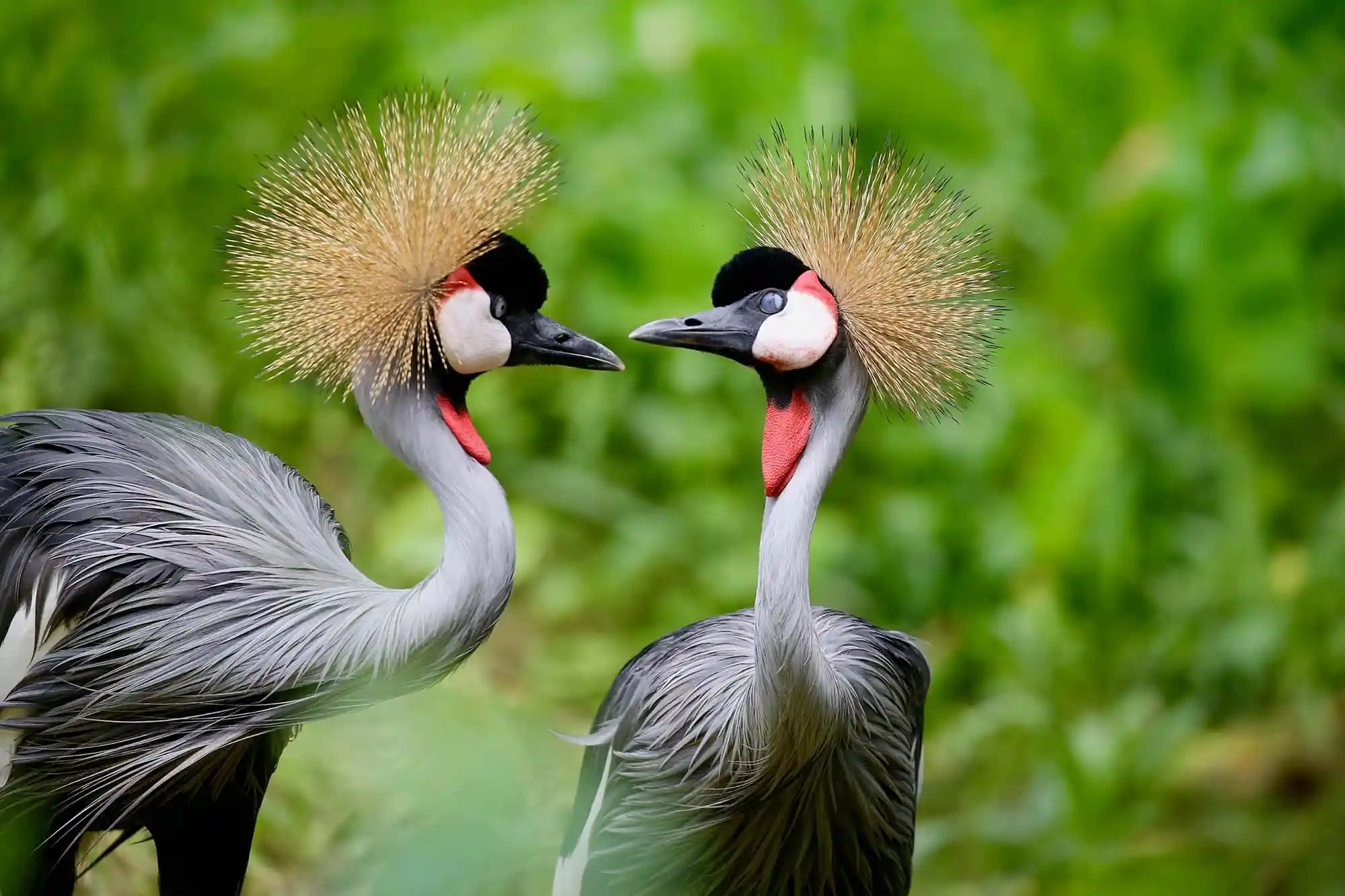
Key Bird Species in Queen Elizabeth National Park
- African finfoot
- African fish eagle
- African hobby
- African skimmer
- Ayres’s hawk-eagle
- Black bee-eater
- Black-headed gonolek
- Black-rumped buttonquail
- Blue-breasted kingfisher
- Broad-billed roller
- Caspian plover
- Cassin’s flycatcher
- Collared pratincole
- Common sand martin
- Crab-plover
- Great blue turaco
- Great white pelican
- Grey crowned crane
- Grey-winged robin-chat
- Heuglin’s gull
- Lesser flamingo
- Long-crested eagle
- Palm-nut vulture
- Papyrus canary
- Papyrus gonolek
- Papyrus yellow warbler
- Pel’s fishing-owl
- Pink-backed pelican
- Red-chested sunbird
- Rufous-bellied heron
- Shoebill
- Spotted redshank
- Water thick-knee
- Western banded snake eagle
- White-backed night heron
- White-winged tern
- Yellow-bellied wattle-eye
- Yellow-billed stork
- Yellow-throated cuckoo
- Yellow-throated longclaw
Best Time for Birding In Queen Elizabeth National Park
Birdwatching in Queen Elizabeth National Park is rewarding year-round, but different seasons offer unique advantages. For observing resident species and enjoying pleasant weather, the dry seasons from June to September and December to February are ideal. Trails are drier, and birds gather around water sources, making them easier to spot. To see migratory species, visit between November and April, when many birds arrive from Europe and Asia.
For daily birding, the early mornings and late afternoons are the most productive. During these times, birds are most active, calling, feeding, and moving between habitats, providing the best opportunities for sightings and photography.
Essential Equipment for Birding
- Binoculars: A high-quality pair with 8x or 10x magnification is essential for observing birds in detail, especially in forests or across wetlands.
- Field Guide: Bring a guidebook or mobile app specific to East African birds to help with accurate identification and note-taking.
- Camera: A camera with a good zoom lens allows you to capture stunning bird photographs without disturbing the wildlife.
- Comfortable Gear: Wear neutral-colored clothing to blend with the environment, along with sturdy boots for walking trails, a hat for sun protection, and sunscreen for long days outdoors.
Essential Equipment for Birding
Park Entrance Fees: A daily park entrance fee of USD 40 is required for all visitors.
Guided Tours: Hiring an experienced, licensed birding guide is highly recommended to maximize your sightings. Guides can be booked through Choose Uganda Safaris or at the Katwe Tourism Information Centre. Their local knowledge of bird hotspots, behaviors, and seasonal patterns ensures a more rewarding experience.
Activities: Birding in Queen Elizabeth National Park can easily be combined with other exciting activities. Consider game drives to spot the famous tree-climbing lions, or chimpanzee trekking in the nearby Kyambura Gorge. This combination allows you to experience the park’s incredible diversity of wildlife while enjoying its world-class birding.