Mabamba Swamp
Have you heard about Mabamba Swamp near Entebbe? It is the best place in Africa to see the fascinating and legendary shoebill bird (Balaeniceps rex). People often ask, where is the easiest spot to find this prehistoric looking bird? The answer is Mabamba Swamp in Central Uganda. The swamp sits along the northern shore of Lake Victoria. This lake is the largest in Africa and the second largest freshwater lake in the world.
Mabamba Swamp is a Ramsar Wetland of International Importance. It is protected by a community-run ecotourism project. That means local people guide visitors and protect the swamp. The shoebill is the star here. It lives in papyrus swamps and can be hard to find elsewhere. In Mabamba, the chance of seeing one is almost 100%.
Yes, you can see shoebills in other places like Murchison Falls National Park. But that area is huge and harder to explore by boat. Mabamba is much easier. You can visit Mabamba at the start or end of your Uganda safari from Entebbe. If you love birds, stay overnight. Over 300 species live here, and every canoe ride feels special and exciting for nature lovers.
Let’s talk about the shoebill.
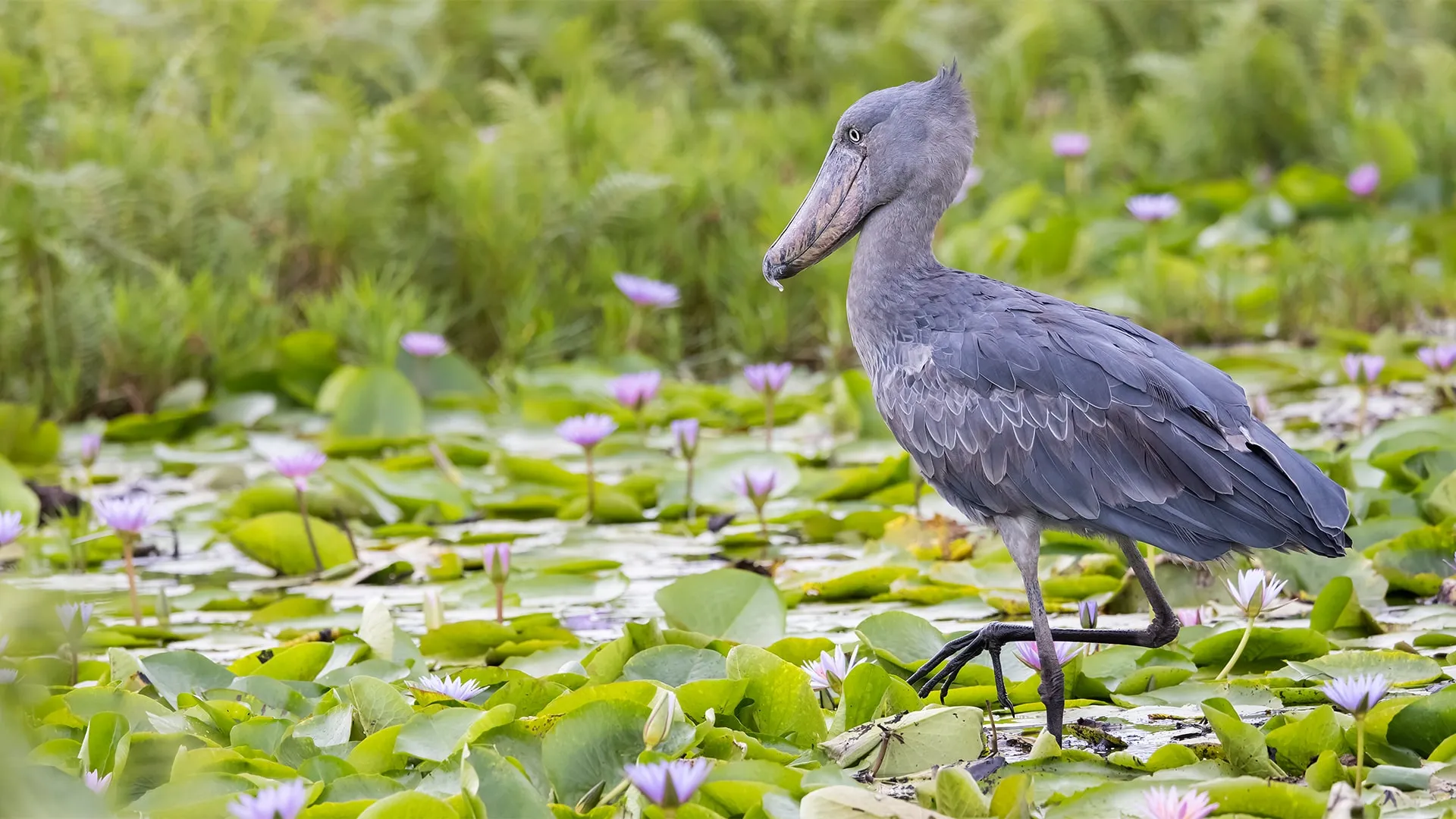
The shoebill is one of Africa’s most wanted birds. Many bird lovers dream of seeing it just once. People often ask, what does it look like? Imagine a bird from dinosaur times. That is the shoebill. It is about 140 cm tall and has a huge bill that looks like a shoe. You cannot mistake it for any other bird. Some people even call it the whalehead or shoe-billed stork. Funny enough, it is closer to a pelican than a stork.
That big bill is perfect for hunting. Shoebills love marbled lungfish most. They also eat tilapia, catfish, frogs, baby crocodiles, snakes, rodents, and small birds. They are very patient hunters. They can stand still for hours. When the time is right, they strike fast. About 60 percent of their attacks work.
Breeding depends on water levels. They nest alone on floating plants or small islands. Usually, only one chick survives. Shoebills can live up to 50 years. Sadly, they are listed as Vulnerable on the IUCN Red List. Fewer than 6,000 may remain in the wild. The bird is threatened by hunters, the destruction of their environments by humans, climate change, pollution of river systems and cultural taboos that lead to them being captured by tribes. Many cultures in Africa believe that the birds are taboo and bring about bad luck, but seeing one in the wild certainly makes one feel very lucky indeed!
Mabamba Swamp Has Over 300 Bird Species
Mabamba Swamp is mainly known for bird watching. Of course, the shoebill is the main star. But it is not the only reason to visit. People often ask, what else can you see? The list is long and exciting. Ove 300 bird species have been sighted here. You may spot the African pygmy goose gliding quietly on the water. The African jacana walks on floating plants with ease. The blue-headed coucal hides in thick reeds, while the long-toed lapwing moves along the swamp edges. Look up and you might see colorful blue-cheeked bee-eaters flying past.
Birds of prey are also common. African fish eagles call loudly from nearby trees. Palm-nut vultures circle above, and ospreys hunt fish in open water. Large animals are rare in the swamp. Still, nature loves surprises. Very lucky visitors may see the shy sitatunga antelope. This special animal lives only in swamps and wetlands. Mabamba always has something new to discover.
The best way to explore Mabamba Swamp
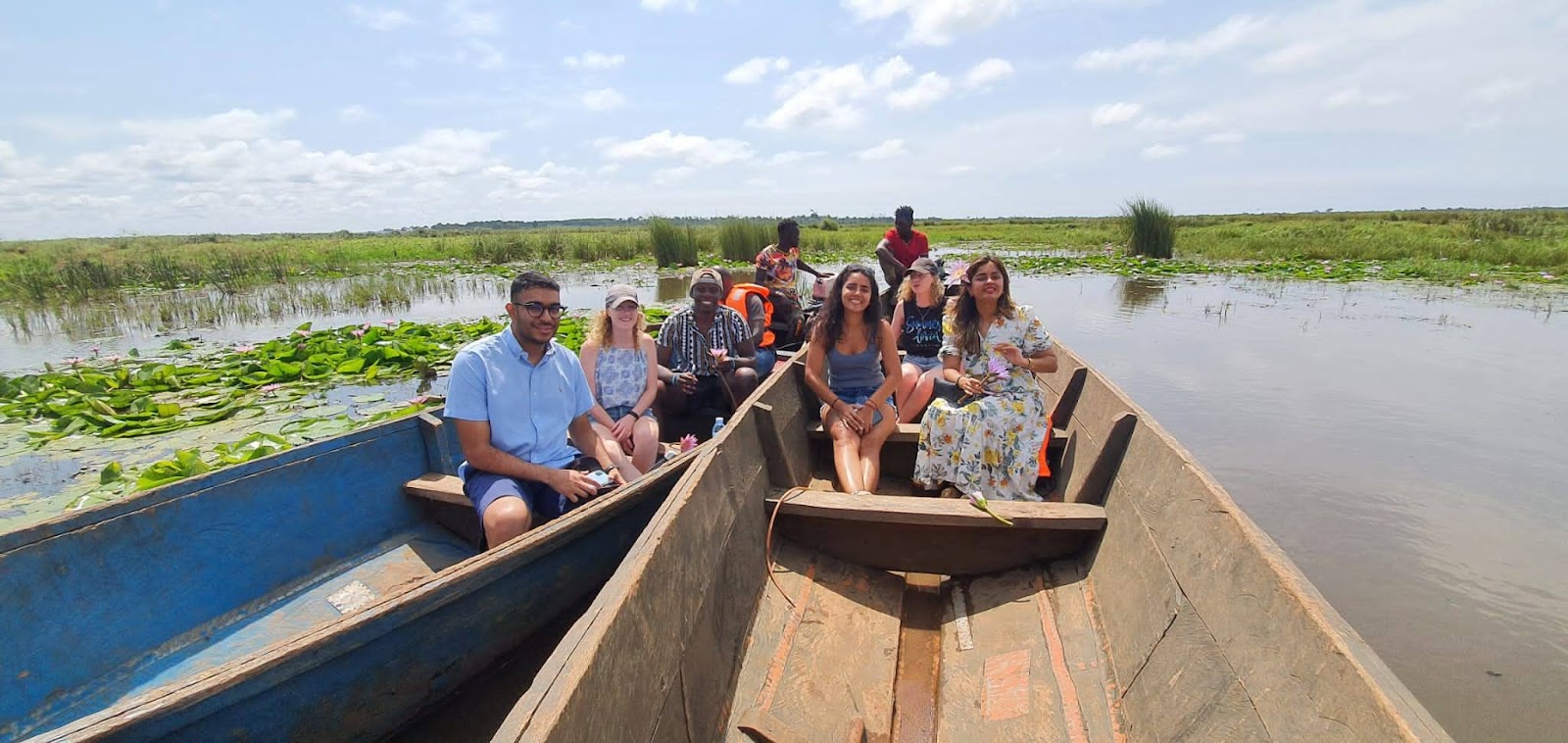
The best way to explore Mabamba Swamp is on a guided boat trip. These trips are run by the local community tourism program. You will sit in a small boat with a local fisherman and an experienced guide. From the start, the journey feels calm and special.
The boat moves slowly through shallow water and narrow channels. Tall grasses and papyrus rise on both sides. Water lilies float quietly on the surface. As you glide along, you will see many other birds. Kingfishers flash past in bright colors. Your guide explains the birds, the swamp, and daily life on the water.
When the shoebill is found, the boat moves closer with care. You usually stop about 30 to 40 meters away. Good binoculars are very important. If luck is on your side, you may watch the shoebill hunt. You could see it strike at fish or even small reptiles. The experience is unforgettable. You normally spend about an hour near the shoebill. There is plenty of time for photos and quiet observation. Choose Uganda Safaris can arrange a full, all-inclusive shoebill tour from Entebbe or Kampala, making the trip easy and stress-free.